
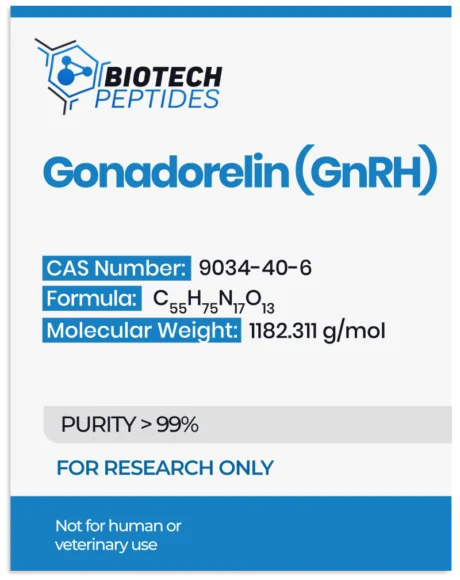
Gonadorelin (GnRH) Peptide 10mg
Buy Gonadorelin (GnRH) Peptide 10mg for laboratory research involving gonadotropin-releasing hormone receptor signaling, pituitary-cell biology, LH and FSH pathways, hypothalamic-pituitary-gonadal (HPG) axis research, and endocrine signaling models.
Gonadorelin is a synthetic decapeptide corresponding to gonadotropin-releasing hormone (GnRH). Research involving Gonadorelin has focused extensively on the relationship between GnRH receptor activation and downstream secretion of luteinizing hormone (LH) and follicle-stimulating hormone (FSH) in experimental endocrine systems.
An important characteristic of GnRH signaling is its dependence on exposure pattern. Experimental research has demonstrated that pulsatile and continuous receptor stimulation can produce different signaling responses, making Gonadorelin particularly relevant to studies of receptor regulation, cellular desensitization, and endocrine feedback mechanisms.
This Gonadorelin 10mg research peptide is supplied exclusively for laboratory research, in-vitro experimentation, biochemical studies, and scientific investigation.
Gonadorelin (GnRH) Peptide Specifications
| Property | Specification |
|---|---|
| Product Name | Gonadorelin (GnRH) Peptide |
| Available Size | 10mg |
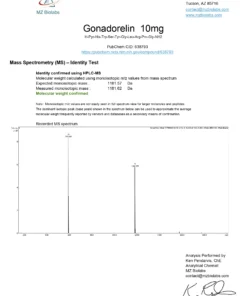
| Molecular Formula | C55H75N17O13 |
| Molecular Weight | 1182.311 g/mol |
| Sequence | Pyr-His-Trp-Ser-Tyr-Gly-Leu-Arg-Pro-Gly |
| Peptide Length | 10 amino acids |
| Other Known Title | Gonadotropin-Releasing Hormone (GnRH) |
| Research Classification | Research Use Only (RUO) |
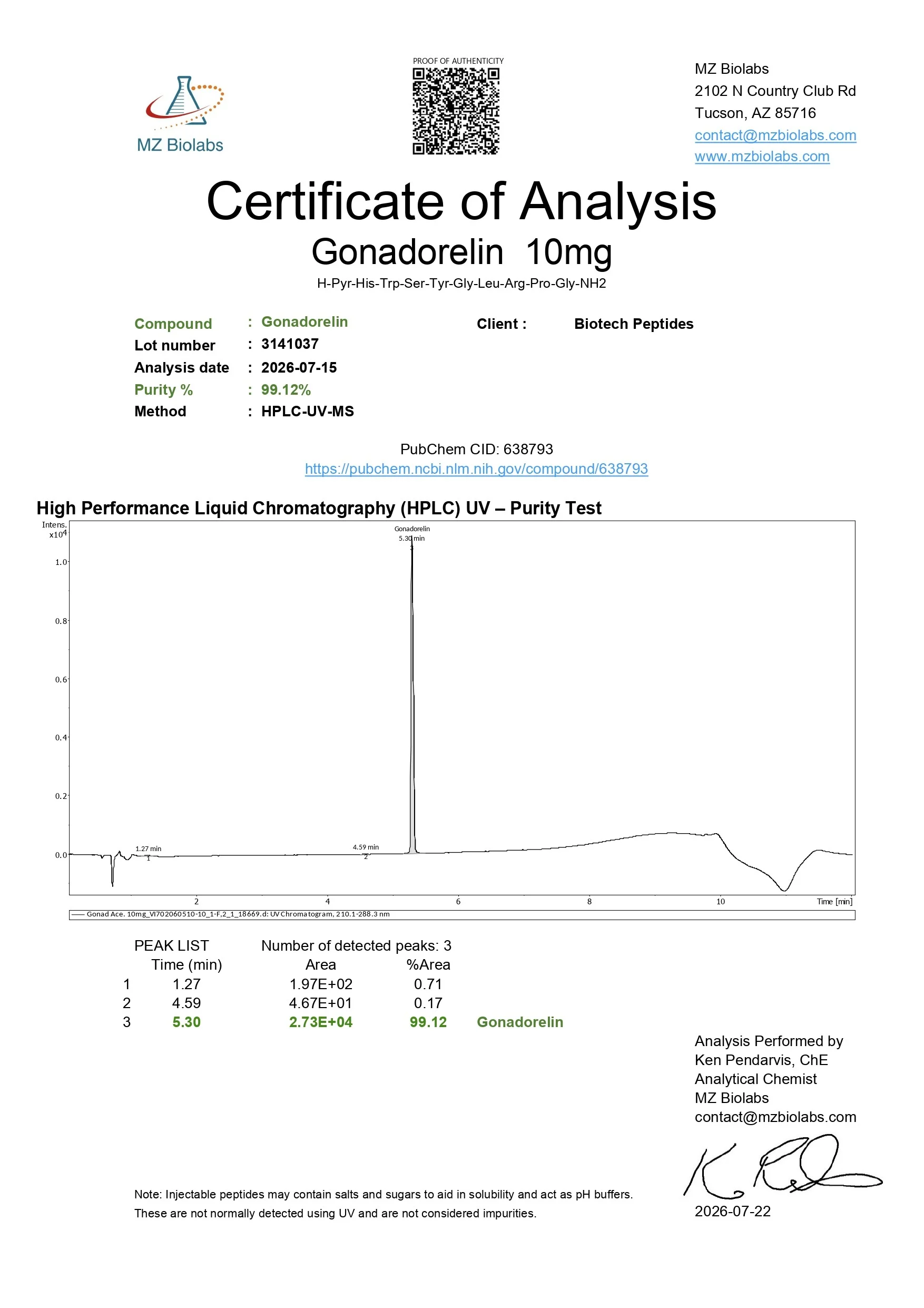
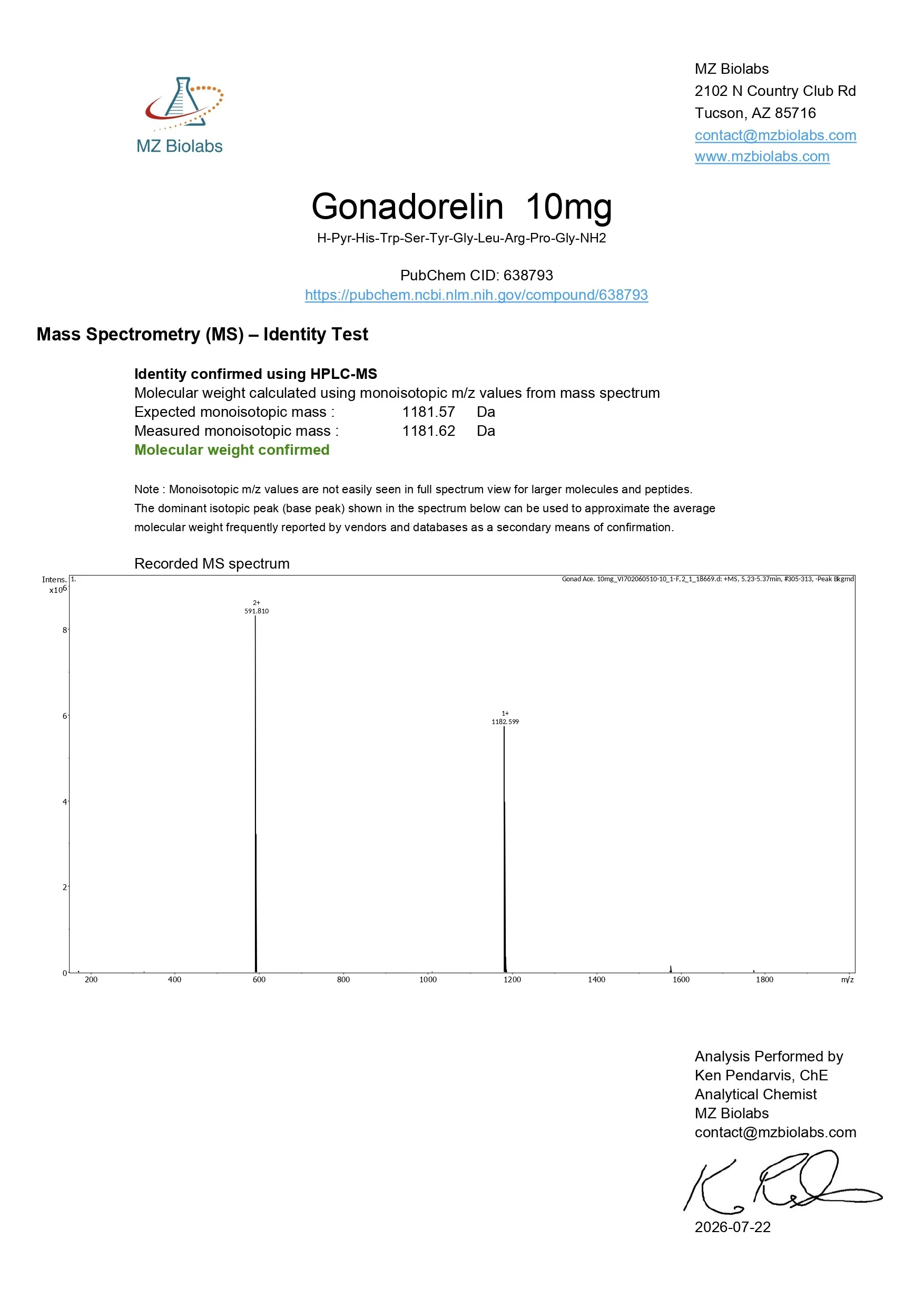
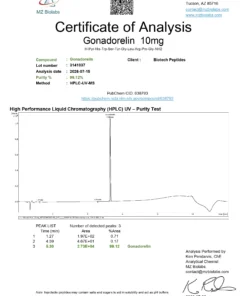
For lot-specific identity, purity, analytical characterization, and handling information, researchers should consult the applicable Certificate of Analysis (CoA) and product documentation.
Gonadorelin and GnRH Receptor Research
The primary research application for Gonadorelin peptide involves the GnRH receptor (GnRHR), a G-protein-coupled receptor expressed primarily in pituitary gonadotroph cells.
When GnRH receptors are activated in experimental systems, intracellular signaling can involve pathways such as phospholipase C, intracellular calcium mobilization, protein kinase C, and downstream transcriptional mechanisms.
These pathways ultimately provide researchers with experimental systems for studying the synthesis and secretion of LH and FSH.
Important research areas include:
- GnRH receptor activation
- GPCR signaling
- Intracellular calcium signaling
- Protein kinase C pathways
- LH and FSH secretion models
- Pituitary-cell signaling
- Endocrine feedback mechanisms
- Receptor desensitization
Gonadorelin is therefore an important research tool for laboratories studying how hypothalamic peptide signaling is translated into pituitary-cell responses.
Gonadorelin and Pulsatile Signaling Research
One of the most important features of GnRH biology is the distinction between pulsatile and continuous receptor stimulation.
Experimental studies have demonstrated that GnRH receptor signaling can change depending on the frequency and duration of peptide exposure. Pulsatile stimulation can support receptor signaling and gonadotropin secretion, whereas prolonged receptor activation can lead to receptor desensitization and reduced downstream responsiveness.
This phenomenon makes Gonadorelin particularly useful for research involving:
- Receptor downregulation
- Receptor internalization
- Cellular desensitization
- Signal attenuation
- Pulsatile signaling
- Endocrine feedback
- GPCR trafficking
Researchers can use controlled experimental systems to investigate how different signaling patterns affect GnRH receptor activity and downstream cellular responses.
Gonadorelin and LH/FSH Research
Gonadorelin is closely associated with laboratory studies of luteinizing hormone (LH) and follicle-stimulating hormone (FSH) signaling.
Within experimental pituitary models, GnRH receptor activation can be evaluated by measuring changes in LH- and FSH-associated cellular responses.
These studies provide useful models for investigating the connection between:
GnRH → GnRH receptor → intracellular signaling → LH/FSH-associated cellular responses
Researchers may examine hormone secretion, receptor expression, intracellular signaling molecules, transcriptional responses, and feedback mechanisms.
This makes Gonadorelin 10mg particularly relevant to endocrine and reproductive-biology laboratories studying the HPG axis at the molecular and cellular level.
Gonadorelin and HPG Axis Research
The hypothalamic-pituitary-gonadal (HPG) axis is a complex endocrine signaling network involving communication between hypothalamic, pituitary, and gonadal tissues.
Gonadorelin provides an experimental peptide model for investigating the hypothalamic component of this signaling network and its downstream effects on pituitary-cell activity.
Laboratory studies may examine:
- Hypothalamic GnRH signaling
- Pituitary gonadotroph-cell responses
- LH secretion
- FSH secretion
- Gonadal endocrine signaling
- Hormonal feedback mechanisms
- GnRH receptor expression
- HPG-axis regulation
These models can help researchers characterize the molecular relationships that control endocrine communication.
Gonadorelin and Receptor Desensitization
A significant area of GnRH research involves receptor desensitization.
Continuous exposure to GnRH-related peptides can produce different receptor responses than intermittent stimulation. Researchers have investigated whether prolonged receptor activation leads to changes in receptor availability, intracellular signaling, and pituitary-cell responsiveness.
This phenomenon is useful for studying broader principles of GPCR biology, including:
- Receptor phosphorylation
- β-arrestin-associated processes
- Receptor internalization
- Downregulation
- Signal attenuation
- Receptor recycling
- Cellular adaptation
Gonadorelin can therefore be incorporated into controlled receptor-signaling experiments designed to characterize these mechanisms.
Gonadorelin in Endocrine Cell Models
Gonadorelin is also relevant to laboratory studies using pituitary and endocrine cell systems.
Researchers can examine the response of experimental cells to GnRH receptor stimulation using biochemical, molecular, and cellular assays.
Potential endpoints include:
- GnRH receptor expression
- Intracellular calcium
- cAMP-associated signaling
- Protein phosphorylation
- LH-associated secretion
- FSH-associated secretion
- Gene expression
- Cellular receptor trafficking
These experiments can provide quantitative information about GnRH receptor function and endocrine signaling under defined laboratory conditions.
Gonadorelin and Reproductive Biology Research
Because GnRH is a central signaling peptide within reproductive endocrinology, Gonadorelin has been extensively investigated in experimental reproductive-biology models.
Research may focus on the molecular relationship between GnRH signaling and downstream gonadotropin pathways rather than attempting to reproduce a complete physiological system.
Potential research areas include:
- Pituitary-gonadal signaling
- Gonadotroph-cell biology
- Endocrine receptor signaling
- Hormonal feedback mechanisms
- Reproductive-cell signaling
- Gonadal endocrine models
- HPG-axis development
Gonadorelin is therefore useful for researchers examining endocrine communication at the cellular and molecular level.
Gonadorelin and Cancer-Cell Signaling Research
GnRH receptors and related signaling pathways have also been investigated in experimental cancer-cell systems. Research has examined GnRH-associated signaling in models derived from hormone-responsive tissues, including prostate and reproductive-tissue-derived cell lines.
For laboratory research, Gonadorelin can be studied in relation to:
- GnRH receptor expression
- Hormone-responsive cell signaling
- Cell proliferation pathways
- Receptor-mediated signaling
- Intracellular kinase activity
- Endocrine signaling in cancer-cell models
These studies are primarily useful for understanding receptor biology and signaling mechanisms within specific experimental cell systems. Results from individual cell or animal models should not be interpreted as established clinical effects.
Gonadorelin and Neuroendocrine Research
GnRH and its receptor system have also been investigated in experimental neuroscience and neuroendocrinology.
Researchers have examined relationships between reproductive endocrine signaling and brain pathways involving LH, gonadal hormones, and neuronal function.
Gonadorelin can therefore be used in experimental systems studying:
- Neuroendocrine communication
- GnRH neuronal signaling
- Hypothalamic pathways
- Hormonal feedback
- LH-associated signaling
- Endocrine regulation of neuronal systems
These studies help characterize the connection between hypothalamic peptide signaling and broader neuroendocrine networks.
Why Choose Gonadorelin (GnRH) Peptide 10mg?
Gonadorelin (GnRH) Peptide 10mg provides researchers with a defined decapeptide for controlled investigations of GnRH receptor biology and endocrine signaling.
Key research applications include:
- GnRH receptor research
- LH and FSH signaling studies
- Pituitary-cell research
- HPG-axis studies
- GPCR signaling research
- Receptor desensitization studies
- Pulsatile signaling experiments
- Endocrine feedback research
- Neuroendocrine models
- Reproductive-biology research
- Hormone-responsive cell models
Its defined sequence and molecular characteristics make Gonadorelin suitable for biochemical and cell-based research where GnRH receptor signaling is being investigated.
Frequently Asked Questions
What is Gonadorelin Peptide?
Gonadorelin is a synthetic decapeptide corresponding to gonadotropin-releasing hormone (GnRH). It is primarily studied in laboratory models of GnRH receptor signaling and pituitary endocrine-cell responses.
What is the sequence of Gonadorelin?
The supplied sequence is Pyr-His-Trp-Ser-Tyr-Gly-Leu-Arg-Pro-Gly.
What is the molecular weight of Gonadorelin?
The listed molecular weight is 1182.311 g/mol, with a molecular formula of C55H75N17O13.
What is Gonadorelin used for in research?
Gonadorelin is studied in experimental systems involving GnRH receptor activation, LH and FSH signaling, pituitary-cell biology, HPG-axis signaling, receptor desensitization, endocrine feedback, and neuroendocrine research.
Why is exposure pattern important in GnRH research?
GnRH receptor signaling can differ depending on the pattern and duration of experimental stimulation. Researchers therefore study pulsatile versus continuous exposure to investigate receptor activation, desensitization, internalization, and downstream signaling.
Is Gonadorelin intended for human use?
No. Gonadorelin 10mg is supplied strictly for Research Use Only (RUO) and is not intended for human consumption, administration, diagnosis, treatment, or clinical use.
What should researchers verify before using Gonadorelin?
Researchers should review the applicable Certificate of Analysis, lot-specific analytical information, storage requirements, and institutional laboratory procedures before beginning experiments.
FOR RESEARCH USE ONLY (RUO)
Gonadorelin (GnRH) Peptide is supplied exclusively for laboratory research, in-vitro testing, analytical research, and scientific investigation. It is not intended for human consumption, veterinary use, diagnosis, disease management, or use as a food, dietary supplement, cosmetic, or approved drug. This material is intended for qualified laboratory personnel using appropriate safety procedures and following applicable institutional requirements and laws. Findings from cellular or animal research models should not be interpreted as established outcomes in humans. The purchaser is responsible for determining appropriate laboratory use, handling, storage, and regulatory compliance.
Be the first to review “Gonadorelin (GnRH) Peptide 10mg”
Related products
Biotech Peptides
Biotech Peptides
Biotech Peptides
Biotech Peptides
Biotech Peptides
Biotech Peptides
Biotech Peptides
Biotech Peptides
Reviews
There are no reviews yet.