
Description
Buy Selank Peptide 10mg – Research Use Only
Buy Selank Peptide 10mg for laboratory research involving neuropeptide signaling, GABAergic pathways, gene expression, neurotrophic factors, immune signaling, and experimental neurobiology. Selank is a synthetic peptide derived from the naturally occurring immunomodulatory peptide Tuftsin and has been investigated in cellular and animal research models examining neurotransmission, inflammatory signaling, and neuroplasticity.
This Selank research peptide provides researchers with a defined seven-amino-acid peptide sequence for experimental investigations. Research areas associated with Selank include GABA receptor signaling, enkephalin metabolism, cytokine-related pathways, serotonin signaling, brain-derived neurotrophic factor (BDNF) expression, and molecular mechanisms associated with learning and memory in experimental models.
Selank Research Peptide Overview
Selank is a synthetic peptide structurally related to Tuftsin, an endogenous tetrapeptide derived from immunoglobulin G (IgG). Selank contains an additional Pro-Gly-Pro sequence at the C-terminus, producing a seven-amino-acid peptide.
The structural modification has been investigated in relation to peptide stability and biological activity. Research involving Selank has examined its interactions with neurotransmitter systems and immune-associated pathways, making it a useful experimental compound for studying communication between neural and immune signaling systems.
Selank Peptide Specifications
| Specification | Details |
|---|---|
| Product | Selank Peptide |
| Available Quantity | 10mg |
| Peptide Type | Synthetic peptide |
| Related Peptide | Tuftsin |
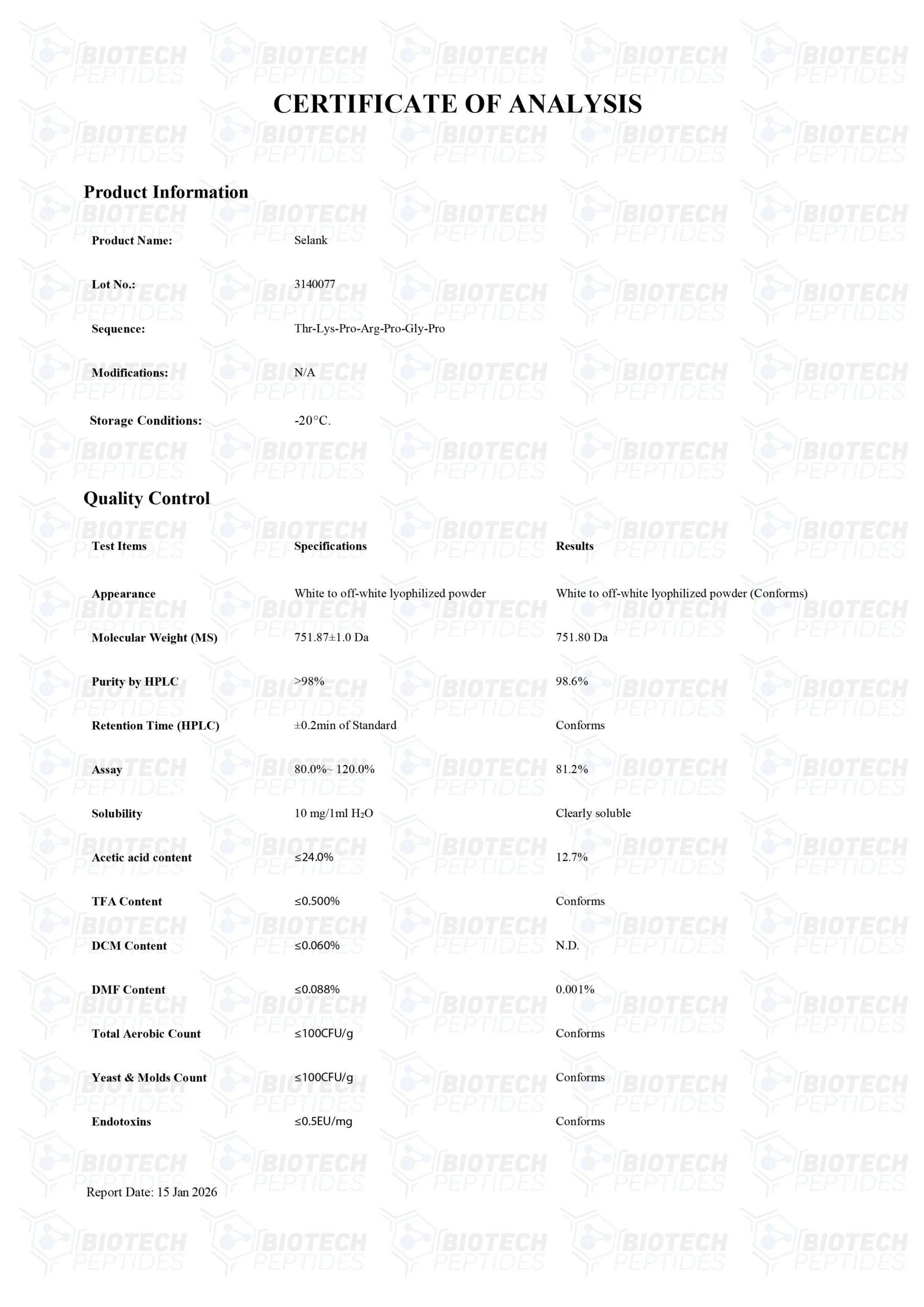
| Molecular Formula | C33H57N11O9 |
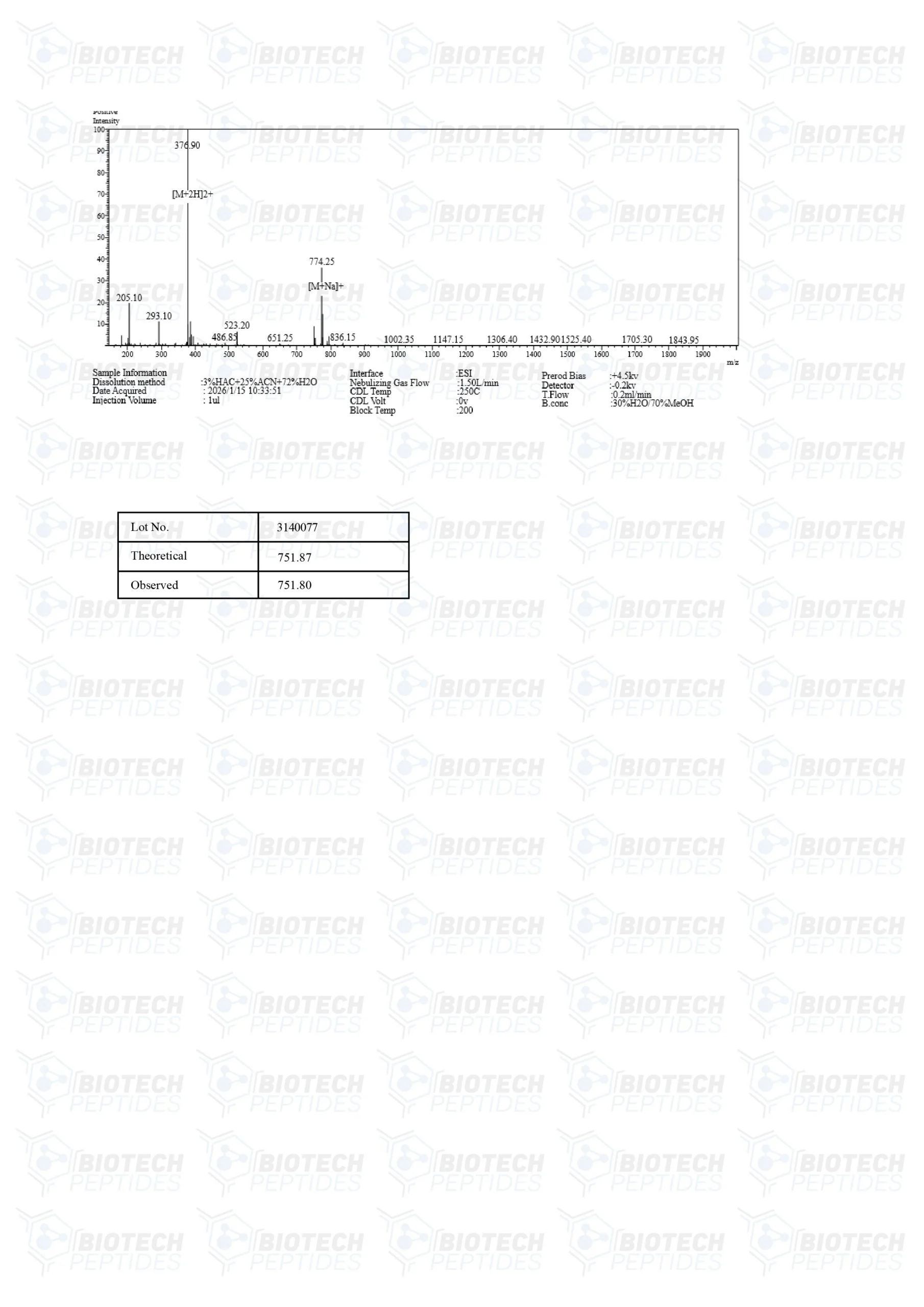
| Molecular Weight | 751.88 g/mol |
| Peptide Length | 7 amino acids |
| Amino Acid Sequence | Thr-Lys-Pro-Arg-Pro-Gly-Pro |
| Research Classification | Research Use Only (RUO) |
Selank and GABA Neurotransmission Research
Selank laboratory research has investigated interactions between the peptide and GABAergic neurotransmission. Experimental studies have examined whether Selank can influence GABA receptor activity and downstream signaling in neural models.
Research has also explored changes in the expression of genes associated with GABA signaling. These investigations provide a framework for studying how a short synthetic peptide can influence receptor-associated molecular pathways and neurotransmitter-related gene expression.
Because GABA is the principal inhibitory neurotransmitter in the central nervous system, experimental analysis of GABA receptor activity can provide insight into mechanisms regulating neuronal excitability. Selank can therefore be evaluated in controlled cellular and animal-model systems designed to examine GABAergic signaling.
Selank and Enkephalin Research
Selank has also been investigated in relation to enkephalin metabolism. Enkephalins are endogenous opioid peptides that participate in signaling pathways involving opioid receptors. Experimental research has examined whether Selank can influence enzymes involved in enkephalin degradation.
Laboratory models can be used to evaluate changes in the stability or persistence of specific enkephalin peptides following exposure to Selank. These studies provide an experimental framework for investigating interactions between peptide metabolism, neurotransmission, and stress-related signaling.
Selank and Immune Signaling
The relationship between Selank and immune-associated signaling is another area of experimental research. Studies have investigated changes in inflammatory cytokine pathways, including interleukin-6 (IL-6), as well as changes in gene expression within immune-related systems.
Animal and cellular models have been used to examine how Selank may influence expression patterns involving cytokines, chemokines, receptors, and other immune-associated targets. These studies are useful for characterizing potential interactions between neuropeptide signaling and immune-cell activity.
Research involving Selank and immune pathways should be interpreted according to the specific experimental model, tissue, concentration, and analytical methodology used in each study.
Selank and Gene Expression Research
One area of interest in Selank research peptide studies is transcriptional regulation. Experimental investigations have reported changes in the expression of multiple genes associated with neurotransmission and immune signaling.
Gene-expression experiments can provide information about how Selank exposure affects specific molecular targets. Techniques such as quantitative PCR, transcriptomic analysis, and other molecular assays can be used to characterize changes in gene expression following experimental peptide exposure.
Selank and Neurobiology Research
Selank has been investigated in animal models involving learning, memory, neuronal signaling, and neuroplasticity. Experimental studies have examined behavioral endpoints alongside molecular measurements to investigate possible relationships between peptide exposure and neural pathways.
Researchers may examine hippocampal gene expression, neuronal signaling, ion-channel-associated pathways, and other molecular markers relevant to learning and memory models. These approaches can help separate behavioral observations from the underlying cellular and molecular mechanisms.
Selank and Serotonin Signaling
Experimental research has also examined Selank in relation to serotonergic signaling. Serotonin is an important neurotransmitter involved in communication between neurons and is associated with numerous signaling pathways throughout the central nervous system.
Animal models with experimentally altered serotonergic activity have been used to investigate whether Selank influences serotonin metabolism or related molecular pathways. These experiments may help characterize interactions between Selank and neurotransmitter systems under defined laboratory conditions.
Selank and BDNF Research
Brain-derived neurotrophic factor (BDNF) is a neurotrophin involved in neuronal survival, differentiation, synaptic plasticity, and neural signaling. Selank has been investigated in experimental models examining BDNF messenger RNA expression, particularly in hippocampal tissue.
Researchers can study this relationship using molecular assays that measure BDNF expression alongside other neuroplasticity-related markers. These investigations provide a useful model for examining connections between synthetic peptide signaling and neurotrophic pathways.
Selank and Blood-Brain Barrier Research
The blood-brain barrier (BBB) is a highly selective interface formed by specialized endothelial cells and associated cellular structures that regulate molecular transport between circulating blood and the central nervous system.
The Pro-Gly-Pro segment of Selank has been discussed in research concerning peptide stability and transport characteristics. However, BBB transport is influenced by multiple physicochemical and biological factors. Researchers investigating Selank transport should therefore evaluate permeability using validated experimental systems rather than assuming transport behavior from sequence composition alone.
Selank and Experimental Metabolic Research
Selank has also been examined in animal research involving metabolic parameters and lipid-associated pathways. Experimental models have investigated changes in cholesterol fractions, triglycerides, glucose-related measurements, and other metabolic endpoints.
These observations provide potential research directions for studying relationships between neuropeptide signaling and metabolic regulation. Because such findings are model-dependent, they should be interpreted within the experimental conditions under which they were obtained.
Selank Research Applications
- GABAergic neurotransmission research
- GABA receptor and neuronal signaling studies
- Enkephalin metabolism and peptide-stability research
- Neurotransmitter gene-expression studies
- Serotonergic signaling research
- BDNF and neurotrophic-factor studies
- Hippocampal molecular biology research
- Immune-cell and cytokine signaling models
- IL-6 and inflammatory pathway research
- Blood-brain barrier and peptide-transport studies
- Experimental learning and memory models
- Neuroimmune signaling investigations
Selank Peptide Handling and Storage
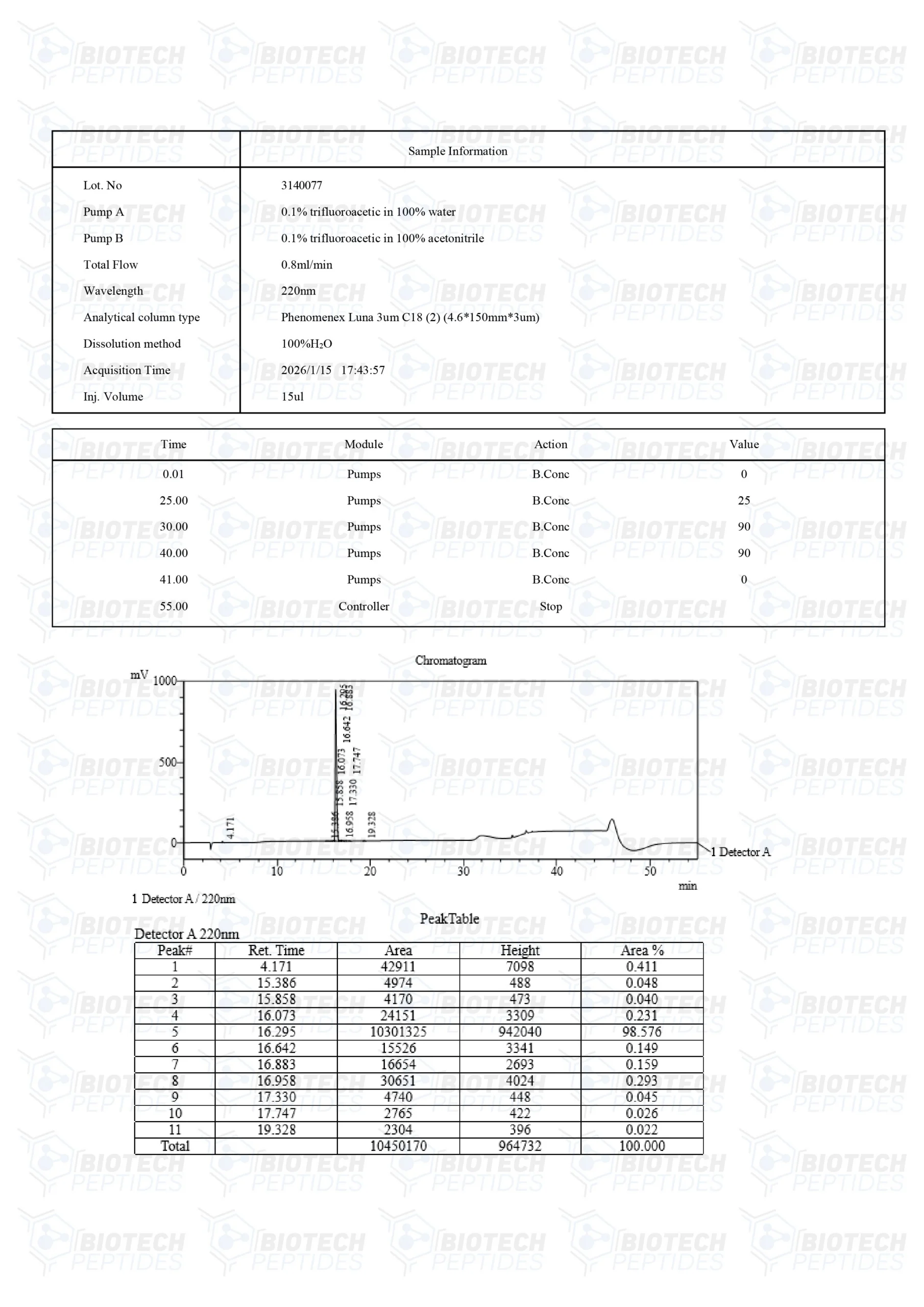
Researchers using Selank Peptide 10mg should follow the applicable manufacturer documentation and lot-specific certificate of analysis for storage, handling, and preparation requirements. Qualified laboratory personnel should use appropriate laboratory safety procedures and protective equipment when working with research peptides.
Experimental results may vary according to the model system, peptide preparation, assay methodology, concentration, exposure conditions, and analytical endpoint. Researchers should distinguish findings obtained from Selank specifically from results involving Tuftsin or other related peptides.
Frequently Asked Questions About Selank
What is Selank?
Selank is a synthetic seven-amino-acid peptide structurally related to the endogenous peptide Tuftsin. It has been investigated in experimental models involving neurotransmitter signaling, immune pathways, gene expression, and neurotrophic factors.
What is the molecular weight of Selank?
The supplied specification lists the molecular weight of Selank as 751.88 g/mol.
What is the Selank amino acid sequence?
The supplied sequence is Thr-Lys-Pro-Arg-Pro-Gly-Pro.
What is Selank used for in laboratory research?
Selank can be investigated as an experimental peptide in studies involving GABAergic signaling, enkephalin metabolism, serotonin pathways, BDNF expression, immune signaling, cytokine pathways, and neurobiological models.
Is Selank intended for human use?
No. This product is supplied strictly for qualified laboratory research, in-vitro testing, analytical research, and scientific investigation.
Research Use Only Disclaimer
FOR RESEARCH USE ONLY (RUO). Selank Peptide is supplied exclusively for laboratory research, in-vitro testing, analytical research, and scientific investigation. It is not intended for human consumption, veterinary use, diagnosis, disease management, or use as a food, dietary supplement, cosmetic, or approved drug. This material is intended for qualified laboratory personnel using appropriate safety procedures and following applicable institutional requirements and laws. Findings from cellular or animal research models should not be interpreted as established outcomes in humans. The purchaser is responsible for determining appropriate laboratory use, handling, storage, and regulatory compliance.

Reviews
There are no reviews yet.