Description
Buy ACE-031 Peptide 1mg – Research Use Only
Buy ACE-031 Peptide 1mg for laboratory research involving ACVR2B receptor signaling, myostatin-related pathways, activin-family signaling, muscle-cell biology, bone metabolism, and cellular energy research. ACE-031, also known as Ramatercept, ActRIIB-IgG1, and ACVR2B/Fc, is a soluble fusion protein consisting of the extracellular domain of the type IIB activin receptor (ACVR2B) linked to an immunoglobulin G1 Fc domain.
ACE-031 has been investigated as an experimental tool for studying signaling pathways associated with myostatin and related members of the TGF-β superfamily. Because ACVR2B participates in signaling networks involved in muscle and skeletal biology, ACE-031 research can provide useful experimental models for examining receptor-ligand interactions, cellular signaling, tissue remodeling, and metabolic pathways.
ACE-031 Peptide Specifications
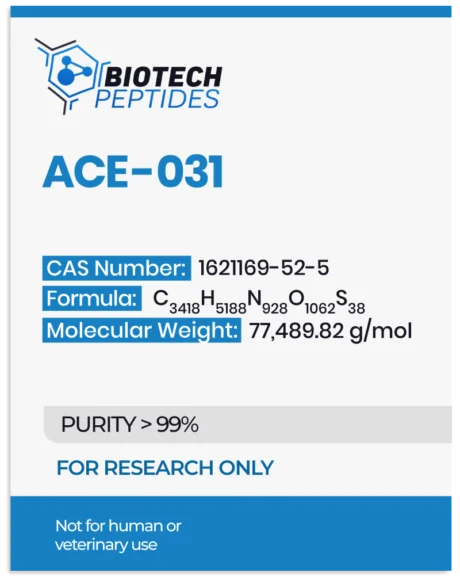
| Specification | Details |
|---|---|
| Product | ACE-031 Peptide |
| Available Amount | 1mg |
| Other Known Titles | Ramatercept, ActRIIB-IgG1, ACVR2B/Fc |
| Protein Type | Soluble ACVR2B-Fc fusion protein |
| Target Research Pathway | ACVR2B / Activin receptor signaling |
| Primary Research Interest | Myostatin and related signaling pathways |
| PubChem | CID 16130571 |
| Research Classification | Research Use Only (RUO) |
ACE-031 Research and ACVR2B Signaling
ACE-031 is particularly relevant to research involving the activin type IIB receptor (ACVR2B). ACVR2B participates in signaling networks associated with several members of the activin and TGF-β superfamily, including ligands involved in muscle and tissue biology.
As an ACVR2B-Fc fusion protein, ACE-031 has been investigated for its ability to interact with extracellular signaling molecules before they engage endogenous receptors. This makes it a useful experimental subject for studying ligand-receptor interactions and downstream cellular signaling.
Researchers can investigate these pathways using cell-based assays, receptor-binding studies, gene-expression analysis, protein quantification, and other molecular biology techniques.
ACE-031 and Myostatin Research
ACE-031 myostatin research is one of the primary areas associated with this experimental protein. Myostatin, also known as growth differentiation factor 8 (GDF-8), belongs to the TGF-β superfamily and participates in signaling pathways associated with skeletal muscle biology.
Experimental models have examined whether interference with myostatin-related signaling alters muscle-cell differentiation, growth-associated pathways, protein expression, and cellular morphology. ACE-031 provides a research model for investigating these mechanisms and their relationship with ACVR2B signaling.
Rather than interpreting these findings as established outcomes, researchers can use ACE-031 in controlled systems to characterize how myostatin-related signaling contributes to muscle-cell biology.
ACE-031 and Muscle Cell Research
Muscle-cell biology is another important application of ACE-031 laboratory research. Experimental studies have investigated ACVR2B-related signaling in skeletal muscle models, including pathways associated with muscle-cell growth, differentiation, protein turnover, and cellular maintenance.
Research workflows may include cultured muscle cells, animal-derived tissue models, molecular assays, immunoblotting, microscopy, and gene-expression studies. These approaches can help researchers evaluate changes in signaling pathways following exposure to an ACVR2B-Fc research protein.
ACE-031 can therefore serve as an experimental tool for examining the relationship between extracellular ligand signaling and downstream muscle-cell responses.
ACE-031 and Cellular Energy Metabolism
Experimental research has also investigated relationships between ACVR2B signaling, skeletal muscle metabolism, mitochondrial function, and cellular energy pathways. These studies can examine how alterations in muscle-related signaling interact with oxidative metabolism and cellular stress.
Laboratory investigations may measure mitochondrial activity, ATP-associated pathways, oxygen utilization, oxidative-stress markers, lactate metabolism, and expression of metabolic proteins. Such research can help characterize the molecular relationship between muscle signaling and cellular energy production.
ACE-031 and Muscle Function Research
Research models have examined the relationship between ACVR2B signaling and muscle contractile properties. Experimental assessments may include muscle-fiber morphology, contractile force, mitochondrial activity, oxidative respiration, and other measurable indicators of muscle-cell function.
These studies provide an opportunity to investigate whether changes in myostatin-related signaling correspond with measurable changes in cellular or tissue-level muscle characteristics.
ACE-031 and Muscle-Wasting Research Models
ACE-031 has been investigated in experimental models involving muscle wasting and neuromuscular biology. Research has included models relevant to conditions in which muscle structure and signaling are altered, including dystrophin-associated muscle research.
In these models, researchers may examine muscle-fiber size, protein expression, cellular signaling, tissue morphology, and interactions between muscle damage and extracellular growth-regulatory pathways.
The ACVR2B/myostatin axis is particularly relevant to studies investigating how extracellular signaling influences muscle-cell maintenance and remodeling.
ACE-031 and Bone Metabolism Research
ACVR2B-related signaling is not limited to skeletal muscle research. Experimental investigations have also examined relationships between this signaling pathway and bone metabolism.
Bone research can include evaluation of osteoblast and osteoclast activity, mineral content, bone architecture, tissue biomechanics, and expression of signaling proteins involved in skeletal remodeling.
ACE-031 has therefore been investigated as an experimental research protein in models examining the interaction between muscle-related signaling pathways and skeletal tissue biology.
ACE-031 and Cancer-Related Muscle Biology
Research involving cancer-associated muscle loss has examined the molecular mechanisms connecting tumor-associated signaling, muscle metabolism, mitochondrial function, and protein turnover. Myostatin and related pathways have been investigated within this broader research field.
ACE-031 provides an experimental framework for examining ACVR2B-associated signaling in cellular models relevant to muscle metabolism. Researchers may evaluate ERK-related pathways, mitochondrial markers, oxidative-stress indicators, apoptosis-associated signaling, and muscle-protein expression.
These studies are useful for understanding molecular mechanisms in controlled research models and should not be interpreted as evidence of a clinical effect.
ACE-031 and Metabolic Research
Experimental studies have also investigated connections between myostatin-family signaling and metabolic pathways. Research may examine glucose-related signaling, lipid storage pathways, mitochondrial activity, inflammatory mediators, and cellular energy metabolism.
These models can help researchers characterize how ACVR2B signaling interacts with pathways controlling cellular metabolism and tissue homeostasis.
ACE-031 Research Applications
- ACVR2B receptor signaling studies
- Myostatin and GDF-8 pathway research
- Activin-family signaling investigations
- Skeletal muscle-cell biology
- Muscle-cell differentiation and remodeling models
- Neuromuscular research models
- Bone remodeling and mineralization research
- Osteoblast and osteoclast studies
- Mitochondrial and cellular energy research
- Oxidative-stress and metabolic signaling studies
- Cancer-associated muscle biology research
- Structure-function and ligand-receptor investigations
Key Features of ACE-031 Peptide 1mg
- 1mg research quantity.
- Also known as Ramatercept, ActRIIB-IgG1, and ACVR2B/Fc.
- Soluble ACVR2B-Fc fusion protein.
- Relevant to myostatin and activin-family signaling research.
- Suitable for controlled laboratory and in-vitro research applications.
- Applicable to muscle, bone, metabolic, and cellular signaling studies.
- PubChem identification: CID 16130571.
- Intended exclusively for qualified research environments.
Handling and Storage for Laboratory Research
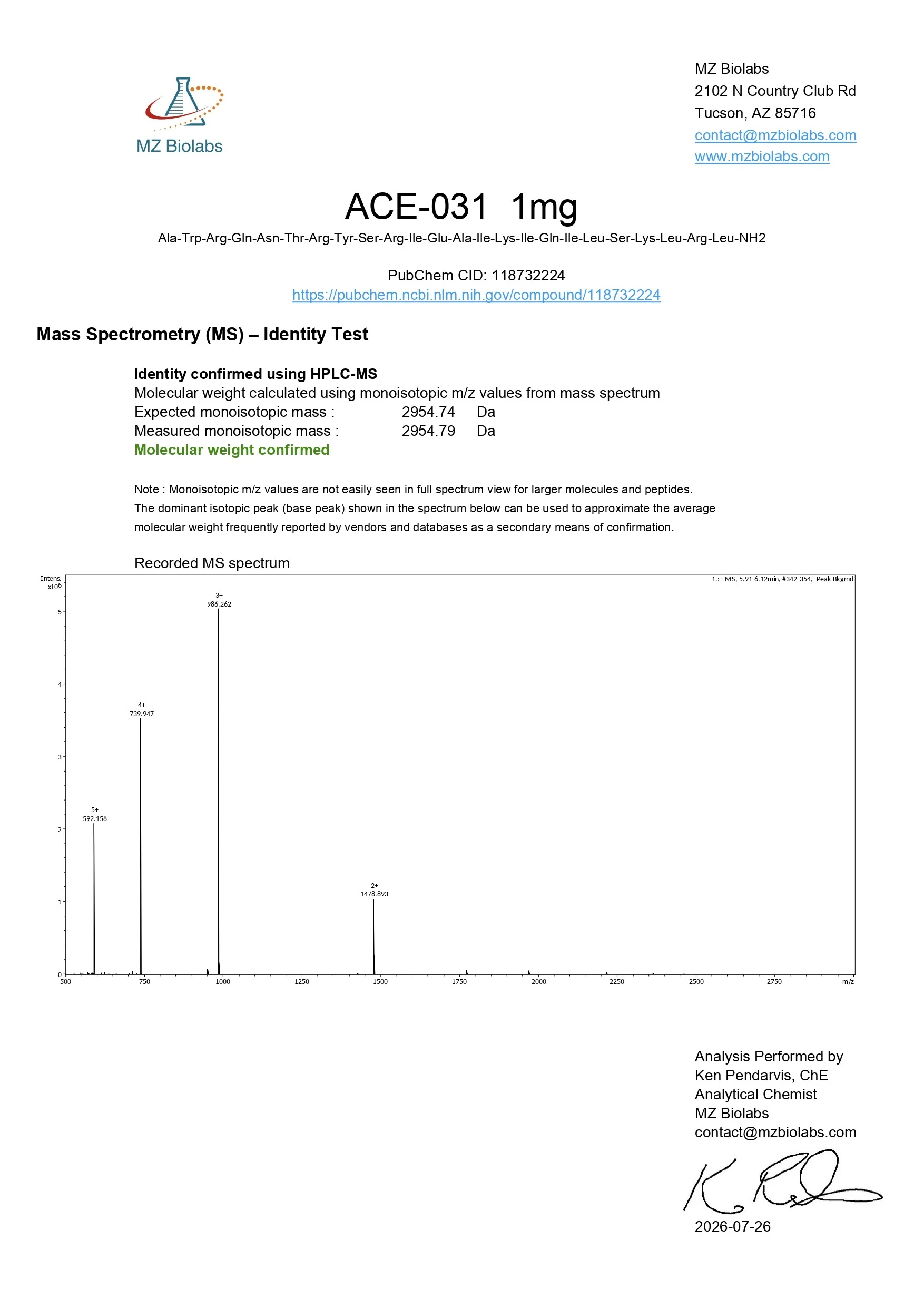
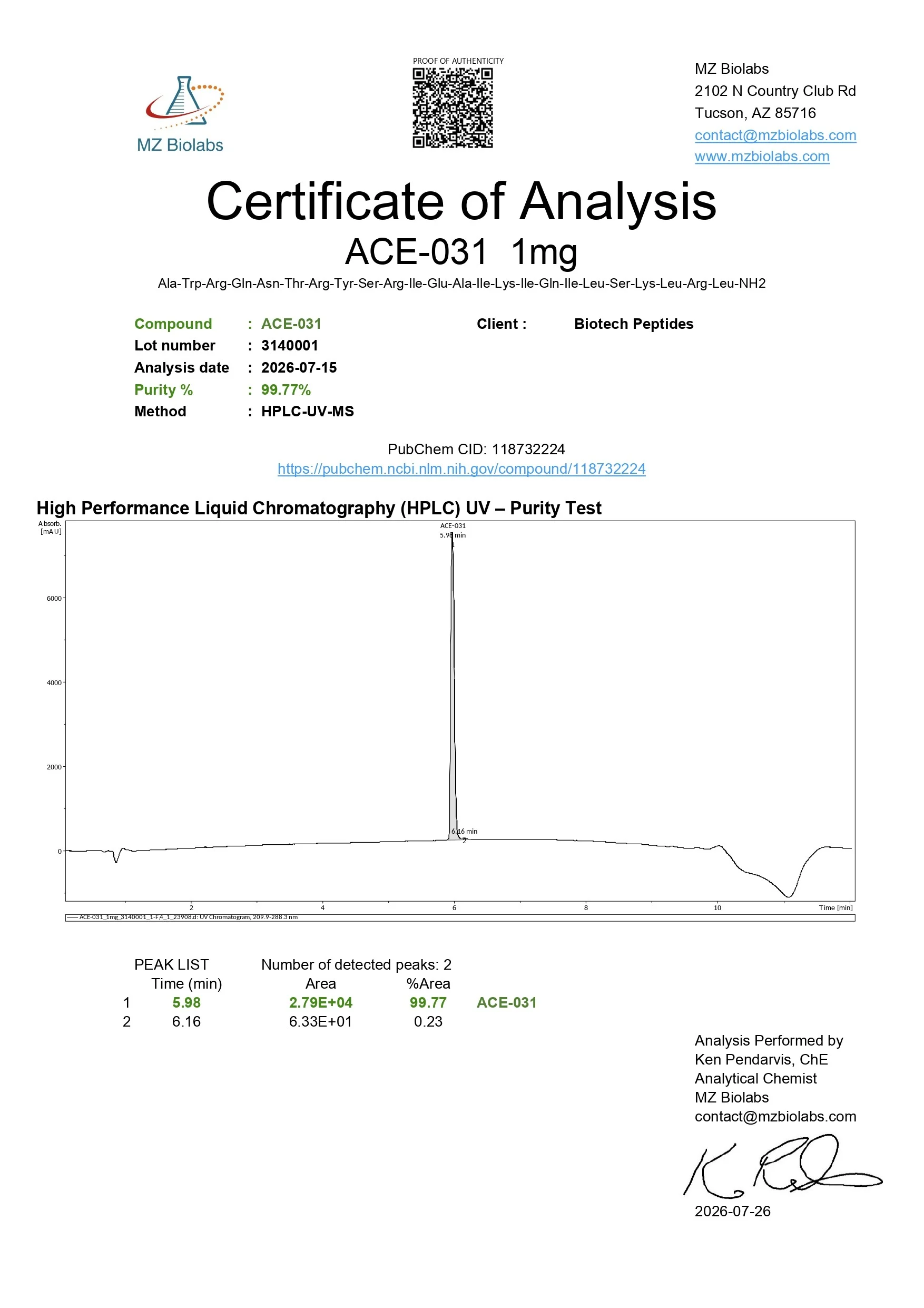
ACE-031 should be handled according to the applicable laboratory protocol and lot-specific product documentation. Researchers should consult the accompanying analytical documentation for verified information regarding storage conditions, stability, preparation, and other material-specific requirements.
As a recombinant or fusion-protein research material, maintaining appropriate sample integrity and minimizing contamination are important considerations. Laboratory personnel should follow institutional procedures for protein handling, storage, documentation, and disposal.
Frequently Asked Questions About ACE-031
What is ACE-031?
ACE-031 is a soluble fusion protein incorporating the extracellular domain of the activin type IIB receptor (ACVR2B) with an IgG1-Fc domain. It has been investigated primarily in experimental studies involving myostatin and related signaling pathways.
What is another name for ACE-031?
ACE-031 is also identified as Ramatercept, ActRIIB-IgG1, and ACVR2B/Fc.
What is ACE-031 used for in research?
ACE-031 is studied as an experimental research protein for investigating ACVR2B signaling, myostatin pathways, muscle-cell biology, bone metabolism, cellular energy pathways, and related molecular mechanisms.
What is the PubChem identifier for ACE-031?
The supplied PubChem identifier for ACE-031 is CID 16130571.
Is ACE-031 intended for human use?
No. This product is supplied strictly for Research Use Only (RUO). It is intended for qualified laboratory research, in-vitro experimentation, analytical studies, and scientific investigation.
Research Use Only Disclaimer
FOR RESEARCH USE ONLY (RUO). ACE-031 Peptide is supplied exclusively for laboratory research, in-vitro testing, analytical research, and scientific investigation. It is not intended for human consumption, veterinary use, diagnosis, disease management, or use as a food, dietary supplement, cosmetic, or approved drug. This material is intended for qualified laboratory personnel using appropriate safety procedures and following applicable institutional requirements and laws. Findings from cellular or animal research models should not be interpreted as established outcomes in humans. The purchaser is responsible for determining appropriate laboratory use, handling, storage, and regulatory compliance.

Reviews
There are no reviews yet.