Description
Fragment 176-191 Peptide
Fragment 176-191 peptide, also known as Frag 176-191, is a synthetic 16-amino-acid peptide fragment associated with the C-terminal region of human growth hormone (hGH). It has been investigated extensively in experimental research examining peptide structure, cellular signaling, lipid metabolism, and other biological pathways in laboratory and animal-model systems.
For laboratory researchers seeking to buy Fragment 176-191 peptide, this product provides a defined research compound for controlled scientific investigation. Its sequence, molecular formula, molecular weight, and structural characteristics make it suitable for research programs examining short peptide fragments and their interactions with experimental biological systems.
This product is supplied strictly for Research Use Only (RUO). The information presented here describes published or source-provided research context and should not be interpreted as evidence of clinical efficacy, human therapeutic use, or a recommendation for administration to humans or animals.
Buy Fragment 176-191 Peptide for Laboratory Research
Fragment 176-191 represents a shortened peptide sequence associated with the C-terminal portion of hGH. Research literature has examined this fragment in connection with experimental investigations of cellular metabolism and biological signaling.
The designation “176-191” refers to the region of the hGH sequence represented by the fragment. The supplied material is a synthetic research peptide intended for laboratory applications where researchers require a defined peptide sequence for experimental analysis.
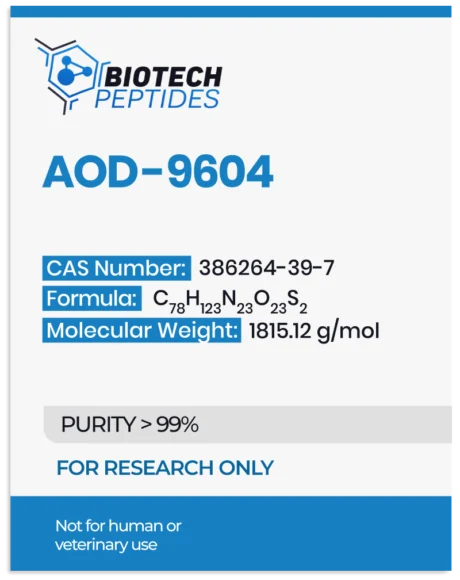
Fragment 176-191 has also been discussed in scientific literature in relation to structural modifications designed to investigate peptide stability and biological activity. Related peptide research includes modified sequences such as AOD 9604, which differs structurally from the sequence supplied for Fragment 176-191.
Fragment 176-191 Molecular and Chemical Specifications
The following specifications are based on the source information provided for this product:
| Specification | Details |
|---|---|
| Product Name | Fragment 176-191 Peptide |
| Other Known Title | Frag 176-191 |
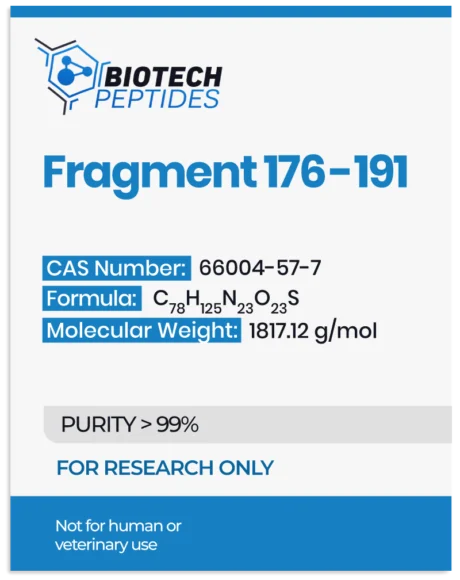
| Molecular Formula | C78H125N23O23S2 |
| Molecular Weight | 1817.1 g/mol |
| Sequence | Tyr-Leu-Arg-Ile-Val-Gin-Cys-Arg-Ser-Val-Glu-Gly-Ser-Cys-Gly-Phe |
| Peptide Length | 16 amino acids |
| Research Classification | Research Use Only (RUO) |
Researchers should verify the current batch-specific documentation for any additional analytical specifications, including purity, analytical testing, and certificate information where applicable.
Fragment 176-191 Peptide Structure
Fragment 176-191 is described as a 16-amino-acid peptide corresponding to the C-terminal region of hGH. Structural investigations of this peptide have focused on the relationship between its amino-acid sequence and observed experimental activity in laboratory and animal-model research.
The supplied sequence begins with tyrosine and contains two cysteine residues. Structural studies of related peptide sequences have investigated the significance of amino-acid composition, peptide conformation, and potential disulfide interactions.
The source material also describes Fragment 176-191 in connection with a modified sequence sometimes referred to as Fragment tyr-hGH 177-191 or AOD 9604. These compounds should not automatically be considered identical, however, because sequence modifications can produce differences in molecular composition and calculated molecular weight.
For analytical work, researchers should therefore identify the exact peptide sequence and molecular specification associated with the material being studied.
Fragment 176-191 Research Profile
Experimental research involving Fragment 176-191 has explored several biological areas. Much of the supplied source material concerns animal models and experimental systems rather than established human applications.
Peptide Structure Research
The 16-amino-acid structure of Fragment 176-191 provides a defined model for studying short peptide fragments derived from larger protein sequences.
Researchers may investigate characteristics such as:
- Amino-acid sequence composition
- Molecular mass
- Peptide structure
- Sequence-dependent interactions
- Stability characteristics
- Experimental peptide behavior in laboratory systems
- Relationships between peptide structure and observed biological responses
These characteristics can be examined through appropriate analytical and biochemical research methods.
Fragment 176-191 and Cellular Metabolism Research
The source material describes experimental investigations into the relationship between Fragment 176-191 and cellular metabolic pathways.
In particular, research has examined pathways associated with adipocyte biology and lipid metabolism in experimental animal models. These studies provide research context for investigating how specific peptide fragments may interact with cellular signaling mechanisms.
Such findings should remain within their experimental context and should not be interpreted as evidence of human metabolic effects.
Fragment 176-191 and Adipocyte Research
Fragment 176-191 has been investigated in experimental models involving adipocytes and lipid-related cellular processes.
The supplied research discusses beta-3 adrenergic receptor expression and possible relationships between this receptor pathway and experimental observations involving the peptide.
For laboratory researchers, this provides a potential research framework for studying:
- Adipocyte signaling
- Adrenergic receptor pathways
- Lipid metabolism
- Cellular signaling mechanisms
- Peptide-mediated biological responses
- Experimental energy-homeostasis pathways
The reported findings originate from experimental research and should not be generalized to human outcomes.
Fragment 176-191 and Cartilage Research
The supplied source also describes animal-model research investigating Fragment 176-191 in a cartilage-damage model.
Researchers compared experimental groups involving saline, hyaluronic acid, Fragment 176-191, and a combination of Fragment 176-191 and hyaluronic acid. Morphological and histopathological measurements were used to evaluate the experimental tissue model.
This research may provide background for laboratory investigations involving:
- Cartilage tissue models
- Peptide–tissue interactions
- Histopathological analysis
- Experimental tissue regeneration pathways
- Comparative peptide studies
These findings should be understood strictly as experimental observations from the cited research model.
Fragment 176-191 Peptide Research Applications
Because Fragment 176-191 has been studied across several experimental systems, researchers may encounter the peptide in scientific investigations involving:
- Peptide structure and characterization
- Short-chain peptide research
- Cellular signaling studies
- Adipocyte research
- Lipid metabolism research
- Experimental tissue models
- Protein-fragment research
- Molecular and biochemical analysis
The appropriate research application depends on the experimental protocol, analytical method, and objectives of the laboratory study.
Key Characteristics of Fragment 176-191
When evaluating Fragment 176-191 for laboratory research, researchers can reference the following characteristics:
- 16-amino-acid peptide: A short synthetic peptide associated with the C-terminal region of hGH.
- Defined molecular composition: The supplied molecular formula is C78H125N23O23S2.
- Molecular weight: The source specifies a molecular weight of 1817.1 g/mol.
- Defined sequence: The supplied sequence contains 16 amino-acid residues.
- Experimental research history: Fragment 176-191 has been investigated in multiple laboratory and animal-model research contexts.
- RUO positioning: This product is intended solely for laboratory research and scientific investigation.
Quality and Documentation
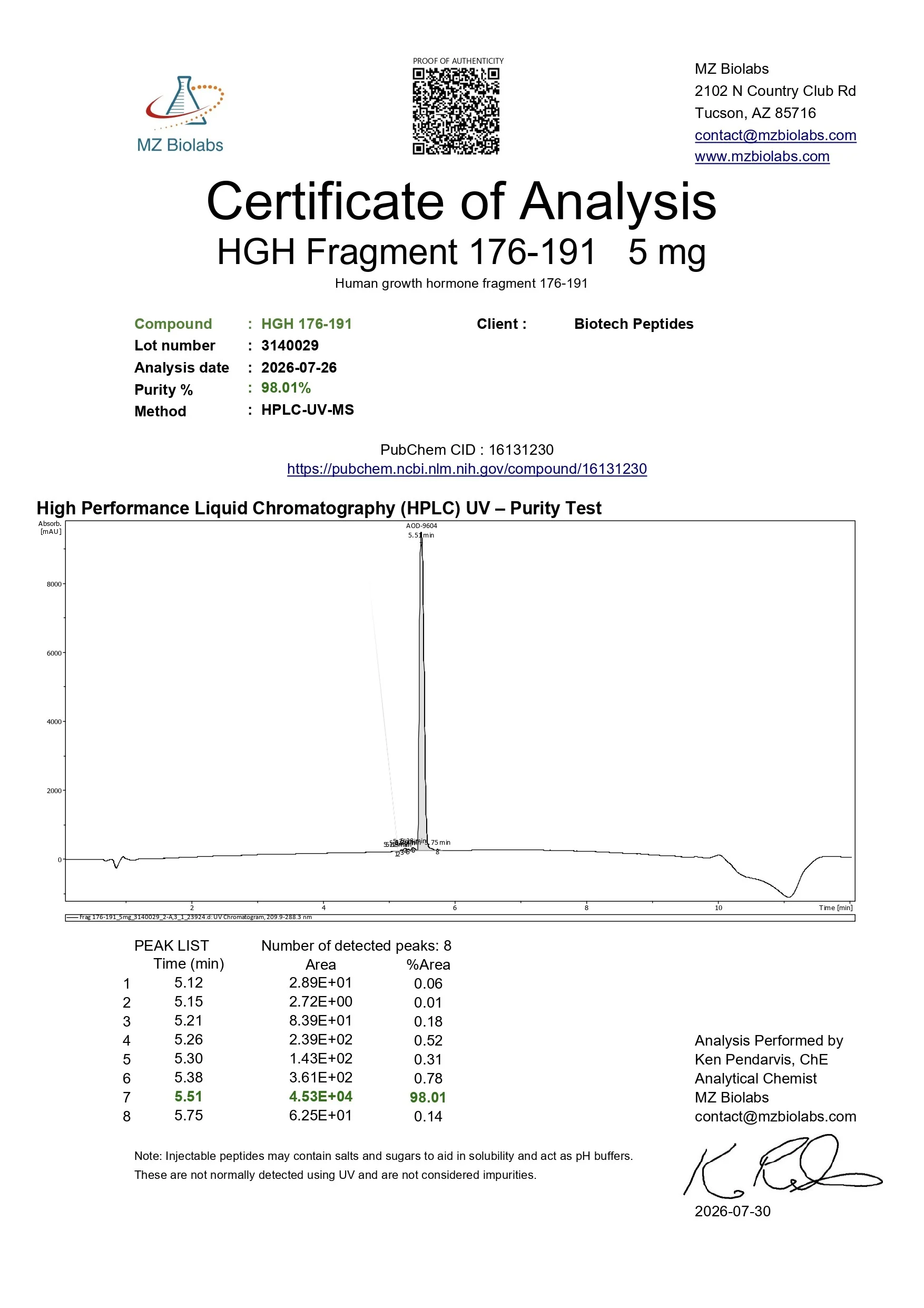
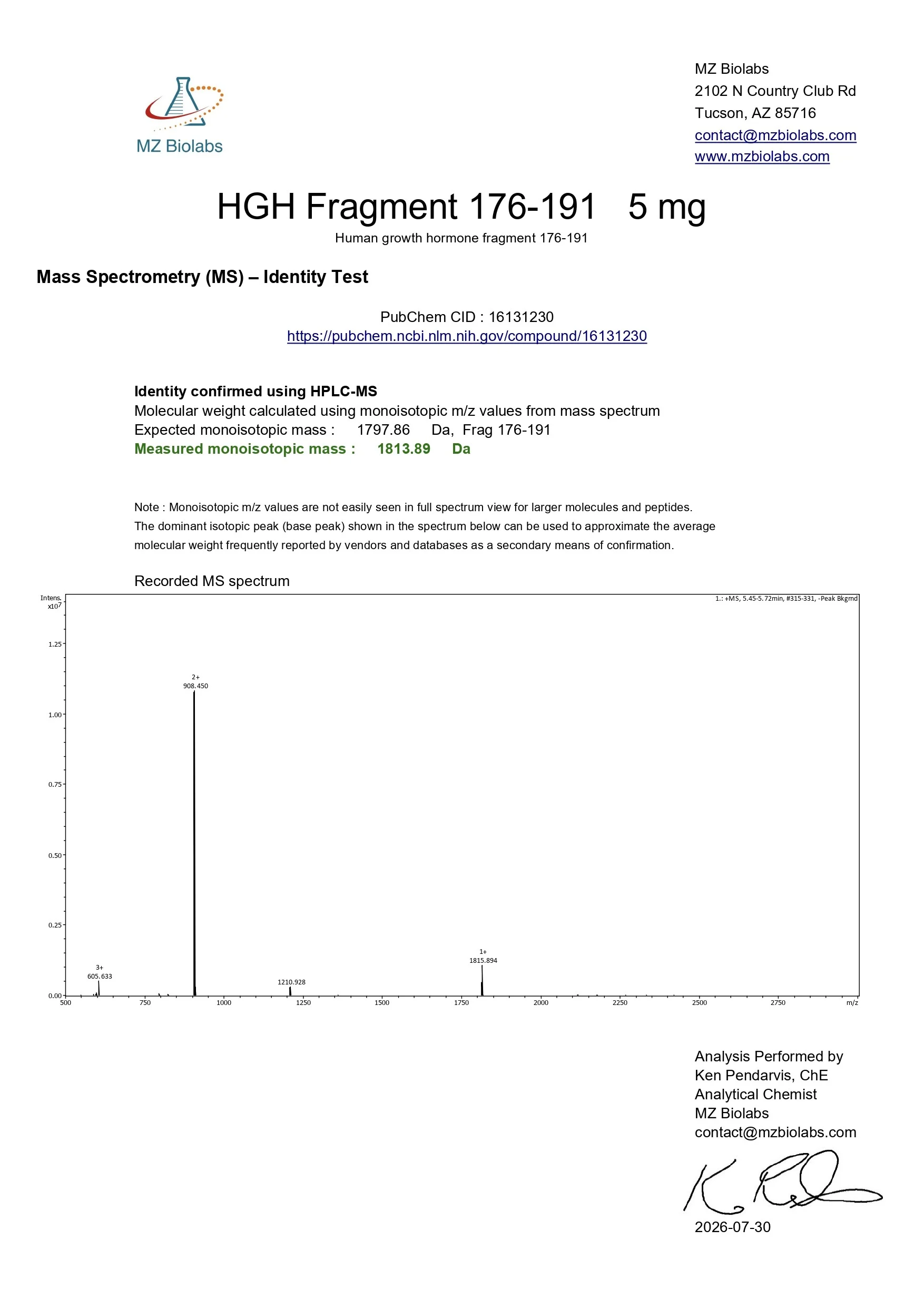
For scientific work, researchers should rely on current batch-specific documentation when evaluating analytical characteristics.
Where applicable, consult the accompanying product documentation or current batch-specific Certificate of Analysis (CoA) for information that is not provided in this product description.
No additional purity percentage, HPLC result, mass-spectrometry result, storage specification, stability period, or other analytical value should be assumed unless it is documented for the specific batch.
Frequently Asked Questions
What is Fragment 176-191?
Fragment 176-191, also called Frag 176-191, is a synthetic 16-amino-acid peptide fragment associated with the C-terminal region of human growth hormone. It has been studied in laboratory and animal-model research.
What is the molecular weight of Fragment 176-191?
The supplied specification lists the molecular weight of Fragment 176-191 as 1817.1 g/mol.
What is the molecular formula of Fragment 176-191?
The supplied source lists the molecular formula as C78H125N23O23S2.
What is the Fragment 176-191 peptide sequence?
The sequence supplied for this product is:
Tyr-Leu-Arg-Ile-Val-Gin-Cys-Arg-Ser-Val-Glu-Gly-Ser-Cys-Gly-Phe
Researchers should verify the sequence against current batch documentation before analytical use.
Is Fragment 176-191 intended for human use?
No. This product is offered strictly as a Research Use Only (RUO) material for laboratory and scientific research. It is not intended for human consumption, clinical use, diagnosis, treatment, or prevention of disease.
How should researchers verify product specifications?
Researchers should review the product information together with the current batch-specific documentation supplied with the material. Where available, the batch-specific CoA should be used to verify analytical specifications.
Research Use Only Disclaimer
RESEARCH USE ONLY — NOT FOR HUMAN CONSUMPTION
Fragment 176-191 peptide is supplied strictly for laboratory research, in-vitro experimentation, analytical investigation, and scientific studies. This product is not intended for human consumption, clinical use, diagnosis, treatment, cure, mitigation, or prevention of any disease or medical condition. No information on this page should be interpreted as medical advice or as evidence that this product is suitable for administration to humans or animals. Researchers are responsible for following applicable institutional, laboratory, regulatory, and safety requirements when handling research materials.

Reviews
There are no reviews yet.