Description
Buy Oxytocin Peptide 10mg – Research Use Only
Buy Oxytocin Peptide 10mg for laboratory research involving oxytocin receptor signaling, neuropeptide biology, cellular communication, and experimental tissue models. Oxytocin is a naturally occurring nonapeptide composed of nine amino acids and is synthesized from a larger precursor molecule. Its receptors are distributed across multiple tissues, making oxytocin an important research compound for investigating signaling pathways in neural, cardiovascular, metabolic, reproductive, and cellular systems.
This Oxytocin research peptide is supplied exclusively for qualified laboratory research, in-vitro studies, analytical work, and scientific investigation. Researchers can use oxytocin as a molecular probe when examining receptor-mediated signaling, intracellular calcium dynamics, neurotransmitter regulation, cellular communication, and related biological pathways.
Oxytocin Research Peptide Overview
Oxytocin is a cyclic peptide hormone consisting of nine amino acids. It is synthesized primarily within hypothalamic neurons and is associated with signaling through the oxytocin receptor, a G-protein-coupled receptor. Research into oxytocin has expanded beyond classical neuroendocrine models to include cellular signaling, neural plasticity, cardiovascular biology, metabolic signaling, tissue models, and intercellular communication.
The peptide’s compact structure and defined amino acid sequence make it useful for laboratory studies investigating peptide-receptor interactions and downstream signaling mechanisms. Researchers may also examine oxytocin in experimental models involving neurotransmitter activity, calcium signaling, cellular differentiation, and tissue-level responses.
Oxytocin Peptide Specifications
| Specification | Details |
|---|---|
| Product | Oxytocin Peptide |
| Available Quantity | 10mg |
| Alternative Names | Endopituitrina, Pitocin |
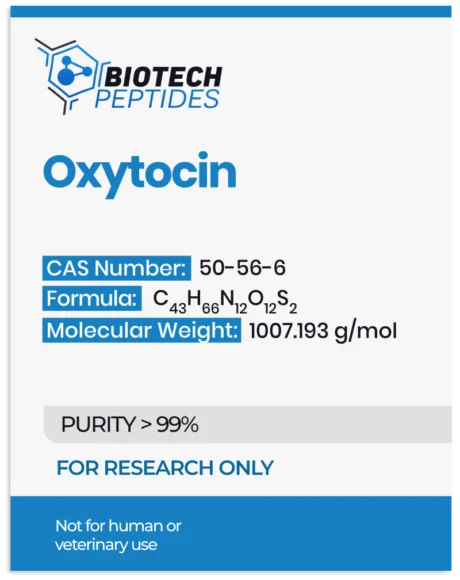
| Molecular Formula | C43H66N12O12S2 |
| Molecular Weight | 1007.19 g/mol |
| Peptide Length | 9 amino acids |
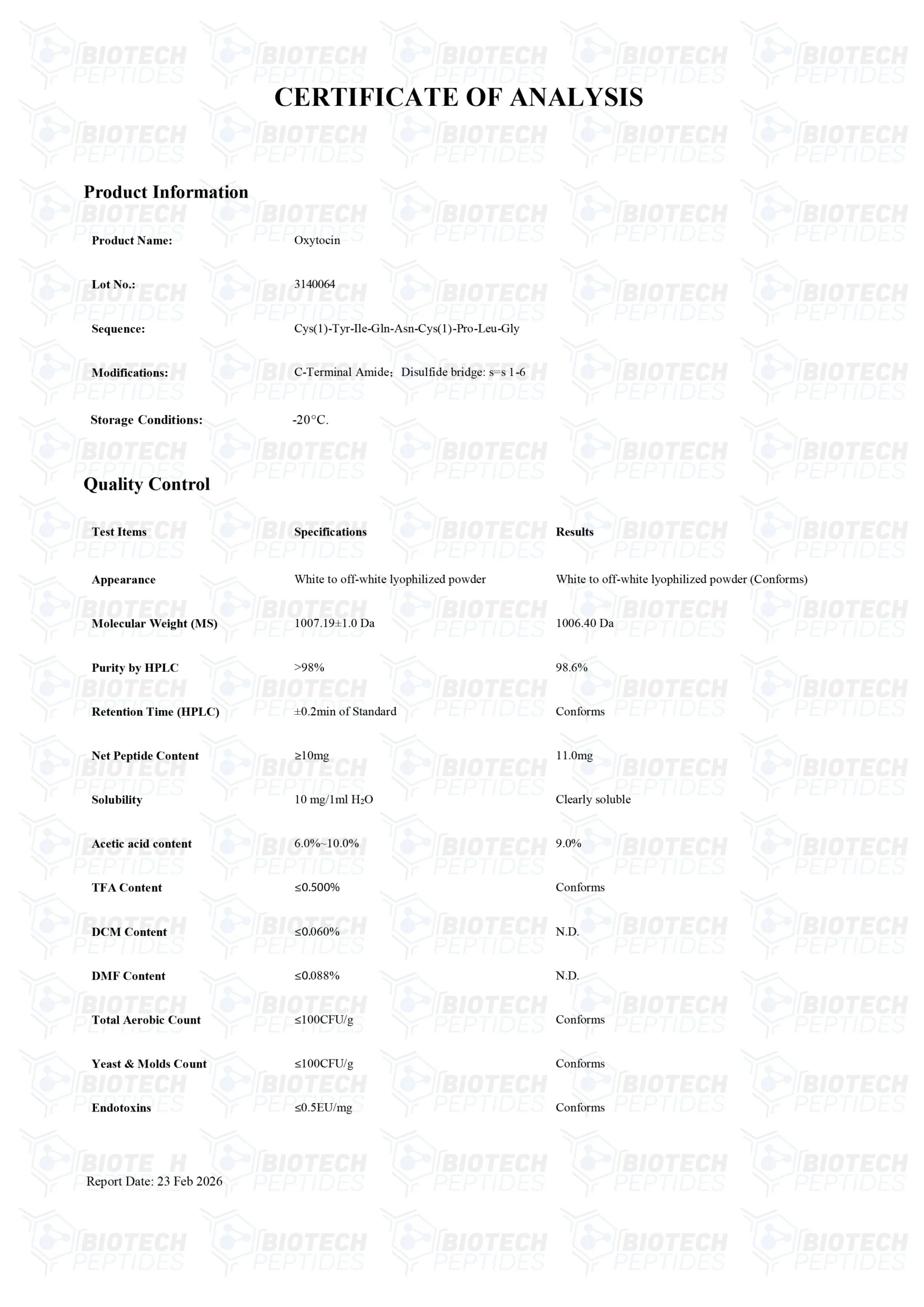
| Amino Acid Sequence | Cys-Tyr-Ile-Gln-Asn-Cys-Pro-Leu-Gly |
| Research Classification | Research Use Only (RUO) |
Oxytocin Receptor and Cellular Signaling Research
Oxytocin provides a useful research model for studying G-protein-coupled receptor signaling. Laboratory investigations can examine receptor activation, intracellular calcium signaling, second-messenger pathways, and downstream cellular responses. Oxytocin receptor expression across different cell populations also provides opportunities for comparative receptor biology.
Because oxytocin signaling can interact with several neurotransmitter systems, researchers may investigate its relationship with glutamate, GABA, dopamine, and other signaling pathways. These studies can help characterize how peptide-mediated receptor activity influences communication between neurons and supporting glial cells.
Oxytocin and Neural Research
Oxytocin laboratory research includes investigations into neural development, synaptic plasticity, neurotransmitter dynamics, and neural circuit organization. Experimental models have examined oxytocin receptor activity in brain regions associated with social behavior, reward signaling, learning, and stress-related responses.
Researchers can also study oxytocin in cellular models to investigate how receptor signaling influences neuronal progenitor cells, synaptic communication, and interactions between neurons and astrocytes. These models provide a framework for examining the molecular mechanisms connecting neuropeptide signaling with neural activity.
Oxytocin in Cardiovascular and Tissue Research
Oxytocin has also been investigated in experimental cardiovascular models. Research areas include oxytocin receptor expression, cardiomyocyte signaling, calcium regulation, cellular stress responses, and interactions between peptide signaling and cardiovascular tissues.
Animal and cellular studies have further examined oxytocin-associated signaling in models of tissue injury, cellular survival, inflammatory signaling, and tissue remodeling. These findings provide research directions for understanding how peptide-receptor pathways may interact with cellular repair mechanisms.
Oxytocin and Metabolic Research
Oxytocin is studied in experimental models involving glucose signaling, insulin-related pathways, lipid metabolism, feeding behavior, and energy homeostasis. Laboratory researchers may examine receptor expression and downstream signaling in skeletal muscle, adipose tissue, pancreatic models, and neural systems.
These investigations can help characterize how oxytocin-related pathways interact with metabolic signaling under different experimental conditions. Results from animal or cellular models should remain within their appropriate experimental context and should not be interpreted as established human outcomes.
Oxytocin Research Applications
- Oxytocin receptor and GPCR signaling studies
- Neuropeptide and neurotransmitter research
- Intracellular calcium signaling experiments
- Neural cell and synaptic plasticity models
- Cardiomyocyte and cardiovascular signaling research
- Cellular communication and receptor-expression studies
- Metabolic and energy-homeostasis research models
- Tissue remodeling and cellular-response investigations
- Animal-model behavioral and neurobiological research
Oxytocin Peptide Handling and Storage
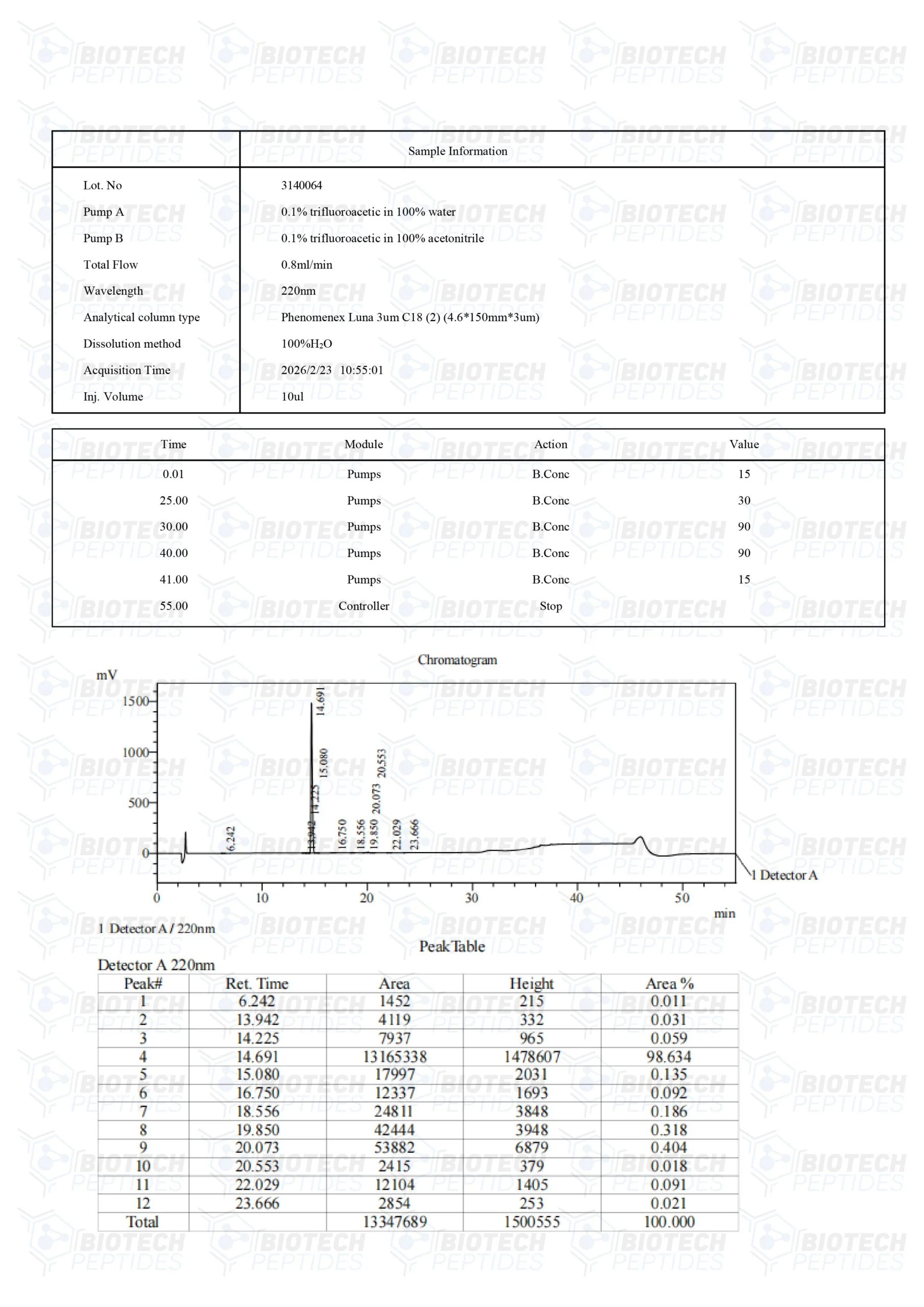
Researchers using this Oxytocin research peptide should follow the handling, storage, and reconstitution procedures specified by the applicable product documentation and lot-specific certificate of analysis. Laboratory personnel should use appropriate protective equipment and established procedures for peptide handling. Storage conditions should be selected according to the manufacturer’s documentation to help preserve peptide integrity.
Frequently Asked Questions About Oxytocin Peptide
What is the molecular weight of Oxytocin?
The supplied specification lists the molecular weight of Oxytocin as 1007.19 g/mol.
What is the Oxytocin amino acid sequence?
The supplied sequence is Cys-Tyr-Ile-Gln-Asn-Cys-Pro-Leu-Gly, consisting of nine amino acids.
What quantity of Oxytocin is available?
This product is listed as Oxytocin Peptide 10mg for research applications.
What is Oxytocin used for in laboratory research?
Oxytocin can be investigated as a research tool for studying oxytocin receptor signaling, neural communication, intracellular calcium pathways, cardiovascular cellular models, metabolic signaling, and other peptide-mediated biological processes.
Is Oxytocin intended for human use?
No. This product is supplied strictly for qualified laboratory research, in-vitro testing, analytical research, and scientific investigation.
Research Use Only Disclaimer
FOR RESEARCH USE ONLY (RUO). Oxytocin Peptide is supplied exclusively for laboratory research, in-vitro testing, analytical research, and scientific investigation. It is not intended for human consumption, veterinary use, diagnosis, disease management, or use as a food, dietary supplement, cosmetic, or approved drug. This material is intended for qualified laboratory personnel using appropriate safety procedures and following applicable institutional requirements and laws. Findings from cellular or animal research models should not be interpreted as established outcomes in humans. The purchaser is responsible for determining appropriate laboratory use, handling, storage, and regulatory compliance.

Reviews
There are no reviews yet.