Description
Buy Thymalin Peptide 25mg – Research Use Only
Thymalin research peptide is a synthetic thymic peptide studied in laboratory research involving immune-cell signaling, T-cell biology, thymic function, inflammatory pathways, cellular aging, and neuroendocrine regulation. Also described in research literature by names including Thymalin Alpha 1, Nonathymulin, Thymic Factor, and Serum Thymic Factor, this short peptide provides researchers with a defined molecular system for investigating thymus-associated signaling.
This Thymalin peptide 25mg is supplied exclusively for laboratory research, in-vitro experimentation, analytical studies, and scientific investigation. It is not intended for human or veterinary use.
Thymalin Peptide Specifications
| Specification | Details |
|---|---|
| Product Name | Thymalin Peptide |
| Available Size | 25mg |
| Other Known Titles | Nonathymulin, Thymic Factor, Serum Thymic Factor, Thymalin Alpha 1 |
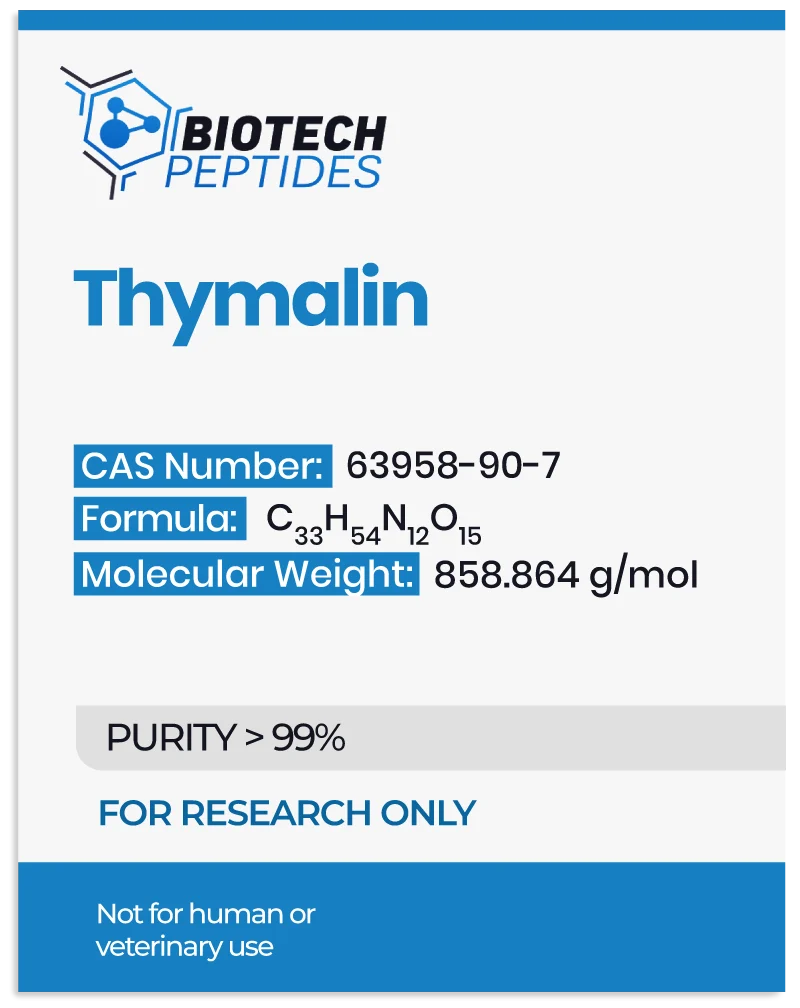
| Molecular Formula | C33H54N12O15 |
| Molecular Weight | 858.86 g/mol |
| Sequence | Pyr-Ala-Lys-Ser-Gln-Gly-Gly-Ser-Asn |
| Peptide Length | 9 amino-acid residues |
| Research Classification | Research Use Only (RUO) |
Thymalin Research and Thymic Signaling
The thymus is an important research subject in immunology because of its relationship with T-cell development, immune-cell differentiation, and immune-system regulation. Thymalin laboratory research provides an experimental framework for investigating how short thymic peptides may interact with cellular signaling networks associated with these processes.
Researchers can study Thymalin in cell-based and animal-model systems designed to evaluate immune-cell markers, cytokine signaling, lymphocyte populations, T-cell differentiation, and other molecular endpoints associated with thymic biology.
Because peptide activity can vary according to experimental model, concentration, assay conditions, and molecular preparation, findings should be interpreted within the specific laboratory system in which they are generated.
Thymalin and T-Cell Research
One of the central areas of interest surrounding Thymalin is T-cell biology. T lymphocytes are key components of adaptive immunity and undergo complex differentiation and maturation processes.
Experimental studies can investigate whether exposure to thymic peptide sequences is associated with changes in T-cell markers, lymphocyte proliferation, cellular differentiation, and immune-cell communication. Flow cytometry, gene-expression analysis, cytokine assays, and other laboratory techniques can be used to characterize these responses.
Thymalin can therefore serve as a molecular research tool for investigating relationships between short thymic peptides and adaptive immune-cell signaling.
Thymalin and Natural Killer Cell Research
Natural killer (NK) cells are components of the innate immune system that participate in cellular surveillance and immune signaling. Research involving thymic peptides has explored relationships between thymic signaling and NK-cell activity.
Laboratory models can measure NK-cell markers, cytotoxicity-associated pathways, cytokine production, and changes in immune-cell communication following experimental peptide exposure. These studies may help characterize the molecular interactions between thymic peptides and innate immune responses.
Thymalin and Inflammatory Signaling
Inflammatory signaling involves coordinated interactions between immune cells, cytokines, transcription factors, and intracellular signaling pathways. Thymalin research has examined potential relationships between thymic peptide activity and inflammatory markers.
Experimental systems can investigate cytokines, immune-cell activation, transcriptional responses, and other molecular indicators of inflammation. These approaches allow researchers to determine whether observed changes are associated with specific cellular pathways rather than relying on broad physiological interpretations.
Research involving inflammatory models should be evaluated according to the experimental design, model organism or cell type, and analytical endpoints used.
Thymalin and Cellular Aging Research
Cellular aging and senescence are major areas of biomedical research involving changes in immune function, cellular signaling, metabolism, gene expression, and tissue homeostasis. Thymic biology is particularly relevant because thymic function and immune-cell composition can change over the course of biological aging.
Experimental Thymalin studies have investigated relationships between thymic peptide signaling, immune-cell activity, cellular aging markers, and longevity-associated pathways in animal models.
Researchers can investigate these relationships through measurements of cellular senescence markers, immune-cell populations, oxidative-stress pathways, gene expression, and other molecular endpoints. Results from animal longevity models should remain specific to those experimental systems and should not be extrapolated directly to humans.
Thymalin and Immune-Cell Signaling
Thymalin research peptide can also be studied in models involving immune dysregulation and altered lymphocyte activity. Experimental research may examine T-cell populations, cytokine signaling, immune-cell proliferation, and thymic-associated molecular markers.
Such models can help researchers investigate how short thymic peptides interact with complex immune signaling networks. The resulting data may be useful for understanding peptide-mediated changes in cellular communication, differentiation, and immune regulation.
Thymalin and Neuroendocrine Research
Thymic signaling does not operate in isolation. Experimental research has investigated relationships between immune pathways, neuroendocrine signaling, stress-associated pathways, and circadian biology.
Thymalin can therefore be incorporated into laboratory studies examining interactions between immune-cell signaling and neuroendocrine systems. Experimental endpoints may include stress-associated signaling molecules, circadian markers, cytokine profiles, and cellular responses to changes in environmental conditions.
Thymalin and Circadian Biology
Circadian rhythms regulate biological processes through coordinated molecular and physiological cycles. Experimental research has examined whether alterations in thymic signaling are associated with changes in immune markers across different phases of the circadian cycle.
Animal models can be used to investigate relationships between thymic peptide exposure, antibody-associated markers, immune-cell activity, and time-dependent biological changes. These studies may provide insight into the interaction between circadian regulation and immune-system signaling.
Thymalin and Metabolic Research
Thymalin has also been investigated in experimental models involving metabolic and systemic signaling. Researchers have examined potential relationships between thymic peptide activity, metabolic markers, immune-cell function, and cellular homeostasis.
Laboratory investigations may include measurements of glucose-associated markers, lipid profiles, inflammatory cytokines, cellular metabolism, and other biochemical endpoints. These studies can help characterize interactions between immune regulation and metabolic pathways.
Thymalin and Vascular Research
Experimental research has investigated relationships between immune regulation, lipid metabolism, vascular biology, and arterial tissue. Thymalin-related studies have included animal models examining immune-cell activity and lipid-associated pathways.
Researchers may use such models to study interactions between T-cell regulation, inflammatory signaling, lipid-associated markers, and vascular tissue responses. These findings are experimental and should be interpreted according to the specific model and methodology used.
Thymalin and Tissue Research
Thymalin-related investigations have extended into several tissue and organ models. Research can examine how thymic peptide signaling interacts with immune-cell populations and inflammatory pathways within specific experimental tissues.
Potential laboratory endpoints include immune-cell infiltration, cytokine expression, cellular proliferation, tissue-associated inflammatory markers, and changes in molecular signaling pathways. These approaches allow researchers to investigate mechanisms without assigning clinical significance to experimental observations.
Key Features of Thymalin Peptide
- Available as a 25mg research peptide.
- Also known as Nonathymulin, Thymic Factor, Serum Thymic Factor, and Thymalin Alpha 1.
- Molecular formula: C33H54N12O15.
- Molecular weight: 858.86 g/mol.
- Supplied sequence: Pyr-Ala-Lys-Ser-Gln-Gly-Gly-Ser-Asn.
- Defined short peptide suitable for controlled laboratory research.
- Relevant to thymic and T-cell biology.
- Applicable to NK-cell and immune-signaling studies.
- Suitable for inflammatory and cytokine pathway research.
- Relevant to cellular aging and longevity-associated experimental models.
- Applicable to neuroendocrine, circadian, metabolic, and vascular research.
- Supplied strictly as a Research Use Only (RUO) material.
Potential Thymalin Laboratory Research Applications
Researchers may investigate Thymalin in controlled experimental systems involving:
- Thymic peptide signaling
- T-cell differentiation and cellular biology
- Lymphocyte proliferation studies
- Natural killer cell research
- Immune-cell communication
- Cytokine and inflammatory signaling
- Cellular aging and senescence research
- Longevity-associated molecular pathways
- Circadian and neuroendocrine research
- Immune-metabolic signaling
- Lipid and vascular biology models
- Animal-model immune research
- Peptide structure-function studies
- Cellular signaling and gene-expression analysis
Handling and Storage of Thymalin Research Peptide
Thymalin should be handled by qualified laboratory personnel using appropriate laboratory safety procedures. Researchers should follow the storage requirements and handling instructions provided with the specific product and lot.
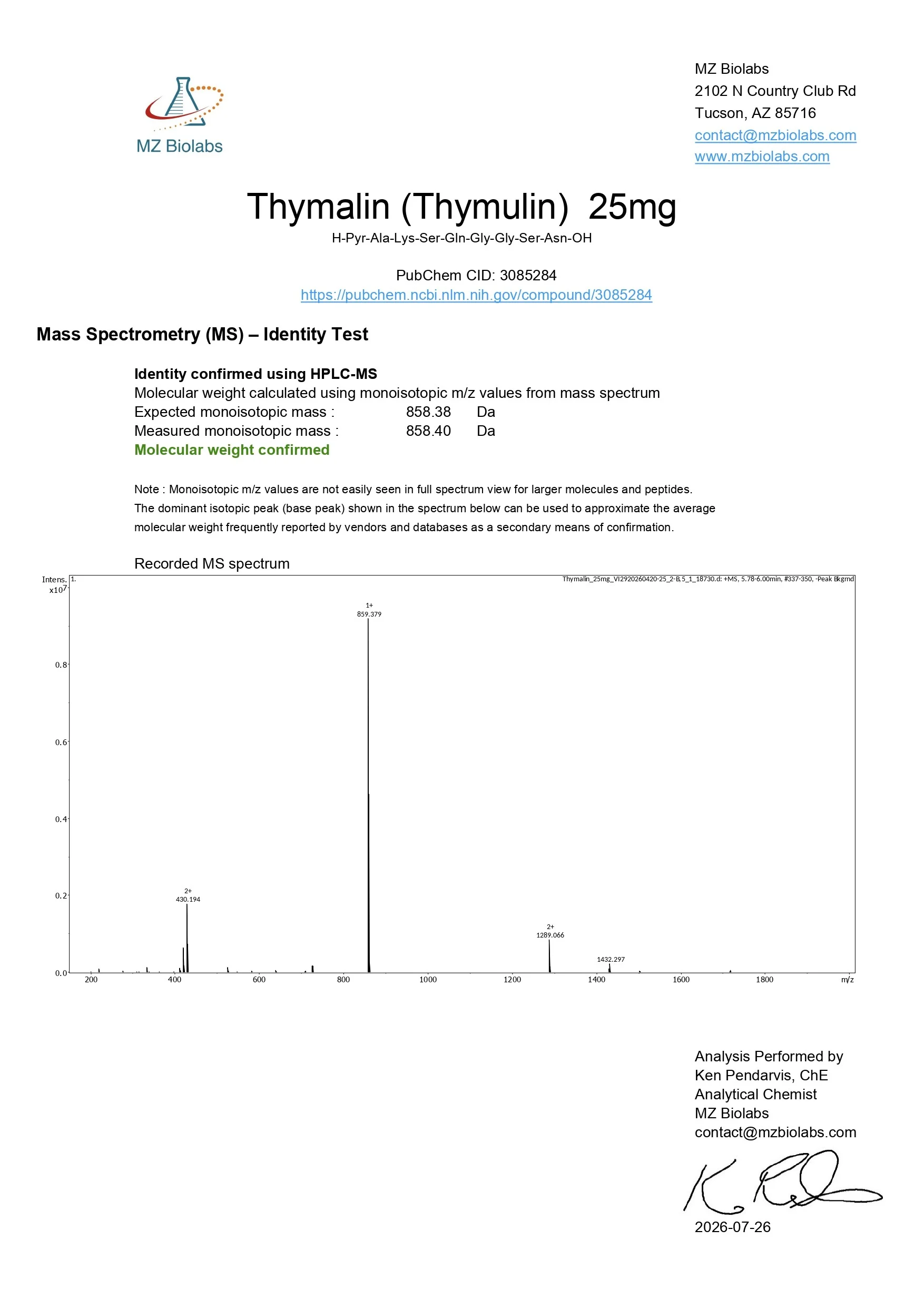
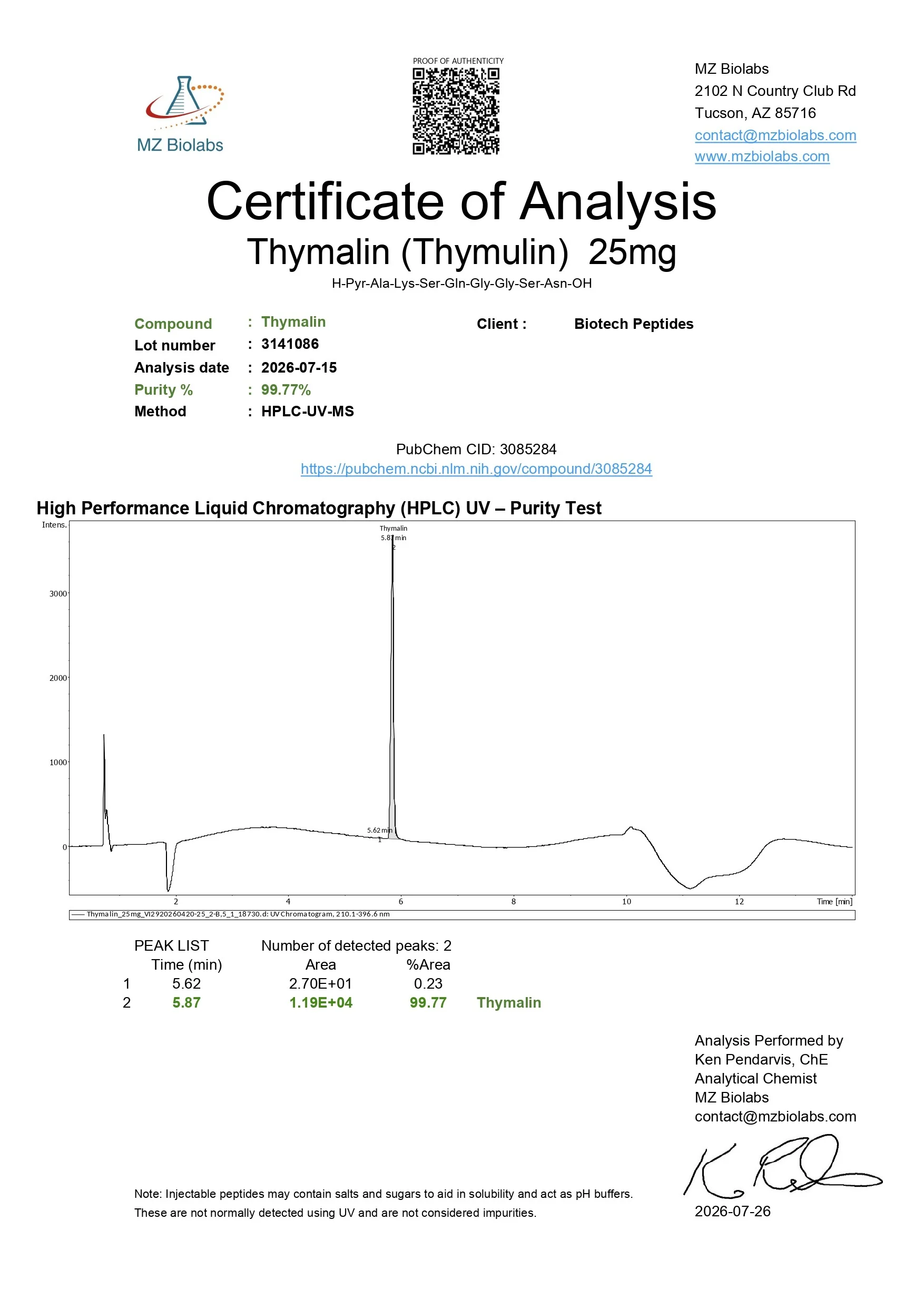
For analytical investigations, the applicable lot-specific certificate of analysis should be used as the primary reference for identity, purity, molecular characterization, and other batch-dependent specifications. Laboratory personnel should establish validated preparation and storage procedures appropriate to their experimental systems.
Frequently Asked Questions About Thymalin Peptide
What is Thymalin peptide?
Thymalin is a short synthetic thymic peptide studied in laboratory research involving thymic signaling, T-cell biology, immune-cell communication, inflammation, cellular aging, and related molecular pathways.
What is the molecular weight of Thymalin?
The molecular weight supplied for this research material is 858.86 g/mol.
What is the amino acid sequence of Thymalin?
The supplied sequence is Pyr-Ala-Lys-Ser-Gln-Gly-Gly-Ser-Asn, consisting of nine listed residues.
What is Thymalin studied for?
Thymalin can be investigated as a molecular research tool in studies involving T-cell biology, immune-cell signaling, thymic function, inflammatory pathways, cellular aging, circadian biology, metabolic signaling, and tissue-associated immune responses.
What size of Thymalin is available?
This product is supplied in a 25mg research quantity.
Is Thymalin intended for human use?
No. This product is supplied strictly as a Research Use Only (RUO) material for qualified laboratory research, in-vitro experimentation, and scientific investigation.
Research Use Only Disclaimer
FOR RESEARCH USE ONLY (RUO). Thymalin Peptide is supplied exclusively for laboratory research, in-vitro testing, analytical research, and scientific investigation. It is not intended for human consumption, veterinary use, diagnosis, disease management, or use as a food, dietary supplement, cosmetic, or approved drug. This material is intended for qualified laboratory personnel using appropriate safety procedures and following applicable institutional requirements and laws. Findings from cellular or animal research models should not be interpreted as established outcomes in humans. The purchaser is responsible for determining appropriate laboratory use, handling, storage, and regulatory compliance.

Reviews
There are no reviews yet.