
Buy PTD-DBM Peptide 5mg & 10mg | Research Use Only
PTD-DBM Peptide 5mg & 10mg stands for Protein Transduction Domain-fused Dishevelled Binding Motif. It is a synthetic peptide that has been investigated in laboratory research involving hair follicle development, Wnt/β-catenin signaling, tissue repair, cellular proliferation, and wound-healing models.
For researchers looking to buy PTD-DBM peptide 5mg or 10mg, this research compound provides a defined peptide material for controlled laboratory and experimental investigations. Research supplied for this product has focused particularly on the proposed interaction between CXXC5 and Dishevelled (Dvl) proteins and the potential influence of this interaction on Wnt/β-catenin signaling.
PTD-DBM Peptide Overview
PTD-DBM was developed in research associated with Professor Kang-Yell Choi and researchers at Yonsei University in South Korea. The supplied research investigated mechanisms associated with hair follicle loss and identified the Wnt/β-catenin signaling pathway as an important area of interest in follicle development.
The research proposes that CXXC5 may interact with Dishevelled proteins and contribute to downregulation of Wnt/β-catenin signaling. PTD-DBM has been investigated as a potential competitive peptide that may interfere with this protein-protein interaction by binding to the PDZ domain of Dishevelled.
Experimental studies in murine models have investigated whether this mechanism may influence markers associated with hair follicle development, including β-catenin, alkaline phosphatase (ALP), and proliferating cell nuclear antigen (PCNA). These findings remain experimental and should not be interpreted as evidence of established effects in humans.
PTD-DBM Peptide Specifications
| Specification | Details |
|---|---|
| Product Name | PTD-DBM Peptide 5mg & 10mg |
| Full Name | Protein Transduction Domain-fused Dishevelled Binding Motif |
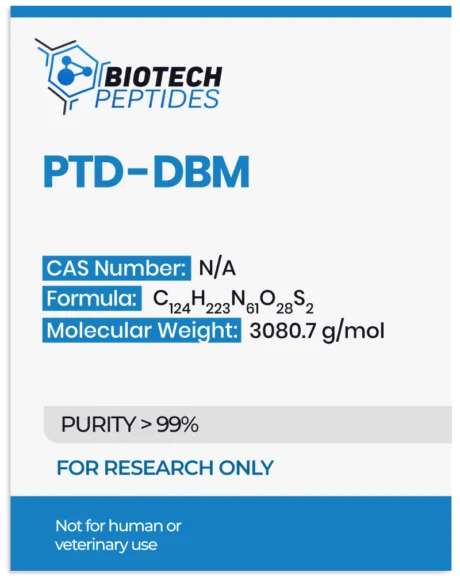
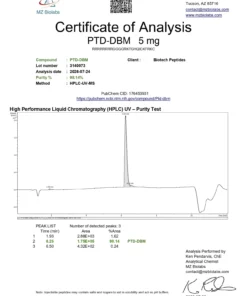
| Molecular Formula | C124H223N61O28S2 |
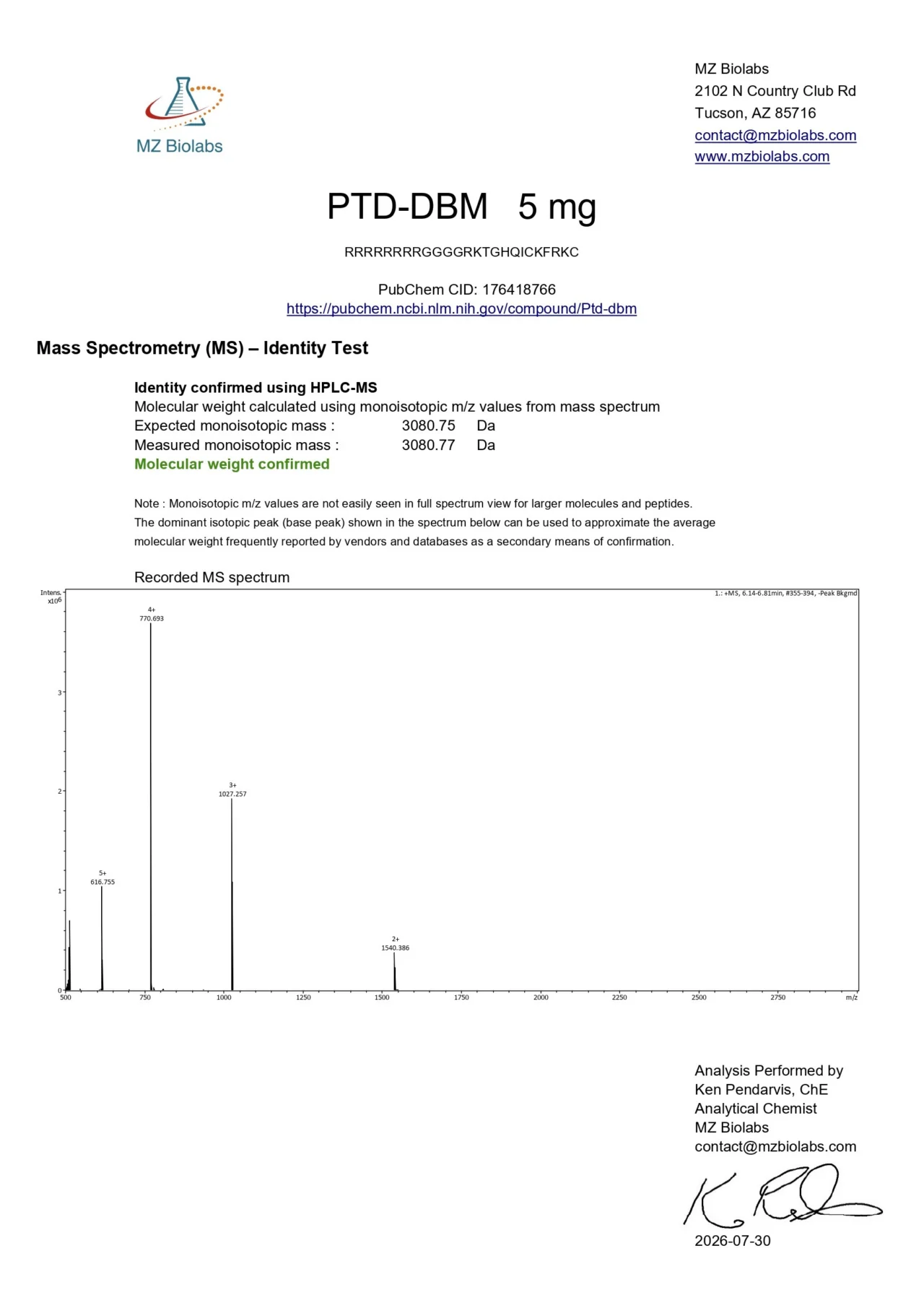
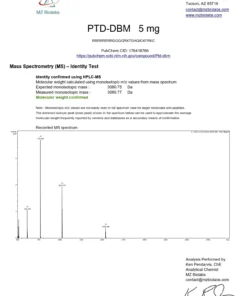
| Molecular Weight | 3080.7 g/mol |
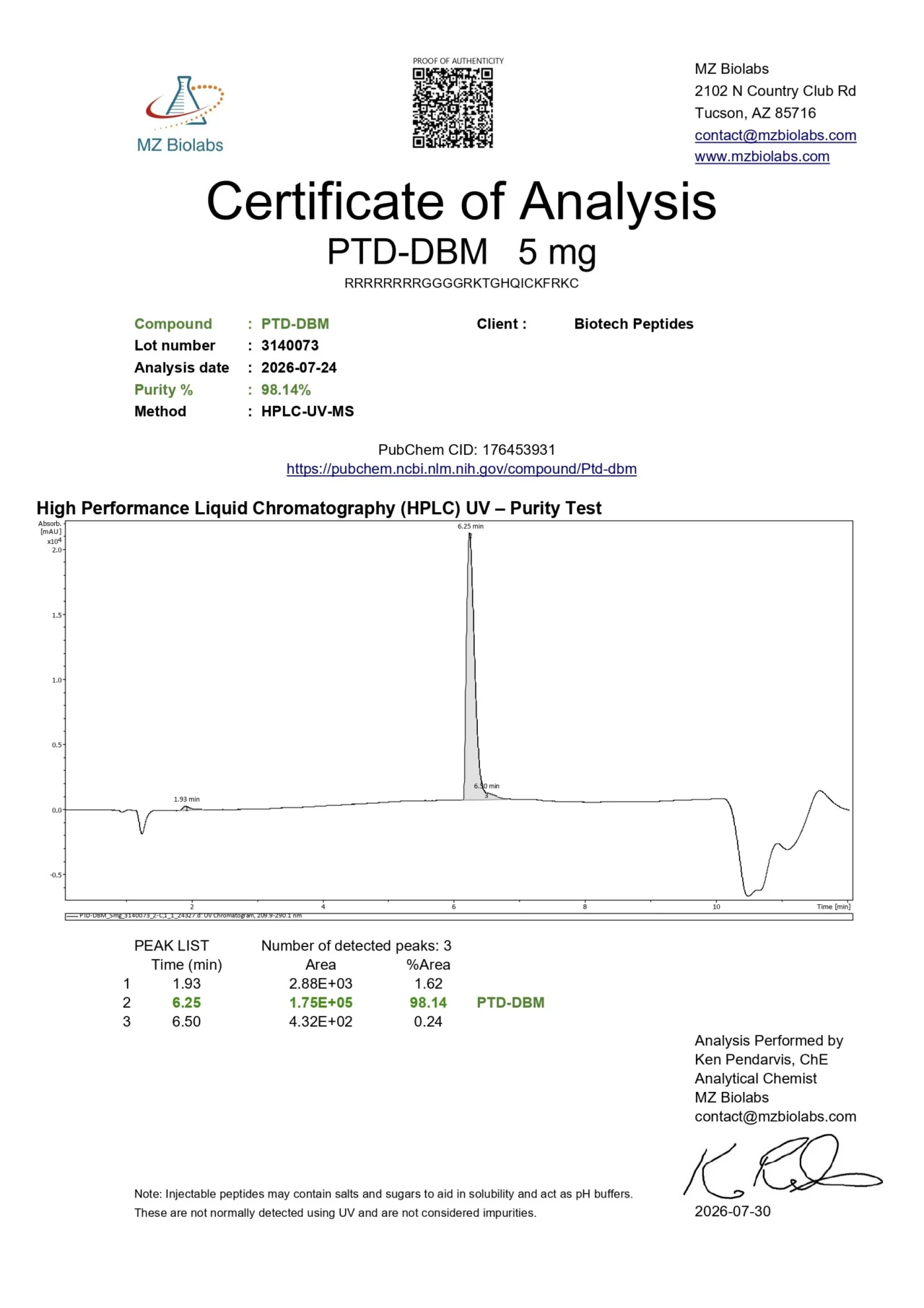
| Sequence | H-Arg-Arg-Arg-Arg-Arg-Arg-Arg-Arg-Gly-Gly-Gly-Gly-Arg-Lys-Thr-Gly-His-Gln-Ile-Cys-Lys-Phe-Arg-Lys-Cys-OH |
| Available Research Quantities | 5mg and 10mg |
| Research Classification | Research Use Only (RUO) |
PTD-DBM Peptide Research
PTD-DBM and Wnt/β-Catenin Signaling
The Wnt/β-catenin pathway is a major focus of PTD-DBM research. Wnt proteins are secreted signaling molecules that interact with cell-surface receptors and initiate intracellular signaling events. In the supplied research framework, activation of Wnt signaling may lead to stabilization and accumulation of β-catenin within cells.
β-catenin may subsequently translocate into the nucleus, where it can interact with transcription-related factors such as T-cell factor (TCF) and lymphoid enhancer factor (LEF). The resulting signaling has been investigated in relation to cellular growth, differentiation, and hair follicle development.
Research has therefore examined PTD-DBM as a peptide that may influence this pathway through its proposed interaction with the CXXC5-Dvl protein-protein interaction.
PTD-DBM and CXXC5 Research
CXXC-type zinc finger protein 5 (CXXC5) has been identified in the supplied research as an important molecular target of interest in studies of hair follicle development. Researchers reported increased CXXC5 expression in experimental models associated with alopecia.
The research proposes that CXXC5 can interact with Dishevelled (Dvl), potentially contributing to suppression of Wnt/β-catenin signaling. Since this pathway has been investigated as a regulator of hair follicle development, researchers have examined whether disrupting the CXXC5-Dvl interaction could alter downstream cellular signaling.
PTD-DBM has been investigated as a competitive peptide in this context. The proposed mechanism involves PTD-DBM interacting with the PDZ domain of Dvl and potentially preventing CXXC5 from exerting its inhibitory influence on the Wnt/β-catenin pathway.
PTD-DBM and Hair Follicle Research
Hair follicle development is commonly investigated through three principal phases: anagen, the growth phase; catagen, the regression phase; and telogen, the resting phase. The supplied research examines Wnt/β-catenin signaling in relation to these follicular processes.
Research involving androgenetic alopecia models has investigated how androgen-related signaling may influence CXXC5 expression and consequently affect Wnt/β-catenin activity. In the supplied murine research, increased CXXC5 expression was associated with experimental hair-loss models.
Studies involving CXXC5-deficient murine models reportedly showed an absence of the baldness or patching observed in certain control models. PTD-DBM exposure was also investigated in murine models, where researchers reported observations consistent with increased hair growth and changes in hair follicle development.
The supplied research further describes observations involving the potential extension of the anagen phase and wound-induced hair follicle neogenesis (WIHN). WIHN refers to experimental research into the formation of new hair follicles following skin injury.
These findings have made PTD-DBM an experimental research subject for investigating the molecular relationship between CXXC5, Dvl, Wnt/β-catenin signaling, and hair follicle development.
PTD-DBM and Androgenetic Alopecia Research
Research into androgenetic alopecia has examined the relationship between androgen-associated signaling and the Wnt/β-catenin pathway. Within the supplied research, dihydrotestosterone (DHT) is discussed as a factor that may increase CXXC5 expression, potentially contributing to suppression of Wnt/β-catenin signaling.
Researchers have proposed that increased CXXC5 activity may interfere with the generation and maintenance of hair follicles by reducing Wnt/β-catenin signaling. PTD-DBM has consequently been studied as an experimental tool for examining whether interruption of the CXXC5-Dvl interaction can alter this signaling relationship.
In murine models, PTD-DBM exposure was associated with observations of hair regrowth and changes in follicular activity. These findings are experimental model observations and do not establish clinical efficacy or a human application.
PTD-DBM and Tissue Repair Research
PTD-DBM has also been investigated in experimental tissue-repair and wound-healing research. The supplied studies propose that CXXC5 may represent a molecular target of interest in wound repair because of its relationship with Wnt/β-catenin signaling.
CXXC5-deficient murine models reportedly demonstrated accelerated healing of experimental skin lesions together with increased keratin and collagen synthesis. These findings have encouraged research into whether interference with CXXC5-Dvl protein-protein interactions could similarly influence tissue-repair pathways.
In experimental models, PTD-DBM was associated with apparent increases in β-catenin, alpha-smooth muscle actin (α-SMA), and collagen I. These markers are relevant to research involving fibroblast activity, extracellular matrix formation, and tissue repair.
PTD-DBM, Fibroblasts, and Collagen Research
Additional experimental observations suggest that PTD-DBM may influence fibroblast behavior. The supplied research describes apparent increases in fibroblast migration and stress-fiber formation following PTD-DBM exposure.
Researchers have also investigated the peptide in relation to collagen gel contraction. Together with the observed changes in collagen I and α-SMA, these findings have contributed to experimental research examining PTD-DBM in cellular models of wound closure and tissue regeneration.
PTD-DBM Research Areas
- Wnt/β-catenin signaling research
- CXXC5-Dvl protein-protein interaction studies
- Dishevelled PDZ-domain research
- Hair follicle development research
- Androgenetic alopecia research models
- Anagen-phase research
- Wound-induced hair follicle neogenesis (WIHN)
- Wound-healing research
- Fibroblast migration studies
- Collagen I research
- Alpha-SMA research
- Cellular proliferation studies
Why Use PTD-DBM Peptide for Laboratory Research?
- Defined synthetic peptide sequence for controlled research applications.
- Available in 5mg and 10mg research quantities.
- Relevant to experimental studies of Wnt/β-catenin signaling.
- Useful for research involving the CXXC5-Dvl protein-protein interaction.
- Studied in experimental hair follicle and tissue-repair models.
- Relevant to fibroblast, collagen, and cellular proliferation research.
- Suitable for controlled laboratory and in-vitro research.
Frequently Asked Questions About PTD-DBM Peptide
What is PTD-DBM peptide?
PTD-DBM stands for Protein Transduction Domain-fused Dishevelled Binding Motif. It is a synthetic peptide investigated in laboratory research involving CXXC5, Dishevelled, Wnt/β-catenin signaling, hair follicle development, and tissue repair.
What is the molecular weight of PTD-DBM?
The supplied specification lists the molecular weight of PTD-DBM as 3080.7 g/mol.
What is the molecular formula of PTD-DBM?
The supplied molecular formula is C124H223N61O28S2.
What is the sequence of PTD-DBM peptide?
The supplied sequence is H-Arg-Arg-Arg-Arg-Arg-Arg-Arg-Arg-Gly-Gly-Gly-Gly-Arg-Lys-Thr-Gly-His-Gln-Ile-Cys-Lys-Phe-Arg-Lys-Cys-OH.
What is PTD-DBM researched for?
PTD-DBM has been investigated in experimental research involving hair follicle development, Wnt/β-catenin signaling, CXXC5-Dvl interactions, androgenetic alopecia models, wound-induced hair follicle neogenesis, fibroblast activity, collagen synthesis, and tissue repair.
Is PTD-DBM intended for human use?
No. PTD-DBM Peptide is supplied strictly for Research Use Only (RUO). It is intended for qualified laboratory research and experimental applications and is not intended for human consumption, diagnosis, treatment, cure, mitigation, or prevention of disease.
Research Use Only Disclaimer
RESEARCH USE ONLY — NOT FOR HUMAN USE
PTD-DBM Peptide 5mg & 10mg is supplied strictly for laboratory research, in-vitro experimentation, analytical testing, and scientific research purposes. This material is not intended for human consumption, veterinary use, diagnosis, treatment, cure, mitigation, or prevention of any disease or medical condition.
The research information presented on this page is based on experimental findings supplied for scientific research purposes. Findings from cell, tissue, and animal models should not be interpreted as established effects in humans. Researchers are responsible for appropriate laboratory handling, experimental design, applicable regulatory requirements, and suitable safety procedures.
| Miligram | 10, 5 |
|---|
Be the first to review “PTD-DBM Peptide 5mg & 10mg | Research Use Only”
Related products
Biotech Peptides
Biotech Peptides
Biotech Peptides
Biotech Peptides
Biotech Peptides

Biotech Peptides

Biotech Peptides
Biotech Peptides
Reviews
There are no reviews yet.