


Buy Syn-AKE Peptide 200mg | Research Use Only
Syn-AKE Peptide 200mg is a synthetic peptide research material also known as Tripeptide-3 or Dipeptide Diaminobutyroyl Benzylamide Diacetate. Syn-AKE has been studied as a synthetic analogue designed to model selected properties associated with the Waglerin-1 peptide and its interaction with neuromuscular signaling pathways.
For laboratory researchers investigating peptide-receptor interactions, neurotransmission, acetylcholine receptor activity, muscle-cell contraction, and experimental skin-topography models, Syn-AKE provides a defined peptide material for controlled research. The supplied research literature describes Syn-AKE as a compound investigated for its reversible interaction with muscle nicotinic acetylcholine receptors (nAChRs) and its effects on contractile signaling.
This Syn-AKE Peptide 200mg is supplied strictly for Research Use Only (RUO). It is not intended for human consumption, administration, diagnosis, treatment, or prevention of disease.
Syn-AKE Peptide Specifications
| Specification | Details |
|---|---|
| Product Name | Syn-AKE Peptide 200mg |
| Other Names | Tripeptide-3; Dipeptide Diaminobutyroyl Benzylamide Diacetate |
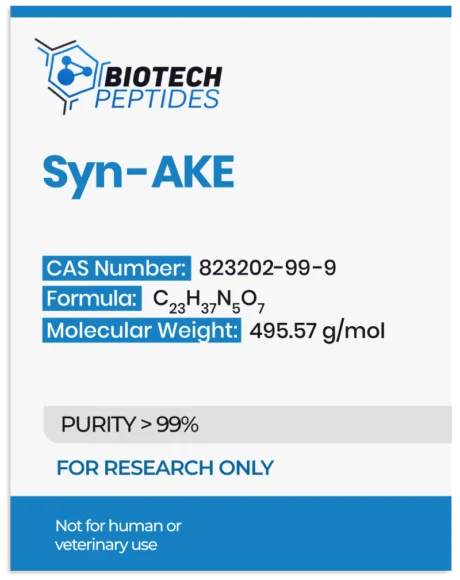
| Molecular Formula | C23H37N5O7 |
| Molecular Weight | 495.57 g/mol |
| Sequence | β-Ala-Pro-Dab-NHBn .2Acetate |
| Quantity | 200mg |
| Research Classification | Research Use Only (RUO) |
What Is Syn-AKE Peptide?
Syn-AKE is a synthetic peptide investigated for its interaction with neuromuscular signaling. The supplied research description identifies it as a peptide designed to mimic selected actions associated with Waglerin-1, a 21-amino-acid peptide that has been studied for its interaction with acetylcholine receptors.
Syn-AKE research focuses particularly on nicotinic acetylcholine receptor (nAChR) activity at the neuromuscular junction. Acetylcholine is a neurotransmitter involved in signaling between nerve and muscle cells. Research into Syn-AKE examines whether its receptor interactions can alter the transmission of signals involved in muscle-cell contraction.
According to the supplied source material, Syn-AKE has been described as acting through reversible blocking of muscle nAChR ion channels. This research model proposes that altered ion-channel activity can interfere with normal neuromuscular signaling and temporarily reduce contractile activity.
Syn-AKE and Neurotransmission Research
One major area of Syn-AKE research involves neurotransmission and muscle-cell activity. Experimental studies have investigated whether Syn-AKE can influence the frequency and force of contractions in innervated muscle-cell models.
The supplied research describes Syn-AKE as a competitive antagonist of acetylcholine receptors in muscle tissue. In this experimental framework, the peptide may compete with acetylcholine for receptor interaction, potentially reducing the signaling process responsible for transmitting contraction-related impulses from nerve tissue to muscle tissue.
Research has also examined the apparent selectivity of Syn-AKE. The supplied material reports that Syn-AKE appears to target muscle-associated nicotinic acetylcholine receptors while lacking the reported activity toward GABA receptors in nervous tissue described for Waglerin-1. This makes receptor selectivity an important subject for laboratory investigation.
One reported experimental observation described an approximately 82% reduction in the frequency of contractions of innervated muscle cells. Such findings are research observations and should be interpreted within the specific experimental conditions under which they were obtained.
Syn-AKE and Muscle-Cell Research
Researchers have investigated Syn-AKE in cellular models involving muscle contraction and neuromuscular communication. These studies provide a framework for examining how synthetic peptides can interact with receptor systems that regulate communication between neurons and muscle cells.
The reported reversible nature of Syn-AKE activity is also relevant to experimental research. Rather than representing a permanent alteration of receptor signaling, the supplied literature characterizes the observed interaction as temporary and reversible under the investigated conditions.
For researchers working with peptide-receptor systems, Syn-AKE can therefore serve as a research material for studying receptor antagonism, ion-channel activity, cellular contractility, and neuromuscular signaling pathways.
Syn-AKE Peptide and Skin Topography Research
Another area investigated with Syn-AKE involves experimental skin-topography models. The supplied research describes studies examining whether changes in muscle contraction can influence the appearance and measurement of surface creasing in experimental models.
Because muscle contraction can contribute to changes in surface topography, researchers have investigated whether temporary modulation of neuromuscular signaling produces measurable changes in wrinkle-depth and skin-surface parameters.
The supplied research describes observations at multiple evaluation points, including assessments shortly after exposure and additional evaluations at approximately one and three months. Reported findings suggested potential changes in wrinkle depth and surface appearance within the studied models.
Additional comparative research examined Syn-AKE alongside other peptide materials and a control compound. The supplied source reports observations suggesting improvements in measured wrinkle-related outcomes, including a reported reduction of up to approximately 52% in wrinkle visibility in one research context.
These findings remain experimental and should not be interpreted as evidence of human cosmetic or therapeutic efficacy. They instead provide research context for investigating the relationship between neuromuscular signaling and measurable skin-topography parameters.
Key Syn-AKE Research Areas
- Muscle nicotinic acetylcholine receptor research
- Neuromuscular neurotransmission studies
- Acetylcholine receptor antagonism
- Ion-channel interaction research
- Innervated muscle-cell contraction models
- Receptor selectivity studies
- Cellular mobility and contractility research
- Experimental skin-topography research
- Wrinkle-depth and surface-creasing models
- Peptide-receptor interaction studies
Why Choose Syn-AKE Peptide 200mg for Research?
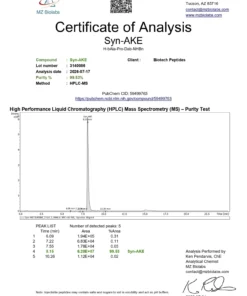
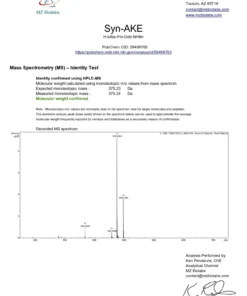
Syn-AKE Peptide 200mg provides researchers with a defined synthetic peptide material for laboratory investigation involving neuromuscular signaling and receptor-mediated cellular activity. Its supplied specifications include a molecular formula of C23H37N5O7, molecular weight of 495.57 g/mol, and the sequence β-Ala-Pro-Dab-NHBn .2Acetate.
The peptide is particularly relevant to research programs examining acetylcholine receptor interactions, muscle-cell contraction, reversible receptor activity, and experimental skin-topography models. Researchers can evaluate the supplied material according to their own validated laboratory protocols and analytical requirements.
Syn-AKE Peptide 200mg FAQ
What is Syn-AKE Peptide?
Syn-AKE is a synthetic peptide also referred to as Tripeptide-3 or Dipeptide Diaminobutyroyl Benzylamide Diacetate. It has been researched for interactions involving muscle nicotinic acetylcholine receptors and neuromuscular signaling.
What is the molecular weight of Syn-AKE?
The supplied specification lists the molecular weight of Syn-AKE as 495.57 g/mol.
What is the Syn-AKE peptide sequence?
The supplied sequence is β-Ala-Pro-Dab-NHBn .2Acetate.
What research areas are associated with Syn-AKE?
Syn-AKE has been investigated in research involving acetylcholine receptors, neuromuscular transmission, muscle-cell contraction, receptor selectivity, ion-channel activity, and experimental skin-topography models.
Is Syn-AKE Peptide 200mg for human use?
No. This product is supplied strictly for Research Use Only (RUO). It is not intended for human consumption, administration, diagnosis, treatment, or prevention of disease.
Research Use Only Disclaimer
IMPORTANT: RESEARCH USE ONLY
Syn-AKE Peptide 200mg is supplied strictly as a research material for laboratory and scientific investigation. It is not a food, dietary supplement, pharmaceutical product, cosmetic treatment, or medical product. This material is not intended for human or veterinary use, consumption, administration, diagnosis, treatment, cure, or prevention of any disease or medical condition.
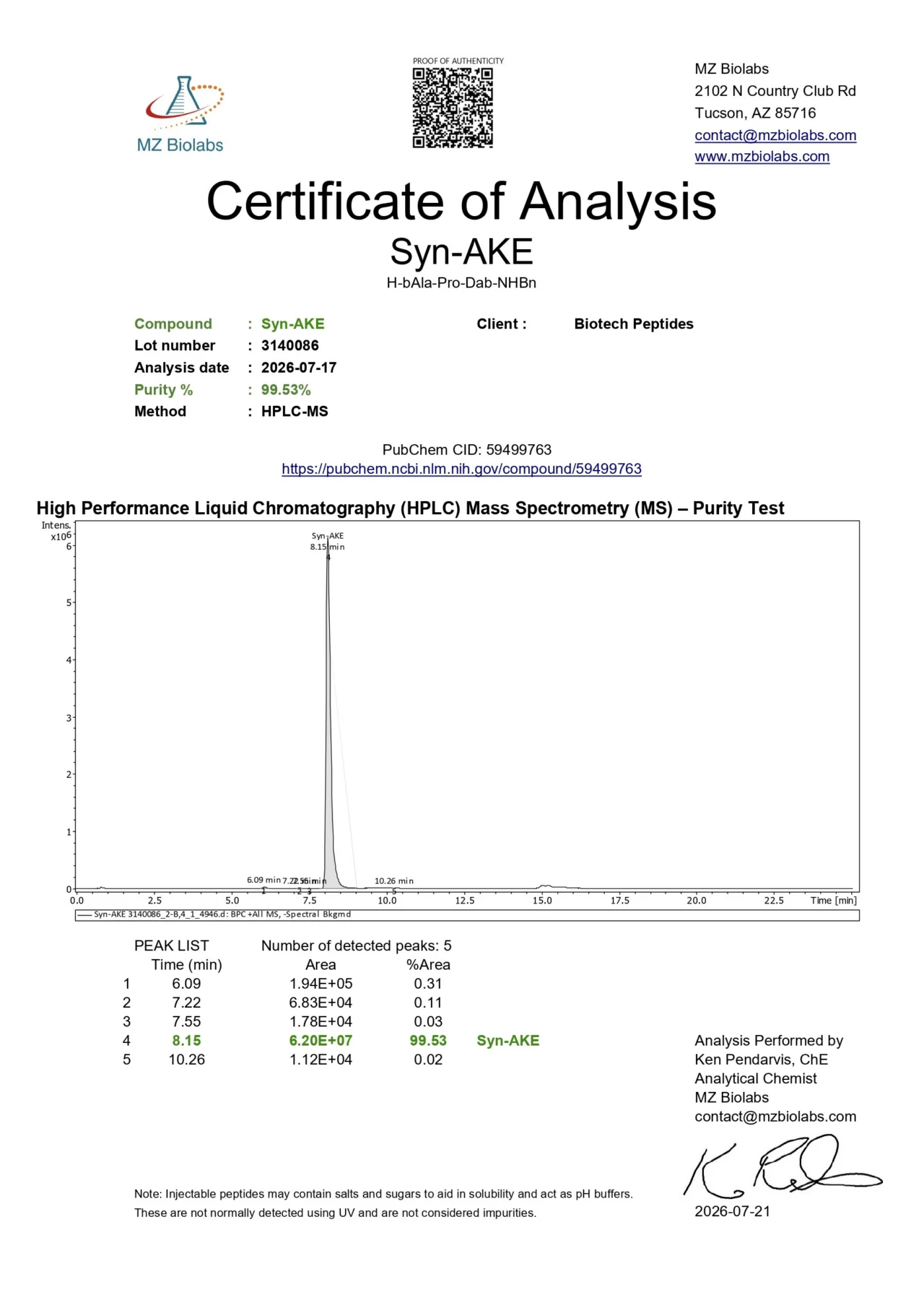
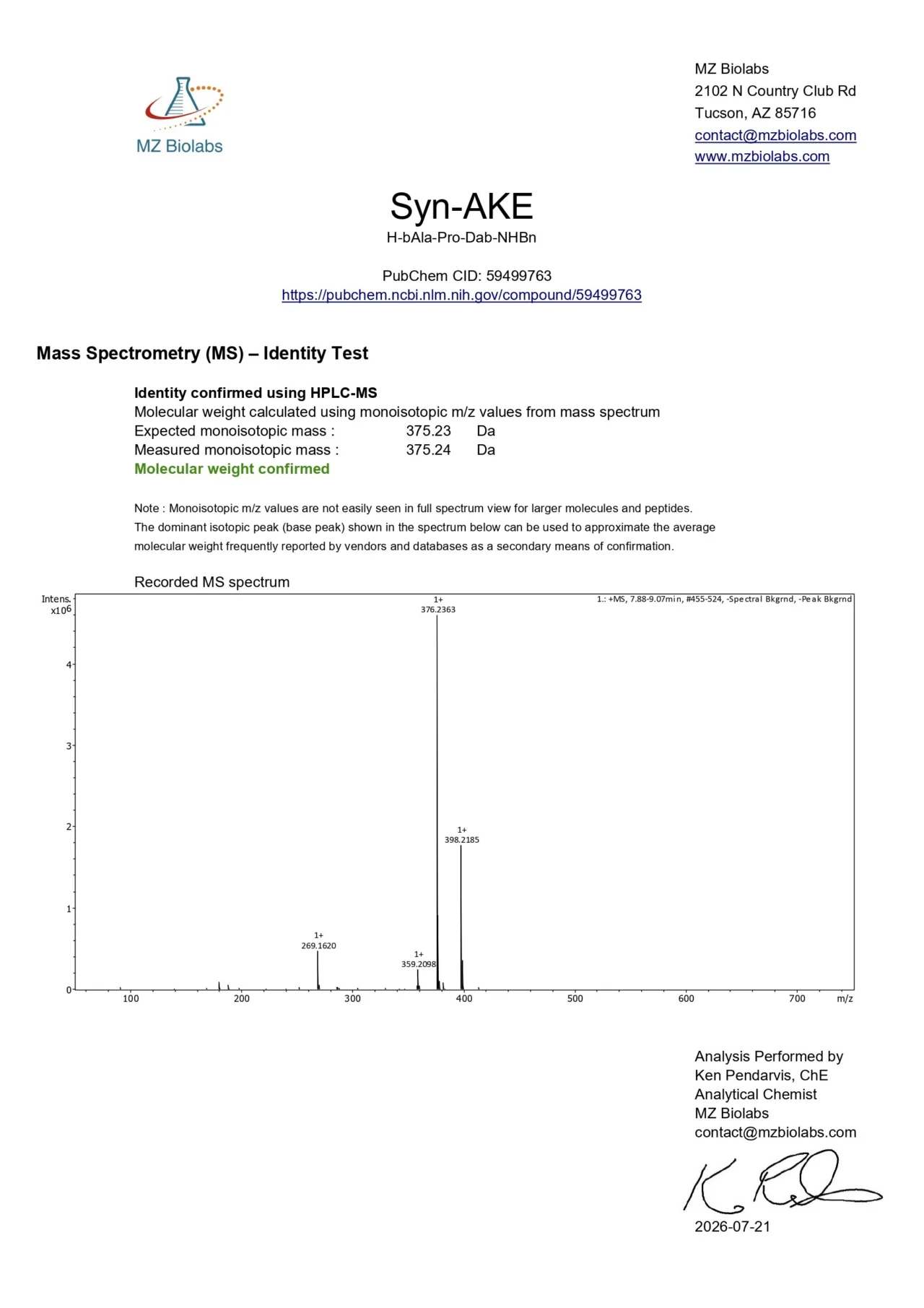
Researchers are responsible for handling, storage, testing, and use of this material according to applicable laboratory procedures, institutional requirements, and relevant laws and regulations. Any analytical specifications or quality information should be confirmed against the applicable batch documentation or Certificate of Analysis where available.
Be the first to review “Syn-AKE Peptide 200mg | Research Use Only”
Related products
Biotech Peptides

Biotech Peptides

Biotech Peptides

Biotech Peptides

Biotech Peptides
Biotech Peptides
Biotech Peptides

Biotech Peptides
Reviews
There are no reviews yet.