
Buy Cardiogen Peptide 20mg | Research Peptide
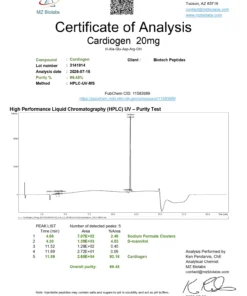
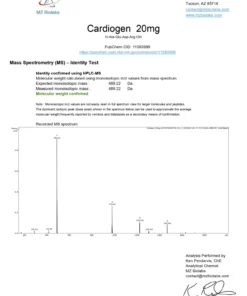
Cardiogen Peptide 20mg is a synthetic tetrapeptide research compound studied in laboratory models of cellular signaling, fibroblast activity, cardiomyocyte biology, apoptosis, and tissue-remodeling pathways. Also identified by the sequence H-Ala-Glu-Asp-Arg-OH (AEDR), Cardiogen has been investigated for its potential interactions with cellular processes associated with myocardial tissue, cytoskeletal proteins, nuclear matrix proteins, and p53-related signaling.
For researchers investigating Cardiogen peptide, Cardiogen tetrapeptide, cardiomyocyte research, fibroblast biology, apoptosis pathways, and cellular repair mechanisms, this research-grade material provides a defined peptide compound for controlled laboratory studies.
Cardiogen Peptide Research Overview
Cardiogen is a synthetic tetrapeptide composed of alanine, glutamic acid, aspartic acid, and arginine. Research literature has investigated the compound in experimental models involving myocardial cells, fibroblasts, cellular proliferation, apoptosis, cytoskeletal protein expression, and tissue-remodeling mechanisms.
Rather than presenting these findings as established biological effects, Cardiogen research can be evaluated through controlled in-vitro and experimental model systems designed to examine cellular responses to the peptide.
Particular areas of interest include:
- Cardiomyocyte cellular biology
- Fibroblast signaling and activity
- p53-associated apoptosis pathways
- Cytoskeletal protein expression
- Nuclear matrix proteins
- Cellular proliferation and differentiation
- Mitochondrial and metabolic research
- Experimental myocardial tissue models
- Cellular stress and tissue-remodeling pathways
Cardiogen Peptide and Cardiomyocyte Research
One major area of Cardiogen research involves experimental cardiomyocyte models. Studies have investigated whether the AEDR tetrapeptide can influence cellular proliferation and apoptosis-associated signaling in myocardial tissue models.
Researchers have examined Cardiogen in relation to p53 expression, a signaling pathway involved in cell-cycle regulation and programmed cell death. Experimental observations have raised the possibility that Cardiogen exposure may alter p53-associated signaling in myocardial cells.
These findings make Cardiogen useful as a research compound for investigating relationships between:
- Cardiomyocyte proliferation
- Cellular survival signaling
- p53-associated pathways
- Programmed cell death
- Cellular stress responses
- Myocardial tissue biology
Such research should be interpreted within the limitations of the experimental model used.
Cardiogen and Fibroblast Research
Fibroblasts are important research subjects in studies of extracellular matrix organization, tissue remodeling, and cellular repair. Cardiogen has been investigated in experimental systems involving fibroblast activity and signaling-factor expression.
Research has explored whether the tetrapeptide may influence cellular pathways associated with fibroblast behavior and extracellular tissue organization. These investigations may help researchers better understand how short peptide sequences interact with fibroblast-associated signaling networks.
Cardiogen research involving fibroblasts can therefore support laboratory investigations into:
- Fibroblast cellular signaling
- Extracellular matrix biology
- Cellular proliferation
- Tissue-remodeling mechanisms
- Protein-expression pathways
- Age-associated cellular changes
Cardiogen, p53 and Apoptosis Research
The relationship between Cardiogen and apoptosis is another area of experimental interest. Research models have investigated changes in p53-related signaling following exposure to the AEDR tetrapeptide.
Because p53 participates in cell-cycle regulation and apoptosis, studying changes in this pathway can provide insight into cellular responses under different experimental conditions.
Cardiogen can therefore be examined in laboratory models evaluating:
- p53 protein expression
- Apoptotic signaling
- Cell-cycle pathways
- Cellular stress
- Nuclear protein regulation
- Cell-survival mechanisms
Importantly, experimental observations concerning apoptosis should not be interpreted as evidence of a therapeutic effect in humans.
Cardiogen Peptide and Cancer-Cell Research
Cardiogen has also appeared in experimental research involving tumor-cell and cancer-cell models. Laboratory investigations have examined whether cellular responses to Cardiogen differ between myocardial cells and experimental tumor models.
This provides an interesting research framework for studying how the same peptide sequence may interact differently with distinct cellular environments.
Research areas can include:
- Tumor-cell apoptosis models
- Cellular signaling differences
- Vascular-associated tumor biology
- Cell morphology
- Apoptosis-associated pathways
- Experimental tumor microenvironment research
These findings remain experimental and should not be interpreted as evidence that Cardiogen is an anticancer treatment.
Cardiogen and Cytoskeletal Protein Research
Experimental work has also investigated Cardiogen in relation to cytoskeletal and nuclear matrix proteins. In cultured cellular models, exposure to H-Ala-Glu-Asp-Arg-OH has been associated in reported research with changes in proteins including actin, vimentin, tubulin, lamin A, and lamin C.
These proteins are important subjects in cellular architecture and intracellular organization research.
Studying Cardiogen in this context may help researchers examine relationships between peptide exposure and:
- Actin-associated cellular structure
- Vimentin expression
- Tubulin-related processes
- Nuclear matrix organization
- Lamin A and lamin C
- Cellular morphology
- Intracellular metabolism
- Cell proliferation and differentiation
Cardiogen and Mitochondrial Research
Experimental myocardial models have also investigated Cardiogen in connection with cellular energy metabolism and mitochondrial structure.
Because mitochondria play a central role in cellular energy production, experimental research can evaluate how peptide exposure influences mitochondrial-associated pathways under controlled stress conditions.
Potential laboratory research areas include:
- Mitochondrial integrity
- Cellular energy metabolism
- Glycogen-associated cellular metabolism
- Oxidative and metabolic stress
- Cardiomyocyte cellular survival models
- Post-stress cellular recovery mechanisms
These applications are intended solely as research directions and do not establish clinical or therapeutic outcomes.
Cardiogen Peptide Specifications
| Property | Specification |
|---|---|
| Product Name | Cardiogen Peptide |
| Research Quantity | 20mg |
| Peptide Type | Synthetic tetrapeptide |
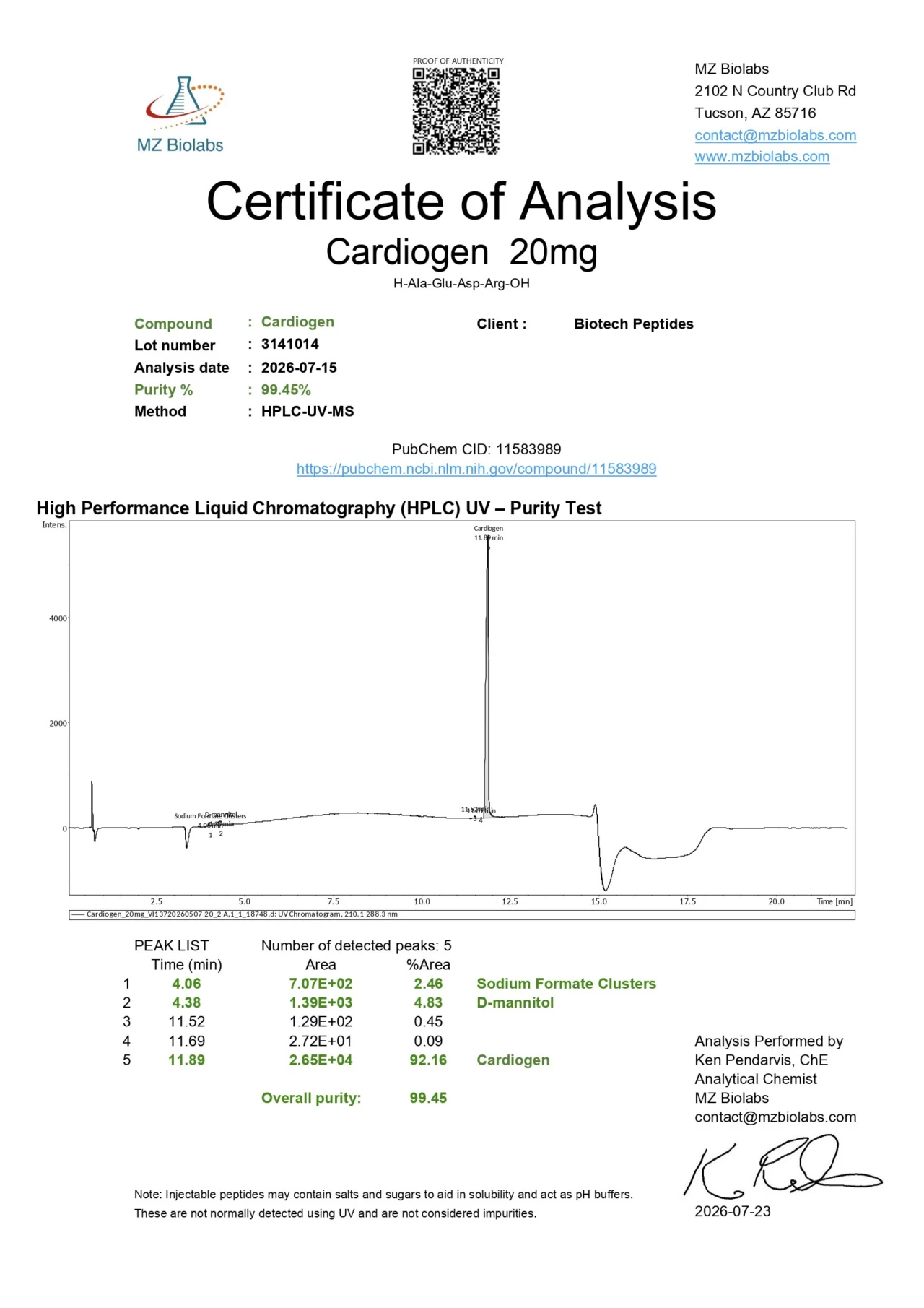
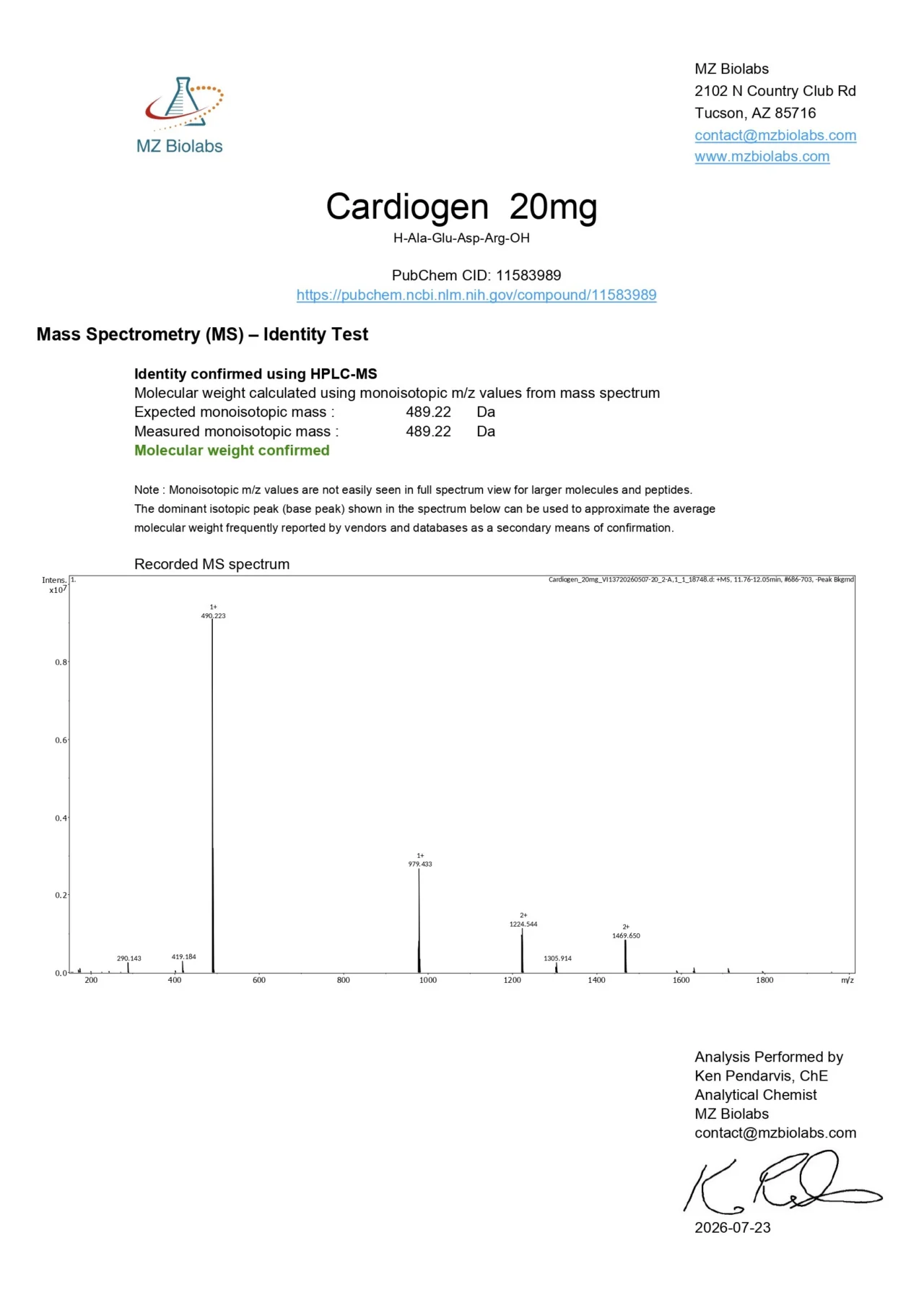
| Peptide Sequence | H-Ala-Glu-Asp-Arg-OH (AEDR) |
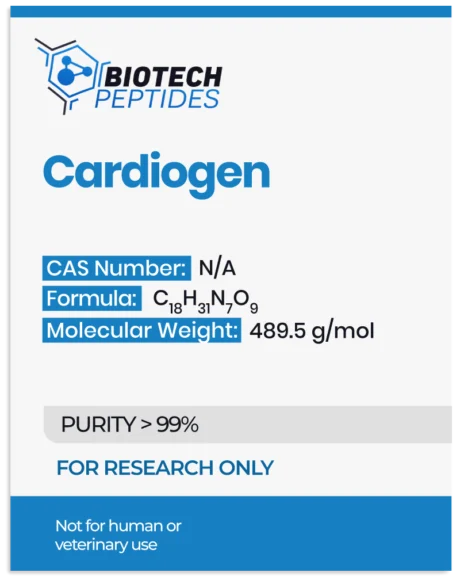
| Molecular Formula | C18H31N7O9 |
| Molecular Weight | 489.5 g/mol |
| Peptide Composition | Alanine, Glutamic Acid, Aspartic Acid, Arginine |
| Research Classification | Research Use Only |
| Primary Research Areas | Cardiomyocyte, fibroblast, apoptosis, p53 and cellular signaling research |
Cardiogen Peptide Research Applications
Cardiogen 20mg can be incorporated into laboratory investigations involving peptide-cell interactions and cellular signaling. Depending on the experimental model, researchers may investigate:
- Cardiomyocyte biology
- Fibroblast signaling
- p53-associated pathways
- Apoptosis research
- Cytoskeletal protein expression
- Nuclear matrix biology
- Cellular proliferation
- Mitochondrial research
- Cellular metabolism
- Tissue-remodeling models
- Experimental tumor-cell biology
- Cellular stress responses
The appropriate experimental concentration, preparation, controls, and analytical methodology should be determined by qualified laboratory personnel according to the requirements of the specific research protocol.
Frequently Asked Questions About Cardiogen Peptide
What is Cardiogen Peptide?
Cardiogen is a synthetic tetrapeptide research compound associated with the sequence H-Ala-Glu-Asp-Arg-OH (AEDR). It has been investigated in experimental models involving cardiomyocytes, fibroblasts, apoptosis, p53-associated signaling, cytoskeletal proteins, and cellular metabolism.
What is the molecular weight of Cardiogen?
The supplied molecular weight for Cardiogen is 489.5 g/mol, with a reported molecular formula of C18H31N7O9.
What is the sequence of Cardiogen?
The reported Cardiogen sequence is H-Ala-Glu-Asp-Arg-OH (AEDR).
What research areas are associated with Cardiogen?
Cardiogen has been studied in experimental research involving cardiomyocyte biology, fibroblast signaling, p53 pathways, apoptosis, cytoskeletal proteins, nuclear matrix proteins, mitochondrial processes, cellular metabolism, and experimental tumor-cell models.
Is Cardiogen intended for human use?
No. Cardiogen Peptide 20mg is supplied strictly for laboratory research and scientific investigation. It is not intended for human consumption, clinical use, diagnosis, treatment, or therapeutic application.
Is Cardiogen a peptide?
Yes. Cardiogen is described as a synthetic tetrapeptide consisting of four amino-acid residues: alanine, glutamic acid, aspartic acid, and arginine.
Be the first to review “Cardiogen Peptide 20mg | Research Peptide”
Related products
Biotech Peptides
Biotech Peptides
Biotech Peptides
Biotech Peptides
Biotech Peptides
Biotech Peptides
Biotech Peptides
Biotech Peptides
Reviews
There are no reviews yet.