
Buy Chonluten (T-34) Peptide 20mg | Research Peptide
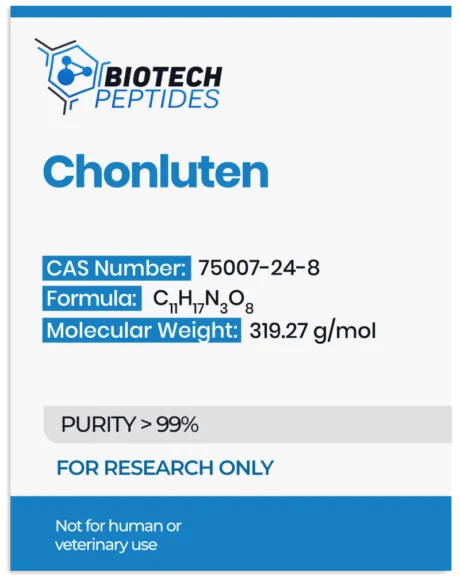
Chonluten (T-34) Peptide 20mg is a research peptide complex associated with the short tripeptide sequence Glu-Asp-Gly (EDG). Also known as Tripeptide T-34 and EDG, Chonluten has been investigated in experimental models involving gene regulation, pulmonary cell biology, oxidative stress, inflammatory signaling, mucosal tissue biology, and cellular responses to environmental stress.
For researchers studying Chonluten peptide, T-34 peptide, EDG tripeptide, pulmonary research, gene-expression pathways, oxidative stress, and cellular inflammation, this research material provides a peptide-based compound for controlled laboratory investigation.
Chonluten (T-34) Peptide Research Overview
Chonluten is described as a short-peptide cytogenetic complex associated with the EDG tripeptide sequence. Research has explored the potential relationship between short regulatory peptides and changes in gene expression, cellular proliferation, apoptosis, oxidative stress, and tissue-specific cellular activity.
Experimental research involving Chonluten has particularly focused on pulmonary and respiratory models, while additional investigations have examined gastrointestinal tissues and cellular responses under hypoxic or inflammatory conditions.
Research areas associated with Chonluten include:
- Gene-expression regulation
- Pulmonary cell biology
- Bronchial and mucosal tissue research
- Oxidative-stress pathways
- Inflammatory signaling
- c-Fos-associated cellular signaling
- HSP70 and cellular stress responses
- SOD-associated antioxidant research
- TNF-α signaling
- COX-2 expression
- Gastrointestinal cellular models
- Hypoxia and cellular stress research
Chonluten and Gene Regulation Research
One area of interest surrounding short regulatory peptides is their potential relationship with gene expression. Chonluten has been investigated in experimental systems examining whether short peptide sequences can influence cellular signaling and transcription-associated processes.
Research involving the EDG tripeptide has considered pathways related to proliferation, apoptosis, cellular aging models, and stress responses.
These investigations may provide researchers with a framework for studying interactions between short peptides and:
- Gene-expression pathways
- DNA-associated processes
- Cellular proliferation
- Apoptotic signaling
- Stress-response genes
- Cellular differentiation
- Oxidative-stress regulation
Experimental findings in these areas should be interpreted according to the specific cellular or animal model used.
Chonluten Peptide and Pulmonary Cell Research
Pulmonary biology represents one of the primary areas in which Chonluten has been investigated. Experimental research has examined the peptide in models involving bronchial tissue, mucosal cellular activity, inflammation-associated signaling, and environmental stress.
Researchers have investigated changes involving genes and proteins such as c-Fos, HSP70, SOD, COX-2, and TNF-α.
c-Fos is associated with cellular proliferation, differentiation, and responses to environmental stimuli. HSP70 is widely studied as part of the cellular stress-response system, while SOD is an important subject in research involving reactive oxygen species and oxidative balance.
This makes Chonluten relevant to laboratory investigations of:
- Pulmonary cellular signaling
- Bronchial tissue models
- Mucosal cell biology
- Cellular stress responses
- Oxidative-stress pathways
- Inflammatory signaling
- Hypoxia-associated cellular responses
Chonluten and Oxidative-Stress Research
Oxidative stress is an important area of experimental cell biology. Chonluten research has examined pathways involving antioxidant-associated enzymes and cellular responses to oxidative conditions.
Particular attention has been given to superoxide dismutase (SOD) and related cellular defense pathways. SOD is an enzyme involved in the conversion of superoxide radicals into hydrogen peroxide and oxygen, making it an important marker in oxidative-stress research.
Laboratory studies involving Chonluten may therefore examine:
- Reactive oxygen species
- SOD-associated pathways
- Oxidative cellular stress
- Antioxidant-response mechanisms
- Cellular adaptation to environmental stress
- Gene-expression changes associated with oxidative conditions
Chonluten, HSP70 and Cellular Stress
HSP70 is another pathway associated with Chonluten research. Heat-shock proteins are widely studied because of their involvement in cellular responses to environmental and physiological stressors.
Experimental investigation of Chonluten can examine whether exposure to the EDG-associated peptide influences HSP70-related signaling in cellular models.
Potential research endpoints include:
- HSP70 expression
- Cellular stress adaptation
- Protein-protection pathways
- Environmental stress responses
- Hypoxia-associated signaling
- Cellular survival pathways
These research areas can be evaluated using appropriate molecular and cellular assays.
Chonluten and Inflammatory Signaling
Chonluten has also been investigated in relation to inflammatory signaling pathways. Research has examined molecular markers including TNF-α and COX-2, both of which are frequently used as experimental indicators in cellular inflammation research.
TNF-α is a cytokine involved in immune-cell communication, while COX-2 is an enzyme associated with prostanoid biosynthesis and inflammatory signaling.
Research involving Chonluten may therefore be useful for studying:
- Cytokine-associated signaling
- TNF-α expression
- COX-2 pathways
- Macrophage-associated cellular models
- Inflammatory gene expression
- Cellular responses to microbial or environmental stressors
These pathways should be treated as experimental research endpoints rather than evidence of clinical activity.
Chonluten and Gastrointestinal Research
Experimental studies have also examined Chonluten in gastrointestinal tissue models. Research has investigated potential changes in gene-expression markers associated with oxidative stress and inflammatory signaling.
Particular interest has included SOD, TNF-α, and COX-2 mRNA expression in experimental gastrointestinal models.
This provides opportunities for laboratory investigation into relationships between short peptides and:
- Gastrointestinal cell signaling
- Oxidative-stress responses
- Inflammatory gene expression
- SOD-associated pathways
- TNF-α signaling
- COX-2 expression
- Cellular stress responses
Chonluten and Hypoxia Research
Chonluten has also appeared in experimental research involving low-oxygen environments. Hypoxia research is important for understanding how cells respond when oxygen availability changes.
Studies involving experimental models have investigated potential changes in pulmonary function and cellular stress responses under hypoxic conditions.
For laboratory researchers, Chonluten can therefore serve as a subject in investigations involving:
- Hypoxia-associated signaling
- Cellular adaptation to low oxygen
- Pulmonary cell models
- Oxidative stress
- Stress-response gene expression
- HSP70-associated pathways
- Cellular metabolism under environmental stress
The observed responses may vary according to model, experimental conditions, and analytical methodology.
Chonluten (T-34) Peptide Specifications
| Property | Specification |
|---|---|
| Product Name | Chonluten (T-34) Peptide |
| Research Quantity | 20mg |
| Alternative Names | Tripeptide T-34, EDG |
| Reported Sequence | Glu-Asp-Gly (EDG) |
| Molecular Formula | C11H17N3O8 |
| Molecular Weight | 319.27 g/mol |
| Product Composition | Peptide complex AC-7 with listed excipients |
| Listed Components | Microcrystalline cellulose, raw sugar, lactose, potato starch, Twin-80 |
| Research Classification | Research Use Only |
| Primary Research Areas | Gene regulation, pulmonary biology, oxidative stress, inflammatory signaling and cellular stress |
Chonluten Research Applications
Chonluten (T-34) 20mg can be incorporated into controlled laboratory investigations examining short-peptide interactions with cellular and molecular pathways.
Potential research applications include:
- Pulmonary cell biology
- Bronchial mucosal research
- Gene-expression studies
- c-Fos signaling
- HSP70 research
- SOD and oxidative-stress studies
- TNF-α signaling
- COX-2 expression
- Gastrointestinal cellular research
- Hypoxia models
- Cellular proliferation research
- Apoptosis-associated pathways
- Environmental stress-response studies
Researchers should determine appropriate experimental concentrations, controls, preparation procedures, and analytical methods according to their specific laboratory protocols.
Frequently Asked Questions About Chonluten Peptide
What is Chonluten (T-34) Peptide?
Chonluten is a short-peptide research compound also associated with the names T-34 and EDG. The reported tripeptide sequence is Glu-Asp-Gly. It has been investigated in experimental research involving gene regulation, pulmonary cell biology, oxidative stress, inflammatory signaling, and cellular stress responses.
What is the sequence of Chonluten?
The reported Chonluten sequence is Glu-Asp-Gly (EDG).
What is the molecular weight of Chonluten?
The supplied molecular weight is 319.27 g/mol, with a reported molecular formula of C11H17N3O8.
What research pathways are associated with Chonluten?
Research involving Chonluten has examined pathways associated with c-Fos, HSP70, SOD, COX-2, and TNF-α, along with broader gene-expression, oxidative-stress, inflammatory, and cellular stress pathways.
Is Chonluten intended for human use?
No. Chonluten (T-34) Peptide 20mg is supplied strictly for laboratory research and scientific investigation. It is not intended for human consumption, clinical use, diagnosis, disease management, or therapeutic application.
What research areas can Chonluten be used to investigate?
Chonluten may be studied in experimental models involving pulmonary cell biology, gene expression, oxidative stress, inflammatory signaling, gastrointestinal cellular pathways, hypoxia, cellular proliferation, and stress-response mechanisms.
Be the first to review “Buy Chonluten (T-34) Peptide 20mg | Research Peptide”
Related products
Biotech Peptides
Biotech Peptides
Biotech Peptides
Biotech Peptides
Biotech Peptides
Biotech Peptides
Biotech Peptides
Biotech Peptides
Reviews
There are no reviews yet.