Description
Buy Melanotan 1 Peptide 10mg – MT-1 Research Use Only
Melanotan 1 Peptide 10mg (MT-1) is a synthetic melanocortin peptide structurally related to alpha-melanocyte-stimulating hormone (α-MSH). Melanotan 1 research has been used to investigate melanocortin receptor signaling, melanocyte biology, pigmentation pathways, and downstream cellular responses in laboratory research models. Its defined peptide sequence and molecular structure make MT-1 a useful research compound for studies involving melanocortin receptor biology and related signaling mechanisms.
For researchers looking to buy Melanotan 1 Peptide 10mg, this product is supplied strictly for laboratory research, in-vitro investigation, analytical work, and scientific studies. MT-1 research applications can include investigations of MC1R-associated signaling, melanogenesis pathways, receptor pharmacology, and broader melanocortin system activity.
Melanotan 1 Research Peptide Overview
Melanotan 1 is a synthetic analog of α-MSH containing specific amino acid substitutions within the peptide sequence. The molecule incorporates norleucine and D-phenylalanine substitutions and is structurally designed to interact with melanocortin receptor systems studied in experimental biology.
The melanocortin receptor family includes MC1R, MC2R, MC3R, MC4R, and MC5R. These receptors have different tissue distributions and biological roles in experimental models. Melanotan 1 research has particularly focused on MC1R, a receptor associated with melanocyte signaling and the regulation of cellular pathways involved in melanin synthesis.
Melanotan 1 Molecular Specifications
| Specification | Details |
|---|---|
| Product Name | Melanotan 1 Peptide 10mg |
| Synonym | MT-1 |
| Peptide Type | Synthetic melanocortin research peptide |
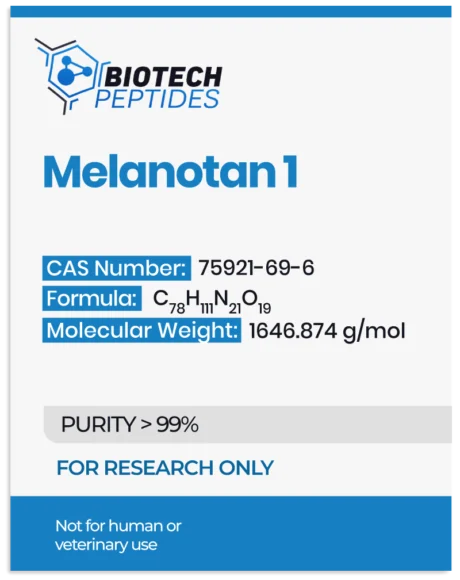
| Molecular Formula | C78H111N21O19 |
| Molecular Weight | 1646.8 g/mol |
| Amino Acid Sequence | Ac-Ser-Tyr-Ser-Nle-Glu-His-D-Phe-Arg-Trp-Gly-Lys-Pro-Val-NH2 |
| Available Quantity | 10mg |
| Research Classification | Research Use Only (RUO) |
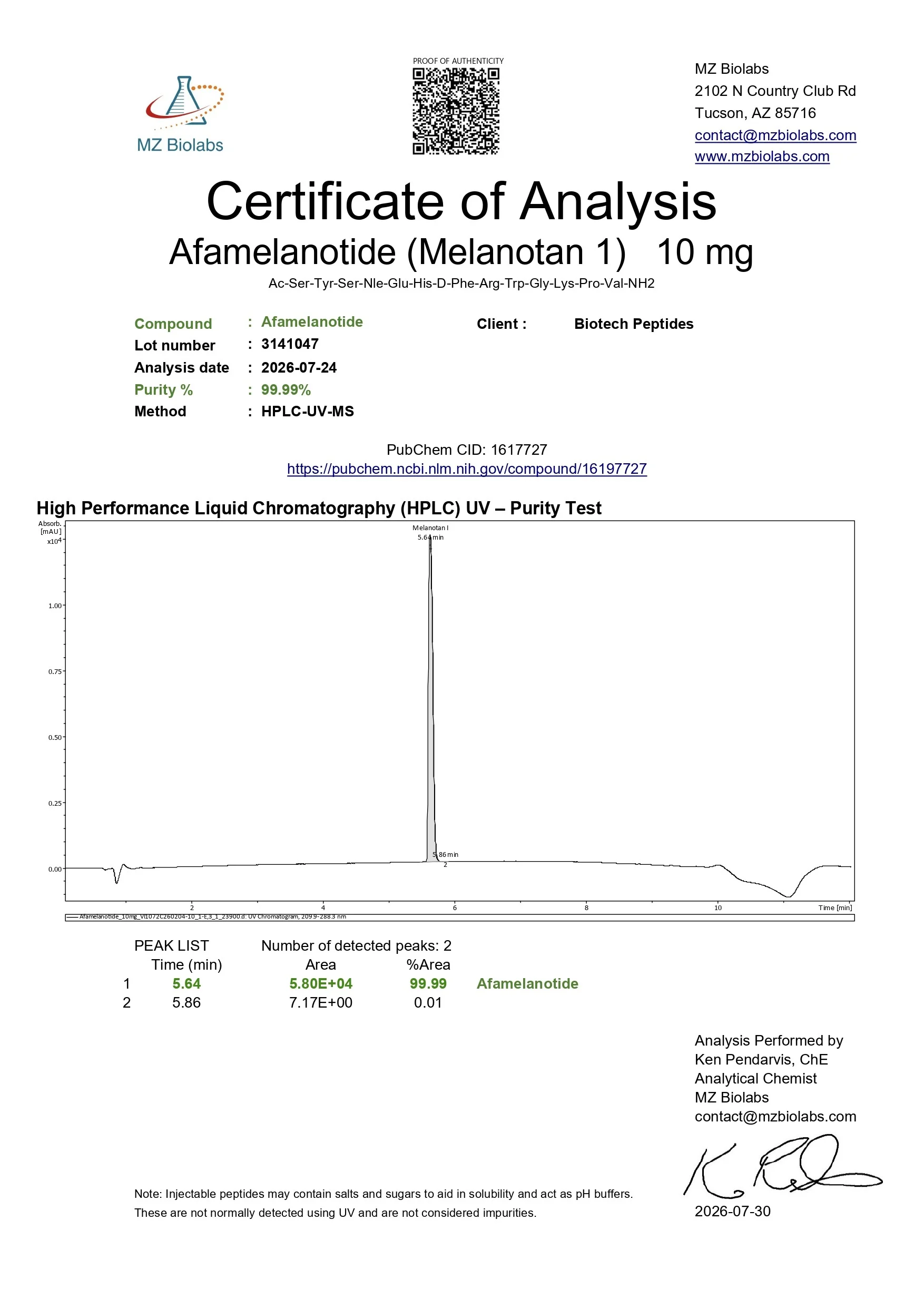
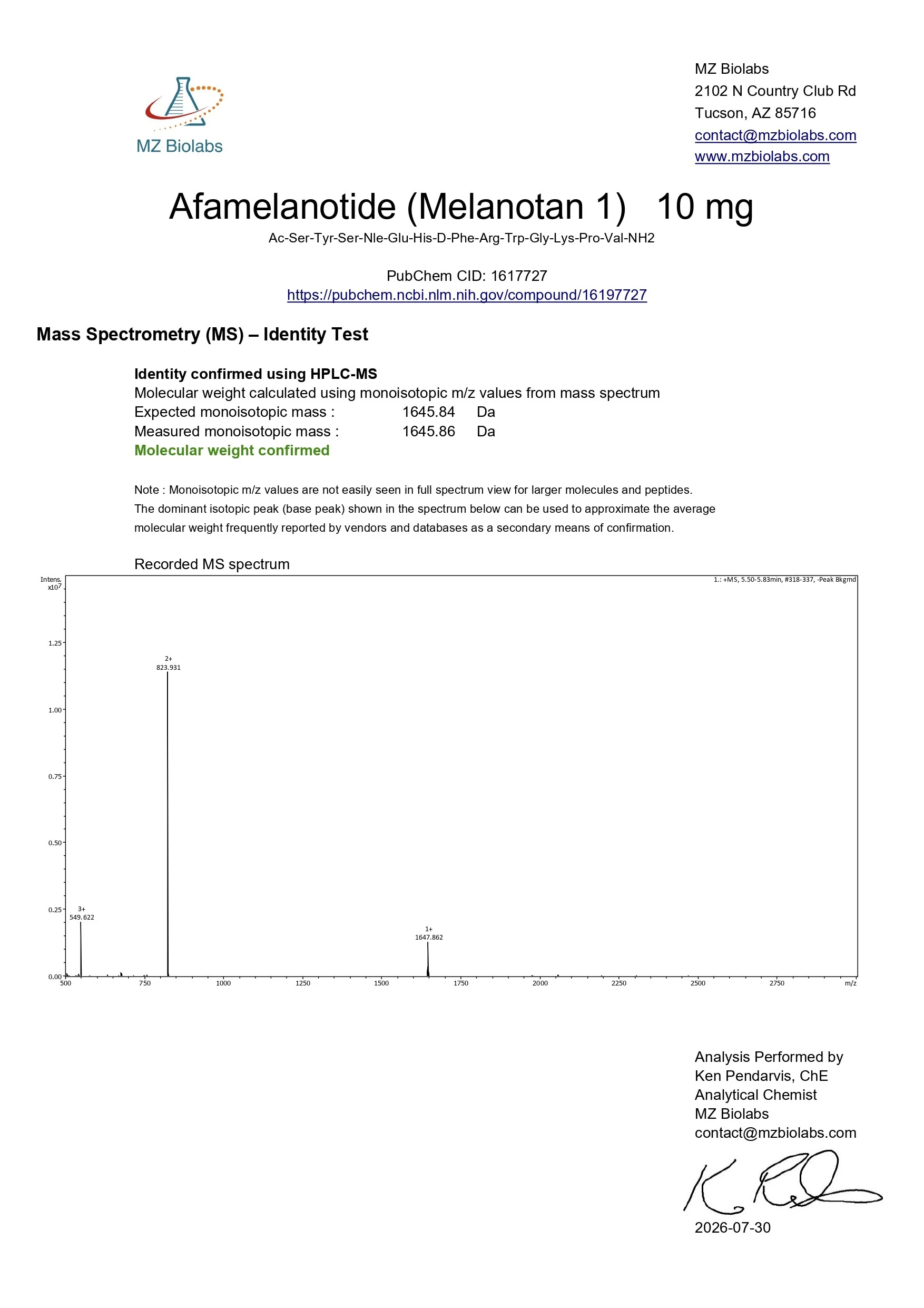
| Purity / Analytical Data | Refer to the lot-specific Certificate of Analysis (CoA) |
Melanotan 1 and Melanocortin Receptor Research
One of the primary areas of Melanotan 1 research is melanocortin receptor signaling. α-MSH is associated with multiple melanocortin receptors, while MT-1 has been investigated particularly in relation to MC1R-associated cellular signaling.
MC1R Research
MC1R is expressed in melanocytes and has an important role in experimental studies of melanogenesis. Researchers use melanocortin signaling models to investigate how receptor activation influences intracellular signaling pathways associated with pigment production.
Experimental investigations have examined the relationship between MC1R activation, cyclic AMP (cAMP) signaling, microphthalmia-associated transcription factor (MITF), and enzymes involved in melanin synthesis. These pathways provide a framework for studying how melanocortin receptor activity can alter melanocyte behavior in laboratory models.
MC3R, MC4R, and MC5R Research
Melanocortin receptors are distributed across multiple tissues and experimental systems. MC3R and MC4R have been investigated in research involving central nervous system signaling and energy-related cellular pathways, while MC5R has been studied across several tissue types.
Research involving MT-1 can therefore provide a molecular probe for investigating melanocortin receptor biology beyond pigmentation-related models. The specific receptor response depends on the experimental system, receptor expression profile, peptide concentration, and assay conditions.
Melanotan 1 and Melanin Research
Melanogenesis is a major research area associated with MT-1. Melanin is produced by specialized pigment-producing cells through a series of enzymatic and transcriptional processes. Two commonly studied forms of melanin are eumelanin and pheomelanin, which contribute different pigment characteristics.
Research models have examined whether melanocortin signaling through MC1R can influence cAMP-dependent pathways and MITF-associated transcription. These mechanisms provide researchers with experimental systems for investigating melanocyte signaling, pigment production, receptor pharmacology, and cellular responses to environmental stressors.
MT-1 has also been investigated in experimental pigmentation models involving ultraviolet radiation. Such studies provide a framework for examining interactions between melanocortin signaling, melanin production, cellular responses, and UV-associated biological processes.
Melanotan 1 in Neurobiology Research
Beyond melanocyte research, melanocortin receptors are investigated in neuroscience because several receptor subtypes are expressed within the central nervous system. Experimental research has examined MT-1 and related melanocortin compounds in models involving neuronal signaling, synaptic processes, microglial activity, and neuroinflammatory pathways.
MC4R is of particular interest in experimental neurobiology because of its expression in neural tissues and its involvement in melanocortin signaling. Researchers can use MT-1 as a molecular tool when investigating receptor-dependent signaling pathways and downstream cellular responses in controlled laboratory models.
Experimental studies have also explored relationships between melanocortin receptor activity and factors such as brain-derived neurotrophic factor (BDNF), synaptic signaling, and cellular homeostasis. These findings remain model-dependent and should not be interpreted as evidence of an established effect in humans.
Melanotan 1 and Cardiovascular Research Models
Melanocortin signaling has also been examined in experimental cardiovascular and cerebrovascular research. Laboratory studies have investigated receptor-dependent signaling in models involving vascular function, blood pressure regulation, ischemic conditions, and neuronal responses following experimentally induced vascular events.
These research models help investigators examine how melanocortin pathways interact with cellular signaling networks involved in vascular and neurological processes. Results from animal or cellular models should be interpreted within the limitations of the specific experimental system and should not be generalized beyond the studied model.
Melanotan 1 and Neuroinflammation Research
Melanocortin receptor pathways are another area of interest in neuroinflammation research. Experimental systems can be used to investigate interactions among melanocortin signaling, immune-cell activity, inflammatory mediators, and neural tissues.
Researchers studying neuroinflammatory signaling may examine receptor activation, cellular transcription, cytokine-associated pathways, and changes in immune-cell behavior. MT-1 can therefore serve as a research compound for exploring melanocortin-related mechanisms in controlled experimental environments.
Melanotan 1 and Fibrosis Research
MC1R signaling has also been investigated in experimental models of tissue remodeling and fibrosis. Research involving MC1R activity has examined pathways associated with extracellular matrix regulation, inflammatory signaling, and fibrogenic gene expression.
Experimental investigations have included molecular markers such as matrix metalloproteinases (MMPs), tissue inhibitors of metalloproteinases (TIMPs), transforming growth factor beta 1 (TGF-β1), collagen-associated genes, cyclooxygenase-2 (COX-2), and alpha-smooth muscle actin (α-SMA).
These pathways provide researchers with molecular endpoints for studying the relationship between melanocortin receptor signaling, extracellular matrix turnover, inflammation, and tissue remodeling. Findings from such models remain experimental and require validation within the specific research system being studied.
Key Research Features of Melanotan 1 10mg
- Defined peptide structure: Synthetic MT-1 sequence suitable for controlled laboratory research.
- Melanocortin research: Useful for investigating melanocortin receptor signaling and receptor-associated pathways.
- MC1R-focused studies: Applicable to experimental research involving melanocyte signaling and melanogenesis.
- Neurobiology research: Supports laboratory investigation of melanocortin pathways in neural research models.
- Cellular signaling research: Suitable for examining receptor-linked intracellular signaling pathways.
- Analytical research: The defined molecular weight and sequence support analytical characterization workflows.
- RUO classification: Supplied exclusively for laboratory research and scientific investigation.
Laboratory Handling and Storage
Melanotan 1 Peptide 10mg should be handled by qualified laboratory personnel using appropriate laboratory safety procedures. Storage conditions, reconstitution requirements, solvent compatibility, concentration ranges, and stability considerations should be determined according to the product’s lot-specific documentation and the requirements of the intended experimental protocol.
Researchers should consult the applicable Certificate of Analysis (CoA), product documentation, and institutional laboratory procedures before incorporating MT-1 into an experimental workflow. Avoid repeated freeze-thaw cycles where applicable and use appropriate laboratory controls to preserve sample integrity.
Frequently Asked Questions About Melanotan 1 Peptide 10mg
What is Melanotan 1?
Melanotan 1, also known as MT-1, is a synthetic melanocortin peptide structurally related to alpha-melanocyte-stimulating hormone (α-MSH). It is studied in laboratory research involving melanocortin receptors, melanocyte signaling, and related cellular pathways.
What is the molecular weight of Melanotan 1?
The supplied molecular weight of Melanotan 1 is 1646.8 g/mol. Its molecular formula is C78H111N21O19.
What is the Melanotan 1 amino acid sequence?
The supplied sequence is Ac-Ser-Tyr-Ser-Nle-Glu-His-D-Phe-Arg-Trp-Gly-Lys-Pro-Val-NH2.
What is Melanotan 1 used for in research?
Melanotan 1 is investigated as a research compound in studies involving melanocortin receptor signaling, MC1R-associated pathways, melanogenesis, melanocyte biology, cellular signaling, neurobiology, and other experimental melanocortin-related systems.
Research Use Only Disclaimer
FOR RESEARCH USE ONLY (RUO). Melanotan 1 Peptide 10mg is supplied exclusively for laboratory research, in-vitro testing, analytical research, and scientific investigation. It is not intended for human consumption, veterinary use, diagnosis, disease management, or use as a food, dietary supplement, cosmetic, or approved drug. This material is intended for use by qualified laboratory personnel following appropriate safety procedures, institutional requirements, and applicable laws. Experimental findings involving research models should not be interpreted as established outcomes in humans. The purchaser is responsible for determining appropriate laboratory use, handling, storage, and regulatory compliance.

Reviews
There are no reviews yet.