Description
GHRP-6 Peptide 5mg & 10mg– Research Use Only
GHRP-6 peptide, also known as Growth Hormone-Releasing Peptide-6, is a synthetic hexapeptide that has been investigated in experimental research involving growth hormone secretagogue receptors (GHS-Rs), ghrelin signaling, pituitary-cell biology, neurological models, cardiac-cell research, wound and scar models, and muscle-cell studies.
GHRP-6 research has primarily focused on its interaction with the ghrelin receptor, also known as growth hormone secretagogue receptor 1a (GHS-R1a). Experimental studies have examined receptor signaling and downstream biological processes in different cellular and animal models.
The supplied research material describes investigations involving growth hormone secretion, memory and brain-tissue models, Parkinson’s-related research, cardiac-cell models, CD36 receptors, wound healing, fibrosis, scarring, and muscle-cell biology.
This product is intended strictly for Research Use Only (RUO). It is not intended for human or veterinary use, diagnosis, treatment, prevention, or mitigation of disease.
GHRP-6 Peptide Specifications
| Specification | Details |
|---|---|
| Product Name | GHRP-6 Peptide |
| Full Name | Growth Hormone-Releasing Peptide-6 |
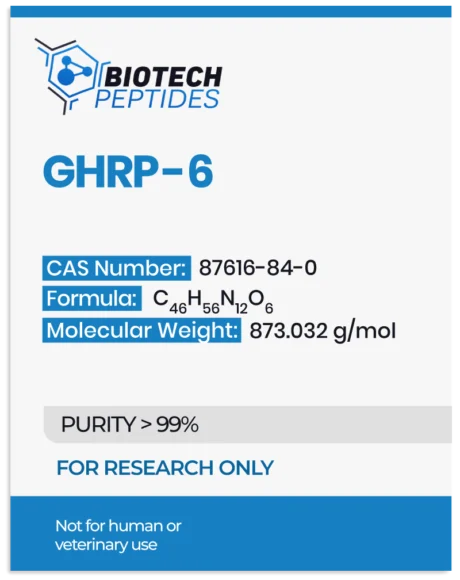
| Molecular Formula | C46H56N12O6 |
| Molecular Weight | 873.032 g/mol |
| Sequence | His-D-Trp-Ala-Trp-D-Phe-Lys |
| Peptide Type | Synthetic hexapeptide |
| Research Classification | Research Use Only |
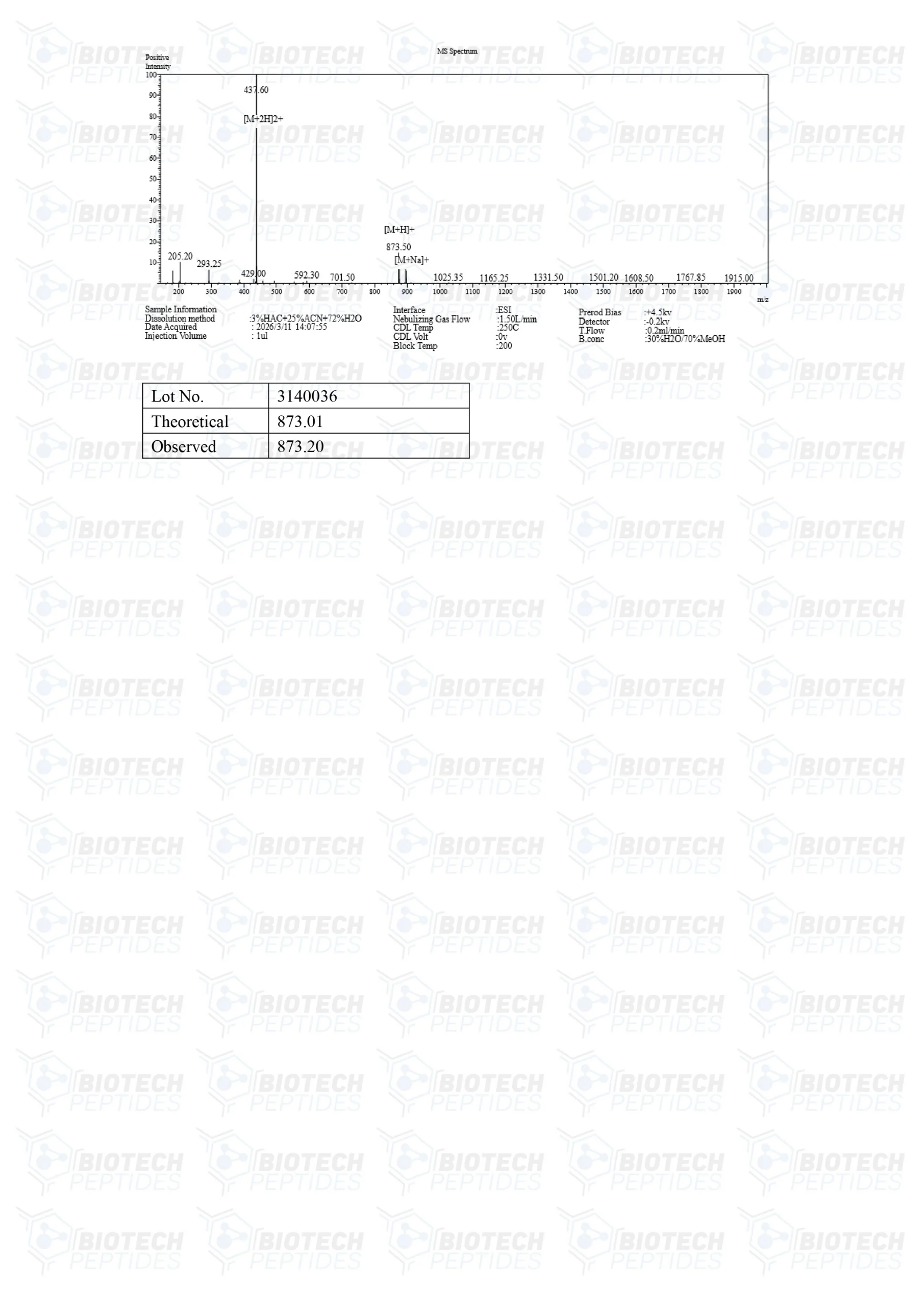
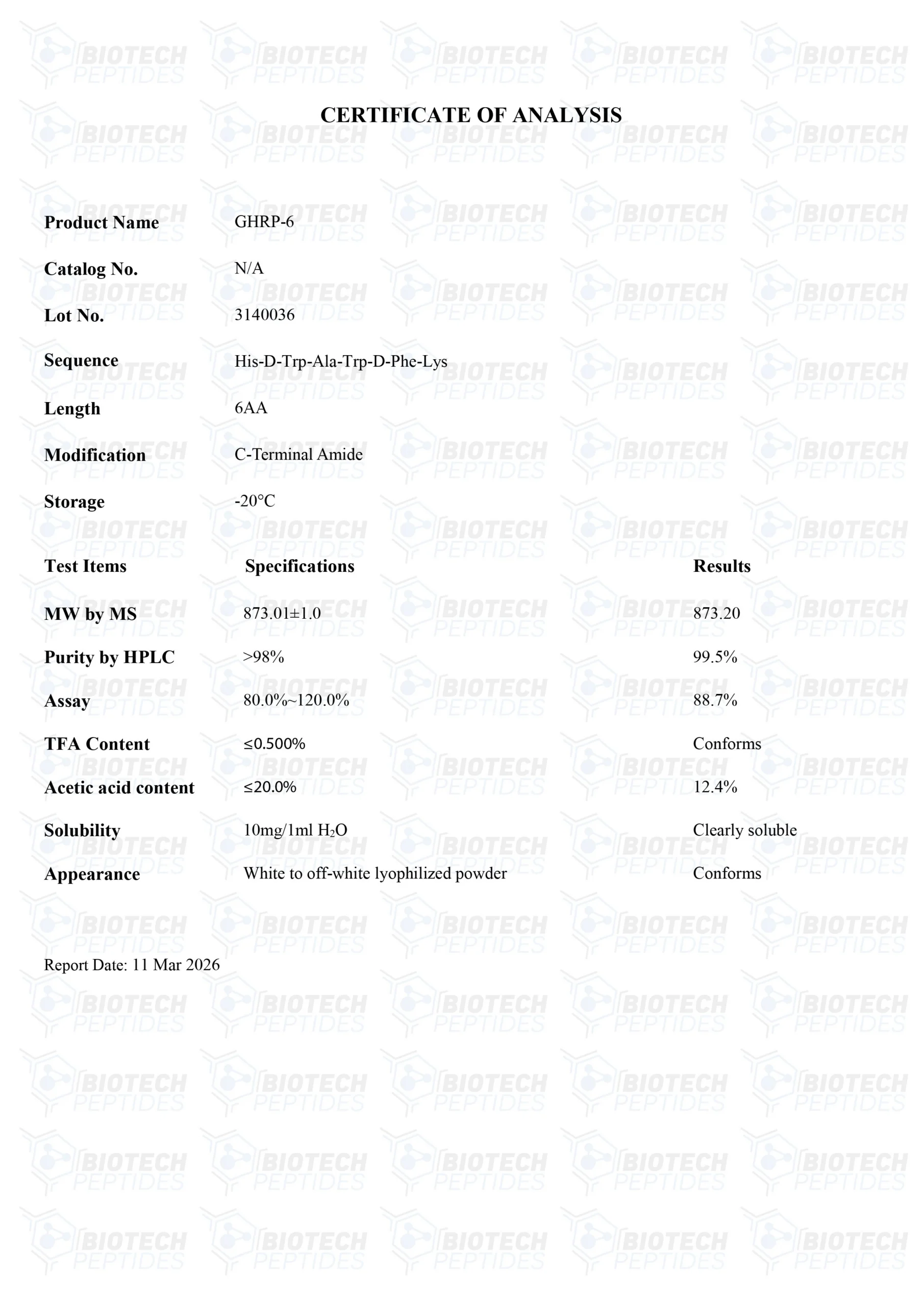
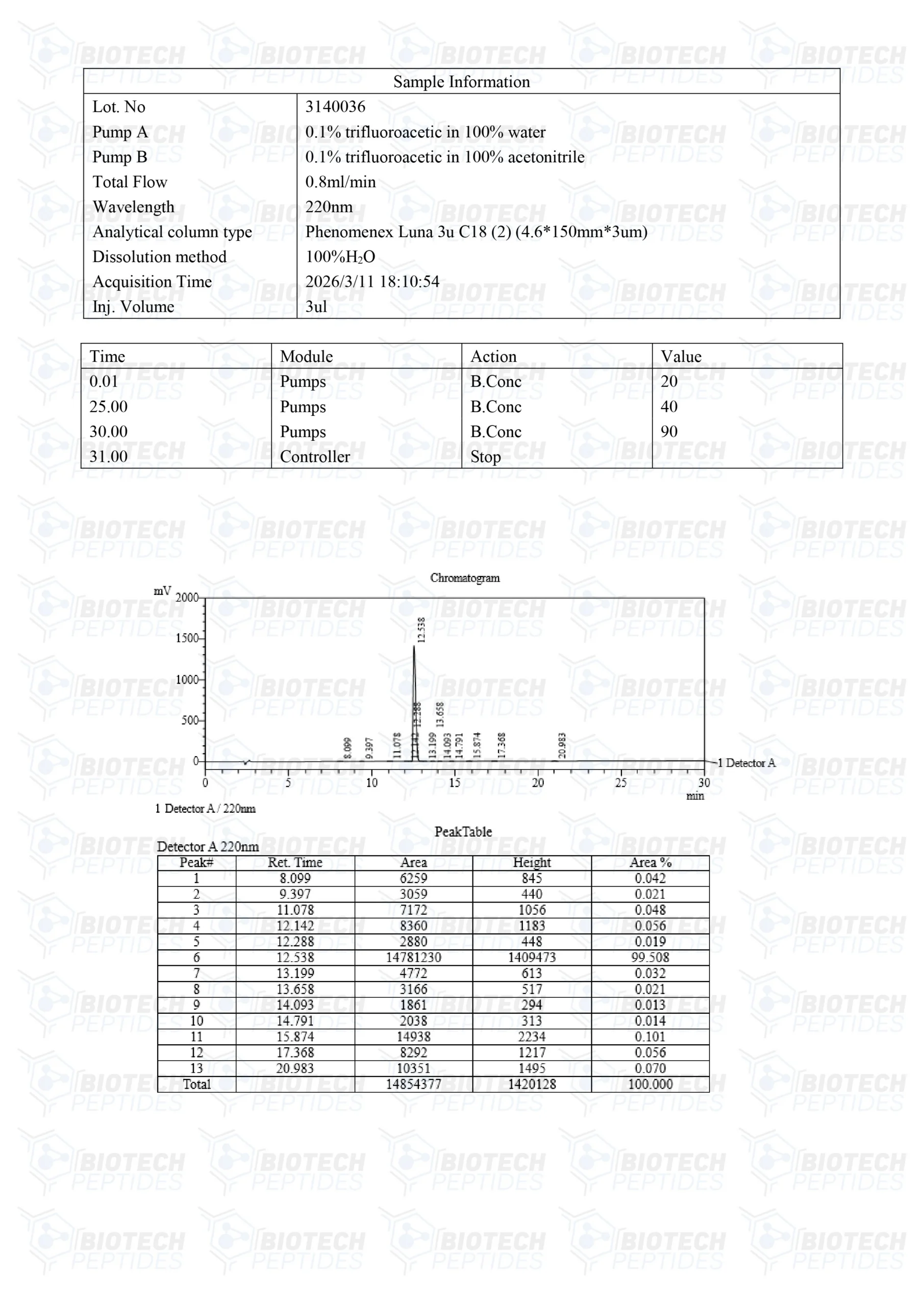
Researchers should verify molecular characterization, sequence nomenclature, and batch-specific analytical information against the applicable certificate of analysis or technical documentation.
GHRP-6 Research Peptide
GHRP-6 has been investigated across multiple experimental systems. A significant portion of the research concerns the interaction between GHRP-6 and GHS-R1a, the receptor associated with ghrelin signaling.
Additional studies have explored downstream effects involving growth-hormone signaling, neuronal pathways, cardiac-cell responses, CD36 receptor activity, wound models, fibrotic pathways, and muscle-cell differentiation.
The following sections summarize the research areas contained in the supplied material.
GHRP-6 and Growth-Hormone Research
One of the principal areas of GHRP-6 laboratory research involves growth-hormone secretion and pituitary-cell signaling.
Experimental studies have investigated whether GHRP-6 interacts with growth hormone secretagogue receptors located on anterior pituitary cells. These receptors represent a different signaling pathway from the receptors activated by growth hormone-releasing hormone (GHRH).
The supplied research describes experiments comparing GHRP-6 and GHRH in relation to measured human growth-hormone concentrations. One experimental study reported a mean hGH peak of 15.7 ng/mL and an estimated total hGH release of 674 ng/mL during the first 90 minutes, compared with reported values of 6.8 ng/mL and 412 ng/mL following GHRH exposure.
Another experiment described in the source compared GHRP-6 with a control condition and reported measured hGH concentrations of 15.4 ng/mL and 5.5 ng/mL, respectively.
These values are experimental observations from the cited models and should be interpreted according to the conditions and methodology of each individual study.
GHRP-6 and Memory Research
GHRP-6 has also been investigated in experimental neuroscience and memory models.
Rodent studies described in the supplied material examined relationships between GHRP-6, ghrelin signaling, memory consolidation, and spatial learning.
Research in this area has investigated the possibility that growth hormone secretagogues may influence cognitive processes through ghrelin-associated pathways. The supplied material further suggests that growth-hormone signaling may represent an indirect component of these experimental observations.
These studies provide a research framework for examining interactions between peptide signaling, ghrelin receptors, and memory-related processes.
GHRP-6 and Brain-Tissue Research
Another research area concerns experimental neurological models involving GHRP-6.
The supplied material describes animal studies examining GHRP-6 in models of experimentally induced stroke and reduced cerebral blood supply. Researchers have investigated potential changes in brain-tissue damage and memory-related outcomes following experimental injury.
At the cellular level, studies have examined apoptosis-related pathways and potential relationships between GHRP-6, growth-hormone signaling, and insulin-like growth factor-1 (IGF-1).
Experimental investigations have measured IGF-1 messenger RNA (mRNA) in different brain regions, including the hypothalamus, cerebellum, and hippocampus. The supplied material reports that changes were not observed in the cerebral cortex in the described experiment.
Additional molecular investigations examined protein kinase B (Akt), BAD, Bcl-2, and Bax. These proteins are involved in cellular survival and apoptosis signaling.
Such experiments provide research models for studying peptide-associated signaling in neuronal and brain-tissue systems.
GHRP-6 and Parkinson’s-Related Research
GHRP-6 has been investigated in experimental research involving ghrelin receptors and Parkinson’s-related neurological models.
The supplied material describes research examining the presence of ghrelin receptors in the substantia nigra, a brain region associated with dopaminergic neurons.
Experimental models with altered ghrelin-receptor signaling have been used to investigate relationships between GHS-R expression and dopaminergic neuronal function.
The source describes a proposed relationship between reduced GHS-R signaling and experimental neurological dysfunction. Researchers have also hypothesized that peptides interacting with these receptors may influence neuronal apoptosis.
These findings remain within the scope of preclinical research and require further experimental investigation.
GHRP-6 and Cardiac-Cell Research
Experimental research has examined GHRP-6 in cardiac-cell models.
The supplied material describes porcine research investigating whether GHRP-6 may influence free-radical-associated cytotoxicity in cardiac cells.
These experiments have contributed to research examining peptide-associated cellular responses under conditions involving oxidative or metabolic stress.
The source characterizes this area of research as preliminary.
GHRP-6 and Ghrelin-Receptor Research
GHRP-6 research is closely associated with the GHS-R1a/ghrelin receptor system.
Ghrelin is an endogenous peptide involved in several physiological signaling pathways, while GHS-R1a is a receptor studied extensively in neuroendocrine research.
Experimental investigations have examined how GHRP-6 interacts with this receptor system and how downstream signaling may influence different biological models.
Research has extended beyond growth-hormone secretion to investigate neurological, behavioral, cardiovascular, metabolic, and cellular processes.
GHRP-6 and CD36 Receptor Research
The supplied research also describes investigations into potential interactions between GHRP-6 and CD36 receptors.
CD36 is a receptor involved in several biological processes, including lipid uptake and transport, immune-cell signaling, phagocytosis, inflammatory pathways, and vascular biology.
Experimental studies have investigated whether GHRP-6 exposure may influence CD36-associated pathways.
Research in murine models has examined wound-related outcomes and inflammatory signaling, including experimental measurements of cytokines and other molecular markers.
These findings provide a basis for further laboratory investigation of GHRP-6 and receptor systems beyond GHS-R1a.
GHRP-6 and Wound-Model Research
GHRP-6 has been investigated in experimental wound and scar models.
The supplied material describes research involving murine wound models and potential relationships between GHRP-6 exposure, CD36 signaling, inflammation, vascular processes, and extracellular-matrix organization.
Researchers have examined wound closure and the formation of connective-tissue components such as collagen.
Additional studies described in the source investigated combined radiation-and-burn injury models, with measurements involving inflammatory markers including tumor necrosis factor alpha (TNF-α).
These studies provide experimental models for examining peptide-associated signaling during wound-related biological processes.
GHRP-6 and Fibrosis Research
Another experimental area involves liver fibrosis.
The supplied material describes a rodent study in which GHRP-6 exposure was investigated over an extended experimental period. Researchers examined fibrogenic markers including transforming growth factor-beta (TGF-β) and connective tissue growth factor (CTGF).
The study also evaluated fibrotic tissue and nodularity as experimental endpoints.
The reported findings provide a basis for investigating relationships between GHRP-6 signaling and fibrotic pathways in animal research models.
GHRP-6 and Scarring Research
Experimental studies have also investigated GHRP-6 in models involving scar formation and extracellular-matrix organization.
The supplied research discusses potential relationships between GHRP-6, CD36-associated signaling, vascular processes, cellular survival, inflammation, and collagen organization.
Research involving rat models has examined wound closure and the development of hypertrophic scar-like tissue.
These studies are relevant to laboratory investigations of extracellular-matrix deposition, collagen organization, inflammatory signaling, and wound-model biology.
GHRP-6 and Muscle-Cell Research
GHRP-6 has also been investigated in experimental muscle-cell systems.
Studies involving cultured myoblasts have examined whether GHRP-6 exposure is associated with changes in myogenic marker proteins and cellular metabolic activity.
The supplied material also describes experimental observations involving IGF-1 and collagen type I, both of which are relevant to studies of muscle-cell differentiation and extracellular-matrix biology.
These experiments provide a laboratory framework for studying peptide-associated changes in myoblast activity, muscle-cell differentiation, protein expression, and connective-tissue signaling.
Key GHRP-6 Research Areas
Researchers studying GHRP-6 research peptide may encounter experimental literature involving:
- GHS-R1a and ghrelin-receptor signaling
- Growth-hormone secretagogue research
- Anterior pituitary-cell models
- Growth-hormone secretion
- GHRH pathway comparisons
- Memory consolidation research
- Spatial-learning models
- Brain-tissue research
- IGF-1 and IGF-1 mRNA studies
- Akt and BAD signaling
- Bcl-2 and Bax research
- Parkinson’s-related experimental models
- Cardiac-cell research
- Oxidative-stress models
- CD36 receptor research
- Wound-model studies
- Inflammatory signaling
- TNF-α research
- Liver-fibrosis models
- TGF-β and CTGF research
- Scar and extracellular-matrix studies
- Myoblast research
- Collagen type I expression
- Muscle-cell differentiation
GHRP-6 Molecular Weight and Peptide Sequence
The supplied specification identifies the molecular formula of GHRP-6 as C46H56N12O6 and the molecular weight as 873.032 g/mol.
The supplied peptide sequence is:
His-D-Trp-Ala-Trp-D-Phe-Lys
Researchers should verify sequence notation, molecular characterization, purity information, and other batch-specific specifications using the applicable certificate of analysis or technical documentation.
Laboratory Research and Documentation
Before using GHRP-6 in an experimental protocol, researchers should review the documentation associated with the specific research material.
Depending on the available batch documentation, relevant information may include:
- Batch identification
- Molecular formula
- Molecular weight
- Peptide sequence
- Purity specification
- Analytical characterization
- Certificate of analysis
- Manufacturer technical documentation
Where a specification is not supplied, researchers should consult the applicable batch documentation rather than assuming an analytical value.
Frequently Asked Questions
What is GHRP-6 peptide?
GHRP-6, or Growth Hormone-Releasing Peptide-6, is a synthetic hexapeptide that has been investigated extensively in experimental research involving GHS-R1a, ghrelin signaling, pituitary-cell biology, neuroscience, cardiovascular models, wound research, fibrosis, and muscle-cell systems.
What is the molecular weight of GHRP-6?
The supplied specification lists the molecular weight of GHRP-6 as 873.032 g/mol.
What is the molecular formula of GHRP-6?
The molecular formula supplied for GHRP-6 is C46H56N12O6.
What is the GHRP-6 peptide sequence?
The supplied sequence is His-D-Trp-Ala-Trp-D-Phe-Lys.
What is GHRP-6 studied for in laboratory research?
GHRP-6 has been investigated in experimental studies involving growth-hormone signaling, ghrelin receptors, memory, brain tissue, Parkinson’s-related models, cardiac cells, CD36 receptors, wound models, fibrosis, scar formation, and muscle-cell biology.
Is GHRP-6 intended for human or animal use?
No. This product is presented strictly as a Research Use Only (RUO) material. It is not intended for human or animal consumption, clinical use, diagnosis, treatment, prevention, or mitigation of disease.
Research Use Only Disclaimer
RESEARCH USE ONLY (RUO): GHRP-6 peptide is intended exclusively for qualified laboratory and scientific research, including appropriate in-vitro and experimental applications. This material is not intended for human consumption, animal consumption, clinical use, diagnosis, treatment, prevention, or mitigation of any disease or medical condition. It must not be represented or marketed as a drug, dietary supplement, therapeutic agent, or medical treatment. Researchers are responsible for appropriate laboratory handling, storage, experimental design, regulatory compliance, and applicable laboratory safety procedures.

Reviews
There are no reviews yet.