
Buy GHK Basic Peptide 50mg | Glycyl-L-Histidyl-L-Lysine
GHK Basic Peptide 50mg is a research-grade tripeptide composed of glycyl-L-histidyl-L-lysine (Gly-His-Lys). Also known as GHK, this naturally occurring peptide is widely investigated in laboratory research involving copper-peptide biology, gene expression, oxidative stress, DNA integrity, fibroblast signaling, extracellular matrix pathways, and cellular responses to tissue stress.
For researchers looking to buy GHK Basic Peptide 50mg for laboratory investigation, this material provides the non-copper-complexed form of the GHK tripeptide for controlled experimental studies. GHK has a strong affinity for copper(II), making the relationship between free GHK and copper-bound GHK-Cu an important subject in peptide and metallobiology research.
GHK Basic Peptide Research Overview
GHK is a naturally occurring tripeptide consisting of glycine, histidine, and lysine. It is structurally distinct from GHK-Cu, in which GHK is associated with copper.
The basic GHK form is particularly relevant to research examining how short peptides interact with cellular signaling and metal-associated biochemical pathways.
Research areas associated with GHK include:
- Gene-expression regulation
- Copper-peptide interactions
- Fibroblast signaling
- Extracellular matrix biology
- Collagen and elastin research
- Glycosaminoglycan pathways
- Oxidative-stress research
- DNA-repair pathways
- Cellular inflammation models
- Mitochondrial and metabolic research
- Tissue-remodeling models
- Cellular stress responses
GHK Basic vs. GHK-Cu
GHK and GHK-Cu should be distinguished when designing laboratory experiments.
GHK Basic refers to the tripeptide Gly-His-Lys without copper complexation. GHK has a high affinity for copper ions and can participate in copper-associated biochemical research.
GHK-Cu refers to a copper-associated form of the peptide. Copper is an important biological trace element involved in numerous enzyme systems, electron-transfer reactions, antioxidant pathways, connective-tissue biology, and cellular metabolism.
This distinction can be important when comparing experimental results because copper availability and peptide-metal interactions may influence the observed biological response.
Researchers investigating GHK may therefore compare:
- Free GHK peptide
- Copper-associated GHK
- Copper-dependent cellular pathways
- Peptide-mediated gene expression
- Metal-binding interactions
- Cellular responses to oxidative stress
GHK Peptide and Gene-Expression Research
One of the most extensively discussed areas of GHK research involves changes in gene expression.
Experimental investigations have examined whether GHK can influence groups of genes associated with cellular stress, tissue remodeling, extracellular matrix biology, antioxidant activity, and cellular signaling.
This makes GHK particularly useful for researchers studying how a short endogenous peptide interacts with complex cellular transcriptional networks.
Potential research endpoints include:
- Differential gene expression
- Fibroblast-associated signaling
- Stress-response genes
- Antioxidant genes
- Extracellular matrix genes
- DNA-repair pathways
- Cellular proliferation markers
- Apoptosis-associated genes
Gene-expression results should be evaluated according to the experimental cell type, culture conditions, peptide concentration, exposure time, and analytical platform.
GHK and DNA-Repair Research
GHK has been investigated in experimental research involving DNA integrity and cellular responses to oxidative damage.
DNA can be affected by reactive oxygen species and reactive carbonyl compounds generated during cellular stress. Research involving GHK has examined whether the tripeptide influences antioxidant and DNA-associated pathways under controlled experimental conditions.
Laboratory studies may investigate relationships between GHK and:
- DNA-repair gene expression
- Oxidative DNA damage
- Reactive carbonyl species
- Genomic stability
- Antioxidant-response pathways
- Cellular stress signaling
Reported research has also examined GHK-associated changes in antioxidant and pro-oxidant gene networks, providing opportunities for further mechanistic investigation.
GHK Peptide and Oxidative-Stress Research
Oxidative stress is another major research area associated with GHK.
The peptide has been studied in experimental models examining reactive oxygen species, lipid-peroxidation products, antioxidant enzymes, and cellular responses to oxidative conditions.
Researchers may use GHK to investigate:
- Reactive oxygen species
- Lipid peroxidation
- Antioxidant enzyme activity
- Nrf2-associated signaling
- Cellular redox balance
- Oxidative damage
- Reactive carbonyl compounds
GHK has also been investigated in relation to compounds such as 4-hydroxynonenal, acrolein, and malondialdehyde, which are relevant markers and products of oxidative lipid damage.
These studies provide a framework for examining whether GHK-associated molecular interactions influence cellular redox pathways.
GHK and Fibroblast Research
Fibroblasts are important experimental models for studying extracellular matrix organization, collagen-associated pathways, cellular remodeling, and tissue architecture.
GHK research has investigated signaling pathways involving fibroblasts and extracellular matrix components, including pathways associated with TGF-β.
Researchers can investigate GHK in experimental fibroblast systems to examine:
- Fibroblast activity
- Collagen-associated pathways
- Elastin-associated pathways
- Extracellular matrix signaling
- TGF-β-related pathways
- Glycosaminoglycan synthesis
- Cellular remodeling
- Gene-expression changes
The ability of GHK to interact with copper also makes it relevant to research examining the relationship between peptide signaling and copper-dependent biochemical processes.
GHK and Extracellular Matrix Research
GHK has been investigated in connection with extracellular matrix components such as collagen, elastin, glycosaminoglycans, and hyaluronic-acid-associated pathways.
These molecules are important subjects in research involving cellular architecture and extracellular tissue organization.
Experimental studies may therefore evaluate GHK-associated effects on:
- Collagen synthesis pathways
- Elastin-associated signaling
- Fibroblast activity
- Glycosaminoglycan metabolism
- Hyaluronic-acid-associated pathways
- Extracellular matrix organization
- Cellular remodeling
Such studies can help characterize the molecular mechanisms associated with short peptide signaling in cellular and tissue models.
GHK and Inflammatory Signaling Research
GHK has also been investigated in experimental inflammatory models involving cytokines and intracellular signaling pathways.
Research has examined pathways including NF-κB, p38 MAPK, TNF-associated signaling, IL-6, and Nrf2 in experimental systems.
These pathways are frequently used as molecular markers when studying cellular responses to inflammatory or oxidative stress.
GHK research may therefore include:
- NF-κB signaling
- p38 MAPK pathways
- TNF-associated signaling
- IL-6 expression
- Nrf2-associated antioxidant responses
- Macrophage and immune-cell models
- Oxidative-inflammatory interactions
These experimental observations should not be interpreted as evidence of a clinical anti-inflammatory effect.
GHK Peptide and Fibrinogen Research
Another research area involves GHK and fibrinogen-associated gene expression.
Fibrinogen is a glycoprotein complex consisting of alpha, beta, and gamma chains. Experimental research has investigated whether GHK exposure can influence expression of the FGB gene, which encodes the beta chain of fibrinogen.
This provides an interesting model for studying relationships between:
- GHK peptide signaling
- FGB gene expression
- Fibrinogen synthesis
- IL-6-associated pathways
- Cellular inflammatory signaling
- Protein-expression regulation
These findings remain experimental and require further investigation across different biological models.
GHK and Cellular Repair Research
GHK has been studied in experimental models of tissue remodeling and cellular repair. Research has investigated interactions between the peptide, fibroblasts, extracellular matrix components, antioxidant systems, and vascular-associated cellular processes.
Experimental wound-model research has also examined GHK-containing biomaterials and peptide-loaded systems in relation to collagen deposition, epithelialization, fibroblast activity, and antioxidant markers.
These studies may provide research opportunities involving:
- Fibroblast proliferation
- Collagen-associated pathways
- Epithelial-cell biology
- Extracellular matrix formation
- Antioxidant responses
- Cellular remodeling
- Biomaterial-peptide interactions
Results from animal or tissue models should remain appropriately limited to the experimental system in which they were obtained.
GHK Basic Peptide Specifications
| Property | Specification |
|---|---|
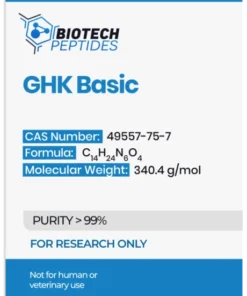
| Product Name | GHK Basic Peptide |
| Research Quantity | 50mg |
| Peptide Type | Synthetic tripeptide |
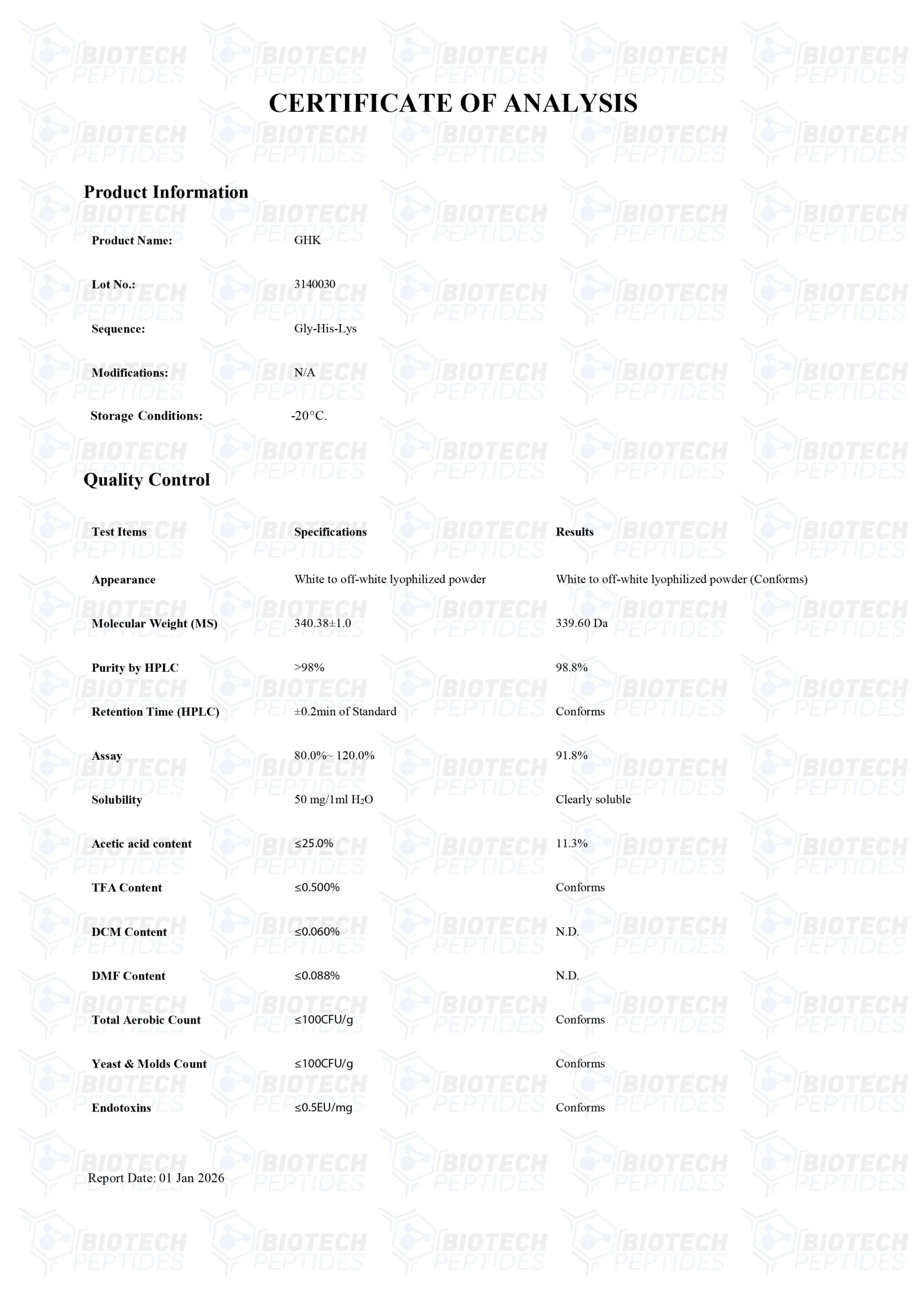
| Sequence | Gly-His-Lys |
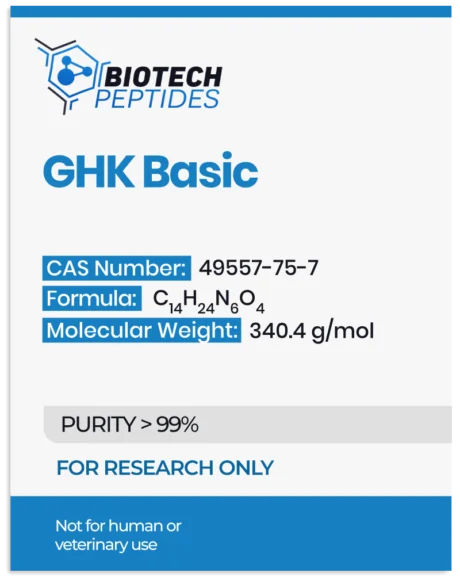
| Molecular Formula | C14H24N6O4 |
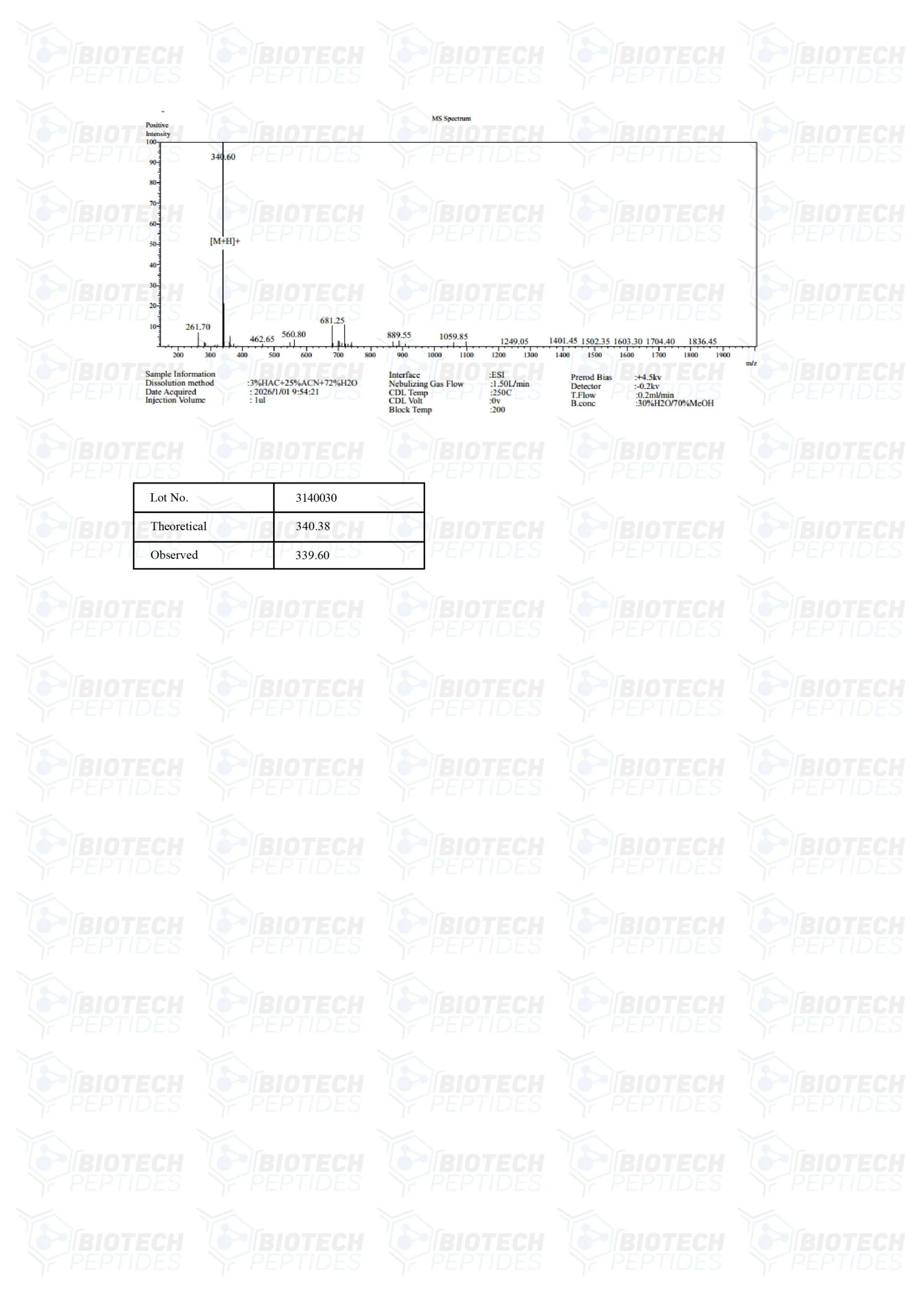
| Molecular Weight | 340.4 g/mol |
| Synonym | Glycylhistidyllysine |
| Copper Complex | No copper specified in the basic GHK form |
| Research Classification | Research Use Only |
| Primary Research Areas | Gene expression, oxidative stress, DNA repair, fibroblast biology and cellular signaling |
GHK Basic Peptide Research Applications
GHK Basic Peptide 50mg can be investigated in a range of laboratory models involving peptide signaling, gene expression, oxidative stress, and cellular remodeling.
Potential research applications include:
- GHK peptide-cell interaction studies
- Copper-peptide research
- Fibroblast models
- Extracellular matrix research
- Collagen-associated pathways
- DNA-repair research
- Oxidative-stress models
- Nrf2-associated signaling
- NF-κB and p38 MAPK research
- FGB and fibrinogen-expression studies
- TGF-β-associated pathways
- Cellular remodeling
- Gene-expression profiling
- Biomaterial and peptide research
Researchers should establish appropriate experimental concentrations, controls, preparation procedures, exposure periods, and analytical endpoints according to their validated laboratory protocols.
Frequently Asked Questions About GHK Basic Peptide
What is GHK Basic Peptide?
GHK Basic Peptide is the tripeptide Gly-His-Lys, also known as glycyl-L-histidyl-L-lysine. It is a research compound investigated in cellular signaling, gene-expression, oxidative-stress, DNA-repair, fibroblast, and extracellular matrix research.
What is the difference between GHK and GHK-Cu?
GHK is the basic Gly-His-Lys tripeptide, while GHK-Cu refers to a copper-associated form of the peptide. The basic GHK material does not specify copper complexation.
What is the molecular weight of GHK?
The supplied molecular weight of GHK Basic Peptide is 340.4 g/mol, with the molecular formula C14H24N6O4.
What is the sequence of GHK?
The sequence is Gly-His-Lys (GHK).
What research areas are associated with GHK?
GHK has been investigated in experimental research involving gene expression, fibroblast signaling, extracellular matrix biology, oxidative stress, DNA-repair pathways, antioxidant signaling, inflammatory pathways, and cellular remodeling.
Is GHK Basic Peptide intended for human use?
No. GHK Basic Peptide 50mg is supplied strictly for laboratory research, in-vitro testing, analytical research, and scientific investigation. It is not intended for human consumption, clinical use, diagnosis, disease management, or therapeutic application.
Be the first to review “GHK Basic Peptide 50mg | Glycyl-L-Histidyl-L-Lysine”
Related products
Biotech Peptides
Biotech Peptides
Biotech Peptides
Biotech Peptides
Biotech Peptides
Biotech Peptides
Biotech Peptides
Biotech Peptides
Reviews
There are no reviews yet.