

Description
Epithalon Peptide 10mg & 25mg
Epithalon, also known as Epitalon, Epithalone, or Epithalamin, is a small synthetic tetrapeptide consisting of four amino acids: alanine, glutamic acid, aspartic acid, and glycine. The peptide has been investigated in experimental research involving cellular aging, oxidative stress, gene expression, telomerase-related mechanisms, extracellular-matrix biology, circadian signaling, and other biological pathways.
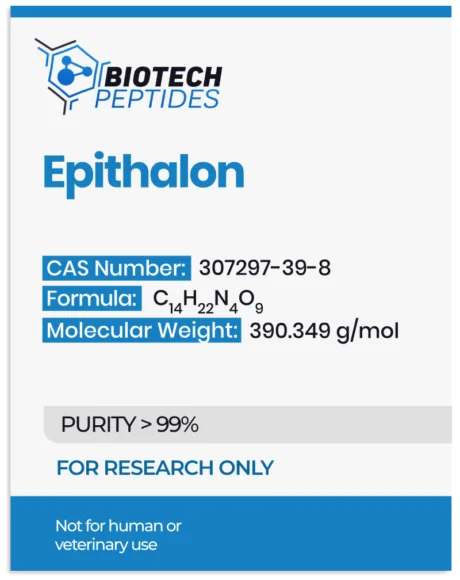
For researchers looking to buy Epithalon peptide for laboratory investigation, this compound provides a defined four-residue peptide with a molecular weight of 390.34 g/mol and the sequence Ala-Glu-Asp-Gly.
Research involving Epithalon includes cell-culture studies and animal-model experiments examining different molecular and cellular pathways. These findings provide scientific context for further laboratory investigation but should not be interpreted as evidence of clinical efficacy or suitability for human use.
This product is supplied strictly for Research Use Only (RUO).
Buy Epithalon Peptide for Laboratory Research
Epithalon is a synthetic peptide that has been studied across several areas of experimental biology. Its relatively short sequence makes it a useful compound for research involving peptide characterization, molecular interactions, cellular signaling, and experimental biological systems.
The peptide has appeared in research under several names, including Epitalon and Epithalone. The supplied source also identifies Epithalamin as a related title.
Researchers investigating Epithalon can use its defined molecular characteristics as a reference when designing analytical or experimental studies.
Epithalon Molecular Specifications
| Specification | Details |
|---|---|
| Product Name | Epithalon Peptide |
| Alternative Names | Epitalon, Epithalone, Epithalamin |
| Molecular Formula | C14H22N4O9 |
| Molecular Weight | 390.34 g/mol |
| Sequence | Ala-Glu-Asp-Gly |
| Peptide Length | 4 amino acids |
| Research Classification | Research Use Only (RUO) |
The specifications above are based on the supplied product information. Researchers should consult current batch-specific documentation for any additional analytical information.
Epithalon Peptide and Cellular Aging Research
One major area of experimental interest surrounding Epithalon is cellular aging.
The supplied research describes investigations in insect and murine models examining possible relationships between Epithalon-related peptide preparations and cellular longevity. Experimental studies have also examined oxidative stress, reactive oxygen species (ROS), telomerase activity, and DNA-related mechanisms.
Telomerase is an enzyme associated with maintenance of chromosome ends known as telomeres. Because telomere integrity is an important subject in cellular and molecular biology, Epithalon has been investigated in experimental systems examining relationships between peptide exposure and telomerase-associated pathways.
The source material also describes research involving aged oocyte models, where investigators examined parameters including ROS accumulation, cellular morphology, mitochondrial membrane potential, mitochondrial DNA copy number, DNA-damage markers, and apoptosis.
These findings represent experimental observations and should be evaluated according to the specific model, experimental conditions, and methodology used in each study.
Epithalon and Oxidative Stress Research
Oxidative stress and reactive oxygen species are important areas of laboratory research because changes in ROS levels can affect cellular structures and signaling pathways.
Experimental research supplied for Epithalon describes investigations into ROS accumulation in aged cellular models. Researchers have also examined markers associated with oxidative damage and cellular integrity.
These studies provide a research framework for investigating:
- Reactive oxygen species
- Oxidative-stress pathways
- Cellular aging models
- Mitochondrial function
- DNA-damage markers
- Cellular morphology
- Apoptosis-associated pathways
Epithalon research in this area remains experimental, and results from specific laboratory or animal models should not be generalized beyond the conditions under which they were obtained.
Epithalon and DNA Regulation Research
Another area of investigation involves potential relationships between Epithalon and gene-expression pathways.
The supplied research describes experimental investigations involving promoter regions and genes including Tram1, IL-2, CD5, and MMP2. These genes are associated with different biological processes, making their expression useful for investigating peptide-associated cellular responses.
Research has also examined potential interactions between Epithalon and histone proteins. Molecular modeling described in the supplied source investigated potential peptide interactions with histones H1/6 and H1/3 and their possible relationship with DNA accessibility.
These findings provide a basis for further research into:
- Gene expression
- Histone interactions
- Chromatin structure
- DNA accessibility
- Transcriptional regulation
- Peptide–protein interactions
Epithalon and Stem Cell Research
Epithalon has also been investigated in experimental stem-cell systems.
The supplied research describes studies involving human gingival mesenchymal stem cells and periodontal ligament stem cells. Researchers examined expression levels of neurogenic differentiation markers, including:
- Nestin
- GAP43
- β-Tubulin III
- Doublecortin
Such research provides an experimental framework for studying relationships between short peptides, gene expression, protein synthesis, and cellular differentiation.
These results should remain within their experimental context and do not establish a clinical application for Epithalon.
Epithalon and Extracellular Matrix Research
MMP2 expression and fibroblast activity are additional areas discussed in the supplied research.
Matrix metalloproteinase 2 (MMP2) is an enzyme associated with extracellular-matrix biology. Fibroblasts are connective-tissue cells involved in producing and maintaining extracellular-matrix components.
Experimental investigations have examined whether Epithalon exposure is associated with changes in MMP2 expression and fibroblast activity in animal models.
For laboratory researchers, this area provides potential research subjects including:
- Extracellular-matrix biology
- MMP2 expression
- Fibroblast activity
- Cellular signaling
- Protein expression
- Tissue-model research
The supplied findings should be treated as experimental observations rather than evidence of a therapeutic effect.
Epithalon and Cancer Research
Epithalon has also appeared in experimental cancer research involving animal models and cellular pathways.
The supplied source discusses investigations involving tumor models and the PER1 protein, which is associated with circadian-rhythm biology. Research has explored relationships between PER1 expression and experimental cancer-cell behavior.
Additional research areas mentioned in the supplied material include Her-2/neu-positive breast cancer models, testicular cancer models, and certain leukemia research.
These studies are part of experimental biomedical research and should not be interpreted as evidence that Epithalon treats, prevents, or cures cancer.
Epithalon and Circadian Research
Another research area concerns the relationship between Epithalon and melatonin-associated pathways.
The supplied research discusses proteins including arylalkylamine-N-acetyltransferase (AANAT) and pCREB, which are associated with experimental investigations of melatonin synthesis and circadian signaling.
Animal-model research has examined changes in melatonin-related parameters following exposure to Epithalon and related peptides.
This makes circadian signaling another area in which researchers may encounter Epithalon within the scientific literature.
Epithalon and Vision Research
Experimental research has also investigated Epithalon in animal models involving retinal degeneration.
The supplied source describes studies involving retinitis pigmentosa models and investigations of retinal structure and bioelectric function.
These studies provide experimental context for researchers investigating:
- Retinal biology
- Retinal degeneration models
- Cellular signaling in ocular tissues
- Retinal bioelectric activity
- Peptide interactions in experimental eye models
The reported results are specific to the experimental models described in the source material.
Key Research Characteristics
Epithalon offers several defined characteristics relevant to laboratory research:
- Four-amino-acid sequence: Ala-Glu-Asp-Gly.
- Molecular weight: 390.34 g/mol.
- Molecular formula: C14H22N4O9.
- Alternative names: Epitalon and Epithalone are among the names associated with the peptide.
- Broad experimental research profile: Studies have investigated cellular aging, oxidative stress, gene expression, mitochondrial parameters, extracellular-matrix biology, circadian signaling, and experimental disease models.
- Defined molecular structure: Its short sequence makes it suitable for peptide characterization and molecular research.
Research Documentation and Analytical Information
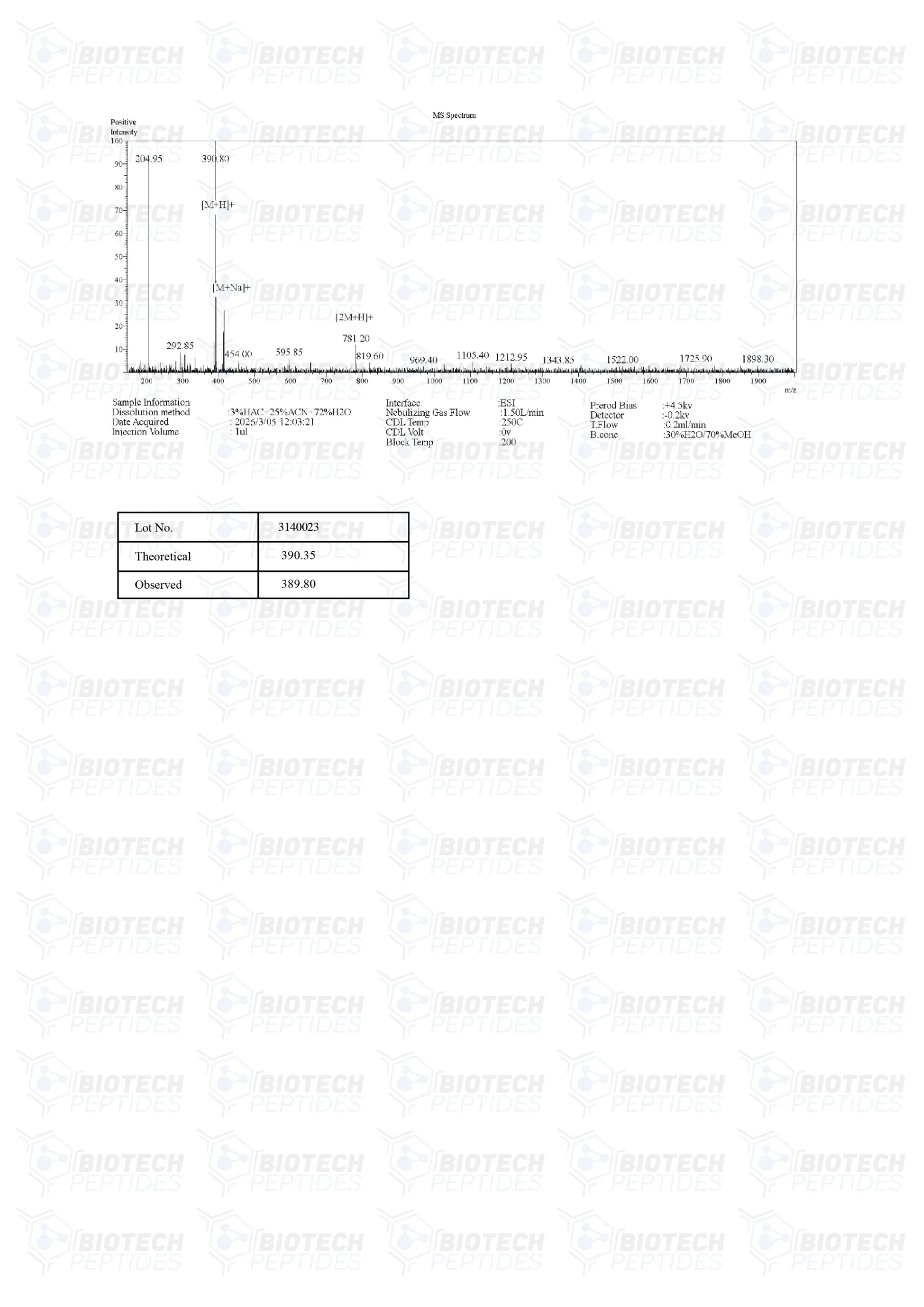
Researchers should verify analytical specifications using the documentation associated with the specific batch of Epithalon peptide.
This product description does not independently establish additional values for:
- Purity percentage
- HPLC analysis
- Mass spectrometry
- Certificate of Analysis
- Residual solvents
- Stability period
- Storage temperature
- Batch-specific analytical results
Where applicable, researchers should refer to the current batch-specific Certificate of Analysis (CoA) or accompanying documentation for these details.
Frequently Asked Questions
What is Epithalon peptide?
Epithalon is a synthetic tetrapeptide with the sequence Ala-Glu-Asp-Gly. It has been investigated in experimental research involving cellular aging, gene expression, oxidative stress, circadian pathways, and other biological systems.
Is Epithalon the same as Epitalon?
Epitalon is listed as an alternative name for Epithalon in the supplied product information. Epithalone is another listed title.
What is the molecular weight of Epithalon?
The supplied specification lists the molecular weight of Epithalon as 390.34 g/mol.
What is the Epithalon peptide sequence?
The supplied sequence is:
Ala-Glu-Asp-Gly
What is the molecular formula of Epithalon?
The supplied molecular formula is:
C14H22N4O9
What research areas involve Epithalon?
The supplied research discusses Epithalon in connection with cellular aging, oxidative stress, telomerase-related research, gene expression, stem-cell research, extracellular-matrix biology, experimental cancer models, circadian signaling, and retinal research.
Is Epithalon intended for human consumption?
No. This product is offered strictly for Research Use Only. It is not intended for human consumption, clinical use, diagnosis, treatment, cure, mitigation, or prevention of disease.
Where can researchers verify additional product specifications?
Researchers should consult the current batch-specific documentation and CoA, where available, for analytical information not stated on this product page.

Reviews
There are no reviews yet.