
Description
DSIP Peptide (Delta Sleep-Inducing Peptide) (5&10mg)
DSIP (Delta Sleep-Inducing Peptide) is a naturally occurring nine-amino-acid neuropeptide that has been investigated in experimental research involving the central nervous system, sleep-related signaling, endocrine pathways, stress-associated biomarkers, oxidative stress, and cellular metabolism.
The peptide was originally identified in research involving slow-wave sleep and has subsequently been investigated across a variety of experimental models. Research has examined possible interactions involving neurotransmitter systems, including GABAergic and glutamatergic pathways, as well as opioid and adrenergic signaling.
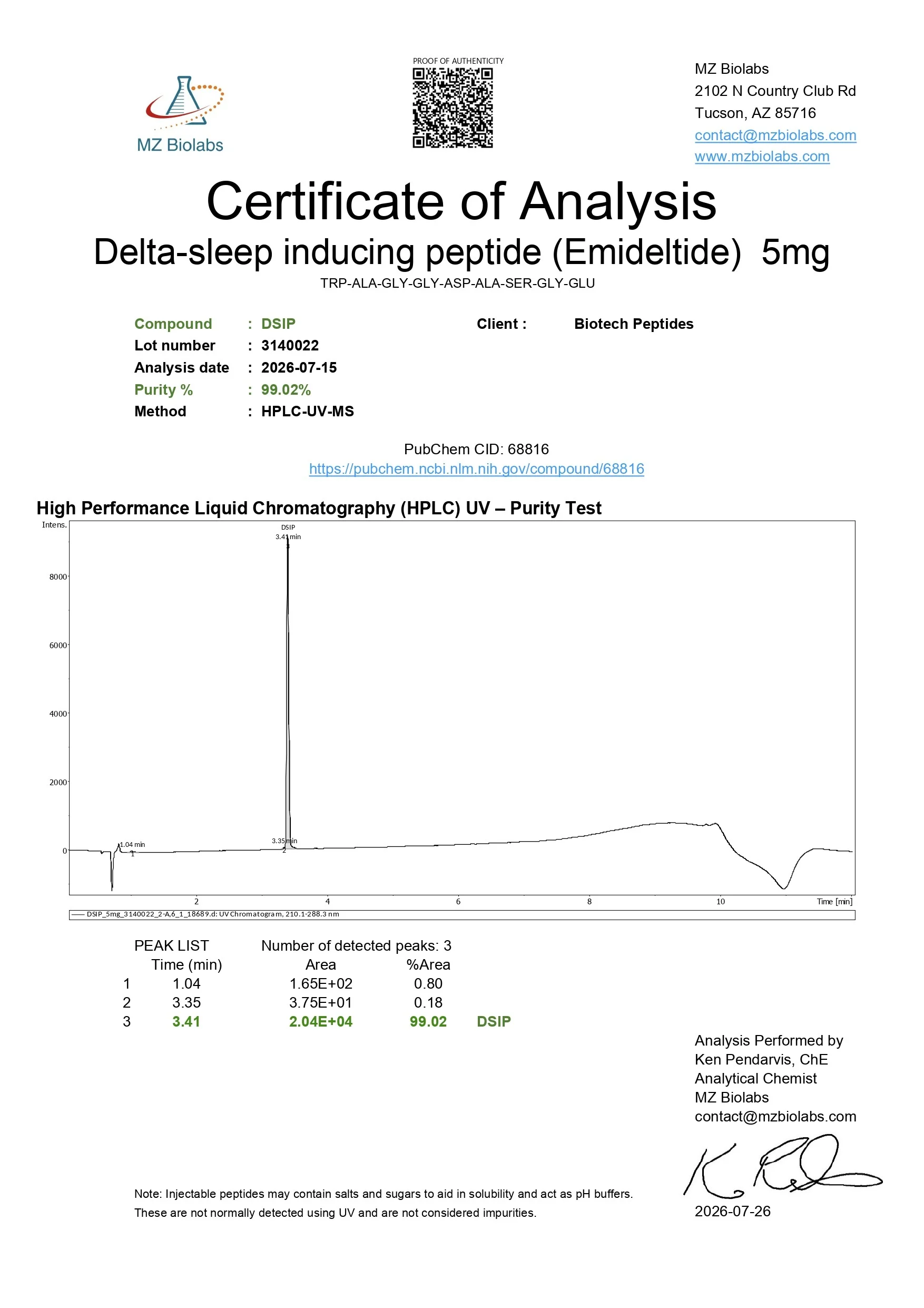
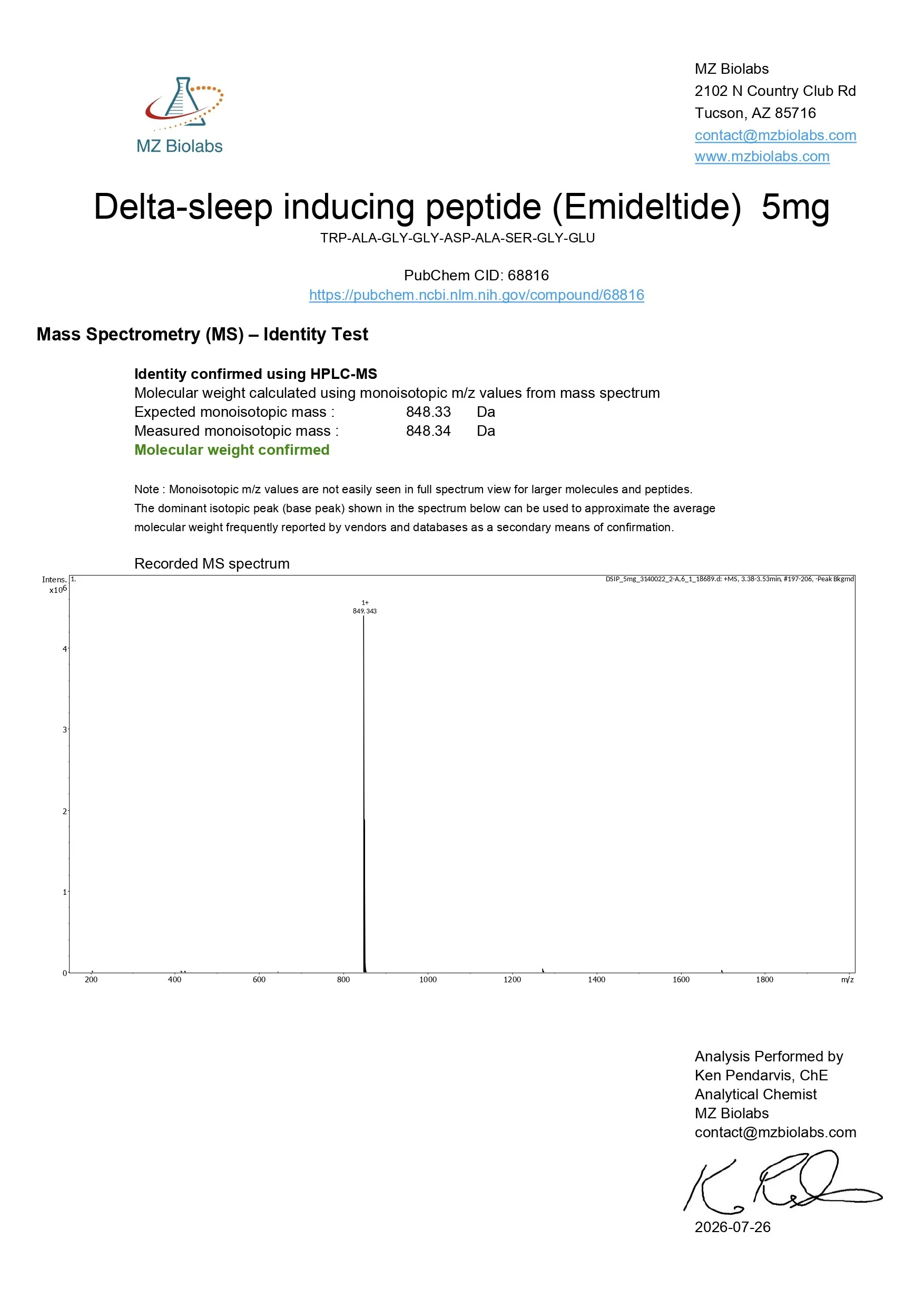
For researchers looking to buy DSIP peptide for laboratory investigation, the supplied material identifies DSIP as a short peptide with a molecular formula of C35H48N10O15, a molecular weight of 848.82 g/mol, and a nine-amino-acid sequence.
This product is supplied strictly for Research Use Only (RUO). The research information presented here describes experimental findings and should not be interpreted as evidence of clinical efficacy or suitability for human use.
Buy DSIP Peptide for Laboratory Research
DSIP is a short neuropeptide that has attracted scientific interest because of its association with experimental sleep and central nervous system research.
The name Delta Sleep-Inducing Peptide originated from early research investigating its relationship with sleep behavior in animal models. The peptide was subsequently investigated in other biological systems, leading researchers to examine whether its effects extend beyond sleep-associated pathways.
Experimental research has explored DSIP in connection with:
- Sleep-related neural activity
- GABAergic signaling
- NMDA receptor pathways
- Opioid receptor research
- Adrenergic signaling
- Stress-associated biomarkers
- Oxidative stress
- Mitochondrial activity
- Endocrine signaling
- Cellular metabolism
The mechanisms underlying these observations remain an area of scientific investigation.
DSIP Molecular Specifications
| Specification | Details |
|---|---|
| Product Name | DSIP Peptide |
| Full Name | Delta Sleep-Inducing Peptide |
| Molecular Formula | C35H48N10O15 |
| Molecular Weight | 848.82 g/mol |
| Sequence | Trp-Ala-Gly-Gly-Asp-Ala-Ser-Gly-Glu |
| Peptide Length | 9 amino acids |
| Research Classification | Research Use Only (RUO) |
The specifications above are based on the supplied product information. Researchers should consult current batch-specific documentation for additional analytical specifications.
DSIP Peptide Structure
DSIP consists of nine amino acids arranged in the following sequence:
Trp-Ala-Gly-Gly-Asp-Ala-Ser-Gly-Glu
Its short peptide structure makes DSIP a useful research compound for investigations involving peptide characterization and neurobiological signaling.
The supplied molecular formula is C35H48N10O15, with a molecular weight of 848.82 g/mol.
Researchers examining DSIP should use the sequence and molecular specifications associated with the specific material being studied and verify analytical information against applicable batch documentation.
DSIP and Neurotransmitter Research
One area of DSIP research involves possible interactions with neurotransmitter systems in the central nervous system.
The supplied research discusses potential relationships between DSIP and GABA receptors and NMDA receptors.
GABA is an inhibitory neurotransmitter system involved in regulating neuronal activity, while NMDA receptors are associated with glutamatergic excitatory neurotransmission.
Experimental animal research has investigated whether DSIP exposure may alter signaling through these systems. Such research provides a framework for investigating how short neuropeptides can interact with complex neurotransmitter networks.
Potential laboratory research areas include:
- GABAergic signaling
- Glutamatergic signaling
- NMDA receptor pathways
- Neuronal excitability
- Neurotransmitter interactions
- Central nervous system signaling
The exact mechanisms remain subject to further research.
DSIP and Opioid Receptor Research
The supplied source also discusses experimental investigations involving DSIP and opioid receptor pathways.
Researchers have examined possible relationships between DSIP-associated signaling and opioid-related neurobiological processes, including experimental withdrawal models.
These studies provide a research framework for examining:
- Opioid receptor signaling
- Neuropeptide interactions
- Central nervous system pathways
- Neurochemical responses
- Experimental withdrawal models
Results from animal studies should be interpreted according to the specific model and experimental conditions used.
DSIP and Adrenergic Signaling
Another potential research pathway involves the alpha-1 adrenergic receptor.
The supplied research identifies the alpha-1 adrenergic receptor in the pineal gland as a possible target of interest in DSIP studies. Adrenergic signaling is relevant to several physiological processes and has also been investigated in relation to stress-associated responses.
DSIP research in this area can therefore provide opportunities to investigate:
- Adrenergic receptor signaling
- Pineal-gland-associated pathways
- Neuroendocrine signaling
- Stress-related cellular responses
- Peptide–receptor interactions
These mechanisms require further experimental characterization.
DSIP and Sleep Research
Sleep research represents one of the primary areas historically associated with DSIP.
The peptide’s name originated from observations made during early experimental studies involving slow-wave sleep. Subsequent investigations produced varied findings, with different experimental models reporting different changes in sleep architecture and activity.
The supplied research describes investigations involving:
- Slow-wave sleep
- Sleep latency
- Sleep architecture
- NREM sleep
- REM sleep
- Sleep-wake cycles
- Neural activity
Some experimental studies reported changes in sleep-related parameters, while other studies did not observe significant effects. This variability is important when evaluating DSIP research because experimental outcomes can depend on model, methodology, and study conditions.
DSIP and Stress Research
DSIP has also been investigated in experimental models involving controlled stress conditions.
The supplied research describes measurements of several biomarkers, including:
- Substance P
- Beta-endorphin
- Corticosterone
Changes in these biomarkers following experimental exposure to DSIP have been investigated as potential indicators of alterations in neuroendocrine and stress-associated signaling.
These studies provide an experimental framework for examining relationships between neuropeptides and stress-response pathways.
DSIP and Oxidative-Stress Research
Oxidative stress and mitochondrial activity are additional areas of DSIP investigation.
The supplied research describes experimental studies examining DSIP under hypoxic conditions and its possible relationship with mitochondrial metabolic processes.
Research in this area may examine:
- Reactive oxygen species
- Oxidative stress
- Mitochondrial respiration
- Oxidative phosphorylation
- Hypoxia-associated cellular responses
- Energy metabolism
These experimental pathways are relevant to basic cellular research involving oxygen availability and metabolic adaptation.
DSIP and Metabolic Research
Experimental research has also investigated DSIP in relation to metabolic changes associated with stress and oxygen availability.
The supplied material describes animal-model research examining mitochondrial metabolism and the transition between oxygen-dependent and oxygen-independent metabolic processes.
Such investigations may provide research context for studying:
- Mitochondrial function
- Cellular respiration
- Energy metabolism
- Hypoxic conditions
- Oxidative metabolism
- Metabolic stress
The findings described in the source are experimental and should not be interpreted as establishing a therapeutic application.
DSIP and Experimental Depression Research
DSIP has also appeared in experimental research involving depression-related models.
The supplied material describes investigations into mitochondrial activity, monoamine oxidase A (MAO-A), serotonin-associated pathways, cerebrospinal-fluid peptide levels, and the hypothalamic-pituitary-adrenal axis.
These research areas provide a framework for examining relationships between neuropeptide signaling, sleep-associated pathways, mitochondrial function, and neuroendocrine activity.
Potential research parameters include:
- MAO-A activity
- Serotonergic signaling
- Mitochondrial function
- HPA-axis-associated signaling
- Cerebrospinal-fluid peptide measurements
- Experimental behavioral models
These findings remain within the context of experimental research.
DSIP and Experimental Withdrawal Research
Animal-model research has investigated DSIP in connection with experimental withdrawal paradigms involving ethanol and opioid exposure.
The supplied source reports changes in withdrawal-associated outcomes following DSIP exposure. These findings have contributed to research interest in the interaction between DSIP, neuropeptide signaling, and withdrawal-associated neurobiology.
Such research should be considered strictly within its experimental model and does not establish DSIP as a treatment for substance-use disorders or withdrawal in humans.
DSIP and Experimental Cancer Research
The supplied research also describes preliminary investigations involving DSIP and tumor development in animal models.
Researchers have investigated possible relationships between DSIP exposure, tumor incidence, and chromosomal abnormalities in experimental mice.
The proposed research mechanisms include interactions between sleep-associated biology, immune-system activity, and cellular regulation.
This remains an experimental research area. The animal-model findings should not be interpreted as evidence that DSIP prevents or treats cancer.
DSIP and Muscle-Cell Research
DSIP has also been investigated in relation to somatostatin-associated pathways.
The supplied material discusses experimental research examining whether DSIP may influence somatostatin, a peptide involved in endocrine and cellular signaling.
This provides a research framework for studying relationships between DSIP and:
- Somatostatin signaling
- Muscle-cell biology
- Endocrine pathways
- Cellular growth signaling
- Peptide-mediated physiological responses
The precise biological role of DSIP remains an area of ongoing investigation.
Key Research Characteristics
DSIP provides several defined characteristics relevant to laboratory peptide research:
- Nine-amino-acid neuropeptide: DSIP is a short peptide consisting of nine residues.
- Defined sequence: Trp-Ala-Gly-Gly-Asp-Ala-Ser-Gly-Glu.
- Molecular weight: 848.82 g/mol.
- Molecular formula: C35H48N10O15.
- Neurobiological research: Investigated in sleep, neurotransmitter, stress, and endocrine research.
- Metabolic research: Studied experimentally in relation to mitochondrial and oxidative-stress pathways.
- Multiple experimental models: Research has included cellular systems and animal models.
- RUO classification: Intended exclusively for laboratory and scientific research.
Research Documentation and Analytical Information
Researchers should verify the analytical properties of the specific DSIP batch being evaluated.
This product description does not independently establish additional specifications such as:
- Purity percentage
- HPLC results
- Mass spectrometry results
- Certificate of Analysis
- Residual solvents
- Stability period
- Storage temperature
- Batch-specific analytical results
Where available, researchers should consult the current batch-specific Certificate of Analysis (CoA) and accompanying documentation.
Frequently Asked Questions
What is DSIP peptide?
DSIP stands for Delta Sleep-Inducing Peptide. It is a naturally occurring nine-amino-acid neuropeptide that has been investigated in experimental research involving sleep, central nervous system signaling, stress, metabolism, and endocrine pathways.
What is the DSIP peptide sequence?
The supplied sequence is:
Trp-Ala-Gly-Gly-Asp-Ala-Ser-Gly-Glu
What is the molecular weight of DSIP?
The supplied molecular weight of DSIP is 848.82 g/mol.
What is the molecular formula of DSIP?
The supplied molecular formula is:
C35H48N10O15
What research areas involve DSIP?
Research described in the supplied material includes sleep activity, neurotransmitter signaling, stress-associated biomarkers, oxidative stress, mitochondrial metabolism, experimental depression models, withdrawal models, cancer research, and muscle-cell signaling.
Is DSIP intended for human consumption?
No. DSIP is supplied strictly for Research Use Only (RUO). It is not intended for human consumption, clinical use, diagnosis, treatment, cure, mitigation, or prevention of disease.
How should DSIP specifications be verified?
Researchers should use the current product documentation and, where available, the batch-specific CoA to verify analytical specifications for the material being studied.
Research Use Only Disclaimer
RESEARCH USE ONLY — NOT FOR HUMAN CONSUMPTION
DSIP (Delta Sleep-Inducing Peptide) is supplied strictly for laboratory research, in-vitro experimentation, analytical investigation, and scientific studies. This product is not intended for human consumption, clinical use, diagnosis, treatment, cure, mitigation, or prevention of any disease or medical condition. Information presented on this page is provided for scientific research context only and does not constitute medical advice or establish clinical efficacy. Researchers are responsible for complying with applicable institutional, laboratory, regulatory, and safety requirements when working with research materials.

Reviews
There are no reviews yet.