
Description
Buy Semax Peptide 10mg & 30mg – Research Use Only
Semax Peptide 10mg & 30mg is a synthetic peptide derived from a sequence associated with adrenocorticotropic hormone (ACTH) and has been investigated extensively in experimental neuroscience research. Semax research has focused on molecular signaling in neural tissues, neurotrophic-factor expression, gene regulation, neurotransmitter pathways, and cellular responses to experimental neurological stress.
For laboratories looking to buy Semax Peptide 10mg or 30mg, this material is supplied strictly for research use, in-vitro investigation, analytical studies, and scientific experimentation. Research involving Semax has examined pathways involving brain-derived neurotrophic factor (BDNF), nerve growth factor (NGF), serotonin-associated signaling, enkephalin metabolism, and gene-expression changes in experimental neural models.
Semax Research Peptide Overview
Semax Peptide is a synthetic peptide investigated as an ACTH-related molecular compound. Research has examined its structural characteristics, stability, cellular signaling, and interactions with molecular pathways associated with the central nervous system.
One important area of interest is the relationship between Semax and neurotrophic signaling. Experimental studies have investigated changes in BDNF and NGF expression following exposure to Semax in cellular and animal research models. These investigations provide researchers with a framework for examining how short synthetic peptides can influence complex molecular signaling networks.
Semax has also been investigated in experimental models involving cerebral ischemia, neural stress, gene expression, neurotransmitter metabolism, and brain-region-specific molecular responses.
Semax Molecular Specifications
| Specification | Details |
|---|---|
| Product Name | Semax Peptide |
| Available Quantities | 10mg & 30mg |
| Peptide Classification | Synthetic ACTH-related research peptide |
| Molecular Formula | C39H54N10O10S |
| Molecular Weight | 854.99 g/mol |
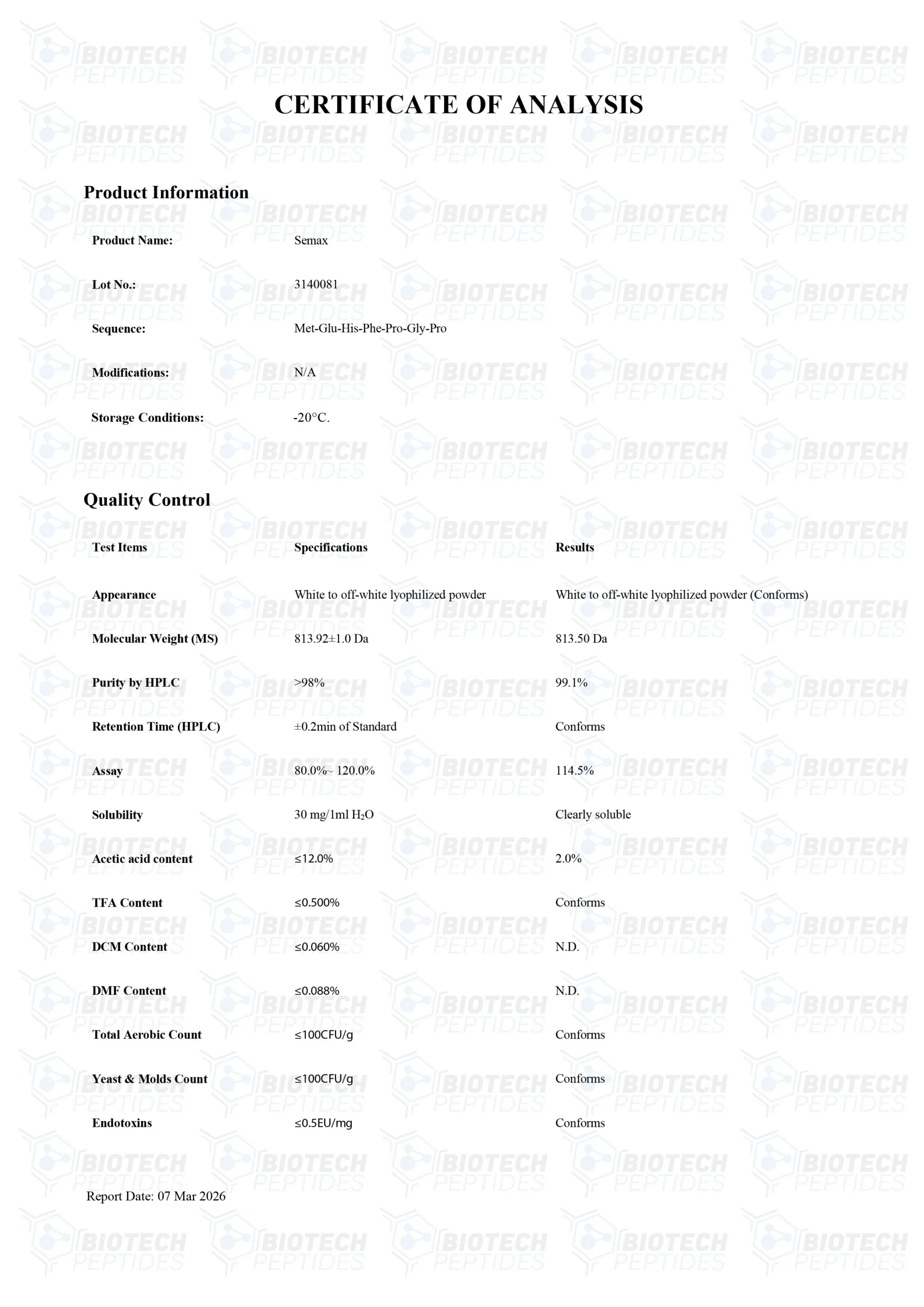
| Sequence | Refer to lot-specific product documentation for the verified sequence representation |
| Research Classification | Research Use Only (RUO) |
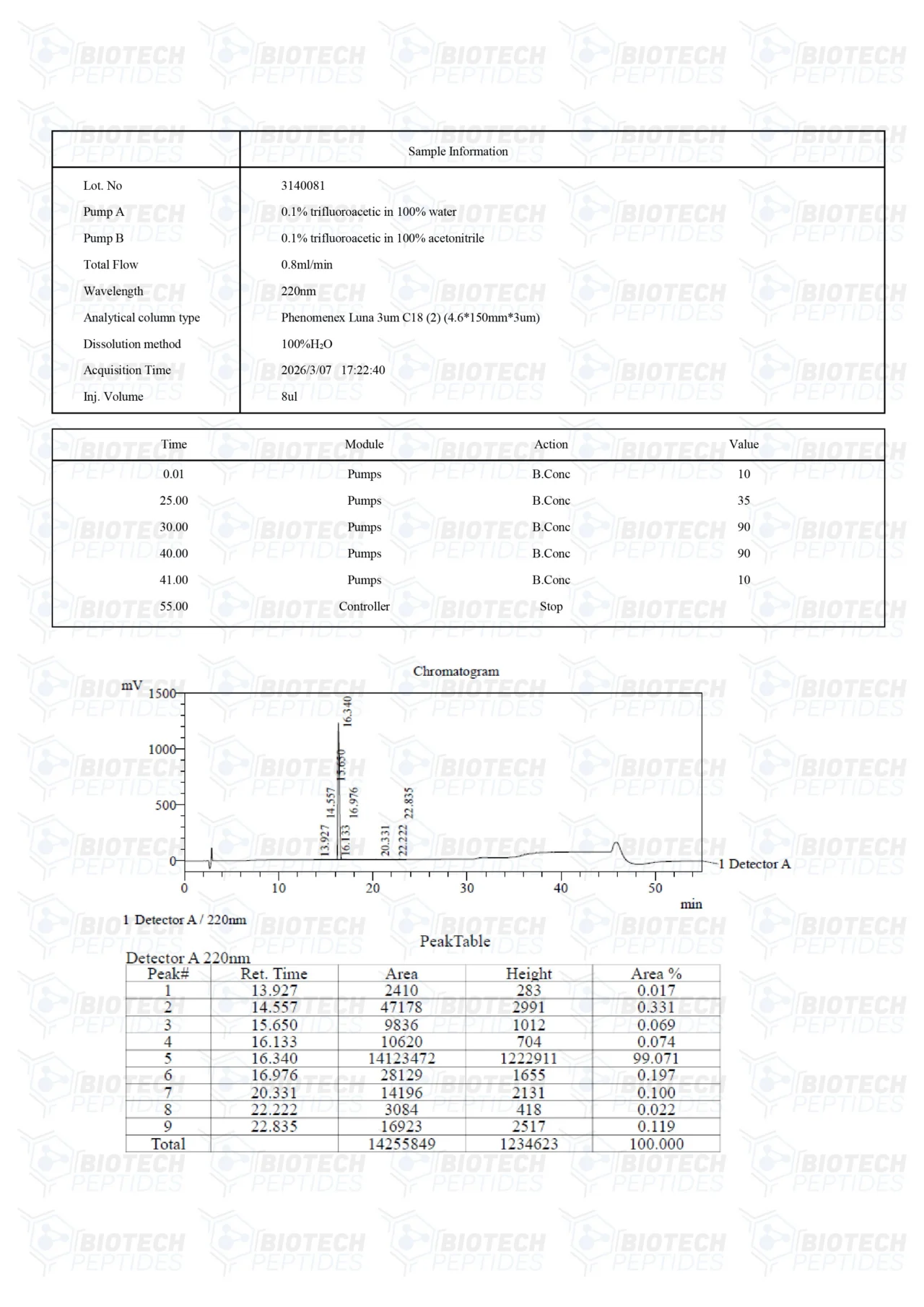
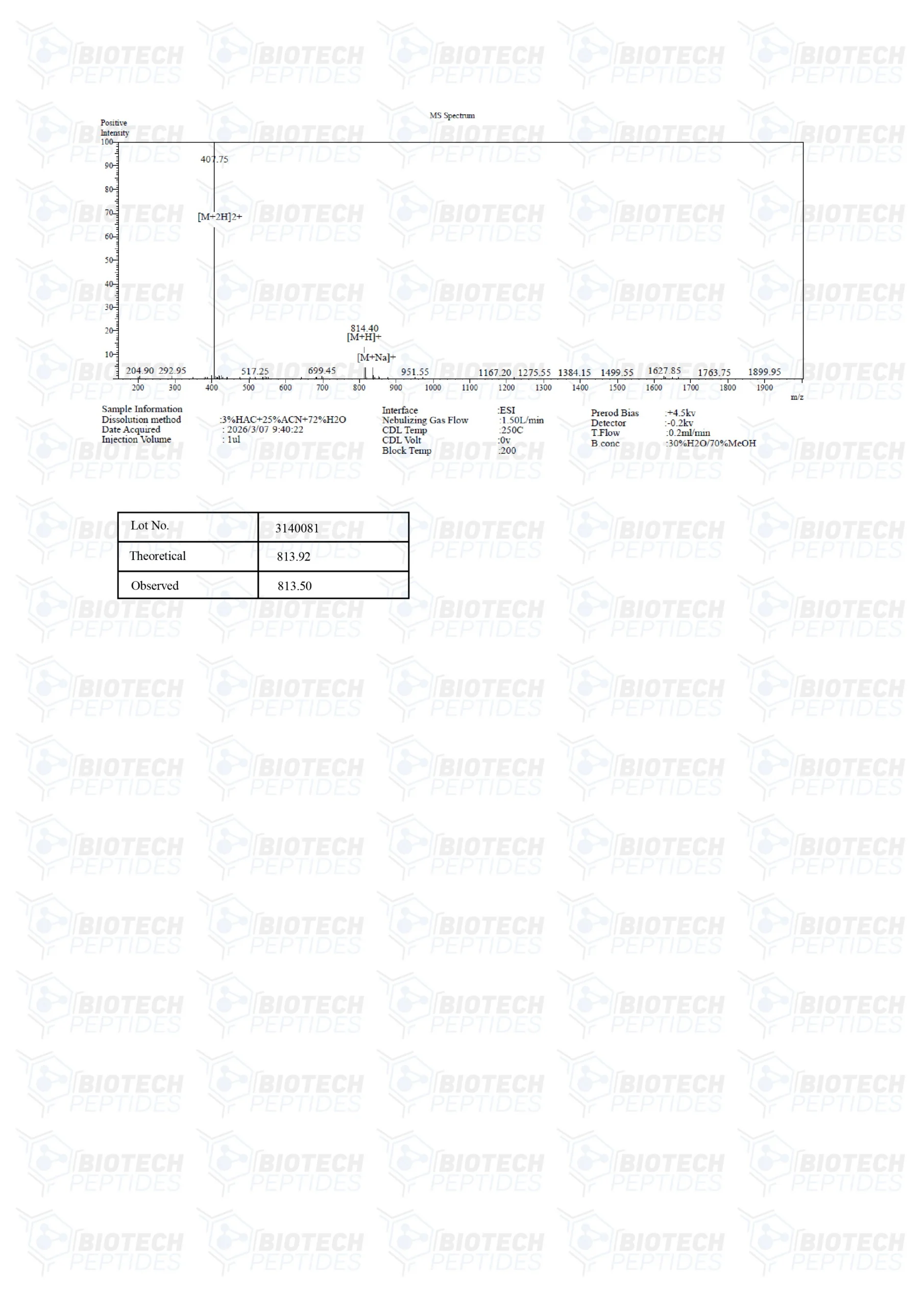
| Purity / Analytical Data | Refer to the lot-specific Certificate of Analysis (CoA) |
Note: The sequence supplied in the source material contains apparent formatting and transcription inconsistencies. The molecular formula and molecular weight have been retained as provided, while the sequence should be verified against the applicable lot-specific analytical documentation before publication as a definitive structural specification.
Semax and Neurotrophic Signaling Research
One of the principal areas of Semax research involves neurotrophic signaling. Researchers have investigated whether Semax exposure can influence expression of neurotrophic factors including brain-derived neurotrophic factor (BDNF) and nerve growth factor (NGF).
BDNF and NGF are important experimental biomarkers in neuroscience research because they participate in neuronal development, cellular signaling, synaptic processes, and neural plasticity. Measuring changes in their expression can help researchers characterize molecular responses to experimental compounds.
Studies using experimental neural models have reported changes in BDNF- and NGF-associated gene expression following Semax exposure. These findings provide a basis for investigating peptide-dependent transcriptional responses in specific brain regions.
Semax and Blood-Brain Barrier Research
The relationship between peptide structure and blood-brain barrier (BBB) transport is an important area of pharmaceutical and neuroscience research. Semax has been investigated in this context because its molecular structure includes modifications that may influence stability and interactions with biological membranes or transport systems.
Research into peptide transport across the BBB can involve passive diffusion, membrane-associated processes, transporter interactions, and receptor-mediated mechanisms. Experimental studies can evaluate these possibilities using cellular barrier models, permeability assays, imaging techniques, and analytical detection methods.
Acetylation and other structural modifications may also influence peptide stability against enzymatic degradation. Researchers studying Semax can therefore investigate the relationship between molecular structure, stability, cellular uptake, and neural-tissue exposure in controlled experimental systems.
Semax Peptide and Gene Expression Research
Gene-expression analysis represents another major area of Semax research. Experimental studies have investigated transcriptional changes in brain regions including the frontal cortex and hippocampus.
The hippocampus is frequently used in neuroscience research involving memory-related cellular processes, while the frontal cortex provides an important model for investigating neuronal signaling and information-processing pathways. Comparing gene-expression profiles between these regions can help researchers identify tissue-specific molecular responses.
Experimental observations involving Semax have included changes in the expression of genes associated with BDNF and NGF. Researchers can investigate these responses using techniques such as quantitative PCR, transcriptomic analysis, RNA sequencing, and protein-expression assays.
Semax peptide and Experimental Cerebral Ischemia Research
Semax has been investigated in experimental models of cerebral ischemia and hypoxic neural stress. These research models allow scientists to study molecular responses occurring when neural tissue experiences altered oxygen availability or experimentally induced vascular stress.
Research endpoints can include neuronal-cell survival markers, mitochondrial activity, inflammatory signaling, vascular-associated pathways, gene expression, and neurotrophic-factor levels.
Some experimental studies have also examined whether Semax exposure alters the expression of multiple genes involved in processes such as cellular migration, vascular biology, and blood-cell-associated pathways. Such findings remain specific to the experimental model and should be interpreted within the parameters of the individual study.
Semax and Neural Structure Research
Neuroimaging research provides another approach for investigating Semax-associated activity. Experimental investigations have examined changes in functional brain-network activity and regional neural signaling following exposure to the peptide.
The default mode network (DMN) is a group of interconnected brain regions commonly studied in functional neuroimaging. Researchers investigate this network in relation to resting-state brain activity, functional connectivity, and transitions between different cognitive states.
Semax-related neuroimaging research can therefore provide an experimental framework for studying relationships between peptide exposure, regional brain activity, and functional connectivity.
Semax and Serotonin Signaling Research
Neurotransmitter metabolism is another area of investigation involving Semax. Experimental research has examined serotonin-associated pathways and changes in serotonin metabolites following peptide exposure.
One commonly measured serotonin metabolite is 5-hydroxyindoleacetic acid (5-HIAA). Changes in 5-HIAA concentrations can provide researchers with an indirect experimental measure of altered serotonergic metabolism.
Animal-model studies have reported changes in 5-HIAA levels following Semax exposure. These findings provide an opportunity to investigate interactions between Semax-associated signaling and serotonin metabolism under controlled experimental conditions.
Researchers can further examine these pathways using neurotransmitter measurements, receptor-expression analysis, metabolite profiling, and molecular assays designed to characterize serotonergic activity.
Semax and Enkephalin Research
Semax Peptide has also been investigated in relation to enkephalin metabolism. Enkephalins are endogenous neuropeptides involved in signaling pathways within the nervous system, and their breakdown is regulated by specific enzymes.
Experimental studies can investigate whether Semax alters the activity of enzymes involved in enkephalin degradation and whether such changes influence downstream signaling pathways.
Because enkephalin signaling interacts with multiple neurotransmitter systems, including pathways involving dopamine and serotonin, researchers can use controlled models to examine potential relationships between peptide exposure, neuropeptide metabolism, and neurotransmitter signaling.
Semax and Neuroinflammation Research
Neuroinflammatory signaling is another area in which Semax has been investigated experimentally. Research models can be used to examine interactions among peptide exposure, inflammatory mediators, immune-cell signaling, and neural tissue responses.
Researchers studying neuroinflammation may examine cytokine expression, immune-cell activity, oxidative stress, mitochondrial markers, and neurotrophic-factor signaling. These endpoints can help characterize molecular changes occurring in neural tissues under experimentally controlled conditions.
Such research remains model-dependent, and observations from animal or cellular systems should not be interpreted as established effects in humans.
Semax and Cognitive Neuroscience Research
Semax has been investigated in experimental models involving learning, memory, neural signaling, and seizure-associated molecular pathways. These studies are relevant to researchers examining how neuropeptide signaling may interact with neuronal plasticity and neurotrophic-factor pathways.
Experimental cognitive research can measure a combination of molecular and behavioral endpoints, including BDNF expression, NGF expression, synaptic markers, neurotransmitter metabolites, gene regulation, and region-specific changes in the hippocampus or cortex.
Using multiple endpoints allows researchers to distinguish between direct molecular responses and downstream changes within a particular experimental system.
Key Research Features of Semax Peptide
- Defined synthetic research peptide: Semax is investigated as an ACTH-related peptide in experimental neuroscience.
- Neurotrophic-factor research: Suitable for studying BDNF- and NGF-associated signaling pathways.
- Gene-expression studies: Relevant to experimental analysis of transcriptional changes in neural tissues.
- Neurotransmitter research: Investigated in relation to serotonin metabolism and 5-HIAA measurements.
- Enkephalin research: Provides a molecular tool for investigating neuropeptide metabolism and related signaling pathways.
- Neural-stress models: Studied in experimental systems involving hypoxic and ischemic neural conditions.
- Neuroimaging research: Investigated in experimental studies involving functional brain-network activity.
- Analytical research: Molecular weight and product documentation support controlled characterization workflows.
- Multiple quantities: Available in 10mg and 30mg research quantities.
- RUO classification: Supplied exclusively for laboratory research and scientific investigation.
Laboratory Handling and Storage
Semax Peptide should be handled by qualified laboratory personnel using appropriate laboratory safety procedures. Storage conditions, reconstitution requirements, solvent compatibility, concentration ranges, and stability considerations should be established according to the applicable product documentation and the intended experimental protocol.
Researchers should review the lot-specific Certificate of Analysis (CoA) and manufacturer documentation before beginning laboratory work. Appropriate controls should be maintained during sample preparation, storage, and analysis to preserve sample integrity.
Frequently Asked Questions About Semax Peptide
What is Semax?
Semax is a synthetic ACTH-related research peptide that has been investigated extensively in experimental neuroscience. Research areas include neurotrophic signaling, gene expression, neurotransmitter metabolism, and neural-cell responses.
What is the molecular weight of Semax?
The supplied molecular weight of Semax is 854.99 g/mol, with a supplied molecular formula of C39H54N10O10S.
What is Semax studied for in laboratory research?
Semax has been investigated in experimental studies involving BDNF and NGF expression, gene regulation, neurotrophic signaling, serotonin metabolism, enkephalin pathways, neural stress models, and functional neuroscience.
Why is BDNF studied in Semax research?
BDNF is an important neurotrophic signaling molecule frequently studied in neuroscience. Researchers can measure BDNF expression to investigate molecular responses associated with neural-cell signaling, plasticity, and cellular stress.
What quantities of Semax are available?
This product is available in 10mg and 30mg research quantities.
Is Semax intended for human use?
No. This product is supplied strictly as a Research Use Only (RUO) material for laboratory research, in-vitro testing, analytical work, and scientific investigation by qualified personnel.
Research Use Only Disclaimer
FOR RESEARCH USE ONLY (RUO). Semax Peptide is supplied exclusively for laboratory research, in-vitro testing, analytical research, and scientific investigation. It is not intended for human consumption, veterinary use, diagnosis, disease management, or use as a food, dietary supplement, cosmetic, or approved drug. This material is intended for qualified laboratory personnel using appropriate safety procedures and following applicable institutional requirements and laws. Findings from cellular or animal research models should not be interpreted as established outcomes in humans. The purchaser is responsible for determining appropriate laboratory use, handling, storage, and regulatory compliance.




Reviews
There are no reviews yet.