
Buy NAD+ Nicotinamide Adenine Dinucleotide 100mg, 250mg & 500mg
Nicotinamide Adenine Dinucleotide (NAD+) is a naturally occurring cellular coenzyme involved in redox reactions, mitochondrial metabolism, energy transfer, and NAD-dependent enzymatic pathways. NAD+ research material is widely investigated in laboratory models studying mitochondrial function, oxidative metabolism, sirtuin activity, DNA repair, cellular stress, and metabolic signaling.
NAD+ is the oxidized form of NADH and participates in reversible electron-transfer reactions throughout cellular metabolism. In addition to its role in redox chemistry, NAD+ serves as a substrate or cofactor for enzyme families including sirtuins and poly(ADP-ribose) polymerases (PARPs).
This research-grade NAD+ is available in 100mg, 250mg, and 500mg quantities for qualified laboratory research, biochemical investigations, analytical studies, and in-vitro experimentation.
<div style=”border: 1px solid #ddd; padding: 15px; margin: 20px 0; background-color: #f8f8f8;”> <strong>Important classification:</strong> NAD+ is a coenzyme and nucleotide-derived metabolite rather than a peptide. The term “NAD+ peptide” may be used in product searches, but scientifically NAD+ should be classified as nicotinamide adenine dinucleotide. </div>
NAD+ Research and Cellular Energy Metabolism
NAD+ is central to cellular redox metabolism. The NAD+/NADH pair participates in electron-transfer reactions that connect glycolysis, the tricarboxylic acid cycle, fatty-acid metabolism, and mitochondrial oxidative phosphorylation.
Within mitochondria, reducing equivalents generated through metabolic reactions contribute electrons to the electron transport chain. This makes NAD+ and NADH important research components when investigating mitochondrial energy metabolism and cellular redox balance.
Laboratory researchers can investigate NAD+ in relation to:
- NAD+/NADH redox balance
- Mitochondrial metabolism
- Oxidative phosphorylation
- Electron-transfer reactions
- Cellular energy pathways
- Metabolic enzyme activity
- Mitochondrial signaling
- Cellular stress responses
NAD+ and Sirtuin Research
One of the most important areas of NAD+ research involves the sirtuin family of NAD-dependent enzymes.
Sirtuins use NAD+ during enzymatic reactions involving protein deacetylation and related post-translational modifications. These enzymes have been investigated in connection with transcriptional regulation, chromatin organization, metabolic signaling, mitochondrial biology, and cellular stress responses.
SIRT1, SIRT3, SIRT6, and other sirtuin family members provide useful experimental systems for studying how cellular NAD+ availability interacts with enzyme activity.
Researchers can use NAD+ research material to investigate:
- SIRT1 activity
- SIRT3 mitochondrial signaling
- SIRT6-associated pathways
- NAD-dependent deacetylation
- Protein post-translational modification
- Chromatin regulation
- Metabolic signaling
- Cellular stress pathways
The relationship between NAD+ availability and sirtuin activity is highly dependent on the experimental system, cellular compartment, and metabolic conditions being studied.
NAD+ and Mitochondrial Research
Mitochondria depend heavily on NAD+/NADH redox chemistry. Changes in the cellular NAD+ pool can therefore affect metabolic pathways and provide researchers with an important variable for studying mitochondrial function.
Experimental research has investigated NAD+ in models involving mitochondrial dysfunction, oxidative stress, cellular senescence, and metabolic changes.
Potential laboratory applications include:
- Mitochondrial respiration studies
- Oxidative phosphorylation research
- NAD+/NADH ratio measurements
- Mitochondrial redox-state analysis
- Cellular energy metabolism
- Reactive oxygen species research
- PGC-1α-associated signaling
- Mitochondrial gene-expression studies
Research using cellular or animal models should be interpreted according to the specific experimental conditions rather than generalized to human outcomes.
NAD+ and Muscle-Cell Research
NAD+ metabolism has also been investigated in skeletal muscle models because muscle cells have substantial mitochondrial energy requirements.
Preclinical research has examined relationships between NAD+ availability, mitochondrial gene expression, oxidative phosphorylation, and PGC-1α-associated pathways.
These studies provide a research framework for investigating how changes in cellular redox metabolism may influence mitochondrial activity in muscle-cell systems.
Potential research areas include:
- Skeletal muscle-cell metabolism
- Mitochondrial biogenesis
- Oxidative phosphorylation
- PGC-1α signaling
- NAD+/NADH balance
- Cellular energy production
- Oxidative-stress pathways
NAD+ and DNA Repair Research
NAD+ is also directly connected to DNA-repair research through its role as a substrate for poly(ADP-ribose) polymerases (PARPs).
When DNA damage occurs, PARP enzymes can use NAD+ to generate ADP-ribose modifications on target proteins. PARP-1 is particularly important in experimental models of DNA-damage signaling.
Poly(ADP-ribose) formation can contribute to the recruitment of DNA-repair proteins and changes in chromatin organization around damaged DNA.
This makes NAD+ useful in research involving:
- PARP-1 activity
- ADP-ribosylation
- Poly(ADP-ribose) formation
- DNA-damage signaling
- Base-excision repair
- Chromatin remodeling
- Genomic stability
- DNA-repair enzyme activity
Researchers can investigate how NAD+ availability influences PARP-dependent signaling under controlled biochemical and cellular conditions.
NAD+ and Cellular Stress Research
NAD+ metabolism is closely connected to cellular responses to oxidative and metabolic stress. Increased DNA damage can activate NAD-consuming enzymes, potentially changing intracellular NAD+ availability.
Research models can therefore investigate relationships between NAD+ depletion, PARP activity, oxidative stress, mitochondrial metabolism, and cellular responses.
These pathways provide opportunities to study:
- Reactive oxygen species
- Oxidative DNA damage
- PARP activation
- NAD+ depletion
- Cellular energy metabolism
- Apoptosis-associated signaling
- Stress-response pathways
The effects observed in experimental models may vary according to cell type, metabolic state, oxidative conditions, and experimental design.
NAD+ and Neurobiology Research
NAD+ metabolism has also been investigated in neuronal and other nervous-system models. Because neurons have substantial energy requirements, mitochondrial metabolism and redox balance are important areas of neurobiological research.
Experimental studies have examined NAD+ in models involving oxidative stress, mitochondrial dysfunction, neuronal metabolism, and oxygen-glucose deprivation.
In-vitro neuronal research may examine:
- NAD-dependent metabolic pathways
- Mitochondrial function
- Oxidative stress
- DNA-repair activity
- Neuronal energy metabolism
- PARP signaling
- Cellular survival pathways
These findings are specific to experimental models and should not be interpreted as evidence of clinical efficacy.
NAD+ and Inflammatory Signaling Research
NAD+ metabolism is also connected to cellular inflammatory signaling through enzymes and metabolic pathways that regulate NAD synthesis and consumption.
NAMPT (nicotinamide phosphoribosyltransferase) is an important enzyme in the NAD salvage pathway and has been studied extensively in metabolic and inflammatory research models.
Investigators can examine relationships among:
- NAMPT activity
- NAD biosynthesis
- Cellular inflammatory signaling
- Metabolic stress
- Mitochondrial function
- NAD-dependent enzymes
- Cellular redox balance
These studies can help characterize how NAD metabolism interacts with broader cellular signaling networks.
NAD+ Specifications
| Specification | Details |
|---|---|
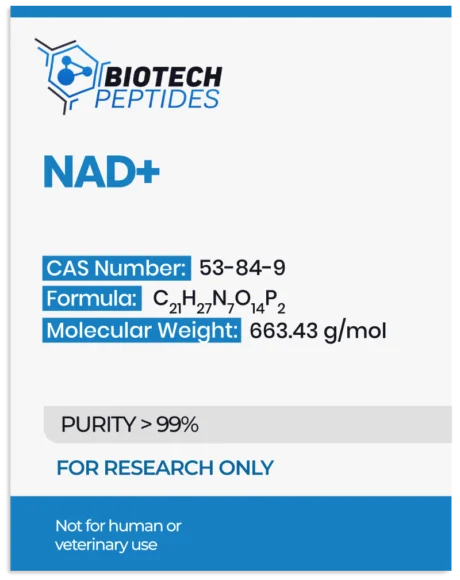
| Product Name | Nicotinamide Adenine Dinucleotide (NAD+) |
| Available Quantities | 100mg, 250mg & 500mg |
| Scientific Classification | Coenzyme / nucleotide-derived metabolite |
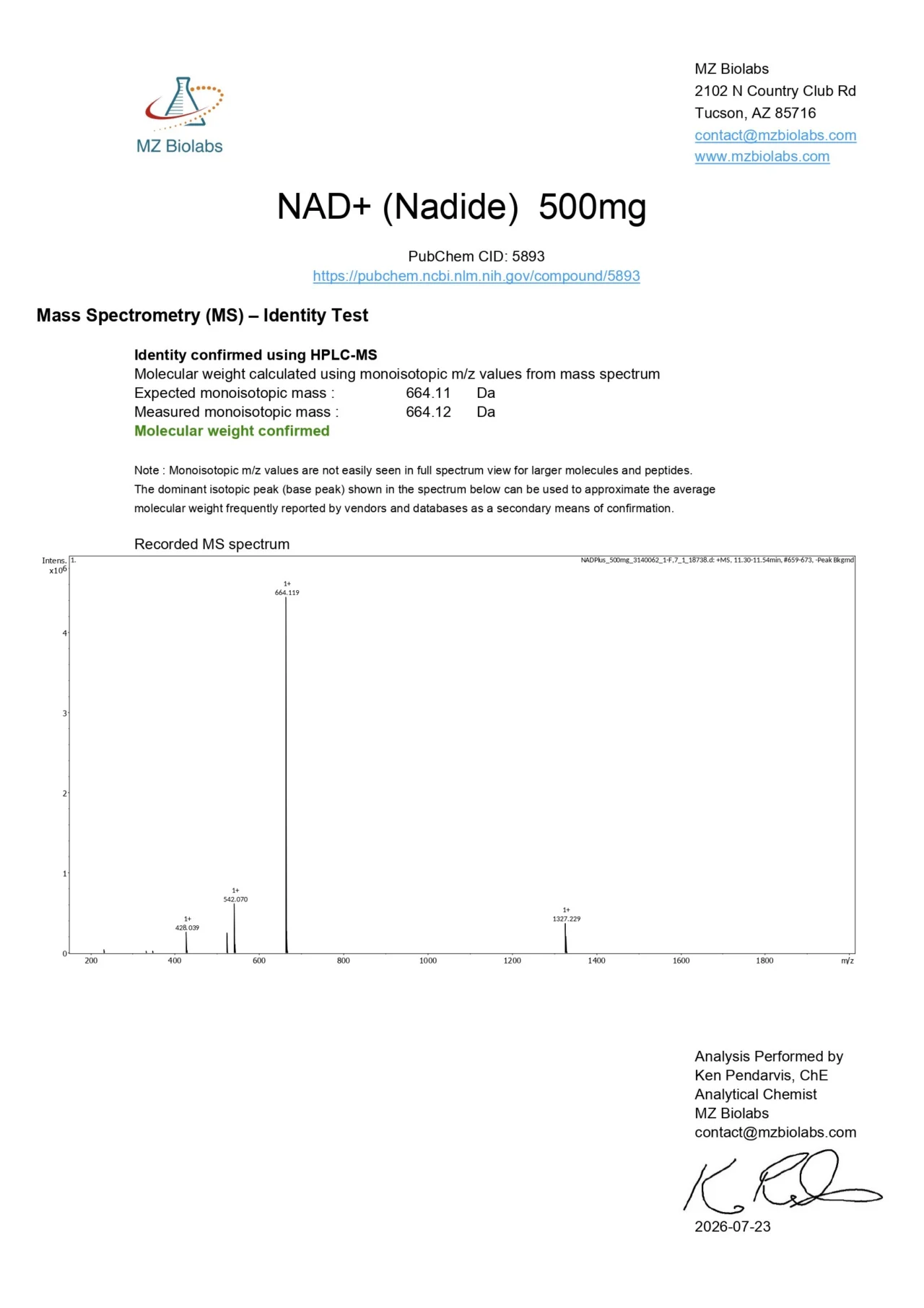
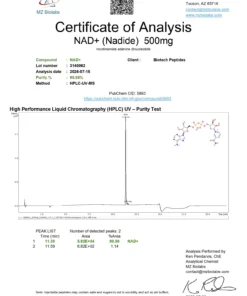
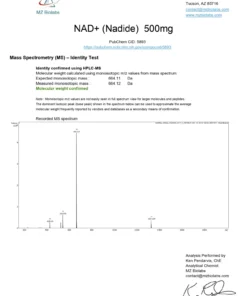
| Molecular Formula | C21H27N7O14P2 |
| Molecular Weight | 663.43 g/mol |
| Synonyms | Nicotinamide Adenine Dinucleotide, Beta-NAD, NAD |
| Research Areas | Mitochondrial metabolism, redox biology, sirtuin research, PARP signaling, DNA repair, cellular stress |
| Research Classification | Research Use Only (RUO) |
Why Buy NAD+ 100mg, 250mg & 500mg for Research?
Researchers looking to buy NAD+ 100mg, 250mg, or 500mg can use this research-grade coenzyme in controlled biochemical and cellular investigations.
Potential applications include:
- NAD+/NADH redox research
- Mitochondrial metabolism studies
- Sirtuin enzyme research
- PARP signaling research
- DNA-repair investigations
- Oxidative-stress models
- Cellular energy metabolism
- Neurobiology research
- Muscle-cell metabolism studies
- NAMPT and NAD salvage-pathway research
- In-vitro enzyme assays
- Cellular signaling experiments
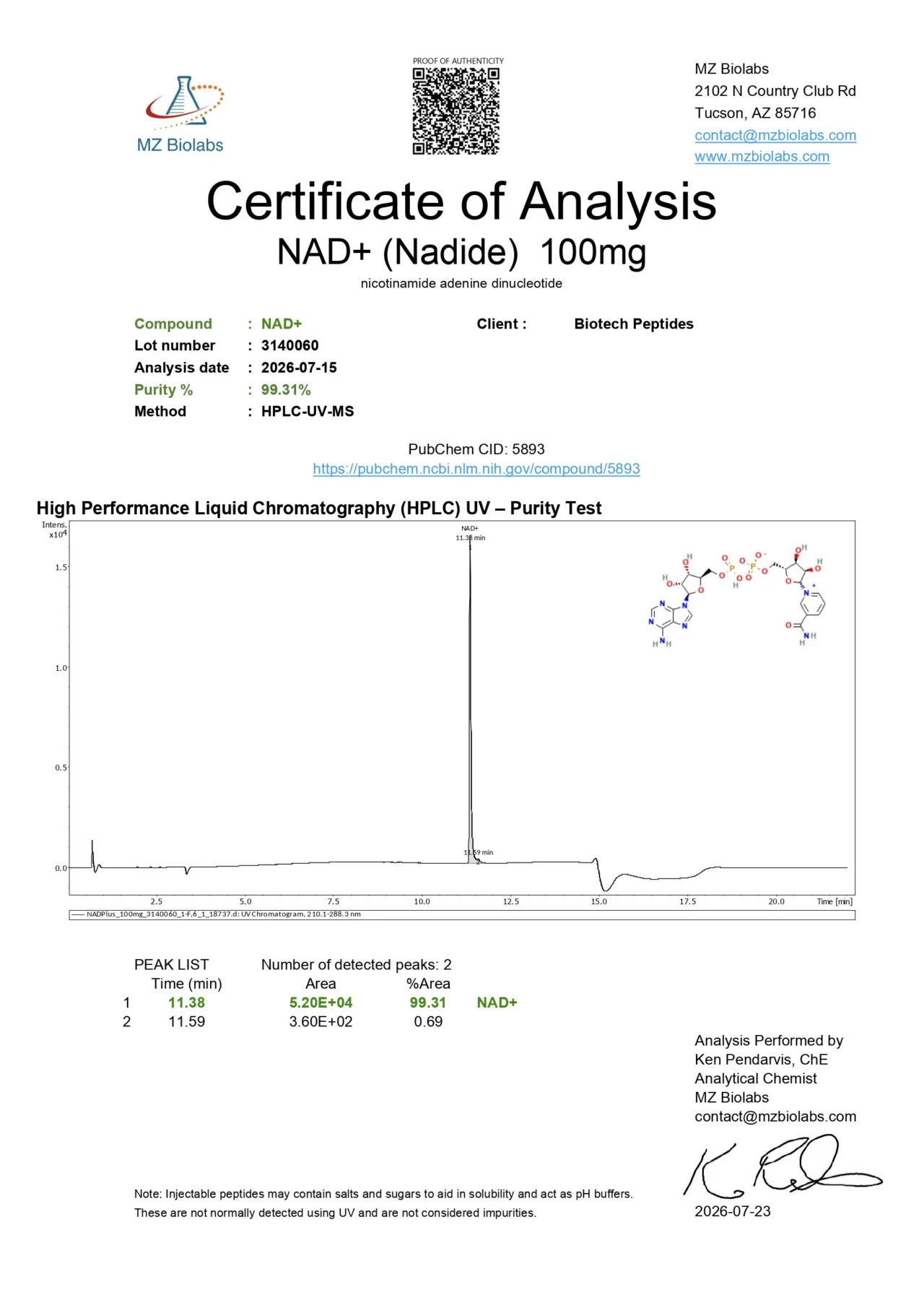
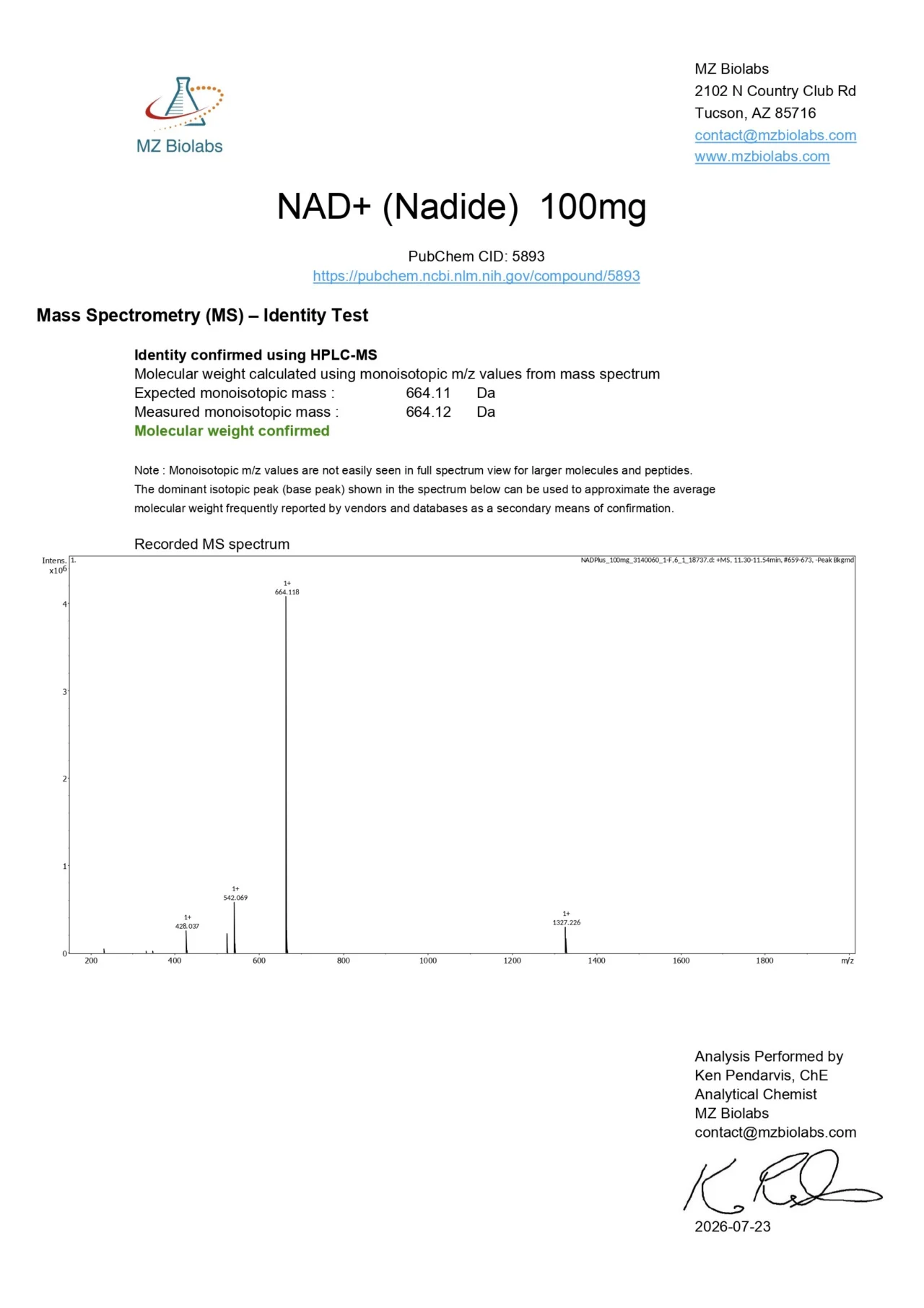
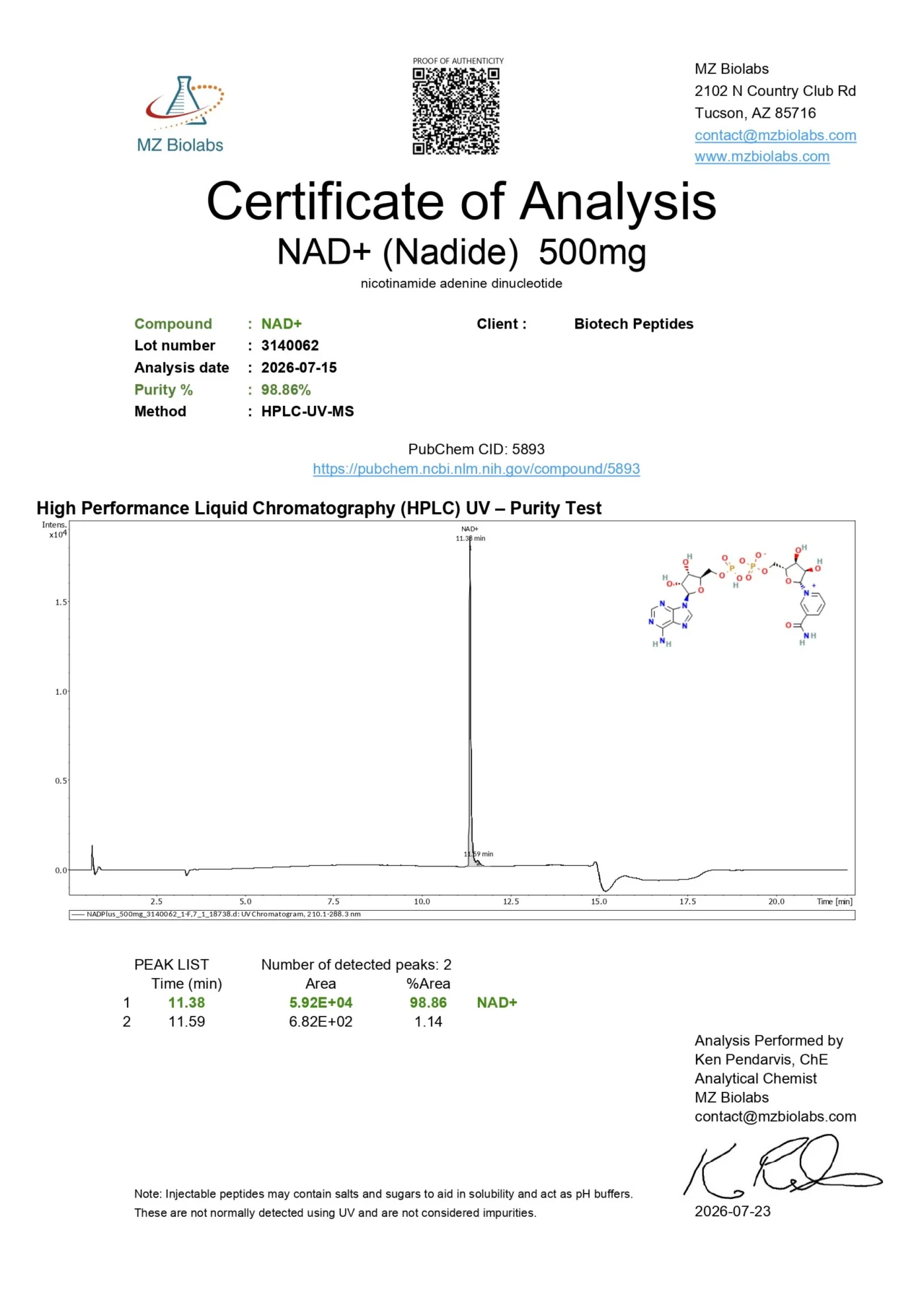
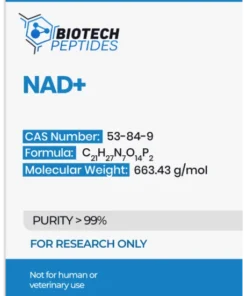
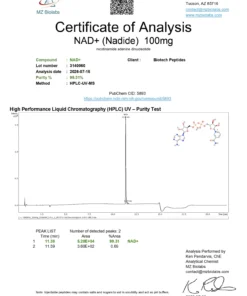
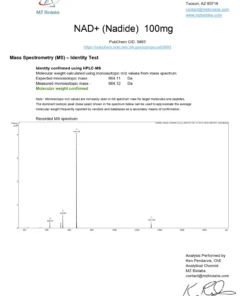
The appropriate quantity depends on the research design, assay requirements, and laboratory workflow. Researchers should consult the applicable product documentation and analytical data for lot-specific information.
Frequently Asked Questions
What is NAD+?
NAD+ stands for Nicotinamide Adenine Dinucleotide. It is a cellular coenzyme involved in redox reactions, energy metabolism, and NAD-dependent enzymatic processes.
Is NAD+ a peptide?
No. Scientifically, NAD+ is a coenzyme and nucleotide-derived metabolite, not a peptide. The term “NAD+ peptide” may appear in commercial searches, but it is not the correct chemical classification.
What is the molecular weight of NAD+?
The supplied specification lists NAD+ with a molecular weight of 663.43 g/mol and molecular formula C21H27N7O14P2.
What is NAD+ used for in laboratory research?
NAD+ is researched in connection with mitochondrial metabolism, redox biology, sirtuin activity, PARP signaling, DNA repair, oxidative stress, cellular energy metabolism, and other biochemical pathways.
What quantities are available?
This product is offered in 100mg, 250mg, and 500mg research quantities.
Is NAD+ intended for human use?
No. This product is supplied exclusively for Research Use Only (RUO) and is not intended for human consumption, administration, diagnosis, disease management, or therapeutic use.
Research Use Only Disclaimer
| Miligram | 100, 250, 500 |
|---|
Be the first to review “NAD+ Nicotinamide Adenine Dinucleotide 100mg, 250mg & 500mg”
Related products
Biotech Peptides
Biotech Peptides
Biotech Peptides
Biotech Peptides
Biotech Peptides
Biotech Peptides
Biotech Peptides
Biotech Peptides
Reviews
There are no reviews yet.