
Buy AICAR Peptide 50mg | Research Use Only
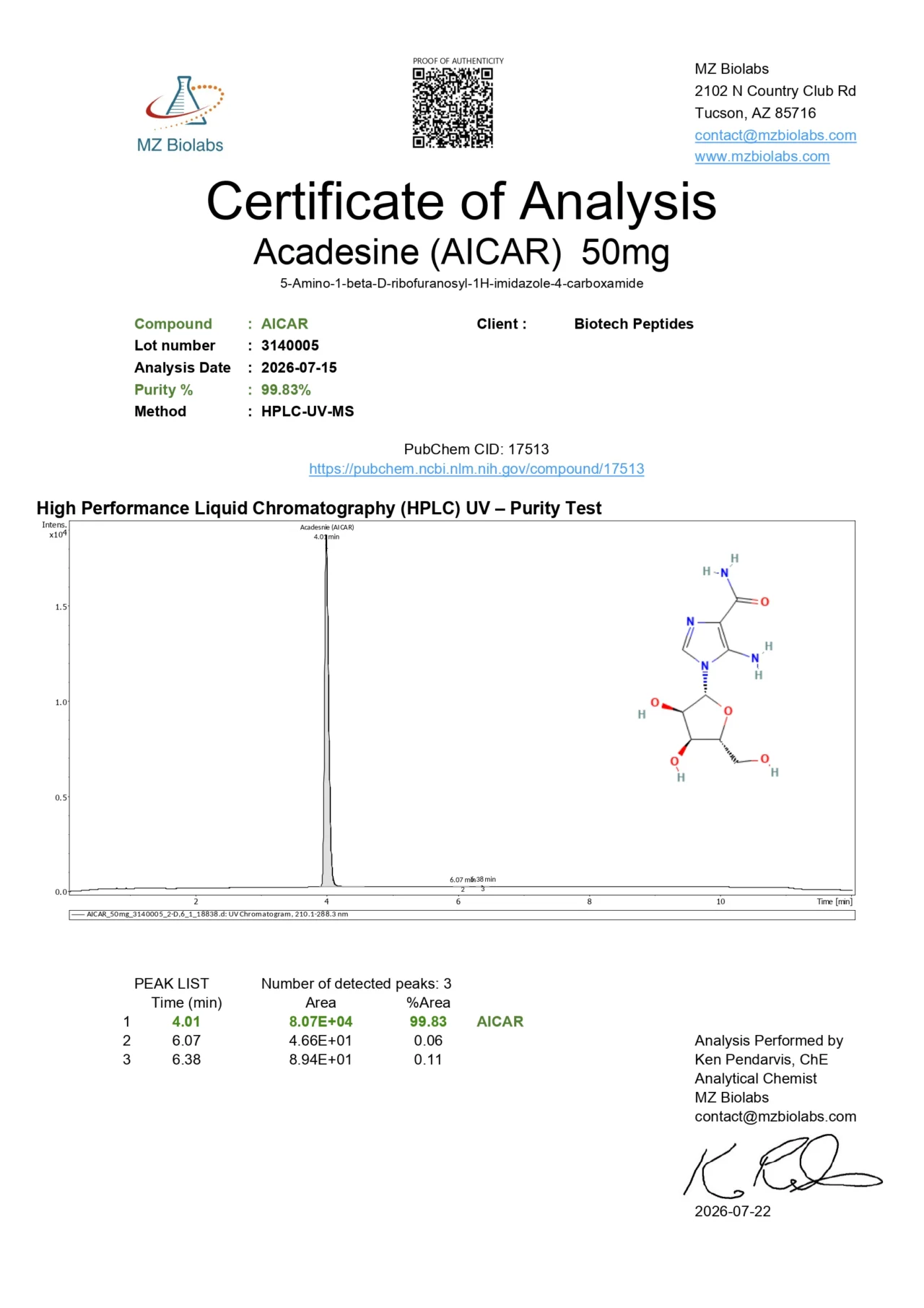
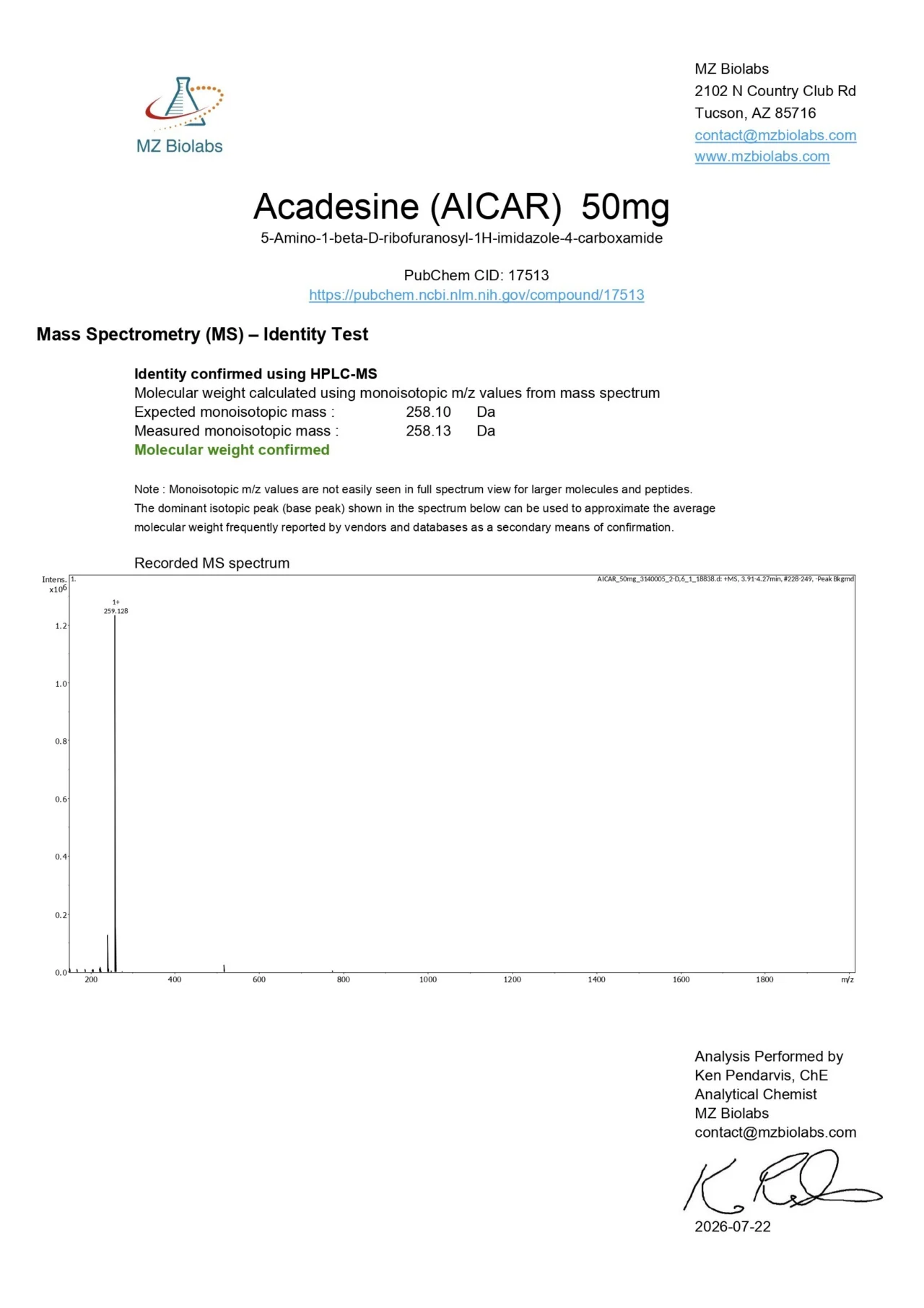
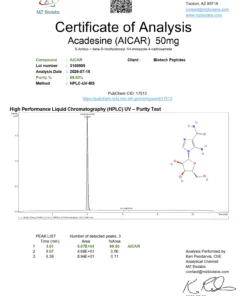
AICAR Peptide 50mg, also known as 5-Aminoimidazole-4-carboxamide ribonucleotide, is a synthetic adenosine monophosphate analog studied primarily in laboratory research involving AMP-activated protein kinase (AMPK) signaling. AICAR has been investigated as an experimental compound for examining cellular energy regulation, glucose transport, lipid metabolism, inflammation, cardiac ischemia, apoptosis, and other biochemical pathways.
For researchers purchasing AICAR peptide 50mg, this compound provides a defined research material for controlled laboratory and in-vitro investigations involving AMPK-related signaling pathways. The research literature supplied for this product includes studies involving cardiac tissue, skeletal muscle cells, metabolic models, cancer cell lines, inflammatory pathways, and reproductive research models.
AICAR Peptide 50mg Overview
AICAR has been developed and investigated as an activator of AMP-activated protein kinase. AMPK is an enzyme and cellular energy-regulation protein observed in tissues including skeletal muscle, liver, and brain. Research has examined the role of AMPK in several metabolic pathways, including glucose uptake, fatty-acid oxidation, lipid metabolism, and cellular responses to energy-deficit conditions.
Experimental studies have also investigated AICAR in models of ischemic cardiac injury, insulin resistance, cancer-cell metabolism, inflammation, and fertility-related mechanisms. These findings represent laboratory and animal research and should not be interpreted as evidence of clinical efficacy or human therapeutic use.
AICAR Peptide Specifications
| Specification | Details |
|---|---|
| Product Name | AICAR Peptide 50mg |
| Primary Research Name | 5-Aminoimidazole-4-carboxamide ribonucleotide |
| Synonyms | Z-nucleotide; 5-amino-4-imidazolecarboxamide ribotide; 5′-Phosphoribosyl-5-amino-4-imidazolecarboxamide |
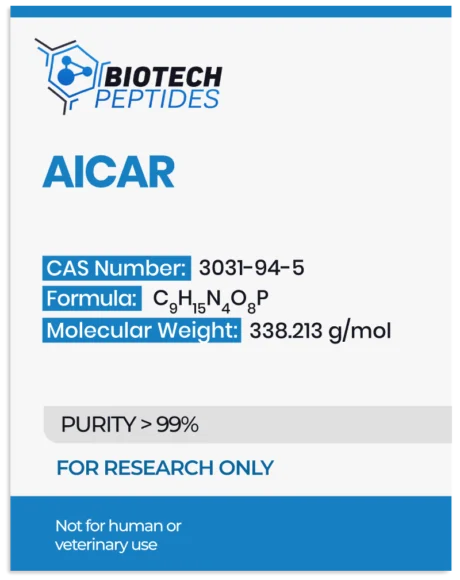
| Molecular Formula | C9H15N4O8P |
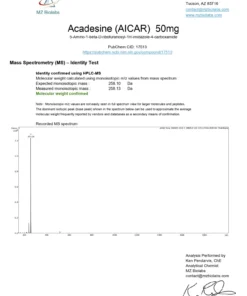
| Molecular Weight | 338.213 g/mol |
| Research Quantity | 50mg |
| Research Classification | Research Use Only (RUO) |
AICAR Research and AMPK Signaling
AICAR is particularly relevant to laboratory investigations involving AMP-activated protein kinase. AMPK has been studied as a regulator of cellular energy status and metabolic pathways. Experimental conditions such as hypoxia and hypoglycemia have been associated with AMPK activation, making the pathway an important subject in cellular metabolism research.
AICAR research has therefore examined how AMPK activation may influence glucose transport, lipid metabolism, glycogen metabolism, inflammatory signaling, and other cellular processes.
AICAR and Cardiac Research
Research involving AICAR has examined its potential protective characteristics in experimental models of cardiac ischemia. Studies have investigated whether AMPK activation may influence cellular responses associated with ischemic cardiac injury and vascular inflammation.
Research in rabbit models has suggested that AICAR may suppress vascular smooth-muscle proliferation. Other experimental work has examined macrophage proliferation associated with elevated LDL levels and the potential involvement of AICAR in these processes.
AICAR has also been investigated in experimental cardiac preconditioning models. Research has suggested that AICAR may delay certain processes associated with cell death following ischemic injury. One study reported an experimental reduction in infarct frequency and size of up to approximately 25%, together with potential changes in cardiac blood flow. These observations are experimental findings and should not be interpreted as demonstrated clinical effects.
AICAR and Myocardial Glycogen Research
Experimental work using isolated working hearts from murine models examined how AICAR may influence myocardial glycogen metabolism through AMPK activation. Researchers observed apparent increases in glycogen degradation, or glycogenolysis, while glycogen synthesis appeared unaffected.
The study also observed increased levels of 5-aminoimidazole-4-carboxamide 1-beta-D-ribofuranotide, commonly referred to as ZMP, following AICAR exposure. The findings were investigated in relation to potential allosteric activation of glycogen phosphorylase and glycogen metabolism within intact cardiac tissue.
AICAR and Metabolic Research
AICAR has been extensively investigated in experimental studies involving glucose metabolism, insulin sensitivity, lipid metabolism, and AMPK signaling. Research in diabetic murine models reported reductions in blood glucose levels following AICAR exposure without corresponding weight changes in the experimental models.
Other research has examined the relationship between AMPK activation and glucose uptake in skeletal muscle. AICAR has been investigated as an experimental tool for studying pathways involved in glucose transport, including signaling associated with GLUT-4 and other intracellular mechanisms.
In Zucker diabetic fatty murine models, long-term experimental exposure to AICAR was compared with treadmill exercise. The study reported that both experimental groups avoided the hyperglycemia observed in control models during the intervention period. The AICAR group also showed apparent improvements in whole-body insulin sensitivity and preservation of pancreatic beta-cell morphology.
These findings provide a research framework for studying the relationship between AMPK activation, glucose metabolism, pancreatic beta-cell function, and insulin signaling in experimental models.
AICAR and Cancer Research
AICAR has also been studied in cancer-related laboratory research because of its relationship with AMPK and cellular metabolism. Experimental studies using cell cultures and animal models have examined whether prolonged AICAR exposure may influence cancer-cell metabolism and proliferation.
Research involving thyroid cancer cells has investigated potential effects involving p21 induction and caspase-3 activation. Other studies have examined AICAR-induced apoptosis in B-cell chronic lymphocytic leukemia (B-CLL) cells.
In B-CLL research, AICAR exposure was associated with apparent activation of AMPK and apoptotic signaling involving caspase-3, caspase-8, caspase-9, and cytochrome c release. Experimental inhibitor studies were used to investigate whether cellular uptake and phosphorylation of AICAR into ZMP were important components of these observations.
The supplied research also reported differences in AICAR sensitivity between B-CLL cells, normal B lymphocytes, and T cells. These findings provide a basis for continued laboratory investigation of AMPK-associated apoptotic pathways.
AICAR and Fertility Research
Experimental research has examined AMPK activation in relation to male reproductive biology. Studies using murine models have investigated whether activation of AMPK pathways may influence sperm motility and other processes associated with reproductive function.
Because AICAR is investigated as an AMPK activator, it has been used as an experimental research compound for examining the enzymes and cellular pathways involved in sperm motility. These findings remain within the context of laboratory and animal research and do not establish human fertility applications.
AICAR and Inflammation Research
AMPK signaling has been investigated extensively in relation to cellular inflammatory pathways. AICAR has consequently been used in experimental models examining inflammatory processes associated with conditions such as hepatitis, acute lung injury, asthma, colitis, and atherosclerosis.
Research involving cultured L6 myotubes has also investigated the molecular pathways connecting AICAR-induced AMPK activation with glucose transport. Experimental findings examined interactions involving atypical protein kinase C (aPKC), extracellular signal-regulated kinase (ERK), phosphoinositide-dependent kinase 1 (PDK1), and related signaling pathways.
In these experiments, inhibition or depletion of selected signaling components appeared to reduce certain AICAR-associated effects on glucose transport. Additional murine research examined muscle-specific depletion of aPKC and its apparent effect on AICAR-induced glucose disposal while AMPK activation remained comparatively unaffected.
Why Use AICAR Peptide 50mg for Laboratory Research?
- Suitable for controlled laboratory and in-vitro research involving AMPK signaling.
- Defined molecular formula and molecular-weight specifications.
- Research applications spanning cellular metabolism, cardiac signaling, inflammation, and apoptosis.
- Useful for experimental investigation of glucose transport and metabolic signaling pathways.
- Applicable to controlled studies involving cultured cells and experimental model systems.
- Supplied as a 50mg research quantity.
AICAR Research Areas
- AMP-activated protein kinase (AMPK) signaling
- Cellular energy metabolism
- Glucose transport and glucose metabolism
- Cardiac ischemia and myocardial research
- Glycogen metabolism
- Insulin signaling research
- Lipid metabolism
- Inflammatory signaling
- Cancer-cell metabolism and apoptosis
- Reproductive and sperm-motility research
- aPKC and ERK signaling
Frequently Asked Questions About AICAR Peptide 50mg
What is AICAR peptide?
AICAR, or 5-Aminoimidazole-4-carboxamide ribonucleotide, is a synthetic adenosine monophosphate analog investigated primarily for laboratory research involving AMP-activated protein kinase (AMPK) and related cellular pathways.
What is the molecular weight of AICAR?
The supplied specification for AICAR lists a molecular weight of 338.213 g/mol.
What is the molecular formula of AICAR?
The supplied molecular formula is C9H15N4O8P.
What is AICAR used for in research?
AICAR has been investigated as an experimental AMPK-related research compound. Supplied research areas include cellular metabolism, glucose transport, cardiac ischemia, glycogen metabolism, inflammation, apoptosis, cancer-cell research, and reproductive biology.
Is AICAR intended for human use?
No. This product is offered strictly for Research Use Only (RUO). It is intended for qualified laboratory research and experimental applications and is not presented for human consumption, diagnosis, treatment, prevention, or mitigation of disease.
Research Use Only Disclaimer
RESEARCH USE ONLY — NOT FOR HUMAN USE
AICAR Peptide 50mg is supplied strictly for laboratory research, analytical testing, in-vitro experimentation, and scientific research purposes. It is not intended for human consumption, veterinary use, diagnosis, treatment, cure, mitigation, or prevention of any disease or medical condition.
The research information presented on this page summarizes experimental findings supplied for research purposes. Results described in cell, tissue, or animal models should not be interpreted as established effects in humans. Researchers are responsible for appropriate laboratory handling, experimental design, applicable regulatory requirements, and the use of suitable safety procedures.
| Miligram | 50 |
|---|
Be the first to review “AICAR Peptide 50mg | Research Use Only”
Related products

Biotech Peptides

Biotech Peptides

Biotech Peptides
Biotech Peptides
Biotech Peptides
Biotech Peptides
Biotech Peptides
Biotech Peptides
Reviews
There are no reviews yet.