
Buy KPV Peptide 4mg | Research Use Only
KPV Peptide 4mg is a short tripeptide corresponding to the C-terminal sequence of alpha-melanocyte-stimulating hormone (alpha-MSH). Composed of the three amino acids Lys-Pro-Val, KPV has been investigated in laboratory research focused primarily on inflammatory signaling, intestinal inflammation, epithelial biology, wound-healing models, and cellular pathways associated with NF-kappaB and MAPK activity.
Researchers studying KPV peptide 4mg may be interested in its experimental interaction with inflammatory signaling pathways. Research supplied for this product has investigated KPV in intestinal epithelial cells, activated T cells, corneal epithelial models, and murine models of intestinal inflammation and wound healing. The precise mechanisms underlying KPV activity remain an area of ongoing investigation.
KPV Peptide 4mg Overview
KPV represents the final three amino acids of alpha-MSH and is also identified in research literature as MSH(11-13), ACTH(11-13), and alpha-MSH(11-13). Although KPV is structurally related to alpha-MSH, the supplied research suggests that its cellular mechanisms may differ from those associated with the full alpha-MSH molecule.
Experimental studies have investigated KPV in relation to intracellular calcium signaling and inflammatory pathways. Research involving cells expressing melanocortin-1 receptors has suggested that KPV may influence intracellular calcium levels. This observation has been investigated in connection with NF-kappaB signaling, a transcriptional pathway involved in cellular inflammatory responses.
KPV Peptide Specifications
| Specification | Details |
|---|---|
| Product Name | KPV Peptide 4mg |
| Sequence | Lys-Pro-Val |
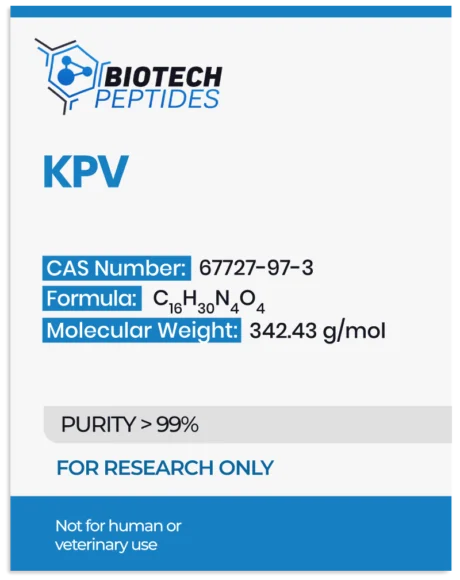
| Molecular Formula | C16H30N4O4 |
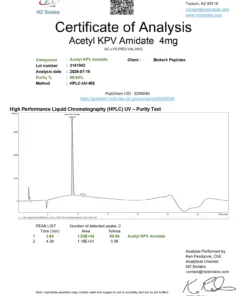
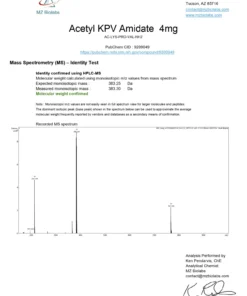
| Molecular Weight | 342.43 g/mol |
| Other Known Titles | MSH(11-13); ACTH(11-13); alpha-MSH(11-13) |
| Research Quantity | 4mg |
| Research Classification | Research Use Only (RUO) |
KPV Peptide Research
KPV and Inflammatory Signaling
One of the primary areas of KPV research concerns its potential relationship with cellular inflammatory pathways. Experimental studies have investigated whether KPV may influence NF-kappaB activation, MAPK signaling, cytokine secretion, and other pathways associated with inflammatory responses.
The supplied research suggests that KPV may produce effects that differ from those associated with alpha-MSH. Alpha-MSH has been investigated in connection with melanocortin-1 receptor signaling and the cAMP pathway, while KPV research has examined changes in intracellular calcium and related signaling mechanisms.
Studies involving melanocortin-1 receptor-transfected cells have suggested that KPV may elevate intracellular calcium levels. This finding has been investigated in relation to potential inhibition of NF-kappaB activation. Because NF-kappaB is involved in the regulation of inflammatory gene expression, KPV has become a subject of experimental research into cellular inflammatory mechanisms.
KPV Peptide and Intestinal Inflammation Research
Intestinal inflammation is one of the principal areas represented in the supplied KPV research. Experimental studies using murine models of inflammatory bowel disease have investigated KPV in relation to inflammatory infiltrates, myeloperoxidase (MPO) activity, and histological measures of intestinal inflammation.
In these experimental models, KPV exposure was associated with apparent reductions in inflammatory infiltrates and MPO activity. Researchers also observed changes in recovery and body-weight development in the experimental models. These findings are limited to the research models described and should not be interpreted as evidence of clinical efficacy.
Additional research investigated nanoparticles functionalized with hyaluronic acid as a potential delivery system for KPV. The experimental approach was designed to direct KPV-containing nanoparticles toward intestinal inflammatory sites.
KPV, TNF-alpha, NF-kappaB, and MAPK
Research has investigated the relationship between KPV and several inflammatory signaling pathways, including tumor necrosis factor-alpha (TNF-alpha), NF-kappaB, and mitogen-activated protein kinase (MAPK) activity.
In intestinal epithelial cells and activated T cells, KPV appeared to decrease activation of certain inflammatory pathways and was associated with reduced secretion of pro-inflammatory cytokines such as interleukin-8 (IL-8). These observations have contributed to research examining KPV as a molecular tool for studying inflammatory signaling in intestinal cellular systems.
KPV and PepT1 Research
The supplied research proposes that KPV may enter cells through Peptide Transporter 1 (PepT1), a di- and tripeptide transporter expressed in the small intestine and potentially upregulated in the colon during inflammatory conditions.
Experimental observations indicated that blocking the PepT1 pathway appeared to diminish certain KPV-associated effects. This has led researchers to investigate whether intracellular uptake through PepT1 is an important component of KPV’s experimental activity.
The research also reported that KPV did not appear to increase intracellular cAMP under the investigated conditions. This observation has been used to explore whether KPV’s effects are mediated through pathways distinct from conventional melanocortin receptor signaling.
KPV Peptide and Wound-Healing Research
KPV has also been investigated in experimental wound-healing models. Research has examined cells involved in wound repair that express melanocortin-1 receptors and the potential relationship between KPV, inflammatory signaling, and tissue recovery.
One experimental study investigated KPV in a corneal epithelial wound model. Mechanical abrasion was used to create a corneal epithelial defect, after which researchers measured the remaining defect at defined time points. The experimental samples exposed to KPV showed apparently smaller epithelial defects compared with controls at the measured time points.
Additional experiments investigated whether nitric oxide (NO) signaling could contribute to the observed effects. Researchers used sodium nitroprusside as an NO donor and L-NAME as a nitric oxide synthase inhibitor. Pre-exposure to L-NAME appeared to inhibit the observed KPV-associated facilitative effect on corneal epithelial wound closure.
These observations have been used to investigate a possible relationship between KPV and NO-dependent signaling in experimental epithelial repair. In-vitro experiments involving corneal epithelial cells also reported changes in cell viability following exposure to KPV under the conditions studied.
KPV Peptide and Scar Formation Research
Another area of KPV research involves inflammatory mechanisms associated with scar formation. Chronic inflammation has been investigated as a contributing factor in hypertrophic scarring and keloid-related processes, with macrophage infiltration, TNF immunoreactivity, and neutrophil abundance among the factors studied.
Research has investigated whether KPV may influence inflammatory signaling associated with these processes. The supplied research proposes that KPV may provide anti-inflammatory activity through mechanisms that differ from those of alpha-MSH.
Alpha-MSH has been studied in relation to melanocortin receptor signaling and melanin production, whereas KPV research has focused more heavily on inflammatory pathways and cellular signaling. This distinction has made KPV an experimental subject for researchers investigating inflammation and tissue-repair mechanisms without focusing on pigmentation-related signaling.
KPV Peptide Research Areas
- Inflammatory signaling research
- NF-kappaB pathway research
- MAPK signaling
- TNF-alpha research
- Intestinal epithelial cell research
- Inflammatory bowel disease research models
- PepT1-mediated peptide transport
- Corneal epithelial wound models
- Nitric oxide signaling
- Scar and fibrosis-related inflammatory research
- Melanocortin-related cellular signaling
- Intracellular calcium signaling
Why Use KPV Peptide 4mg for Laboratory Research?
- Defined tripeptide sequence of Lys-Pro-Val.
- Useful for controlled research involving inflammatory signaling pathways.
- Relevant to experimental studies involving NF-kappaB and MAPK activity.
- Suitable for laboratory investigation of intestinal epithelial and inflammatory models.
- Studied in experimental wound-healing and corneal epithelial models.
- Available as a 4mg research quantity.
- Supplied strictly for Research Use Only applications.
Frequently Asked Questions About KPV Peptide 4mg
What is KPV peptide?
KPV is a three-amino-acid peptide consisting of Lys-Pro-Val. It corresponds to the C-terminal peptide sequence of alpha-MSH and is also known as MSH(11-13), ACTH(11-13), and alpha-MSH(11-13).
What is the molecular weight of KPV?
The supplied specification lists the molecular weight of KPV as 342.43 g/mol.
What is the sequence of KPV peptide?
The supplied sequence is Lys-Pro-Val.
What is KPV researched for?
KPV has been investigated primarily in experimental studies involving inflammatory signaling. Research areas supplied for this product include intestinal inflammation, NF-kappaB and MAPK pathways, PepT1 transport, epithelial wound-healing models, nitric oxide signaling, and scar-related inflammatory processes.
Is KPV peptide intended for human use?
No. KPV Peptide 4mg is supplied strictly for Research Use Only (RUO). It is intended for qualified laboratory research, analytical work, and experimental applications and is not intended for human consumption, diagnosis, treatment, cure, mitigation, or prevention of disease.
Research Use Only Disclaimer
RESEARCH USE ONLY — NOT FOR HUMAN USE
KPV Peptide 4mg is supplied strictly for laboratory research, in-vitro experimentation, analytical testing, and scientific research purposes. This material is not intended for human consumption, veterinary use, diagnosis, treatment, cure, mitigation, or prevention of any disease or medical condition.
The research information presented on this page is based on experimental findings supplied for research purposes. Findings from cell, tissue, and animal models should not be interpreted as established effects in humans. Researchers are responsible for appropriate laboratory handling, experimental design, applicable regulations, and suitable safety procedures.
Be the first to review “KPV Peptide 4mg | Research Use Only”
Related products
Biotech Peptides
Biotech Peptides
Biotech Peptides
Biotech Peptides
Biotech Peptides
Biotech Peptides
Biotech Peptides
Biotech Peptides
Reviews
There are no reviews yet.