

Buy Follistatin-344 Peptide 1mg
Follistatin-344 Peptide 1mg is a recombinant or synthetic research protein based on the naturally occurring follistatin-344 isoform. Follistatin-344 research protein is studied extensively for its interactions with members of the transforming growth factor beta (TGF-β) superfamily, including myostatin and Activin A. These interactions make Follistatin-344 an important research tool for investigating cellular proliferation, differentiation, muscle-cell signaling, tissue remodeling, and related molecular pathways.
Researchers studying Follistatin-344 peptide 1mg can investigate protein-protein interactions, ligand sequestration, TGF-β-family signaling, SMAD pathway activity, and cellular responses in appropriate laboratory and preclinical models.
This product is supplied strictly for Research Use Only (RUO) and is intended for qualified laboratory personnel conducting in-vitro, biochemical, cellular, or other scientific research.
Follistatin-344 Research Protein
Follistatin is a secreted glycoprotein that interacts with several signaling proteins belonging to the TGF-β superfamily. Naturally occurring follistatin variants are associated with alternative processing of the FST gene, with FST-344 representing a longer precursor-derived form.
Follistatin research is particularly relevant to studies involving myostatin, Activin A, bone morphogenetic proteins (BMPs), and downstream SMAD signaling.
Rather than acting primarily as a conventional receptor agonist, follistatin is commonly investigated for its ability to bind selected extracellular signaling proteins and influence their availability to their respective receptors.
Key Follistatin-344 Research Areas
Laboratory studies involving Follistatin-344 may include:
- Myostatin/GDF-8 binding research
- Activin A signaling studies
- TGF-β superfamily research
- SMAD2/3 pathway investigations
- Muscle-cell proliferation and differentiation models
- Cellular growth and remodeling research
- BMP signaling studies
- Pancreatic beta-cell research
- Protein-protein interaction assays
- Tissue and cellular signaling models
Follistatin-344 and Myostatin Research
One of the most extensively investigated functions of follistatin is its interaction with myostatin, also known as growth differentiation factor 8 (GDF-8).
Myostatin is a TGF-β-superfamily ligand involved in signaling pathways associated with skeletal muscle development and cellular regulation. Experimental studies have investigated whether follistatin can bind myostatin and reduce its availability for receptor-mediated signaling.
This makes Follistatin-344 particularly useful for researchers studying the molecular relationship between extracellular ligands and cellular signaling pathways controlling muscle-cell biology.
In appropriate experimental systems, researchers can investigate:
- Myostatin-follistatin binding
- GDF-8 signaling
- Activin receptor pathways
- SMAD2/3 phosphorylation
- Myogenic differentiation
- Muscle-cell proliferation
- Cellular remodeling
- TGF-β-superfamily ligand regulation
Animal and cellular findings involving Follistatin-344 should remain specific to the experimental model in which they were observed and should not be interpreted as established human outcomes.
Follistatin-344 and Activin A Research
Follistatin also interacts with Activin A, another important member of the TGF-β superfamily.
Activin A participates in diverse cellular processes, including proliferation, differentiation, extracellular matrix regulation, and signaling through activin receptors. Research into Follistatin-344 therefore provides an opportunity to examine how extracellular ligand-binding proteins can modify Activin-associated signaling.
The relationship between Follistatin-344 and Activin A can be investigated using biochemical binding assays, cell-based receptor systems, and downstream signaling measurements.
Researchers may examine:
- Activin A ligand sequestration
- Activin receptor signaling
- ActRIIB-associated pathways
- SMAD2/3 activation
- Cellular proliferation
- Cellular differentiation
- Tissue-remodeling pathways
- TGF-β-superfamily signaling networks
Follistatin-344 and Muscle-Cell Biology
Follistatin-344 has been widely studied in experimental models of muscle-cell biology because of its relationship with myostatin and Activin signaling.
Research models have investigated changes in muscle-cell number, cellular differentiation, contractile characteristics, and tissue composition following alterations in follistatin signaling.
These studies provide a useful framework for investigating the molecular mechanisms controlling muscle-cell development without assuming that observations from experimental models translate directly to human physiology.
Potential laboratory research topics include:
- Myoblast proliferation
- Myogenic differentiation
- Muscle-fiber development
- Myostatin signaling
- Activin signaling
- TGF-β-mediated cellular regulation
- Fibrotic signaling
- Extracellular matrix remodeling
Follistatin-344 and SMAD Signaling
A major research pathway associated with myostatin and Activin A is the SMAD2/3 signaling pathway.
When specific TGF-β-superfamily ligands interact with their receptors, downstream SMAD proteins can become activated and transmit signals into the nucleus. Follistatin research can therefore be used to examine how extracellular ligand availability influences intracellular SMAD signaling.
Cell-based studies can evaluate endpoints such as:
- SMAD2 phosphorylation
- SMAD3 phosphorylation
- Nuclear signaling activity
- TGF-β-family transcriptional responses
- Cellular proliferation markers
- Differentiation-associated markers
These mechanisms make Follistatin-344 useful for laboratory investigations connecting extracellular protein interactions with intracellular gene-regulatory pathways.
Follistatin-344 and Pancreatic Cell Research
Preclinical research has also investigated the relationship between follistatin signaling and pancreatic beta-cell biology. Experimental models have examined changes in pancreatic islet-cell proliferation and signaling pathways associated with Activin, myostatin, and other TGF-β-family proteins.
These studies provide opportunities to investigate the molecular relationship between extracellular ligand regulation and pancreatic-cell signaling.
For laboratory researchers, Follistatin-344 may therefore be relevant to studies involving:
- Pancreatic beta-cell models
- Islet-cell biology
- Activin signaling
- Myostatin signaling
- SMAD2/3 pathways
- Cellular proliferation
- Insulin-associated cellular signaling
- PI3K-Akt pathway research
Observations from animal or cellular models should be interpreted only within the experimental conditions used.
Follistatin-344 and Cancer-Cell Signaling Research
Follistatin expression and signaling have also been investigated in different cancer-cell models. Research has examined relationships between Follistatin, Activin signaling, BMP pathways, cellular migration, proliferation, and tissue remodeling.
Because TGF-β-superfamily signaling can vary substantially between cell types and experimental systems, Follistatin-344 research may be useful for investigating these pathways without assuming a uniform biological effect.
Potential research areas include:
- Activin-dependent cell signaling
- BMP signaling
- Epithelial-cell models
- Cellular migration
- Proliferation pathways
- Extracellular matrix regulation
- Tumor-cell signaling models
Results may differ depending on the specific cell line, ligand concentration, receptor expression, and experimental design.
Follistatin-344 Specifications
| Specification | Details |
|---|---|
| Product Name | Follistatin-344 Peptide |
| Research Quantity | 1mg |
| Synonyms | Activin-binding protein, FST, FSH-suppressing protein |
| Protein Form | Follistatin-344 |
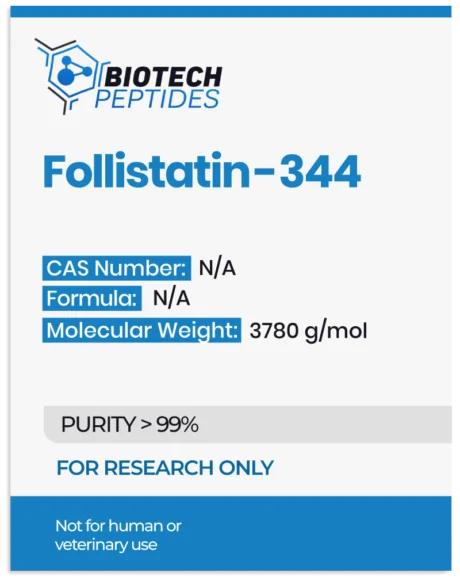
| Molecular Weight | 3780 g/mol |
| Sequence | MVRARHQPGGLCLLLLLLCQFMEDRSAQAGNCWLRQAKNGRCQVLYKTELSKEECCSTGRLSTSWTEEDVNDNTLFKWMIFNGGAPNCIPCKETCENVD CGPGKKCRMNKKNKPRCVCAPDCSNITWKGPVCGLDGKTYRNECALLKARCKEQPELEVQYQGRCKKTCRDVFCPGSSTCVVDQTNNAYCVTCNRICPEPASSE QYLCGNDGVTYSSACHLRKATCLLGRSIGLAYEGKCIKAKSCEDIQCTGGKKCLWDFKVGRGRCSLCDELCPDSKSDEPVCASDNATYASECAMKEAACSSGVLLEVKHSGSCNSISEDTEEEEEDEDQDYSFPISSILEW |
| Research Classification | Research Use Only (RUO) |
Sequence note: The sequence above is reproduced from the supplied product information. Researchers should verify sequence identity, molecular weight, purity, formulation, and lot-specific analytical information against the applicable Certificate of Analysis (CoA) or product documentation.
Why Buy Follistatin-344 Peptide 1mg?
Researchers looking to buy Follistatin-344 peptide 1mg can use this research protein for controlled investigations into TGF-β-superfamily signaling and extracellular ligand regulation.
Potential applications include:
- Myostatin/GDF-8 research
- Activin A research
- TGF-β signaling studies
- SMAD2/3 pathway research
- Muscle-cell biology
- Cell proliferation and differentiation studies
- BMP signaling research
- Pancreatic beta-cell research
- Protein-protein interaction studies
- Cellular remodeling research
Follistatin-344 should be evaluated according to the specific experimental system, assay conditions, and analytical methods used by the laboratory.
Frequently Asked Questions
What is Follistatin-344?
Follistatin-344 is a naturally occurring follistatin isoform studied for its interactions with members of the TGF-β superfamily, particularly myostatin and Activin proteins.
What is Follistatin-344 used for in research?
Follistatin-344 is investigated in laboratory research involving myostatin, Activin A, TGF-β signaling, SMAD2/3 pathways, muscle-cell biology, cellular proliferation, differentiation, BMP signaling, and protein-ligand interactions.
What is the molecular weight of Follistatin-344?
The supplied product specification lists the molecular weight as 3,780 g/mol. Researchers should verify the molecular-weight specification against the applicable lot-specific analytical documentation.
Is Follistatin-344 a peptide or protein?
Follistatin-344 is more accurately described as a protein/glycoprotein research molecule rather than a short peptide. The supplied material represents the Follistatin-344 form used for research applications.
Is Follistatin-344 intended for human use?
No. This product is supplied strictly for Research Use Only (RUO) and is not intended for human consumption, administration, diagnosis, disease management, or therapeutic use.
| Miligram | 1 |
|---|
Be the first to review “Buy Follistatin-344 Peptide 1mg”
Related products

Biotech Peptides
Biotech Peptides
Biotech Peptides

Biotech Peptides
Biotech Peptides
Biotech Peptides
Biotech Peptides
Biotech Peptides
Reviews
There are no reviews yet.