


Buy Syn-Coll (Palmitoyl Tripeptide-5) Peptide 100mg & 200mg
Syn-Coll (Palmitoyl Tripeptide-5) is a synthetic palmitoylated tripeptide studied in laboratory models involving collagen signaling, extracellular matrix biology, dermal fibroblast activity, transforming growth factor beta (TGF-β) pathways, and matrix metalloproteinase (MMP) research. Also known as Palmitoyl Tripeptide-5 and Tripeptide-5, Syn-Coll provides a defined peptide system for researchers investigating extracellular matrix regulation and collagen-related cellular pathways.
Researchers studying Syn-Coll peptide may be particularly interested in its relationship to thrombospondin-1 (TSP-1), an extracellular matrix protein associated with cellular signaling and tissue structure. Experimental literature has investigated whether Palmitoyl Tripeptide-5 can influence TGF-β-associated signaling and downstream collagen-related processes in fibroblast and skin-tissue models.
Our Syn-Coll (Palmitoyl Tripeptide-5) Peptide 100mg & 200mg is supplied for laboratory research, in-vitro investigation, analytical work, and scientific studies. It is not intended for human consumption or therapeutic use.
Syn-Coll Palmitoyl Tripeptide-5 Research Overview
Syn-Coll is a palmitoylated tripeptide designed for research involving extracellular matrix signaling. Its peptide sequence is Palmitoyl-Lys-Val-Lys. The addition of the palmitoyl group makes Syn-Coll a useful model compound for researchers examining how lipid-modified peptides behave in experimental skin, cellular, and extracellular matrix systems.
Laboratory research has examined Palmitoyl Tripeptide-5 in connection with type I and type III collagen, TGF-β signaling, fibroblast activity, and matrix metalloproteinases. These pathways are important subjects in studies of extracellular matrix organization, cellular signaling, tissue structure, and protein turnover.
Syn-Coll and TGF-β Signaling Research
One of the primary areas of interest surrounding Syn-Coll Palmitoyl Tripeptide-5 is its relationship with transforming growth factor beta (TGF-β). TGF-β signaling is extensively studied because of its involvement in extracellular matrix regulation and the expression of structural proteins, including collagen.
Experimental models have investigated whether Syn-Coll can influence TGF-β-associated signaling and subsequently affect collagen-related gene expression in fibroblast systems. Research into this pathway provides a useful framework for studying how synthetic peptides may interact with extracellular matrix signaling networks.
For researchers working with dermal fibroblasts, extracellular matrix models, or collagen-expression assays, Syn-Coll can serve as a research material for investigating peptide-mediated signaling and cellular responses.
Palmitoyl Tripeptide-5 and Collagen Research
Collagen is a major structural protein within the extracellular matrix, making collagen synthesis and degradation important areas of laboratory research. Syn-Coll (Palmitoyl Tripeptide-5) has been investigated in experimental systems examining type I and type III collagen formation.
Studies involving TGF-β-related pathways have explored changes in collagen-associated messenger RNA and extracellular matrix protein expression following experimental exposure to signaling compounds. These findings have contributed to continued research into the molecular pathways connecting TGF-β activity, fibroblast signaling, and extracellular matrix organization.
Syn-Coll research may therefore be relevant to laboratory investigations involving:
- Type I collagen expression
- Type III collagen expression
- Dermal fibroblast biology
- Extracellular matrix organization
- TGF-β/SMAD signaling
- Cellular protein synthesis pathways
- Collagen turnover and degradation
Syn-Coll and Matrix Metalloproteinase Research
Another area of interest is the relationship between Syn-Coll and matrix metalloproteinases (MMPs). MMPs are enzymes involved in extracellular matrix remodeling and the breakdown of structural proteins.
Experimental research has examined MMP-1 and MMP-3 in connection with collagen degradation. Because these enzymes participate in extracellular matrix turnover, studying their activity provides researchers with a way to investigate the balance between collagen formation and degradation.
Syn-Coll can therefore be incorporated into laboratory research focused on MMP activity, collagen turnover, extracellular matrix remodeling, and peptide-mediated regulation of fibroblast-associated pathways.
Syn-Coll in Skin and Cellular Research Models
Palmitoyl Tripeptide-5 is frequently investigated in experimental models involving skin cells and extracellular matrix components. Research areas can include fibroblast signaling, collagen-associated pathways, cellular stress, barrier-related biology, and interactions between peptide compounds and structural proteins.
Researchers may also investigate Syn-Coll alongside other compounds or peptide modifications to compare cellular responses, signaling activity, and extracellular matrix markers. Such studies can help characterize how lipid-modified peptides interact with biological model systems.
Syn-Coll and Palmitoylated Peptide Research
The palmitoyl modification is an important structural characteristic of Syn-Coll. Lipid modification can change the physicochemical properties of peptide compounds and is therefore relevant to experimental research involving peptide stability, membrane interactions, formulation behavior, and tissue-model systems.
Researchers have also investigated modified derivatives related to Palmitoyl Tripeptide-5. For example, experimental work involving Palm-KVK-AA has examined combinations of the peptide structure with an ascorbic-acid derivative in cellular models. Such research illustrates the broader interest in modifying peptide structures to investigate changes in stability, cellular interaction, and biological signaling.
Syn-Coll Peptide Specifications
| Specification | Details |
|---|---|
| Product Name | Syn-Coll Peptide |
| Primary Research Name | Palmitoyl Tripeptide-5 |
| Alternative Name | Tripeptide-5 |
| Sequence | Palmitoyl-Lys-Val-Lys |
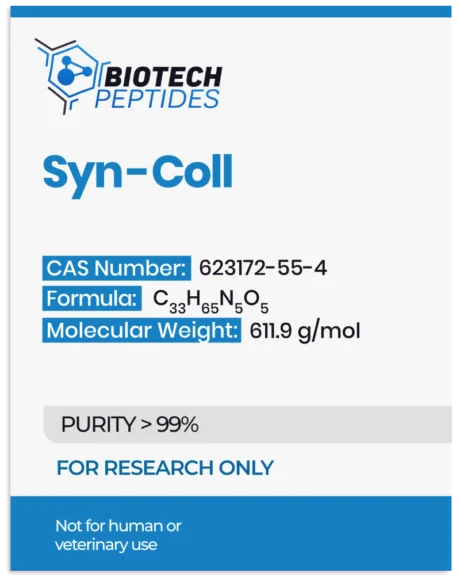
| Molecular Formula | C33H65N5O5 |
| Molecular Weight | 611.9 g/mol |
| PubChem | CID 11950477 |
| Available Quantities | 100mg & 200mg |
| Research Classification | Synthetic palmitoylated peptide |
Buy Syn-Coll Peptide 100mg & 200mg for Research
If you are looking to buy Syn-Coll Peptide 100mg or 200mg for laboratory research, Palmitoyl Tripeptide-5 provides a defined synthetic peptide system for investigating collagen-associated signaling, fibroblast biology, extracellular matrix pathways, TGF-β activity, and MMP-related research.
Choose the 100mg or 200mg Syn-Coll research peptide option appropriate for your laboratory project. Syn-Coll is intended for qualified researchers conducting controlled laboratory experiments, in-vitro studies, analytical investigations, and scientific research.
Frequently Asked Questions About Syn-Coll
What is Syn-Coll peptide?
Syn-Coll is the research name commonly associated with Palmitoyl Tripeptide-5, a synthetic palmitoylated tripeptide studied in extracellular matrix, collagen, fibroblast, TGF-β, and MMP-related research.
What is the sequence of Palmitoyl Tripeptide-5?
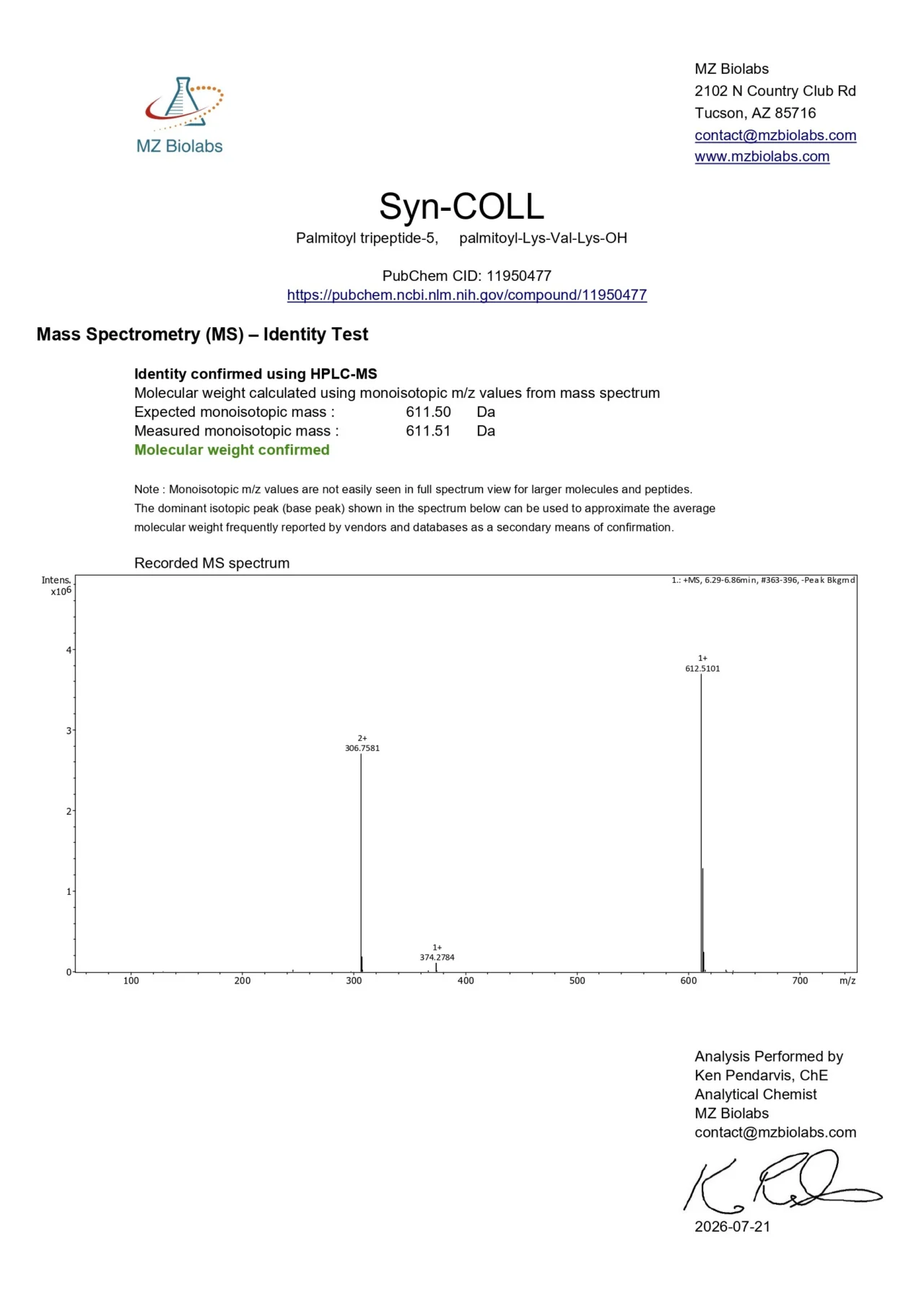
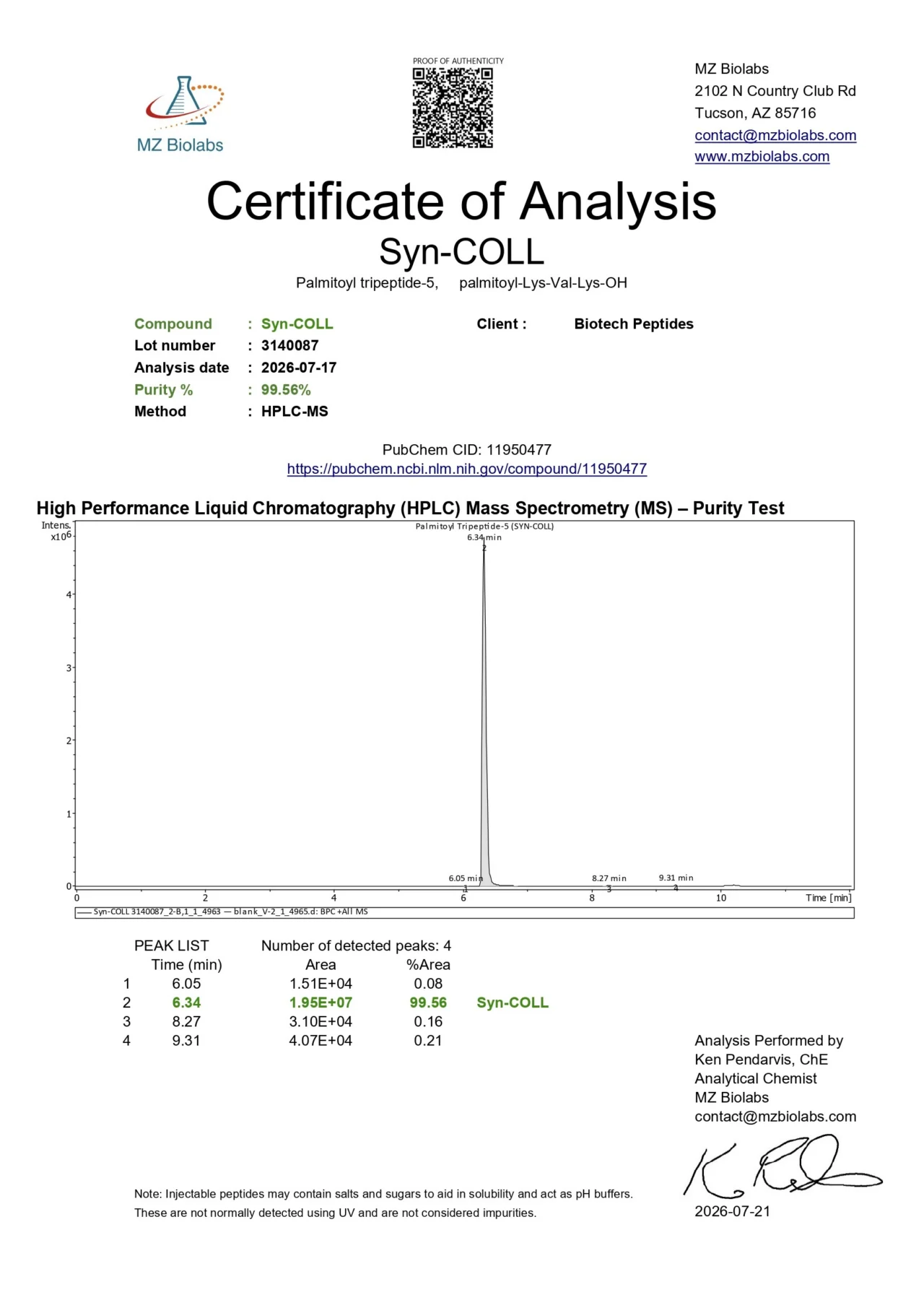
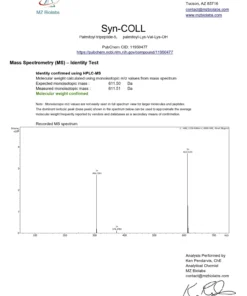
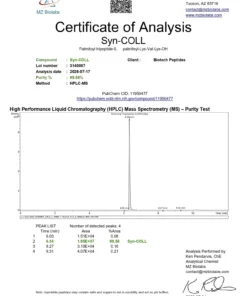
The supplied sequence for Syn-Coll is Palmitoyl-Lys-Val-Lys. Researchers should consult the applicable lot-specific analytical documentation for confirmation of product identity and specifications.
What is the molecular weight of Syn-Coll?
The supplied molecular weight of Syn-Coll (Palmitoyl Tripeptide-5) is 611.9 g/mol.
What is Syn-Coll used for in research?
Syn-Coll is supplied for laboratory research involving collagen signaling, extracellular matrix biology, dermal fibroblast models, TGF-β-associated pathways, MMP activity, and related cellular research. It is not intended for human or veterinary use.
Is Syn-Coll a research peptide?
Yes. Syn-Coll is a synthetic palmitoylated peptide used as a research material in laboratory and experimental settings. Research applications should be determined by qualified laboratory personnel according to appropriate protocols.
Research Use Only Disclaimer
FOR RESEARCH USE ONLY (RUO). Syn-Coll (Palmitoyl Tripeptide-5) is supplied exclusively for laboratory research, in-vitro testing, analytical research, and scientific investigation. It is not intended for human consumption, veterinary use, diagnosis, disease management, or use as a food, dietary supplement, cosmetic, or approved drug. This material is intended for qualified laboratory personnel using appropriate safety procedures and following applicable institutional requirements and laws. Findings from cellular or animal research models should not be interpreted as established outcomes in humans. The purchaser is responsible for determining appropriate laboratory use, handling, storage, and regulatory compliance.
| Miligram | 100, 200 |
|---|
Be the first to review “Syn-Coll (Palmitoyl Tripeptide-5) Peptide 100mg & 200mg”
Related products
Biotech Peptides
Biotech Peptides
Biotech Peptides
Biotech Peptides

Biotech Peptides
Biotech Peptides
Biotech Peptides
Biotech Peptides
Reviews
There are no reviews yet.