Description
Buy Tesamorelin Peptide 5mg & 10mg – GHRH Research Peptide
Tesamorelin research peptide is a chemically modified growth hormone-releasing hormone (GHRH) analog investigated in laboratory research involving GHRH receptor signaling, somatotroph-cell biology, cyclic AMP pathways, growth-hormone-associated signaling, and downstream IGF-related mechanisms. The peptide incorporates an N-terminal modification designed to influence molecular stability while retaining structural characteristics associated with GHRH-derived sequences.
This Tesamorelin peptide 5mg & 10mg is supplied exclusively for laboratory research, in-vitro experimentation, analytical investigation, and scientific studies. It is not intended for human or veterinary use.
Tesamorelin Peptide Specifications
| Specification | Details |
|---|---|
| Product Name | Tesamorelin Peptide |
| Available Sizes | 5mg & 10mg |
| Peptide Class | Modified GHRH Analog |
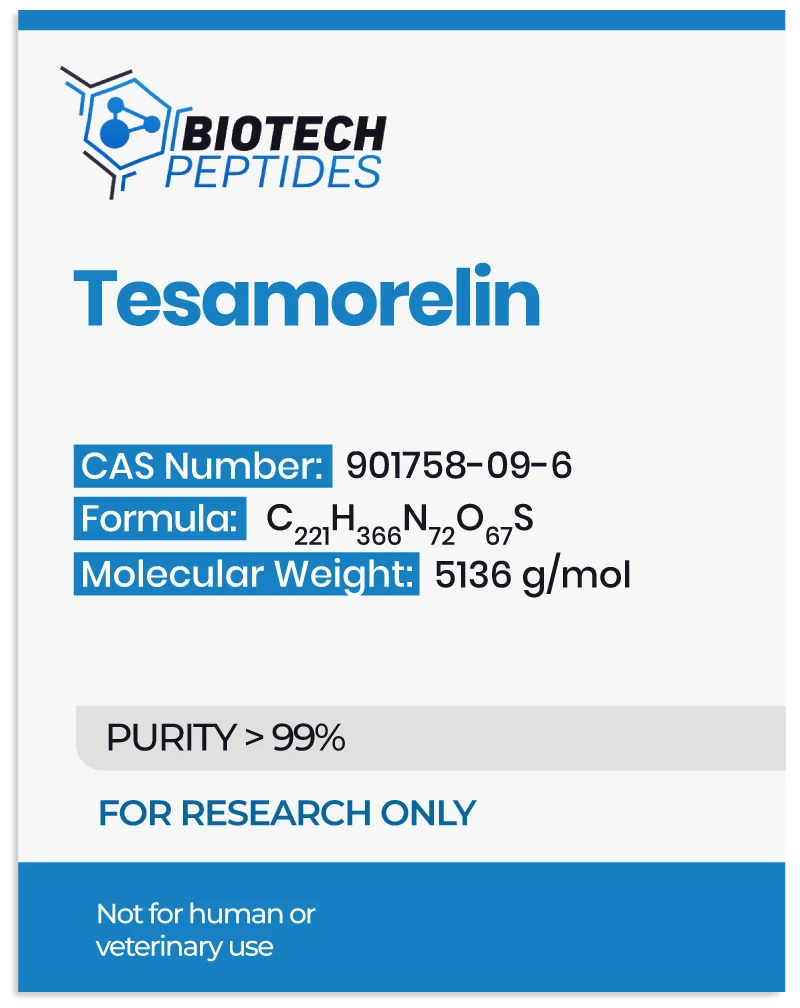
| Molecular Formula | C221H366N72O67S |
| Molecular Weight | 5136 g/mol |
| N-Terminal Modification | trans-Hexenoyl-acid modification |
| Sequence | trans-Hexenoyl-acid-Tyr-Ala-Asp-Ala-Ile-Phe-Thr-Asn-Ser-Tyr-Arg-Lys-Val-Leu-Gly-Gln-Leu-Ser-Ala-Arg-Lys-Leu-Leu-Gln-Asp-Ile-Met-Ser-Arg-Gln-Gln-Gly-Glu-Ser-Asn-Gln-Glu-Arg-Gly-Ala-Arg-Ala-Arg-Leu |
| Research Classification | Research Use Only (RUO) |
Sequence note: The sequence above has been normalized for obvious spacing and transcription inconsistencies in the supplied source material. Researchers performing structural or analytical work should verify the exact molecular identity and terminal modifications against the applicable lot-specific certificate of analysis and product documentation.
Tesamorelin and GHRH Receptor Research
One of the primary areas of Tesamorelin laboratory research involves the interaction between GHRH-derived peptides and GHRH receptors. The GHRH receptor is a G protein-coupled receptor expressed by somatotroph cells and represents an important experimental target for studying endocrine signaling pathways.
Research models can investigate peptide-receptor interactions and the conformational changes associated with receptor activation. Following receptor engagement, intracellular signaling may involve coupling to G proteins and activation of adenylyl cyclase.
Adenylyl cyclase converts ATP into cyclic adenosine monophosphate (cAMP), an important intracellular second messenger. Changes in cAMP can subsequently influence protein kinase A (PKA), protein phosphorylation, calcium-associated signaling, and other downstream cellular events.
Tesamorelin and cAMP/PKA Signaling
The GHRH receptor–adenylyl cyclase–cAMP pathway provides an important framework for investigating how modified GHRH analogs influence cellular signaling.
Experimental Tesamorelin research may evaluate cAMP production, PKA activation, phosphorylation patterns, calcium-dependent cellular events, receptor expression, and downstream transcriptional responses. These measurements can help characterize the molecular activity of GHRH-derived peptides in controlled laboratory systems.
Somatotroph-cell models are particularly relevant because they provide an experimental system for investigating relationships between GHRH receptor activation and growth-hormone-associated cellular signaling.
Tesamorelin and Somatotroph Cell Research
Somatotrophs are specialized endocrine cells located in the anterior pituitary. They provide a useful model for studying GHRH receptor biology and the intracellular pathways associated with growth-hormone synthesis and secretion.
Researchers can use Tesamorelin as a molecular probe to examine receptor signaling, second-messenger activity, cellular responses, and interactions between GHRH-associated pathways and other endocrine signaling systems.
Studies can also investigate downstream markers associated with the growth-hormone/IGF signaling axis while maintaining a controlled experimental environment.
Tesamorelin and Peptide Stability Research
The molecular structure of Tesamorelin incorporates a modified N-terminal group that distinguishes it from unmodified GHRH-derived sequences. Structural modifications of peptide molecules are an important area of pharmaceutical and biochemical research because terminal chemistry can influence molecular stability, degradation, receptor interaction, and experimental behavior.
Researchers studying Tesamorelin can therefore investigate the relationship between terminal modification, peptide structure, receptor interaction, and stability under defined laboratory conditions.
Tesamorelin and IGF-Related Signaling
Research involving GHRH analogs frequently examines downstream pathways associated with insulin-like growth factor signaling. IGF-related pathways are important subjects in cell biology because they participate in growth-factor signaling, cellular differentiation, proliferation, metabolism, and tissue biology.
Experimental systems can measure changes in IGF-associated markers alongside receptor activation and intracellular signaling endpoints. These measurements can help researchers characterize the relationship between GHRH receptor activity and downstream growth-factor pathways.
Tesamorelin and Adipose-Tissue Research Models
Tesamorelin has also been investigated in experimental models involving adipose tissue and metabolic signaling. Laboratory research can examine relationships between GHRH-associated signaling, adipocyte biology, lipid storage, and tissue-level metabolic pathways.
Experimental adipose-tissue models may evaluate markers associated with lipid metabolism, adipocyte differentiation, inflammatory signaling, and endocrine communication. These studies can help researchers investigate how GHRH-derived signaling interacts with metabolic tissues.
Findings from specific experimental models should remain limited to the model, population, and conditions in which they were generated and should not be interpreted as established outcomes in humans.
Tesamorelin and Lipid Metabolism Research
Research involving Tesamorelin has explored biochemical markers associated with lipid metabolism, including triglyceride and cholesterol-related pathways. Such investigations provide an opportunity to examine relationships between GHRH signaling, adipose-tissue biology, and systemic metabolic markers in controlled research settings.
Researchers may investigate lipid-associated pathways through biochemical assays, tissue models, gene-expression analysis, and other analytical approaches. These experiments can provide mechanistic information about how GHRH-associated signaling interacts with metabolic processes.
Tesamorelin and Neurological Research
GHRH signaling has also been investigated in experimental neuroscience. Research involving GHRH analogs has examined neuroendocrine signaling, neurotransmitter-associated pathways, and molecular markers relevant to brain function.
Experimental studies may examine relationships between GHRH signaling and neurotransmitter systems such as gamma-aminobutyric acid (GABA), as well as changes in other biochemical markers within neural models.
These investigations provide opportunities to study interactions between endocrine peptides and neurological signaling networks without extrapolating experimental findings to human neurological outcomes.
Tesamorelin and Peripheral Nerve Research
Peripheral nerve biology is another potential area of experimental investigation. Researchers studying neuronal repair and regeneration can examine growth-factor-associated signaling, cellular migration, axonal responses, and tissue remodeling.
Because GHRH-associated signaling intersects with broader growth-factor pathways, Tesamorelin can be investigated in controlled models designed to characterize molecular mechanisms involved in neuronal and peripheral tissue biology.
Tesamorelin and Muscle-Tissue Research
Experimental muscle research has examined relationships between GHRH-associated signaling and structural characteristics of muscle tissue. Imaging-based and cellular models can evaluate muscle density, tissue composition, cellular architecture, and growth-factor-associated pathways.
These studies can be combined with molecular measurements to investigate how GHRH receptor signaling interacts with muscle-cell biology, extracellular signaling, and IGF-associated pathways.
Tesamorelin and Liver Research Models
Hepatic research has investigated the relationship between GHRH-associated signaling, liver lipid metabolism, inflammatory markers, and tissue remodeling. Experimental models may measure hepatic lipid content, inflammatory biomarkers, extracellular-matrix pathways, and fibrosis-associated markers.
These research systems provide an opportunity to investigate how endocrine signaling may interact with hepatic metabolism and tissue biology. Results should be interpreted according to the specific experimental design and model used.
Key Features of Tesamorelin Peptide
- Available in 5mg and 10mg research quantities.
- Modified GHRH analog for controlled laboratory research.
- Molecular formula: C221H366N72O67S.
- Molecular weight: 5136 g/mol.
- Contains an N-terminal trans-hexenoyl-acid modification according to the supplied specification.
- Relevant to GHRH receptor and somatotroph-cell studies.
- Suitable for cAMP and PKA signaling investigations.
- Applicable to IGF-related pathway research.
- Relevant to adipose, metabolic, neurological, muscle, and hepatic research models.
- Suitable for peptide structure-function and stability investigations.
- Supplied strictly as a Research Use Only (RUO) material.
Potential Tesamorelin Laboratory Research Applications
Researchers may investigate Tesamorelin in controlled experimental systems involving:
- GHRH receptor signaling
- Somatotroph-cell biology
- Adenylyl cyclase and cAMP signaling
- Protein kinase A pathway research
- Peptide-receptor interaction studies
- Growth-factor and IGF-related signaling
- Peptide stability and structure-function analysis
- Adipocyte and adipose-tissue models
- Lipid metabolism research
- Neuroendocrine signaling studies
- GABA-associated experimental research
- Peripheral nerve and neuronal models
- Muscle-cell and tissue research
- Hepatic lipid and tissue-remodeling studies
Handling and Storage of Tesamorelin Research Peptide
Tesamorelin should be handled by qualified laboratory personnel using appropriate laboratory safety procedures. Researchers should follow the storage conditions and handling instructions supplied with the product and applicable lot-specific documentation.
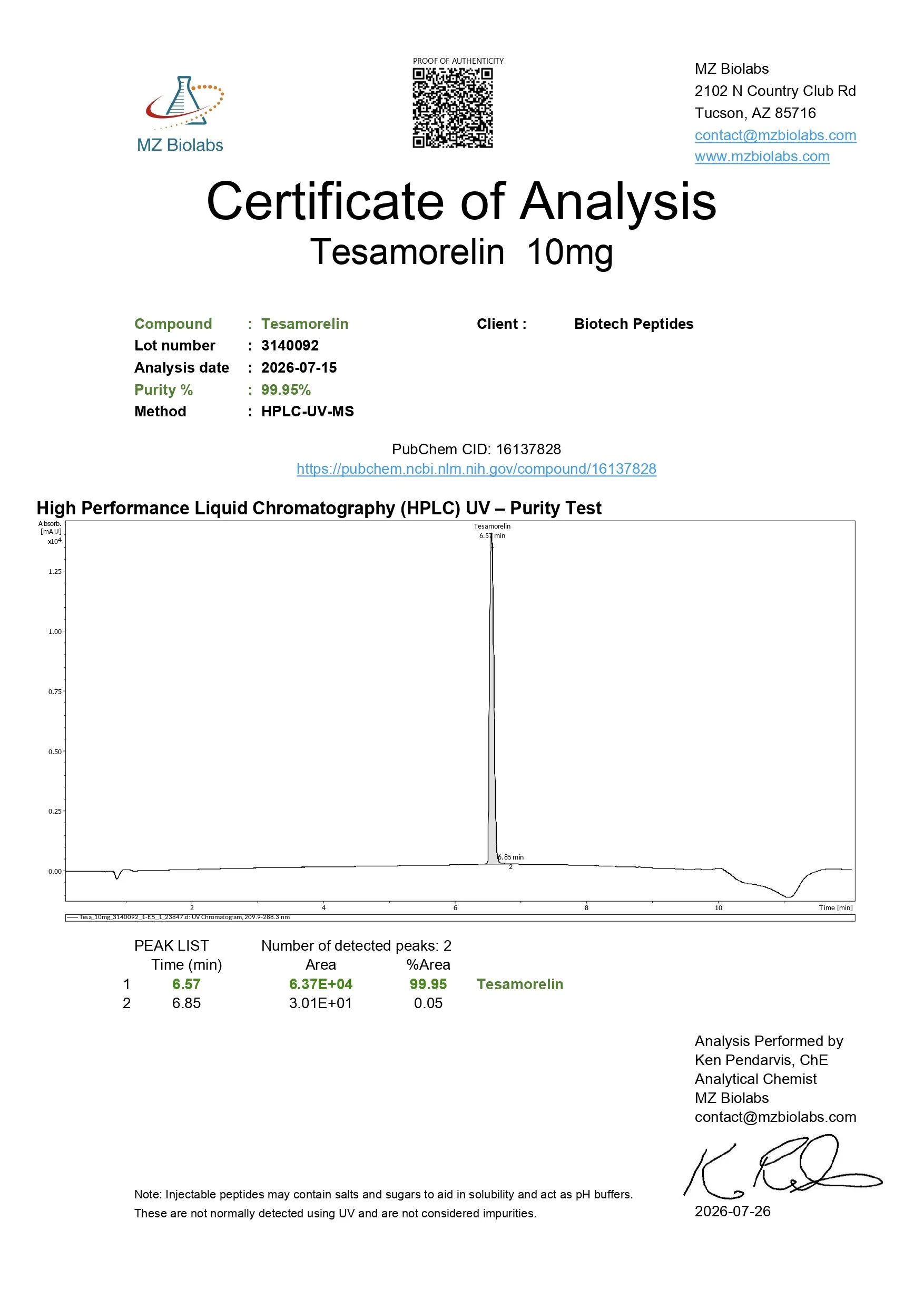
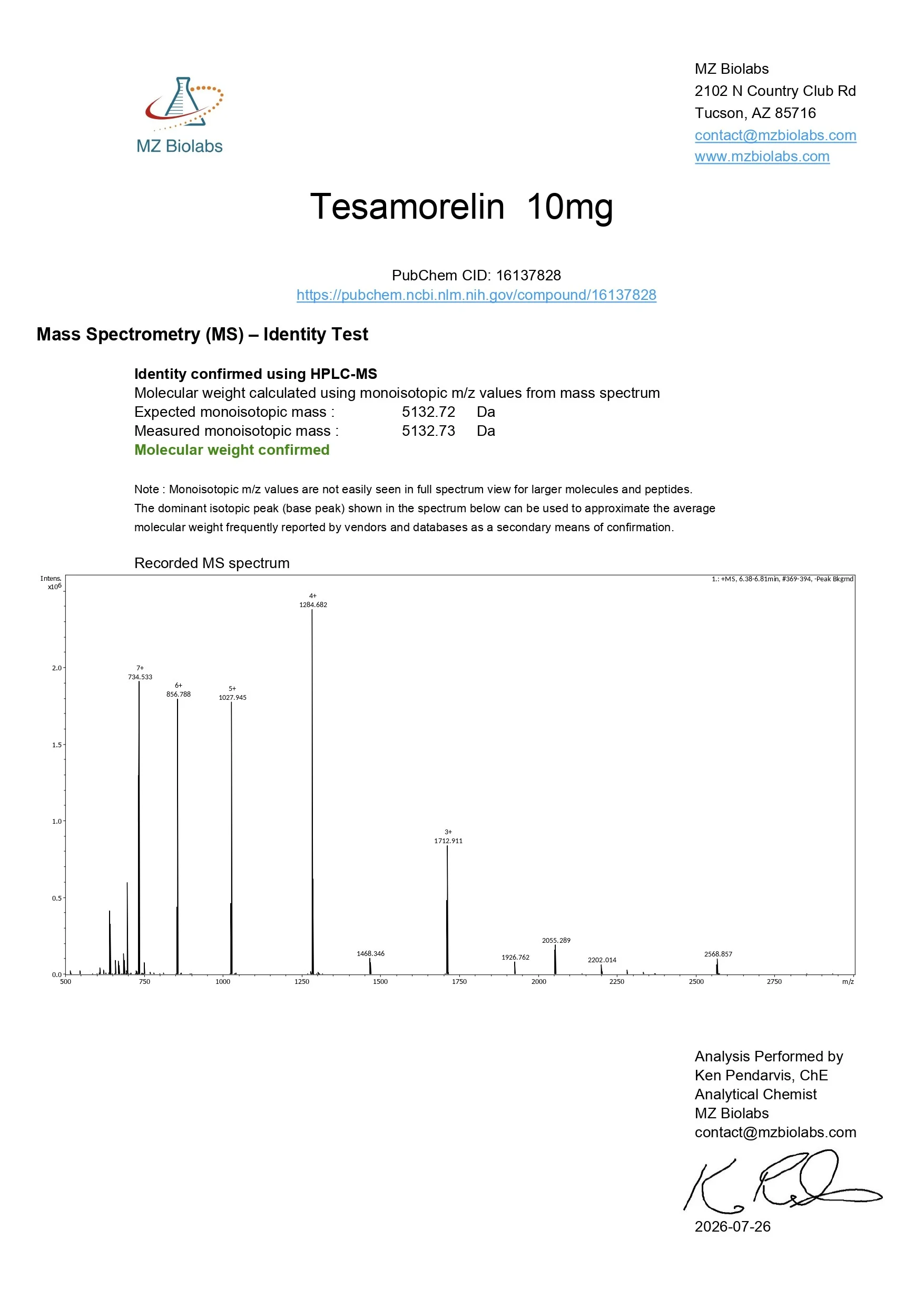
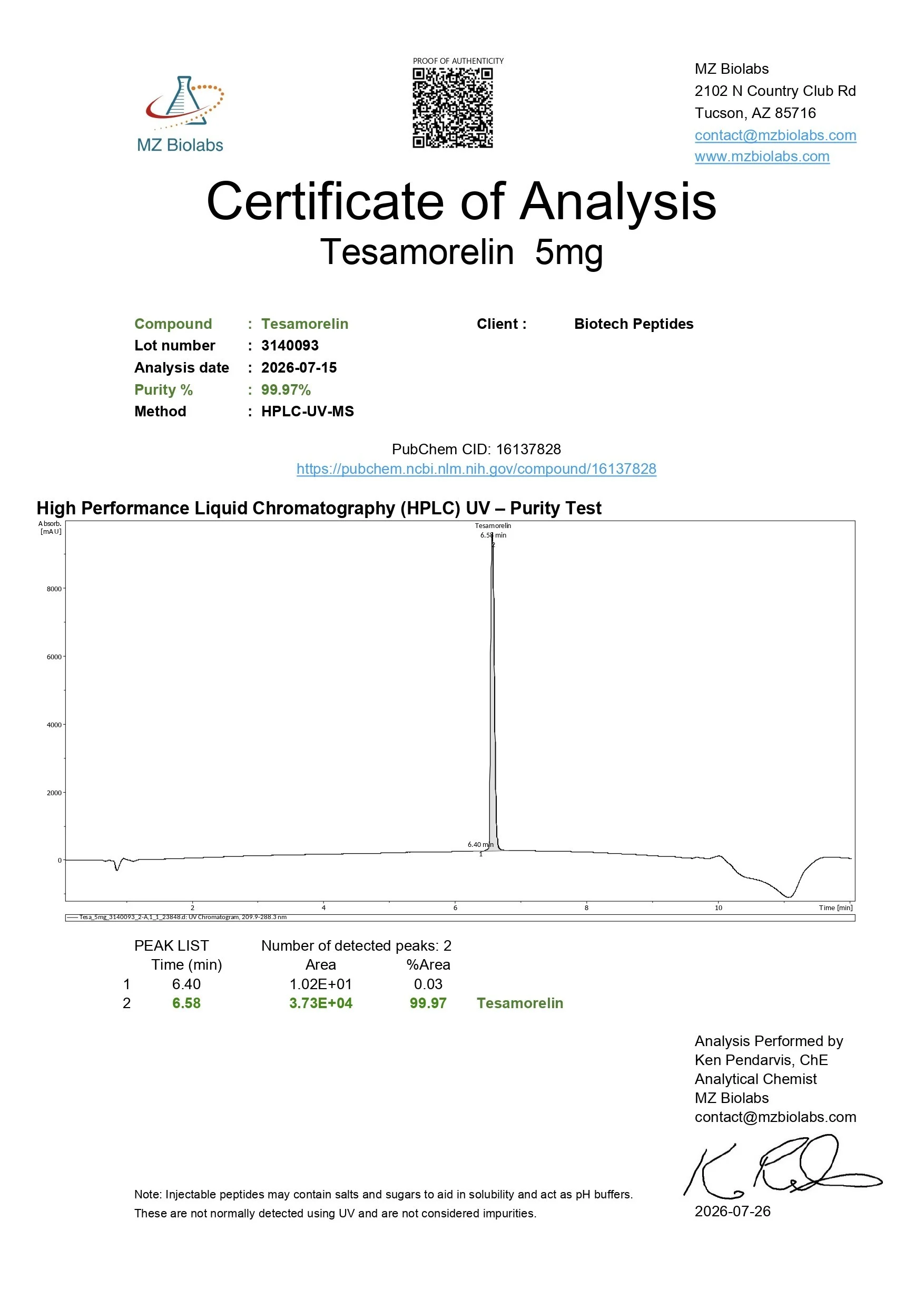
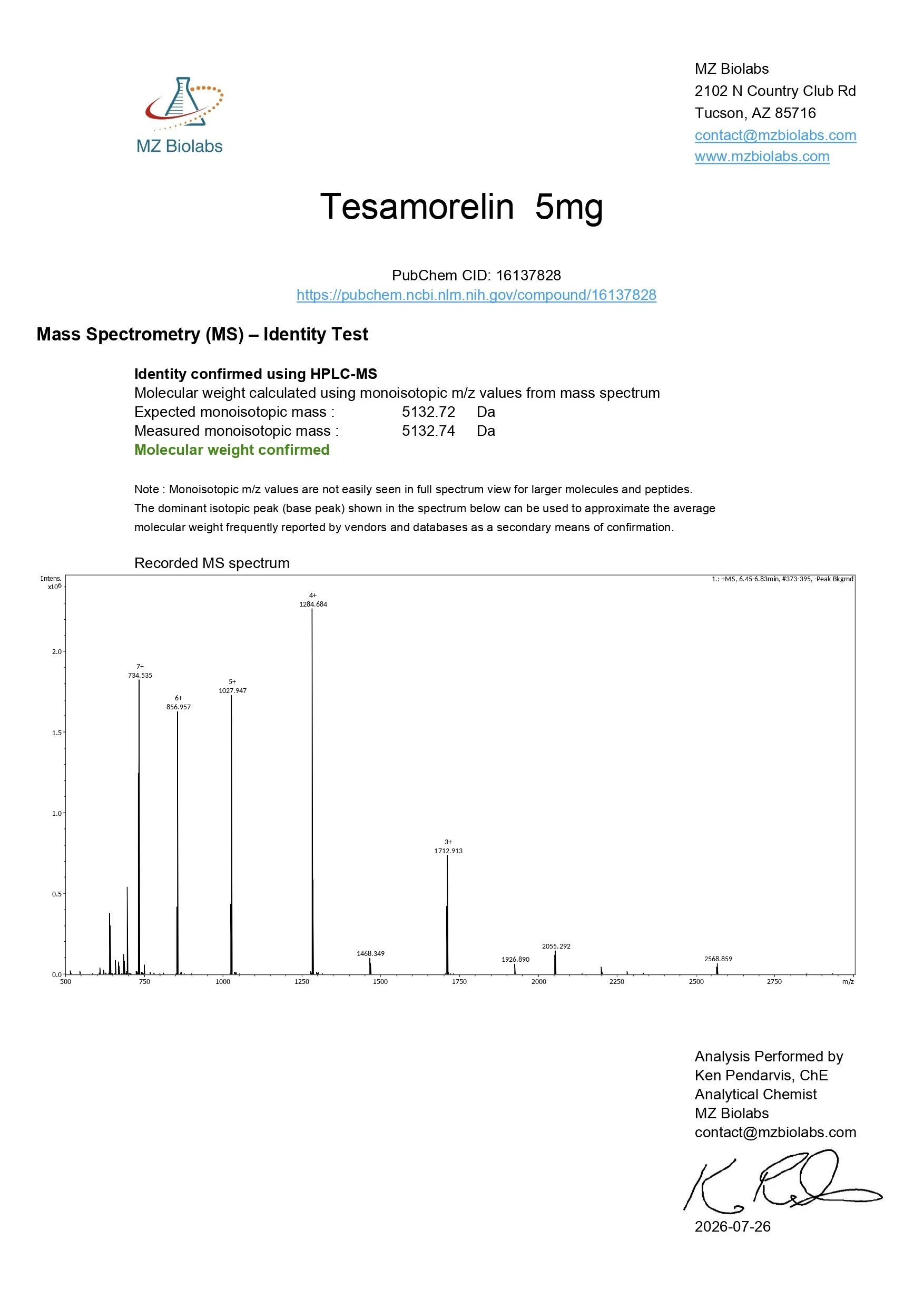
For analytical studies, researchers should use the lot-specific certificate of analysis as the primary reference for identity, purity, molecular characterization, and other batch-dependent specifications. Experimental preparation and storage procedures should be established according to the requirements of the laboratory and research model.
Frequently Asked Questions About Tesamorelin Peptide
What is Tesamorelin peptide?
Tesamorelin is a chemically modified GHRH analog studied in laboratory research involving GHRH receptor signaling, somatotroph-cell biology, cAMP pathways, IGF-related signaling, and tissue-specific experimental models.
What sizes of Tesamorelin are available?
This research product is available in 5mg and 10mg quantities.
What is the molecular weight of Tesamorelin?
The molecular weight supplied for this product is 5136 g/mol. Researchers conducting analytical studies should verify the molecular characteristics against the applicable lot-specific documentation.
What is Tesamorelin studied for?
Tesamorelin can be investigated as a molecular research tool for studying GHRH receptor activation, cAMP signaling, somatotroph-cell biology, IGF-associated pathways, metabolic signaling, neurological models, muscle-tissue biology, and hepatic research.
Does Tesamorelin contain a modified terminal group?
According to the supplied specification, Tesamorelin contains an N-terminal trans-hexenoyl-acid modification. Researchers should verify the exact terminal chemistry using the product’s lot-specific analytical documentation.
Is Tesamorelin intended for human use?
No. This product is supplied strictly for Research Use Only (RUO) and is intended for qualified laboratory research, in-vitro experimentation, and scientific investigation.
Research Use Only Disclaimer
FOR RESEARCH USE ONLY (RUO). Tesamorelin Peptide is supplied exclusively for laboratory research, in-vitro testing, analytical research, and scientific investigation. It is not intended for human consumption, veterinary use, diagnosis, disease management, or use as a food, dietary supplement, cosmetic, or approved drug. This material is intended for qualified laboratory personnel using appropriate safety procedures and following applicable institutional requirements and laws. Findings from cellular or animal research models should not be interpreted as established outcomes in humans. The purchaser is responsible for determining appropriate laboratory use, handling, storage, and regulatory compliance.

Reviews
There are no reviews yet.