
Buy Vialox (Pentapeptide-3V) Peptide 100mg & 200mg
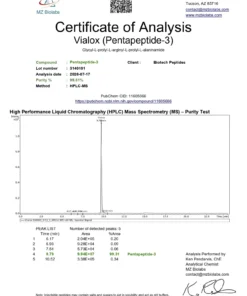
Vialox (Pentapeptide-3V) is a synthetic pentapeptide with the sequence Gly-Pro-Arg-Pro-Ala. It is a research peptide studied in experimental models involving nicotinic acetylcholine receptors (nAChRs), neuromuscular signaling, acetylcholine-mediated cellular communication, and peptide-receptor interactions.
Vialox has attracted research interest because of its proposed interaction with peripheral nicotinic acetylcholine receptor pathways. These receptors play an important role in communication between nerve cells and muscle cells, making Vialox a useful research material for scientists investigating receptor pharmacology, neuromuscular signaling, and mechanisms affecting cellular excitability.
Our Vialox (Pentapeptide-3V) Peptide 100mg & 200mg is supplied exclusively for laboratory research, in-vitro testing, analytical studies, and scientific investigation. It is not intended for human consumption, administration, or therapeutic use.
Vialox Pentapeptide-3V Research Overview
Vialox is a five-amino-acid peptide identified by the sequence Gly-Pro-Arg-Pro-Ala. Research surrounding Pentapeptide-3V has primarily focused on its potential interaction with nicotinic acetylcholine receptors and downstream neuromuscular signaling pathways.
Nicotinic acetylcholine receptors are ligand-gated ion channels involved in rapid cellular communication. In experimental neuromuscular models, acetylcholine released from a nerve terminal can interact with receptors located on the muscle-cell membrane. This receptor interaction contributes to changes in membrane potential and subsequent cellular signaling.
Vialox provides researchers with a peptide model for examining how synthetic peptide compounds may influence receptor-mediated signaling and communication between neuronal and muscle-cell systems.
Vialox and Nicotinic Acetylcholine Receptor Research
One of the primary research interests surrounding Vialox Pentapeptide-3V is its proposed interaction with nicotinic acetylcholine receptors. These receptors are distributed across different tissues and are extensively studied in neuroscience, pharmacology, cellular signaling, and neuromuscular research.
Experimental studies have investigated whether Vialox can interact with peripheral nAChR-associated pathways. This makes the peptide relevant to laboratory models examining receptor binding, receptor antagonism, ion-channel activity, and changes in downstream cellular responses.
Research involving Vialox may be relevant to:
- Nicotinic acetylcholine receptor signaling
- Peripheral receptor pharmacology
- Neuromuscular junction models
- Acetylcholine-mediated cellular signaling
- Ion-channel research
- Muscle-cell excitability
- Peptide-receptor interaction studies
Vialox and Neuromuscular Signaling Research
The neuromuscular junction provides an important experimental system for studying communication between nerve terminals and muscle cells. Acetylcholine serves as a signaling molecule in this process, interacting with nicotinic receptors located on the postsynaptic membrane.
When acetylcholine interacts with an appropriate receptor, ion-channel activity can produce changes in membrane potential. These electrical changes can subsequently influence downstream muscle-cell signaling. Researchers studying Vialox have therefore investigated whether the peptide can modify this receptor-mediated communication.
For laboratory researchers, this provides an experimental framework for studying how peptide molecules influence receptor activity, membrane signaling, and neuromuscular cellular models.
Vialox and Peptide-Receptor Interaction Studies
Vialox is particularly interesting from a peptide-receptor research perspective because of its small five-residue structure. Short synthetic peptides can provide useful model systems for investigating molecular recognition and interactions between peptide structures and membrane-associated receptors.
Researchers can investigate Vialox alongside other compounds or receptor models to evaluate differences in receptor-associated signaling, cellular responses, and experimental conditions. These studies may contribute to a broader understanding of ligand-receptor interactions and neuromuscular pharmacology.
Vialox in Cellular and Skin Research Models
Vialox has also been investigated in experimental research involving skin-cell and tissue models. Because neuromuscular and receptor-mediated signaling can influence cellular behavior, researchers have explored Pentapeptide-3V in laboratory models associated with skin structure and surface characteristics.
Experimental studies have examined changes in skin-model parameters following exposure to peptide-containing formulations. These studies are useful for investigating how receptor-active peptide compounds may interact with cellular signaling networks in controlled experimental environments.
Research in this area may include:
- Skin-cell signaling models
- Cellular receptor activity
- Neuromuscular signaling pathways
- Peptide-mediated cellular responses
- Skin-model surface characterization
- Experimental peptide formulation studies
Vialox Pentapeptide-3V Research Specifications
| Specification | Details |
|---|---|
| Product Name | Vialox Peptide |
| Research Name | Pentapeptide-3V |
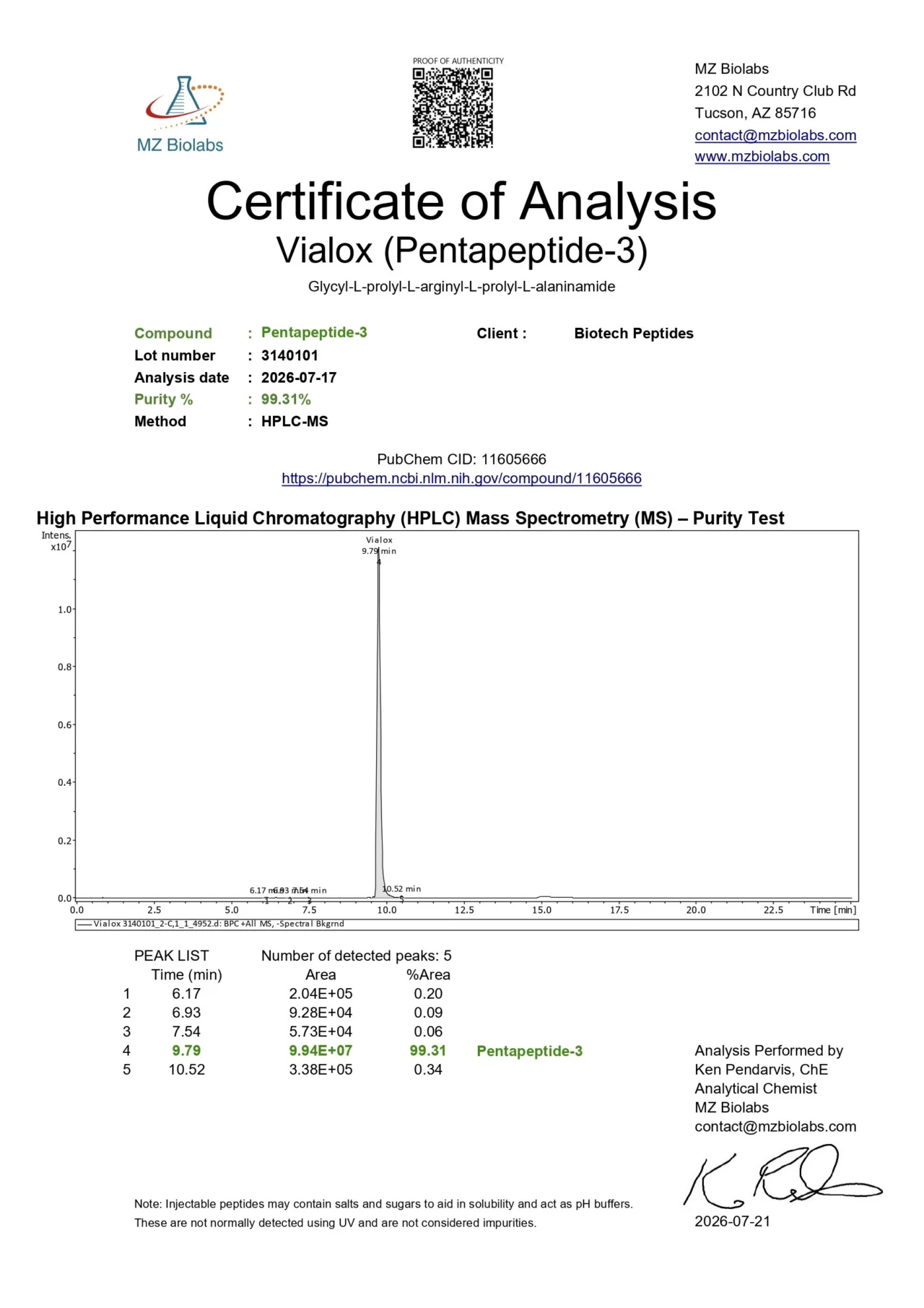
| Sequence | Gly-Pro-Arg-Pro-Ala |
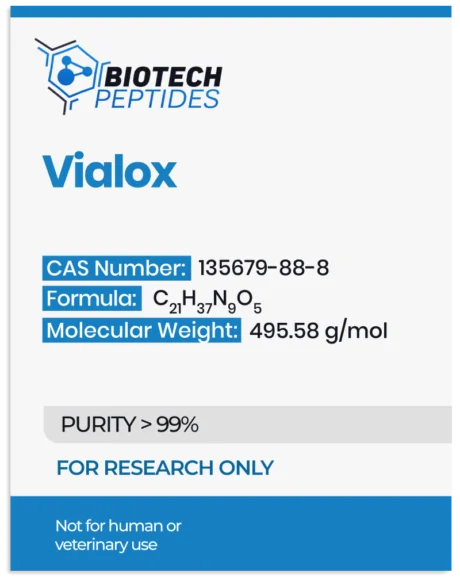
| Molecular Formula | C21H37N9O5 |
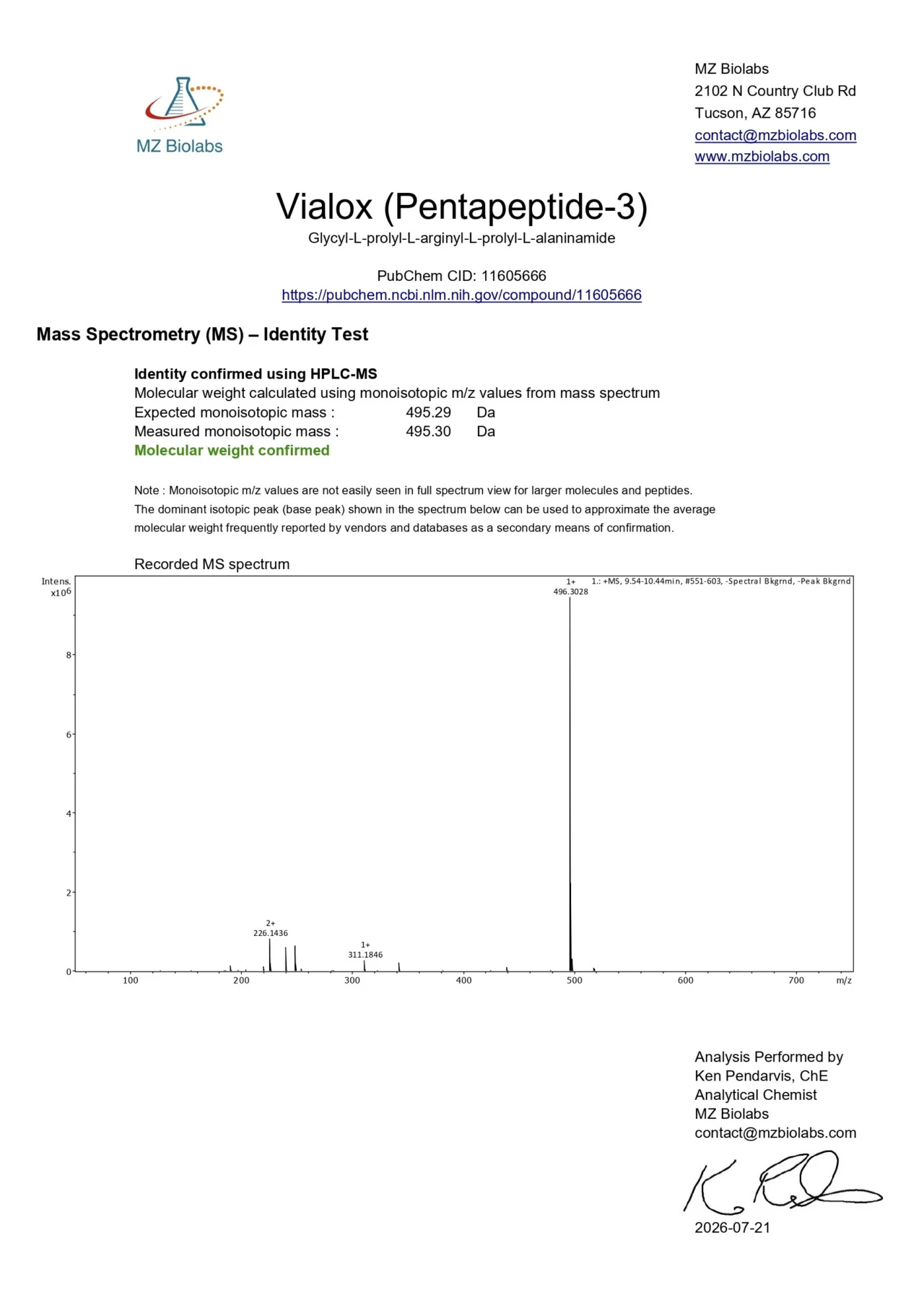
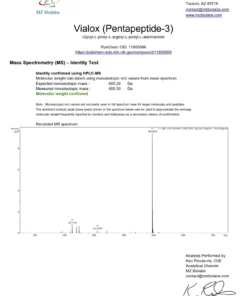
| Molecular Weight | 495.58 g/mol |
| PubChem | CID 67073230 |
| Available Quantities | 100mg & 200mg |
| Research Classification | Synthetic pentapeptide |
Buy Vialox Peptide 100mg & 200mg for Laboratory Research
If you are looking to buy Vialox Peptide 100mg or 200mg for laboratory research, Pentapeptide-3V offers a defined synthetic peptide system for studying nicotinic acetylcholine receptor pathways, neuromuscular signaling, peptide-receptor interactions, and cellular research models.
Choose the 100mg or 200mg Vialox research peptide option appropriate for your laboratory requirements. The material is intended for qualified researchers conducting controlled in-vitro experiments, analytical investigations, and scientific studies using appropriate laboratory protocols.
Frequently Asked Questions About Vialox Peptide
What is Vialox peptide?
Vialox is a research peptide also known as Pentapeptide-3V. It consists of five amino acids with the sequence Gly-Pro-Arg-Pro-Ala and has been studied in connection with nicotinic acetylcholine receptor and neuromuscular signaling research.
What is the sequence of Pentapeptide-3V?
The supplied sequence of Vialox (Pentapeptide-3V) is Gly-Pro-Arg-Pro-Ala.
What is the molecular weight of Vialox?
The supplied molecular weight of Vialox is 495.58 g/mol, with a molecular formula of C21H37N9O5.
What is Vialox used for in research?
Vialox is supplied for laboratory research involving nicotinic acetylcholine receptor signaling, neuromuscular communication, peptide-receptor interactions, ion-channel research, and cellular model systems. It is not intended for human or veterinary use.
Is Vialox a research peptide?
Yes. Vialox (Pentapeptide-3V) is a synthetic pentapeptide used as a research material in laboratory and experimental settings. Appropriate applications and experimental conditions should be determined by qualified laboratory personnel.
Research Use Only Disclaimer
FOR RESEARCH USE ONLY (RUO). Vialox (Pentapeptide-3V) is supplied exclusively for laboratory research, in-vitro testing, analytical research, and scientific investigation. It is not intended for human consumption, veterinary use, diagnosis, disease management, or use as a food, dietary supplement, cosmetic, or approved drug. This material is intended for qualified laboratory personnel using appropriate safety procedures and following applicable institutional requirements and laws. Findings from cellular or animal research models should not be interpreted as established outcomes in humans. The purchaser is responsible for determining appropriate laboratory use, handling, storage, and regulatory compliance.
| Miligram | 100, 200 |
|---|
Be the first to review “Buy Vialox (Pentapeptide-3V) Peptide 100mg & 200mg”
Related products
Biotech Peptides
Biotech Peptides
Biotech Peptides
Biotech Peptides
Biotech Peptides
Biotech Peptides
Biotech Peptides
Biotech Peptides
Reviews
There are no reviews yet.