Description
Buy PT-141 Bremelanotide Peptide 10mg – Research Use Only
Buy PT-141 Bremelanotide Peptide 10mg for laboratory research involving melanocortin receptor pharmacology, peptide-receptor interactions, neural signaling, and cellular-response pathways. PT-141, also known as Bremelanotide, is a synthetic melanocortin analog derived from research surrounding Melanotan II. It has been investigated for its interactions with melanocortin receptor subtypes, particularly MC-3R and MC-4R.
This PT-141 research peptide provides researchers with a defined melanocortin-related compound for in-vitro studies, receptor-binding research, cellular signaling experiments, and experimental neuroscience. Research involving PT-141 can help characterize how melanocortin receptor activation influences intracellular signaling and neural pathways in appropriate laboratory models.
PT-141 Research Peptide Overview
PT-141 belongs to the broader class of synthetic melanocortin analogs. Melanocortin signaling involves several receptor subtypes, including MC-1R, MC-2R, MC-3R, MC-4R, and MC-5R. These receptors are distributed across different tissues and are associated with distinct biological signaling pathways.
PT-141 has been studied primarily in relation to melanocortin receptor activity, with particular attention to MC-3R and MC-4R signaling. Its receptor selectivity and downstream effects make it a useful experimental compound for investigating how melanocortin pathways influence cellular communication, neural activity, and receptor-mediated signaling.
PT-141 Bremelanotide Specifications
| Specification | Details |
|---|---|
| Product | PT-141 Peptide |
| Alternative Name | Bremelanotide |
| Available Quantity | 10mg |
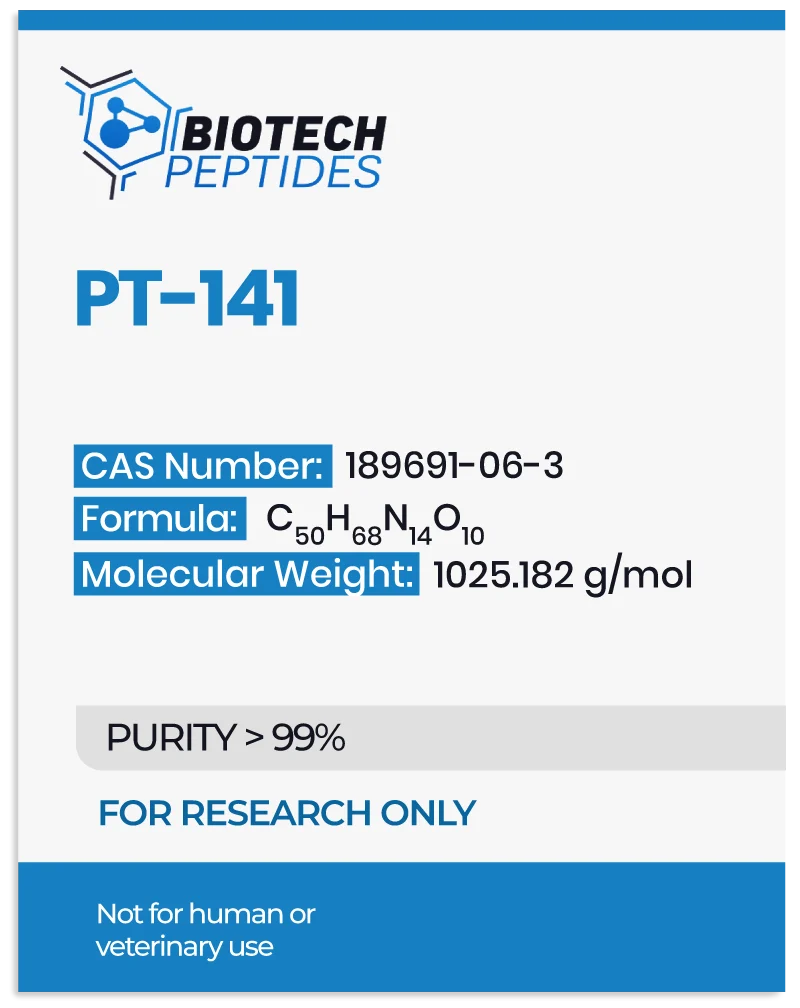
| Molecular Formula | C50H68N14O10 |
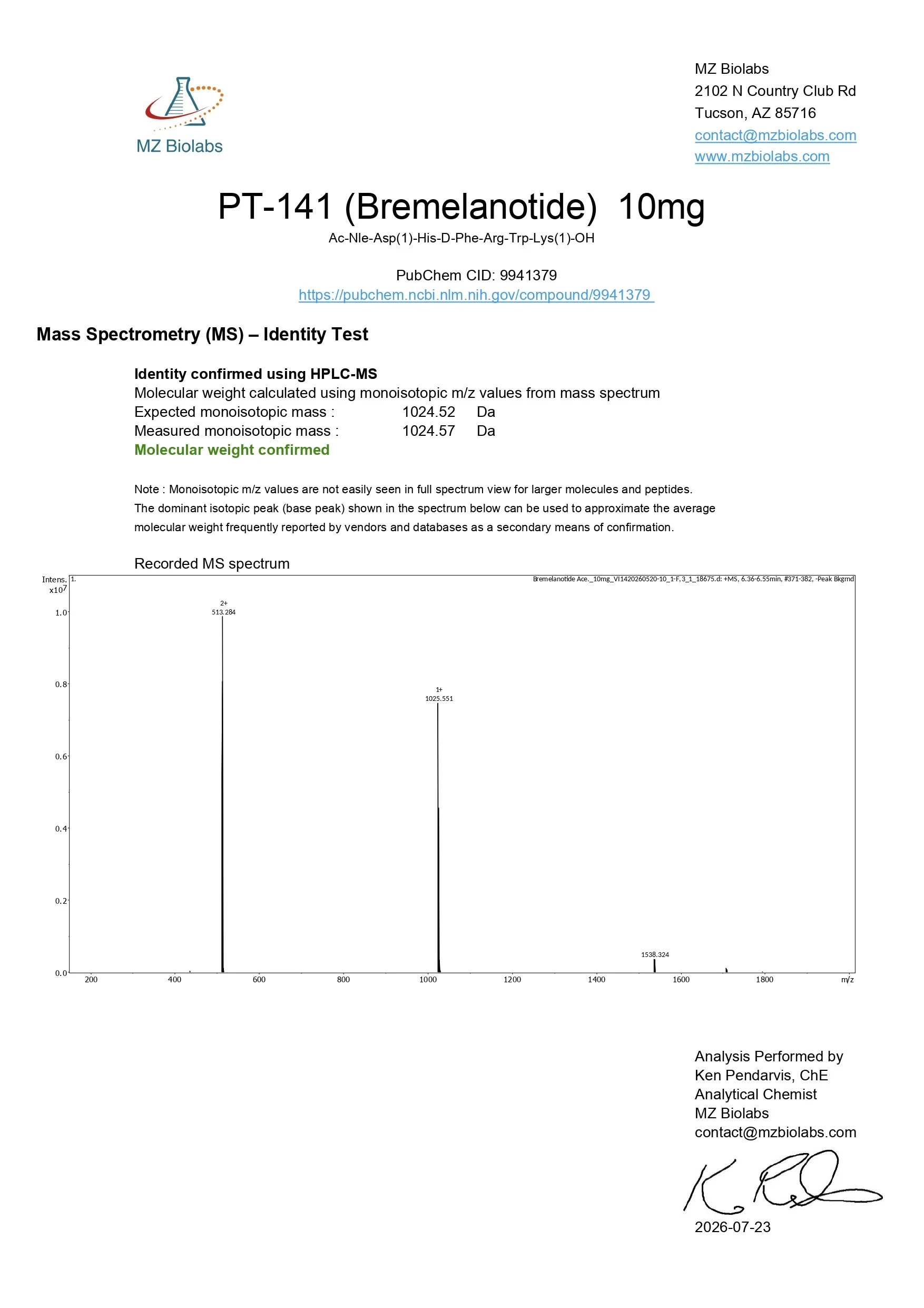
| Molecular Weight | 1025.18 g/mol |
| Peptide Type | Synthetic melanocortin analog |
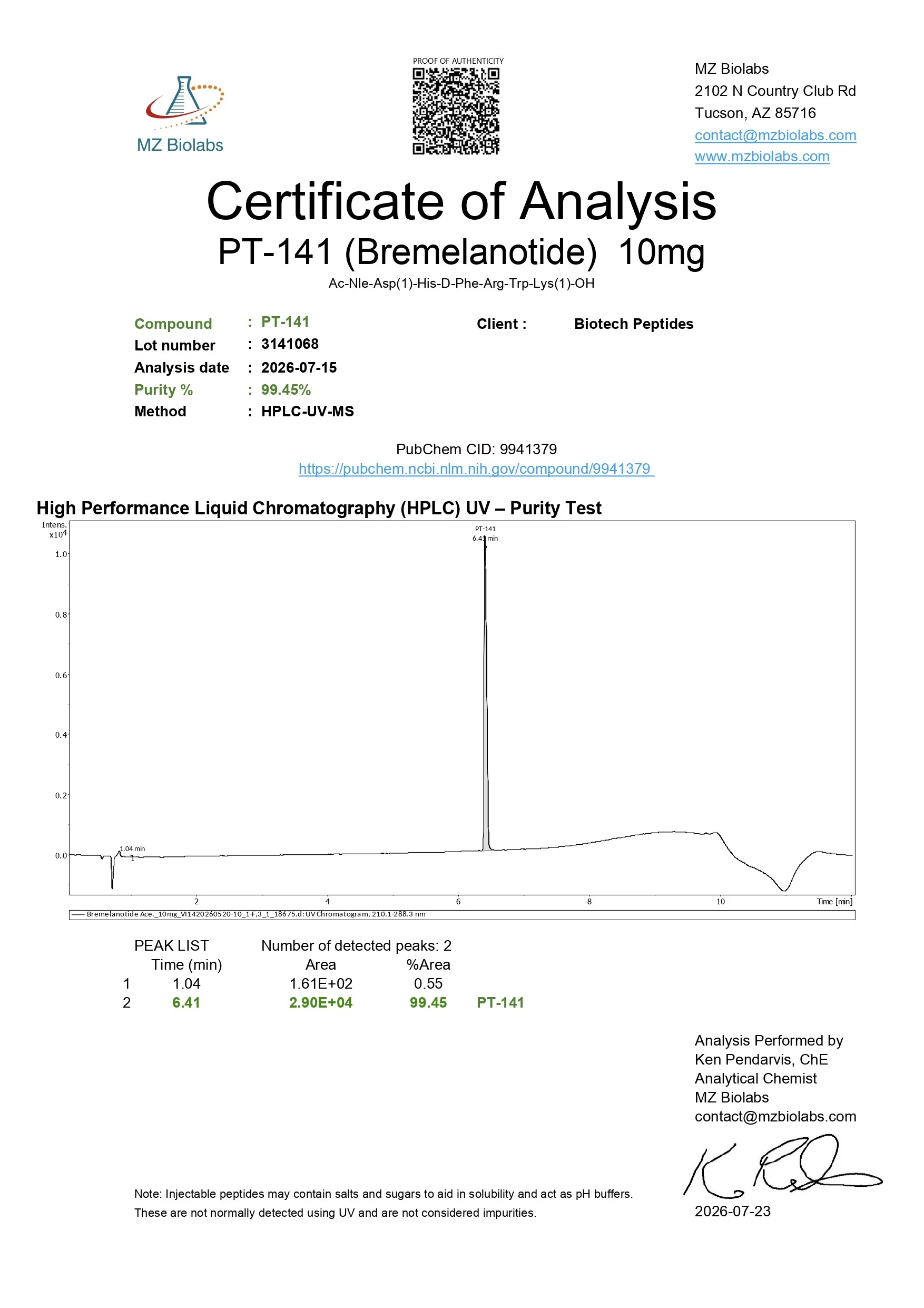
| Supplied Sequence Representation | Ac-Nle-Asp-His-D-Phe-Arg-Trp-Lys-OH |
| Research Classification | Research Use Only (RUO) |
Note: The supplied structural notation is presented in linearized form for product-reference purposes. PT-141 is a cyclic melanocortin analog, so researchers should consult lot-specific analytical documentation for the definitive structural representation.
PT-141 and Melanocortin Receptor Research
PT-141 laboratory research commonly focuses on melanocortin receptor pharmacology. The melanocortin receptor family consists of five known receptor subtypes, each with different tissue distributions and signaling characteristics.
MC-1R is widely studied in pigmentation, inflammatory signaling, antioxidant responses, and cellular-protection pathways. MC-2R is associated with adrenal signaling, while MC-3R and MC-4R have been investigated in neural, metabolic, and energy-regulation research. MC-5R has been associated with exocrine and peripheral cellular functions.
Using PT-141 as an experimental ligand can therefore help researchers investigate receptor activation, receptor selectivity, downstream signaling, and differences between melanocortin receptor subtypes.
PT-141 and MC-4R Signaling Research
MC-4R is a G-protein-coupled receptor that has received substantial attention in neuroscience and cellular signaling research. Experimental studies have investigated how activation of this receptor influences intracellular signaling cascades and activity in specific neural circuits.
PT-141 provides a research tool for examining MC-4R-associated pathways in appropriate experimental models. Researchers may investigate receptor activation, intracellular second messengers, neural-network responses, and interactions between melanocortin signaling and other neurotransmitter systems.
PT-141 and Neural Signaling Research
Melanocortin receptors are expressed within multiple regions of the central nervous system. PT-141 research has therefore included investigations into neural activation, functional connectivity, sensory processing, and interactions between brain regions.
Experimental neurobiology studies can use melanocortin receptor agonists to investigate changes in neural activity following receptor stimulation. Functional imaging and cellular models can provide complementary approaches for examining how MC-4R-associated signaling affects communication between different neural structures.
PT-141 and Intracellular Signaling
As a melanocortin receptor ligand, PT-141 can be studied in cellular systems designed to characterize GPCR signaling. Potential experimental endpoints include receptor activation, intracellular calcium dynamics, cyclic nucleotide signaling, kinase activation, and changes in downstream gene expression.
These approaches can help researchers distinguish receptor-specific effects from broader cellular responses. Comparative experiments involving different melanocortin receptor subtypes may also help characterize the pharmacological profile of synthetic melanocortin analogs.
PT-141 and Nitric Oxide Signaling Research
Experimental studies involving melanocortin receptor agonists have investigated relationships between central receptor activation and nitric oxide-associated signaling pathways. Research models have examined whether melanocortin receptor activation can influence neuronal nitric oxide signaling and downstream cyclic GMP pathways.
These experiments provide a framework for studying the interaction between GPCR signaling, neuronal nitric oxide production, and vascular-cell signaling. Findings from animal models should remain specific to the experimental system in which they were observed and should not be interpreted as established outcomes in humans.
PT-141 and MC-1R Cellular Research
Although PT-141 is primarily investigated in relation to melanocortin pathways involving MC-3R and MC-4R, melanocortin analog research also provides an opportunity to investigate MC-1R-associated cellular signaling.
MC-1R research has examined pathways associated with antioxidant activity, DNA repair, cellular stress responses, and survival signaling. Experimental systems can be used to determine how melanocortin receptor activation influences these pathways under defined laboratory conditions.
PT-141 Research Applications
- Melanocortin receptor pharmacology
- MC-3R and MC-4R receptor signaling studies
- GPCR activation and receptor-binding research
- Neural signaling and neuroscience models
- Intracellular calcium and second-messenger studies
- Nitric oxide and cyclic GMP pathway research
- MC-1R cellular signaling investigations
- DNA repair and cellular-stress pathway studies
- Neurotransmitter and neural-circuit research
- Structure-function studies of melanocortin analogs
PT-141 Peptide Handling and Storage
Researchers using PT-141 Bremelanotide Peptide 10mg should follow the applicable manufacturer documentation and lot-specific certificate of analysis for storage, preparation, and handling requirements. Qualified laboratory personnel should use appropriate protective equipment and established laboratory procedures when working with research peptides.
Researchers should also distinguish between findings generated specifically with PT-141 and observations obtained using other melanocortin agonists or related compounds. Receptor activity can vary substantially between different analogs and experimental systems.
Frequently Asked Questions About PT-141
What is PT-141?
PT-141, also known as Bremelanotide, is a synthetic melanocortin analog studied primarily for its interactions with melanocortin receptor pathways, including MC-3R and MC-4R.
What is the molecular weight of PT-141?
The supplied specification lists the molecular weight of PT-141 as 1025.18 g/mol.
What is the molecular formula of PT-141?
The supplied molecular formula is C50H68N14O10.
What is PT-141 used for in laboratory research?
PT-141 can be investigated as an experimental melanocortin receptor ligand in studies involving GPCR signaling, MC-3R and MC-4R pathways, neural signaling, nitric oxide-associated pathways, and cellular-response mechanisms.
What is the PT-141 peptide sequence?
The supplied linearized sequence representation is Ac-Nle-Asp-His-D-Phe-Arg-Trp-Lys-OH. Because PT-141 has a cyclic structure, researchers should refer to applicable lot-specific analytical documentation for definitive structural characterization.
Is PT-141 intended for human use?
No. This product is supplied strictly for qualified laboratory research, in-vitro testing, analytical research, and scientific investigation.
Research Use Only Disclaimer
FOR RESEARCH USE ONLY (RUO). PT-141 (Bremelanotide) Peptide is supplied exclusively for laboratory research, in-vitro testing, analytical research, and scientific investigation. It is not intended for human consumption, veterinary use, diagnosis, disease management, or use as a food, dietary supplement, cosmetic, or approved drug. This material is intended for qualified laboratory personnel using appropriate safety procedures and following applicable institutional requirements and laws. Findings from cellular or animal research models should not be interpreted as established outcomes in humans. The purchaser is responsible for determining appropriate laboratory use, handling, storage, and regulatory compliance.

Reviews
There are no reviews yet.