
Buy Pentapeptide-18 (Leuphasyl) Peptide 100mg & 200mg
Pentapeptide-18 (Leuphasyl) Peptide 100mg & 200mg is a synthetic modified pentapeptide structurally related to the naturally occurring enkephalin peptide family. Also known as Leuphasyl and NSC-374895, Pentapeptide-18 contains the sequence Tyr-D-Ala-Gly-Phe-Leu and has been investigated in laboratory models involving peptide-receptor interactions, neurotransmitter release, calcium-dependent signaling, neuromuscular communication, and melanogenesis.
Pentapeptide-18 differs structurally from the endogenous pentapeptide leu-enkephalin through the incorporation of D-alanine. This modification makes it a useful molecular model for researchers investigating how changes in peptide structure influence cellular signaling and peptide-receptor interactions.
Our Pentapeptide-18 (Leuphasyl) Peptide 100mg & 200mg is supplied exclusively for qualified laboratory research, in-vitro experimentation, analytical investigation, and scientific studies. This material is not intended for human or veterinary use.
Pentapeptide-18 (Leuphasyl) Research Peptide
Leuphasyl belongs to a class of synthetic peptide structures associated with enkephalin research. Enkephalins are endogenous signaling peptides that have been studied extensively for their interactions with opioid receptors and their effects on neuronal communication.
The modified structure of Pentapeptide-18 provides researchers with an experimental model for examining structure-function relationships within enkephalin-related peptides. Studies can investigate receptor interactions, intracellular signaling, calcium-dependent neurotransmitter release, and other mechanisms associated with neuronal communication.
These characteristics make Pentapeptide-18 research peptide relevant to laboratory studies involving neurobiology, synaptic signaling, calcium channels, neurotransmitter pathways, and neuromuscular communication.
Pentapeptide-18 and Calcium-Dependent Signaling
Calcium ions play a central role in neuronal communication. When an action potential reaches a presynaptic nerve terminal, calcium influx contributes to the exocytosis of neurotransmitter-containing vesicles into the synaptic cleft.
Research involving enkephalin-associated peptides has examined whether peptide signaling can influence calcium-dependent neurotransmitter release. Pentapeptide-18 can therefore be studied as a molecular model for investigating the relationship between peptide-receptor interactions, calcium influx, and synaptic signaling.
Laboratory researchers may evaluate intracellular calcium levels, presynaptic signaling, vesicle release, receptor-associated pathways, and downstream cellular responses in appropriate experimental systems.
Pentapeptide-18 and Neurotransmitter Research
Neurotransmitter release is a tightly regulated process involving electrical signaling, calcium influx, vesicle docking, and exocytosis. Pentapeptide-18 has been investigated in the context of neurotransmitter-associated pathways because of its structural relationship to enkephalin peptides.
Experimental studies can examine how Pentapeptide-18 affects neurotransmitter release under controlled laboratory conditions. Research has included investigation of glutamatergic signaling, providing a framework for studying how peptide structures may influence excitatory neurotransmitter pathways.
Such studies can measure neurotransmitter concentrations, release rates, calcium-associated signaling, receptor activity, and changes in neuronal-cell responses.
Glutamate Signaling Research
Glutamate is one of the principal excitatory neurotransmitters in the nervous system and is extensively studied in cellular and neurophysiological research.
Experimental work involving Pentapeptide-18 has investigated changes in glutamate release under specific laboratory conditions. These observations can provide a basis for additional research into peptide-mediated modulation of neuronal communication and excitatory signaling.
Pentapeptide-18 and Neuromuscular Signaling
Communication between motor neurons and muscle cells depends on neurotransmitter release at the neuromuscular junction. Acetylcholine is a major neurotransmitter involved in this signaling process, while calcium-dependent vesicle release is essential for neurotransmitter secretion.
Pentapeptide-18 has been investigated as a peptide model for studying pathways that may influence neurotransmitter release and neuromuscular communication. Researchers can examine acetylcholine-associated signaling, presynaptic calcium dynamics, neuronal activity, and muscle-cell responses using appropriate experimental models.
These investigations can help characterize how modified enkephalin-related peptide structures interact with neuronal signaling mechanisms.
Pentapeptide-18 and Cellular Contraction Research
Muscle-cell contraction is controlled by complex interactions between neuronal signaling, neurotransmitter release, calcium availability, and intracellular contractile mechanisms.
Laboratory models can be used to investigate whether Pentapeptide-18 exposure is associated with changes in signaling pathways involved in cellular contraction. Experimental endpoints may include calcium flux, neurotransmitter release, receptor activity, and muscle-cell contractile responses.
These findings should remain within the specific experimental model and conditions tested and should not be interpreted as evidence of a human-use effect.
Pentapeptide-18 and Melanogenesis Research
Melanogenesis is the biological process responsible for melanin production within melanocytes and certain pigment-producing cell models. Researchers study this pathway using cultured melanocytes and melanoma-derived cell lines to investigate pigment-associated signaling.
Modified Pentapeptide-18 derivatives have been investigated in experimental systems examining melanogenesis. Structural modifications, including the addition of D-tyrosine, can be studied to determine whether changes in peptide composition influence melanin-associated cellular pathways.
MNT-1 melanoma-derived cells have been used as an experimental model for studying melanin production. Researchers can measure cellular melanin content, melanogenic enzyme expression, gene regulation, and related signaling markers following exposure to peptide derivatives.
Structure-Activity Research in Melanogenesis
The incorporation of modified amino acids provides an opportunity to study how peptide structure influences cellular responses. Comparing Pentapeptide-18 with modified derivatives can help researchers investigate relationships between peptide sequence, receptor interactions, cellular uptake, and melanogenic signaling.
These experiments can provide useful information about peptide structure-function relationships without establishing therapeutic, cosmetic, or human-use outcomes.
Pentapeptide-18 and Peptide-Receptor Research
Because Pentapeptide-18 is structurally related to leu-enkephalin, it can be incorporated into research examining peptide-receptor interactions and opioid-associated signaling pathways.
Researchers can investigate receptor binding, downstream signaling, calcium-dependent mechanisms, neurotransmitter release, and cellular responses using biochemical and cellular assay systems.
The D-alanine modification is particularly relevant to structure-activity studies because replacing a naturally occurring amino acid with a D-isomer can alter molecular conformation, receptor interactions, and peptide stability.
Pentapeptide-18 Peptide Specifications
| Specification | Details |
|---|---|
| Product Name | Pentapeptide-18 (Leuphasyl) Peptide |
| Available Amounts | 100mg & 200mg |
| Peptide Type | Modified Synthetic Pentapeptide |
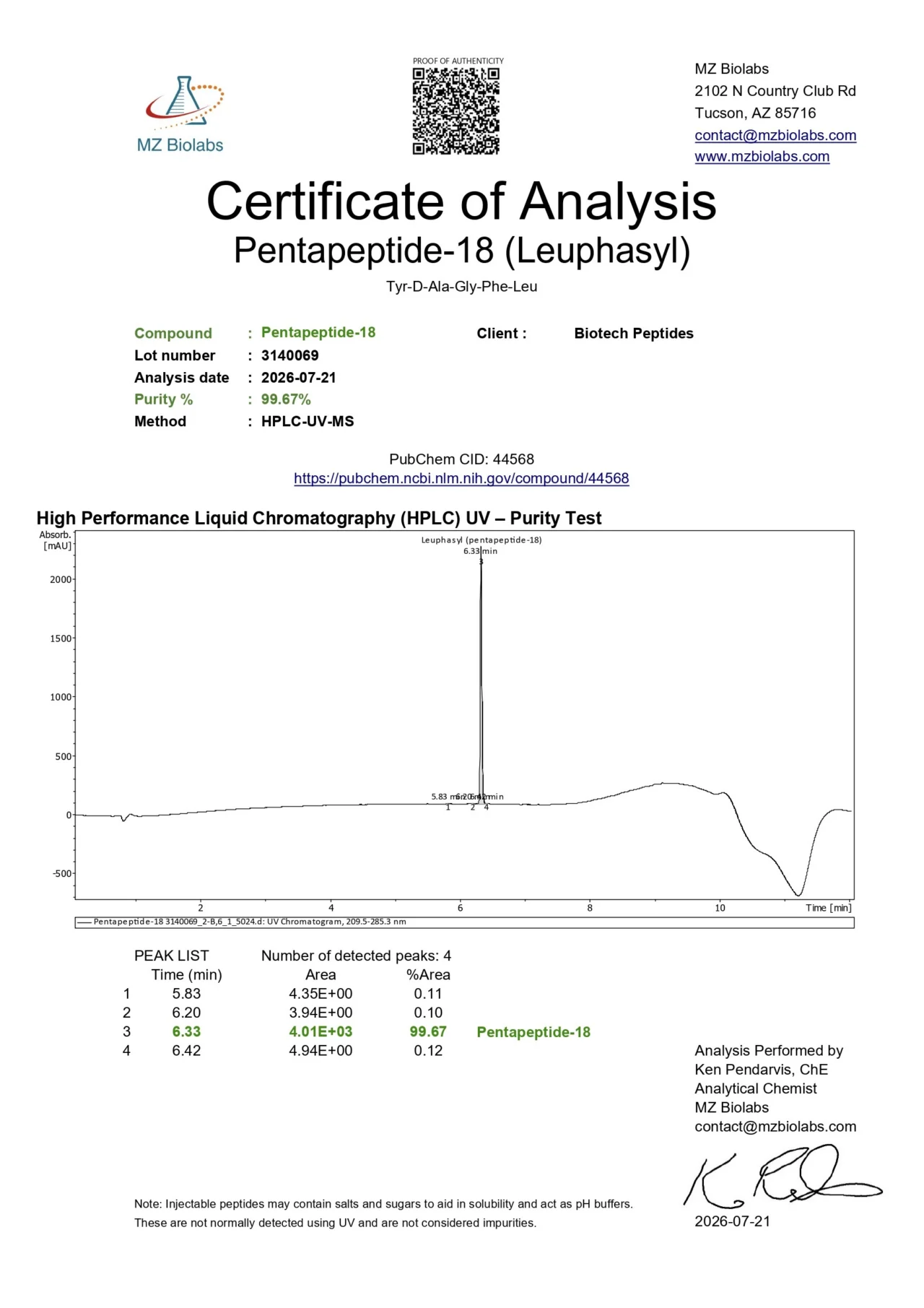
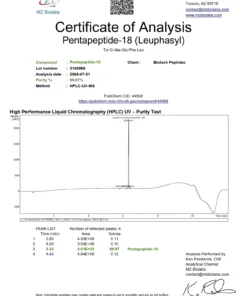
| Sequence | Tyr-D-Ala-Gly-Phe-Leu |
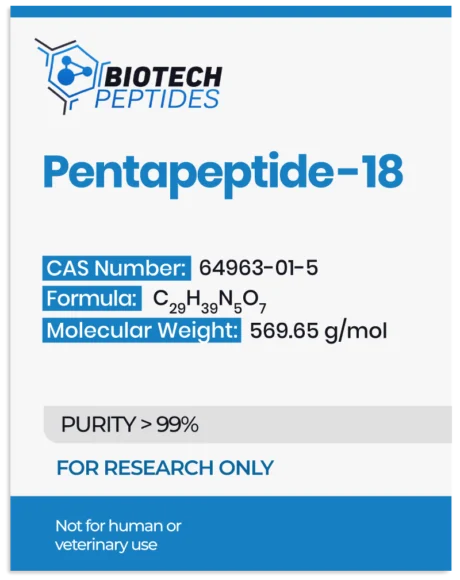
| Molecular Formula | C29H39N5O7 |
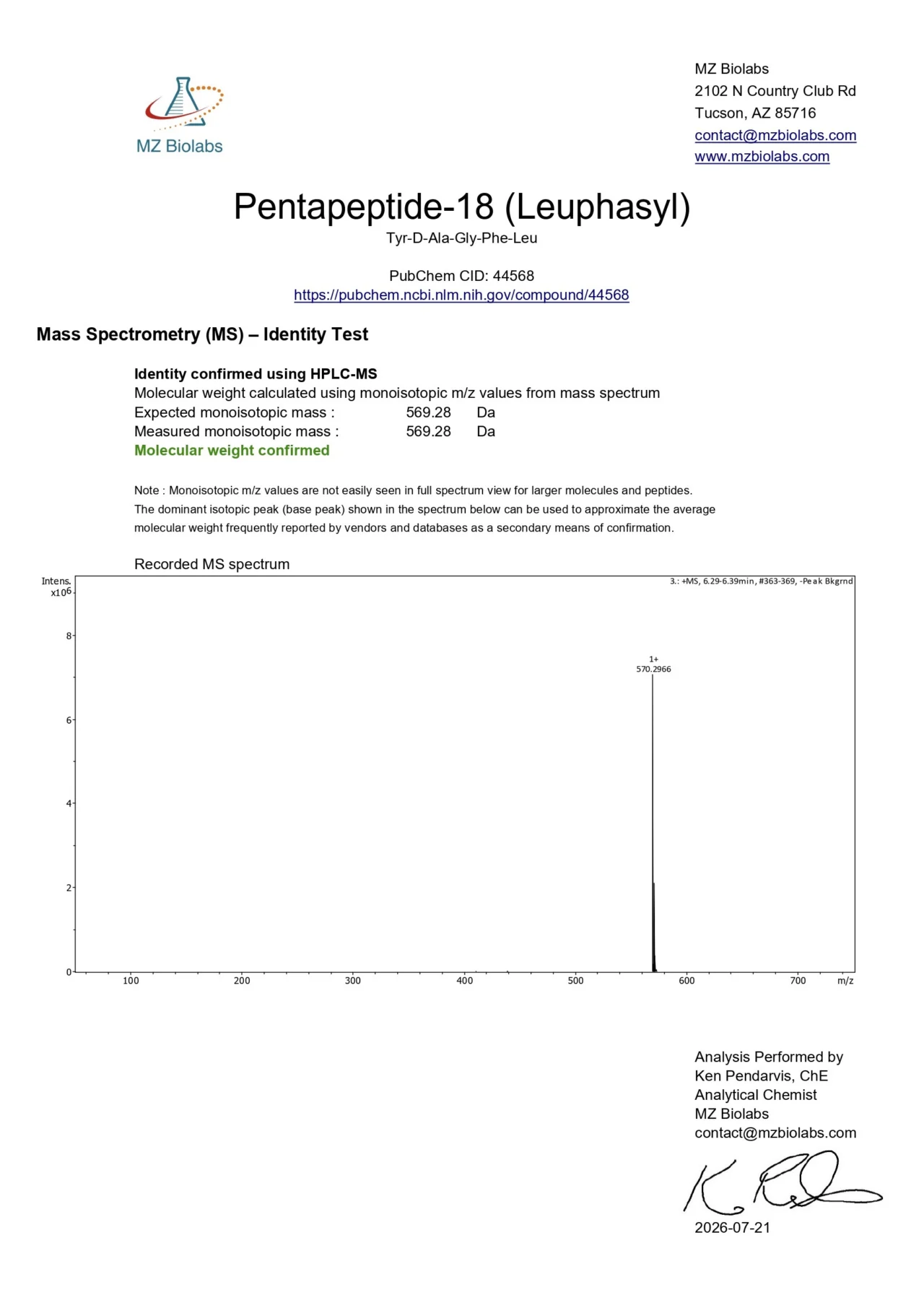
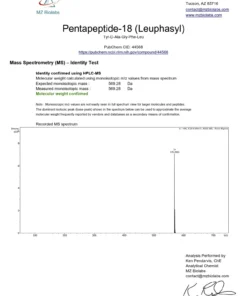
| Molecular Weight | 569.65 g/mol |
| Synonyms | Leuphasyl, NSC-374895 |
| Structural Relationship | Modified Leu-Enkephalin Analog |
| Research Classification | Research Use Only (RUO) |
Why Buy Pentapeptide-18 (Leuphasyl) Peptide?
- Available in 100mg and 200mg research quantities.
- Defined synthetic Pentapeptide-18 research material.
- Contains the Tyr-D-Ala-Gly-Phe-Leu sequence.
- Useful for enkephalin-related peptide research.
- Relevant to calcium-dependent neuronal signaling studies.
- Suitable for neurotransmitter-release research.
- Applicable to neuromuscular junction and cellular signaling models.
- Useful for peptide structure-function investigations.
- Relevant to melanogenesis and pigment-cell research models.
- Suitable for qualified laboratory and scientific research environments.
Buy Pentapeptide-18 (Leuphasyl) Peptide 100mg & 200mg
If your laboratory research focuses on enkephalin-related peptides, neuronal signaling, calcium-dependent neurotransmitter release, neuromuscular communication, or melanogenesis models, Buy Pentapeptide-18 (Leuphasyl) Peptide 100mg & 200mg for your research inventory.
Choose the research quantity appropriate for your experimental workflow and add Pentapeptide-18 to your laboratory research supplies. Its defined modified peptide sequence makes it suitable for controlled biochemical, cellular, receptor, and analytical studies.
Pentapeptide-18 Research FAQ
What is Pentapeptide-18 (Leuphasyl)?
Pentapeptide-18, also known as Leuphasyl, is a synthetic modified pentapeptide structurally related to leu-enkephalin. Its supplied sequence is Tyr-D-Ala-Gly-Phe-Leu.
What is the sequence of Pentapeptide-18?
The supplied sequence is Tyr-D-Ala-Gly-Phe-Leu. The peptide contains a D-alanine residue that distinguishes it structurally from the corresponding natural peptide sequence.
What is the molecular weight of Pentapeptide-18?
The supplied molecular weight is 569.65 g/mol, with the molecular formula C29H39N5O7.
What is Pentapeptide-18 studied for in research?
Pentapeptide-18 can be investigated in experimental models involving enkephalin-related signaling, calcium-dependent neurotransmitter release, neuronal communication, neuromuscular signaling, peptide-receptor interactions, and melanogenesis-associated cellular pathways.
Is Pentapeptide-18 intended for human use?
No. Pentapeptide-18 is supplied strictly for Research Use Only. It is intended for qualified laboratory research, in-vitro testing, analytical investigation, and scientific study and is not intended for human or veterinary use.
Research Use Only Disclaimer
FOR RESEARCH USE ONLY (RUO). Pentapeptide-18 (Leuphasyl) is supplied exclusively for laboratory research, in-vitro testing, analytical research, and scientific investigation. It is not intended for human consumption, veterinary use, diagnosis, disease management, or use as a food, dietary supplement, cosmetic, or approved drug. This material is intended for qualified laboratory personnel using appropriate safety procedures and following applicable institutional requirements and laws. Findings from cellular or animal research models should not be interpreted as established outcomes in humans. The purchaser is responsible for determining appropriate laboratory use, handling, storage, and regulatory compliance.
| Miligram | 100, 200 |
|---|
Be the first to review “Pentapeptide-18 (Leuphasyl) Peptide 100mg & 200mg”
Related products
Biotech Peptides
Biotech Peptides
Biotech Peptides
Biotech Peptides
Biotech Peptides
Biotech Peptides
Biotech Peptides
Biotech Peptides
Reviews
There are no reviews yet.