
Buy Nonapeptide-1 Peptide 100mg & 200mg
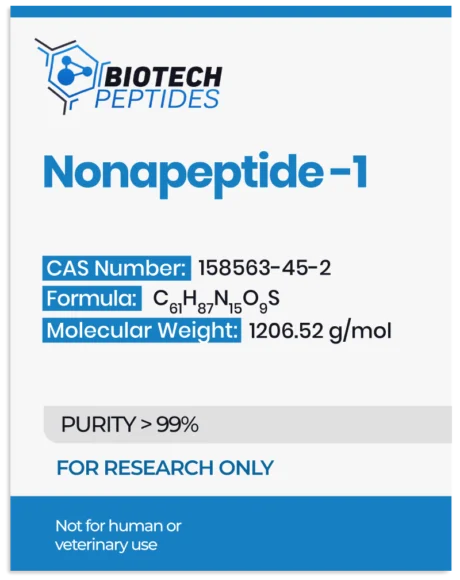
Nonapeptide-1 Peptide 100mg & 200mg, also known as Melanostatine-5, is a synthetic nonapeptide studied primarily in laboratory models of melanocortin-1 receptor (MC1R) signaling, melanocyte biology, melanogenesis, and cellular pigmentation pathways. The peptide contains the sequence Met-Pro-D-Phe-Arg-D-Trp-Phe-Lys-Pro-Val and has been investigated as an MC1R-associated research compound.
For researchers studying pigment-cell signaling, Nonapeptide-1 research peptide provides a defined molecular model for investigating interactions between MC1R, alpha-melanocyte-stimulating hormone (α-MSH), tyrosinase activity, microphthalmia-associated transcription factor (MITF), and other pathways involved in melanin synthesis.
Nonapeptide-1 is supplied in 100mg and 200mg research quantities for qualified laboratory research, in-vitro experimentation, analytical investigation, and scientific studies. This material is strictly intended for Research Use Only and is not intended for human or veterinary use.
Nonapeptide-1 (Melanostatine-5) Research Peptide
Nonapeptide-1 is a synthetic peptide containing several D-amino acid residues, including D-phenylalanine and D-tryptophan. These structural features are relevant to research investigating peptide-receptor interactions and MC1R-associated signaling.
The peptide has attracted scientific interest because of its reported interaction with the melanocortin system. In particular, laboratory research has examined whether Nonapeptide-1 can influence MC1R-associated signaling and downstream molecular processes involved in melanogenesis.
These characteristics make Nonapeptide-1 Peptide 100mg & 200mg useful as a research material for studies involving melanocytes, keratinocytes, pigment-associated signaling, receptor pharmacology, and cellular responses to ultraviolet-associated stress.
Nonapeptide-1 and MC1R Signaling Research
The melanocortin-1 receptor (MC1R) is a G-protein-coupled receptor expressed by melanocytes and is an important component of melanocortin signaling research. Activation of MC1R by α-MSH can influence intracellular signaling pathways associated with melanin production.
Nonapeptide-1 has been investigated as an antagonist-associated peptide in experimental MC1R models. Researchers can use this molecular system to examine how changes in MC1R activity influence downstream signaling, receptor responsiveness, and melanogenic pathways.
Structural research has also identified specific residues within the Nonapeptide-1 sequence that appear important for its interaction with the receptor. The D-Phe and D-Trp residues are particularly relevant when studying structure-activity relationships involving MC1R-associated peptides.
α-MSH and Melanocortin Signaling
Alpha-melanocyte-stimulating hormone (α-MSH) is a melanocortin peptide that participates in MC1R signaling. Experimental systems can compare α-MSH-associated receptor activation with conditions in which MC1R signaling is modulated by antagonist-like research compounds.
Nonapeptide-1 can therefore serve as a defined molecular tool for studying receptor competition, melanocortin signaling, intracellular pathways, and downstream effects on pigment-associated gene expression.
Nonapeptide-1 and Melanogenesis Research
Melanogenesis is the biochemical process through which melanocytes synthesize melanin. Several proteins participate in this process, including tyrosinase, tyrosinase-related protein 1 (TRP1), tyrosinase-related protein 2 (TRP2), and microphthalmia-associated transcription factor (MITF).
Laboratory research has examined Nonapeptide-1 in relation to these melanogenic pathways. Experimental models can measure changes in MC1R, MITF, tyrosinase, TRP1, and TRP2 expression following exposure to the peptide.
These experiments make Nonapeptide-1 particularly relevant for researchers investigating receptor-mediated regulation of melanin synthesis, melanocyte signaling, and pigment-associated gene expression.
Nonapeptide-1 and Melanocyte Research
Melanocytes are specialized pigment-producing cells located within the epidermal environment. Their activity is regulated by complex interactions between receptors, transcription factors, enzymes, and extracellular signaling molecules.
Nonapeptide-1 research can be performed using cultured melanocytes and other cellular models to examine MC1R-associated signaling and changes in melanogenic activity. Experimental researchers may evaluate cellular melanin content, gene expression, protein abundance, receptor activity, and intracellular signaling markers.
Keratinocyte models, including HaCaT cells, may also be incorporated into experimental systems examining interactions between pigment-producing cells and surrounding epidermal cell populations.
Nonapeptide-1 and UV-Associated Cellular Research
Ultraviolet radiation is frequently used in laboratory models investigating melanocyte signaling and cellular stress. UV exposure can influence melanocortin signaling, melanogenic gene expression, and melanin-associated pathways.
Experimental studies involving Nonapeptide-1 have examined MC1R-related signaling in cellular systems exposed to UV-associated stimuli. Researchers can investigate whether peptide exposure corresponds with changes in MC1R expression, MITF activity, tyrosinase-related proteins, and cellular melanin measurements.
These models provide a controlled framework for studying interactions between peptide signaling, melanocyte biology, and environmental cellular stress.
Nonapeptide-1 and Melanoma Cell Research
MC1R signaling has also been investigated in experimental melanoma-cell models. Research involving MC1R-associated compounds has explored relationships between receptor signaling, melanin production, cellular morphology, and proliferation.
Nonapeptide-1 itself should not be characterized as a melanoma treatment or as having established antitumor activity. However, its MC1R-associated properties make it potentially relevant to laboratory studies examining receptor biology in melanoma-derived cell systems.
Researchers can use appropriate in-vitro models to investigate MC1R expression, cellular morphology, melanogenic signaling, proliferation markers, and downstream pathways. Findings from these experimental systems should remain limited to the specific model and conditions tested.
Nonapeptide-1 and Neurobiology Research
MC1R-associated signaling has also been studied outside pigment-cell biology. MC1R expression has been investigated in certain regions of the nervous system, including areas involved in sensory and neurobiological signaling.
This provides a research framework for investigating interactions between melanocortin receptors and neuronal signaling pathways. Experimental work may examine MC1R-associated activity alongside dopaminergic, opioid, or other neurotransmitter-related systems.
Animal and cellular studies involving MC1R antagonism can provide useful mechanistic information, but such findings should not be interpreted as established effects of Nonapeptide-1 in humans. Additional research is required to distinguish receptor-level observations from compound-specific biological outcomes.
Nonapeptide-1 Peptide Specifications
| Specification | Details |
|---|---|
| Product Name | Nonapeptide-1 Peptide |
| Available Amounts | 100mg & 200mg |
| Research Classification | Synthetic Nonapeptide |
| Sequence | Met-Pro-D-Phe-Arg-D-Trp-Phe-Lys-Pro-Val |
| Molecular Formula | C61H87N15O9S |
| Molecular Weight | 1206.52 g/mol |
| Synonyms | Melanostatine, Melanostatine-5, Oxytocin Intermediate-nine Peptide |
| Primary Research Area | MC1R, melanogenesis, melanocyte biology |
| Research Classification | Research Use Only (RUO) |
Why Buy Nonapeptide-1 Peptide 100mg & 200mg?
- Available in 100mg and 200mg research quantities.
- Defined synthetic peptide for laboratory research.
- Useful for MC1R receptor signaling studies.
- Relevant to melanocyte and melanogenesis research.
- Suitable for studying α-MSH-associated signaling pathways.
- Useful for MITF, tyrosinase, TRP1, and TRP2 research.
- Applicable to UV-associated cellular signaling models.
- Relevant to melanoma-cell and receptor-biology research models.
- Suitable for qualified laboratory and scientific research environments.
Buy Nonapeptide-1 Peptide 100mg & 200mg
If your laboratory research focuses on MC1R signaling, melanocyte biology, melanogenesis, receptor pharmacology, or pigment-associated cellular pathways, Buy Nonapeptide-1 Peptide 100mg & 200mg for your research inventory.
Select the research quantity appropriate for your experimental workflow and add Nonapeptide-1 to your laboratory research supplies. This defined synthetic nonapeptide provides a useful model for controlled studies of melanocortin receptor signaling and downstream pigment-associated pathways.
Nonapeptide-1 Research FAQ
What is Nonapeptide-1?
Nonapeptide-1 is a synthetic nonapeptide also known as Melanostatine-5. It has been investigated primarily in research involving MC1R signaling, melanocyte biology, melanogenesis, and pigment-associated cellular pathways.
What is the sequence of Nonapeptide-1?
The supplied sequence is Met-Pro-D-Phe-Arg-D-Trp-Phe-Lys-Pro-Val. The sequence contains D-amino acid residues that are relevant to structure-activity research involving the peptide.
What is the molecular weight of Nonapeptide-1?
The supplied molecular weight is 1206.52 g/mol, with the molecular formula C61H87N15O9S.
What is Nonapeptide-1 studied for in research?
Nonapeptide-1 is studied in experimental models involving MC1R signaling, α-MSH pathways, melanogenesis, melanocyte biology, tyrosinase, MITF, TRP1, TRP2, and related cellular signaling pathways.
Is Nonapeptide-1 intended for human use?
No. Nonapeptide-1 is supplied strictly for Research Use Only. It is intended for qualified laboratory research, in-vitro testing, analytical investigation, and scientific study and is not intended for human or veterinary use.
Research Use Only Disclaimer
FOR RESEARCH USE ONLY (RUO). Nonapeptide-1 is supplied exclusively for laboratory research, in-vitro testing, analytical research, and scientific investigation. It is not intended for human consumption, veterinary use, diagnosis, disease management, or use as a food, dietary supplement, cosmetic, or approved drug. This material is intended for qualified laboratory personnel using appropriate safety procedures and following applicable institutional requirements and laws. Findings from cellular or animal research models should not be interpreted as established outcomes in humans. The purchaser is responsible for determining appropriate laboratory use, handling, storage, and regulatory compliance.
| Miligram | 100, 200 |
|---|
Be the first to review “Nonapeptide-1 Peptide 100mg & 200mg”
Related products
Biotech Peptides
Biotech Peptides
Biotech Peptides
Biotech Peptides
Biotech Peptides
Biotech Peptides
Biotech Peptides
Biotech Peptides
Reviews
There are no reviews yet.