

Buy Lipopeptide (Biopeptide EL) Peptide 100mg & 200mg
Lipopeptide (Biopeptide EL) Peptide 100mg & 200mg, also known as Palmitoyl Hexapeptide-12, is a synthetic lipopeptide studied in laboratory models of fibroblast biology, extracellular matrix (ECM) signaling, cellular migration, and skin-cell research. The peptide contains the VGVAPG amino acid sequence, a sequence associated with elastin-derived protein fragments, together with a palmitoyl modification.
For researchers investigating extracellular matrix biology, Lipopeptide research peptide provides a useful model for studying interactions involving fibroblasts, collagen-associated pathways, elastin-related signaling, cellular migration, melanocyte biology, and inflammatory signaling. The palmitoyl modification also makes this molecule relevant to research examining lipid-modified peptide structure and cellular interactions.
Our Lipopeptide (Biopeptide EL) Peptide 100mg & 200mg is supplied for qualified laboratory research, in-vitro experimentation, analytical investigation, and scientific studies. This material is not intended for human or veterinary use.
Lipopeptide (Biopeptide EL) Research Peptide
Lipopeptide is commonly identified as Palmitoyl Hexapeptide-12 and is associated with the VGVAPG sequence. This six-residue peptide fragment is structurally related to sequences found in naturally occurring elastin and tropoelastin proteins, making it an interesting model for studying extracellular matrix signaling.
The addition of a palmitoyl group creates a lipid-modified peptide structure that researchers can investigate in relation to molecular interactions, membrane-associated processes, peptide partitioning, and cellular signaling. Laboratory studies of Lipopeptide have particularly focused on fibroblast behavior and pathways associated with ECM organization.
Lipopeptide and Fibroblast Research
Fibroblasts are connective-tissue cells responsible for producing and maintaining numerous components of the extracellular matrix. Their activity makes them an important experimental model for studying collagen, elastin, glycosaminoglycans, cellular migration, and tissue-remodeling pathways.
The VGVAPG sequence found in Lipopeptide has been investigated for its ability to interact with fibroblast cells. Experimental research has reported changes in fibroblast proliferation, morphology, and cellular behavior following exposure to VGVAPG-containing peptide sequences.
These observations make Lipopeptide research peptide useful for laboratory investigations involving fibroblast signaling, cell proliferation assays, extracellular matrix biology, and peptide-cell interactions.
Fibroblast Proliferation and Cellular Signaling
Research involving the VGVAPG sequence has examined fibroblast proliferation and potential interactions with cell-surface receptors. Although the precise receptor mechanisms associated with these observations may require additional investigation, VGVAPG has been studied as a signaling peptide capable of influencing fibroblast behavior in experimental systems.
Researchers may therefore use Lipopeptide in controlled in-vitro models to investigate changes in cell number, morphology, receptor-associated signaling, and downstream cellular pathways.
Lipopeptide and Extracellular Matrix Research
The extracellular matrix is a complex network surrounding cells and contains structural and signaling components including collagen, elastin, proteoglycans, and glycosaminoglycans. Fibroblasts play an important role in maintaining this environment by synthesizing and remodeling ECM components.
Lipopeptide research has explored whether the VGVAPG sequence can influence fibroblast-associated ECM activity. Experimental models have examined collagen-related pathways, elastin-associated signaling, hyaluronic-acid biology, and other mechanisms involved in extracellular matrix organization.
These studies make the peptide relevant to laboratory research focused on ECM remodeling, fibroblast signaling, protein synthesis pathways, and cellular responses to elastin-derived peptide fragments.
Lipopeptide and Fibroblast Migration Research
Cell migration is an important area of laboratory research involving extracellular matrix remodeling. Experimental studies have investigated VGVAPG as a potential chemotactic signal for fibroblasts and other cell types.
Research models have examined whether fibroblast responsiveness to VGVAPG varies according to cellular differentiation and extracellular matrix conditions. Such experiments can provide insight into how elastin-derived peptide sequences interact with mature connective-tissue cell populations.
For researchers studying cell migration, Lipopeptide offers a defined synthetic peptide model for investigating chemotactic signaling, cellular morphology, and ECM-associated migration pathways.
Lipopeptide and Collagen Research
Collagen is one of the principal structural proteins found within the extracellular matrix. Laboratory research involving Lipopeptide has examined relationships between VGVAPG signaling and fibroblast-associated collagen biology.
Researchers can investigate collagen-related gene expression, fibroblast activity, ECM protein organization, and interactions between elastin-derived sequences and connective-tissue cells. These experimental applications can help characterize the molecular pathways connecting peptide signaling with extracellular matrix biology.
Lipopeptide and Melanocyte Research
Lipopeptide has also been investigated in experimental models involving melanocytes and melanogenesis-associated signaling. Melanocytes are specialized cells involved in melanin production, and their activity is regulated by transcription factors and enzymes including microphthalmia-associated transcription factor (MITF), tyrosinase, and dopachrome tautomerase.
In-vitro research can examine whether Lipopeptide exposure is associated with changes in melanogenic gene expression, enzyme activity, ERK signaling, or cellular melanin content. These models provide a framework for studying peptide-mediated regulation of melanocyte pathways without implying a human-use outcome.
Lipopeptide and Cellular Inflammation Research
Inflammatory signaling is another area of interest in Lipopeptide research. Laboratory studies have investigated interactions between the peptide and cytokine-associated pathways in keratinocytes and fibroblasts.
Experimental models may evaluate markers such as interleukin-1 (IL-1), interleukin-6 (IL-6), and interleukin-8 (IL-8), along with matrix metalloproteinase (MMP) activity and other ECM-associated signaling pathways.
These studies can help researchers investigate the relationship between inflammatory signaling, extracellular matrix turnover, fibroblast biology, and cellular stress responses.
Lipopeptide Peptide Specifications
| Specification | Details |
|---|---|
| Product Name | Lipopeptide (Biopeptide EL) |
| Product Type | Synthetic Lipopeptide |
| Available Amounts | 100mg & 200mg |
| Sequence | Pal-Val-Gly-Val-Ala-Pro-Gly-OH |
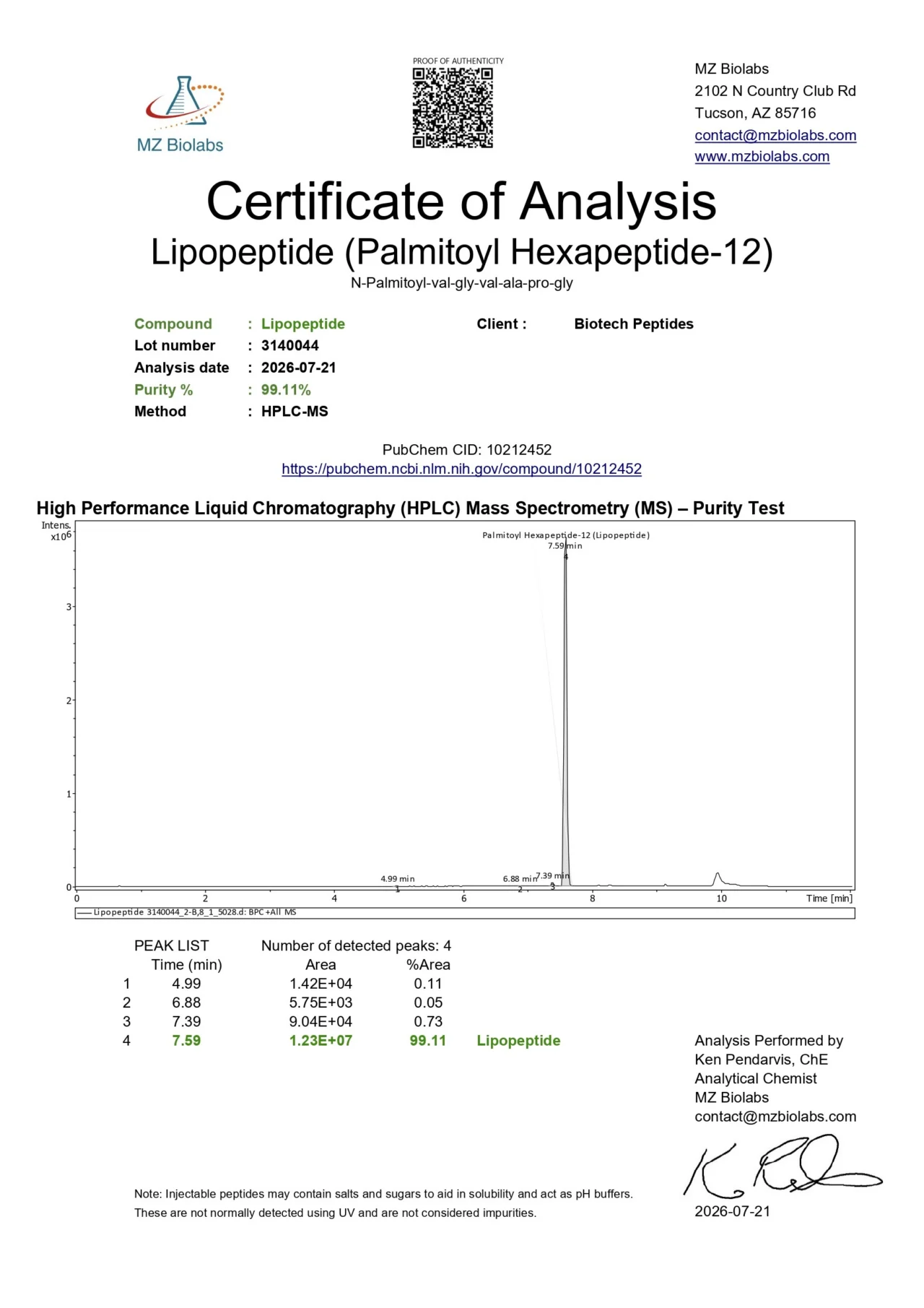
| Peptide Description | Palmitoyl Hexapeptide-12 |
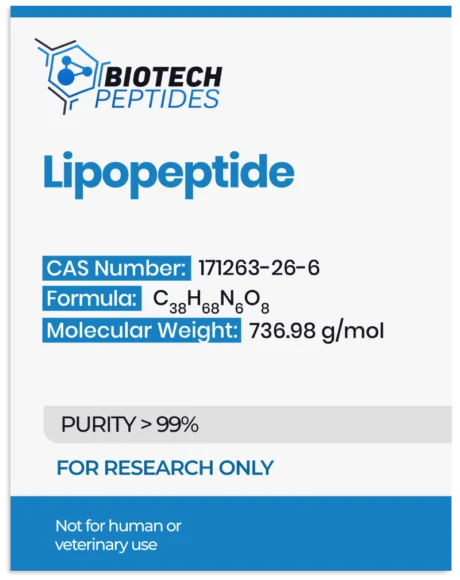
| Molecular Formula | C38H68N6O8 |
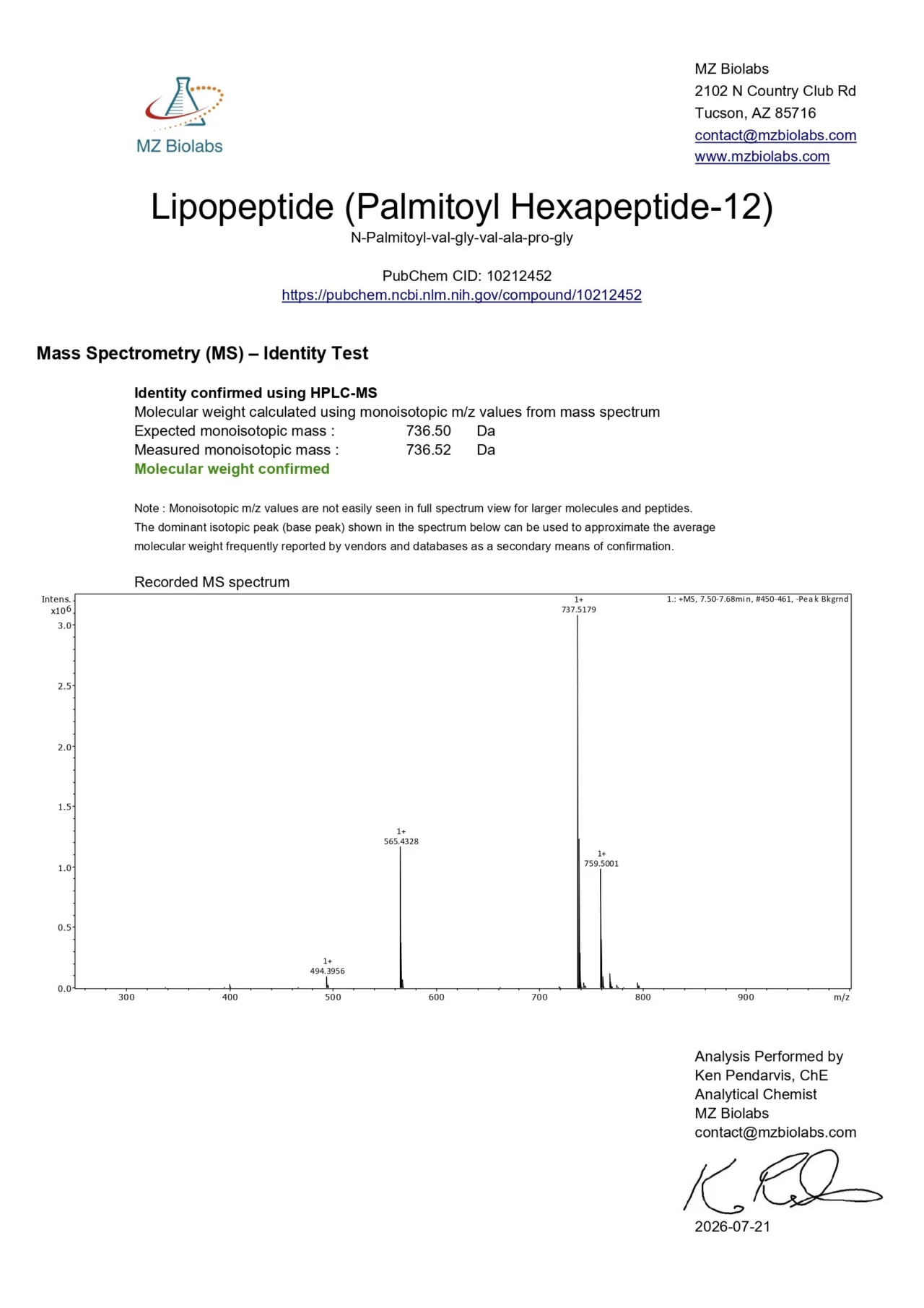
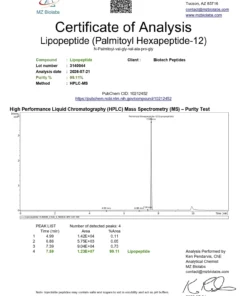
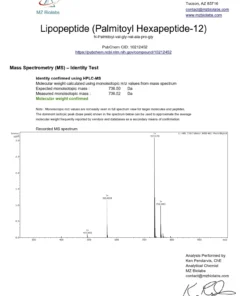
| Molecular Weight | 736.98 g/mol |
| Synonyms | Biopeptide EL, Palmitoyl Hexapeptide-12, Oligopeptide-34 |
| Research Classification | Research Use Only (RUO) |
Why Buy Lipopeptide (Biopeptide EL) Peptide?
- Available in convenient 100mg and 200mg research quantities.
- Useful for fibroblast and extracellular matrix research.
- Contains the VGVAPG elastin-associated peptide sequence.
- Suitable for studies of cellular migration and proliferation.
- Relevant to collagen, elastin, and ECM signaling research.
- Applicable to melanocyte and melanogenesis laboratory models.
- Useful for investigating cytokine and inflammatory signaling pathways.
- Suitable for qualified laboratory and scientific research environments.
Buy Lipopeptide (Biopeptide EL) Peptide 100mg & 200mg
If you are conducting laboratory research involving fibroblast signaling, extracellular matrix biology, peptide-cell interactions, melanocyte pathways, or cellular inflammation models, Buy Lipopeptide (Biopeptide EL) Peptide 100mg & 200mg for your research inventory.
Choose the research quantity appropriate for your experimental workflow and add Lipopeptide to your laboratory research supplies. This synthetic lipopeptide provides a defined VGVAPG-containing model for controlled in-vitro and analytical studies.
Lipopeptide Research FAQ
What is Lipopeptide (Biopeptide EL)?
Lipopeptide, commonly identified as Biopeptide EL or Palmitoyl Hexapeptide-12, is a synthetic lipid-modified peptide containing the VGVAPG sequence. It is studied primarily in laboratory models involving fibroblast biology, extracellular matrix signaling, cellular migration, and melanocyte-related pathways.
What is the Lipopeptide sequence?
The supplied sequence is Pal-Val-Gly-Val-Ala-Pro-Gly-OH, corresponding to a palmitoylated VGVAPG peptide structure.
What is the molecular weight of Lipopeptide?
The supplied molecular weight is 736.98 g/mol, with the molecular formula C38H68N6O8.
What is Lipopeptide used for in research?
Lipopeptide can be investigated in laboratory studies involving fibroblast proliferation, cellular migration, extracellular matrix signaling, collagen-associated pathways, melanocyte biology, and inflammatory cytokine research.
Is Lipopeptide for human use?
No. This product is supplied strictly for Research Use Only. It is intended for qualified laboratory research, in-vitro testing, analytical investigation, and scientific study and is not intended for human or veterinary use.
Research Use Only Disclaimer
FOR RESEARCH USE ONLY (RUO). Lipopeptide (Biopeptide EL) is supplied exclusively for laboratory research, in-vitro testing, analytical research, and scientific investigation. It is not intended for human consumption, veterinary use, diagnosis, disease management, or use as a food, dietary supplement, cosmetic, or approved drug. This material is intended for qualified laboratory personnel using appropriate safety procedures and following applicable institutional requirements and laws. Findings from cellular or animal research models should not be interpreted as established outcomes in humans. The purchaser is responsible for determining appropriate laboratory use, handling, storage, and regulatory compliance.
| Miligram | 100, 200 |
|---|
Be the first to review “Lipopeptide (Biopeptide EL) Peptide 100mg & 200mg”
Related products
Biotech Peptides
Biotech Peptides

Biotech Peptides
Biotech Peptides
Biotech Peptides

Biotech Peptides
Biotech Peptides

Biotech Peptides
Reviews
There are no reviews yet.