
Buy Decapeptide-12 Peptide 100mg & 200mg for Laboratory Research
Decapeptide-12 Peptide 100mg & 200mg is a synthetic oligopeptide investigated in laboratory research involving tyrosinase activity, melanin biosynthesis, melanocyte signaling, epidermal-cell biology, and cellular stress pathways. Research into Decapeptide-12 has attracted particular interest because of its potential interaction with the biochemical processes responsible for pigment production.
For researchers looking to buy Decapeptide-12 peptide 100mg or 200mg, this research material can support controlled laboratory investigations involving tyrosinase, melanin-associated pathways, melanocyte models, keratinocyte biology, peptide structure-function relationships, and sirtuin gene-expression research. Decapeptide-12 remains an experimental research compound, and findings from specific laboratory or animal models should not be interpreted as established outcomes in humans.
Decapeptide-12 Research Overview
Decapeptide-12 is a short synthetic peptide studied primarily in connection with tyrosinase, a copper-containing enzyme involved in key biochemical reactions associated with melanin biosynthesis. Tyrosinase participates in the conversion of tyrosine into L-DOPA and subsequently DOPAquinone, two important steps within the melanin-production pathway.
Because tyrosinase occupies an important position in pigment biosynthesis, researchers have investigated Decapeptide-12 as a molecular tool for studying enzyme activity, melanocyte biology, pigment-related signaling, and peptide-enzyme interactions.
Decapeptide-12 Peptide Specifications
| Property | Specification |
|---|---|
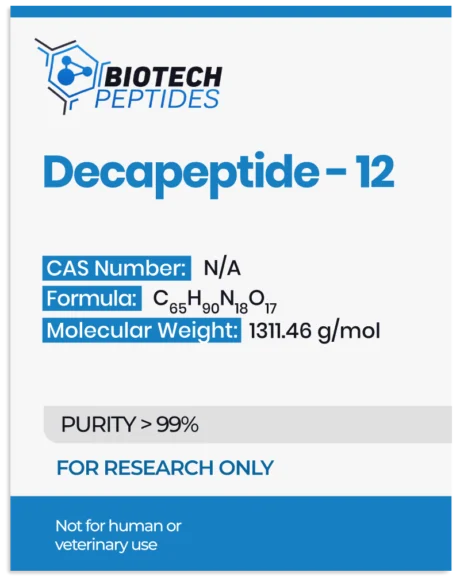
| Product Name | Decapeptide-12 Peptide 100mg & 200mg |
| Peptide Type | Synthetic oligopeptide |
| Sequence | Tyr-Arg-Ser-Aar-Lysd-Tyr-Ser-Ser-Trp-Tyr |
| Molecular Formula | C65H90N18O17 |
| Molecular Weight | 1311.46 g/mol |
| Synonym / Identifier | 137665-91-9 |
| Available Research Quantities | 100mg & 200mg |
| Research Classification | Research Use Only (RUO) |
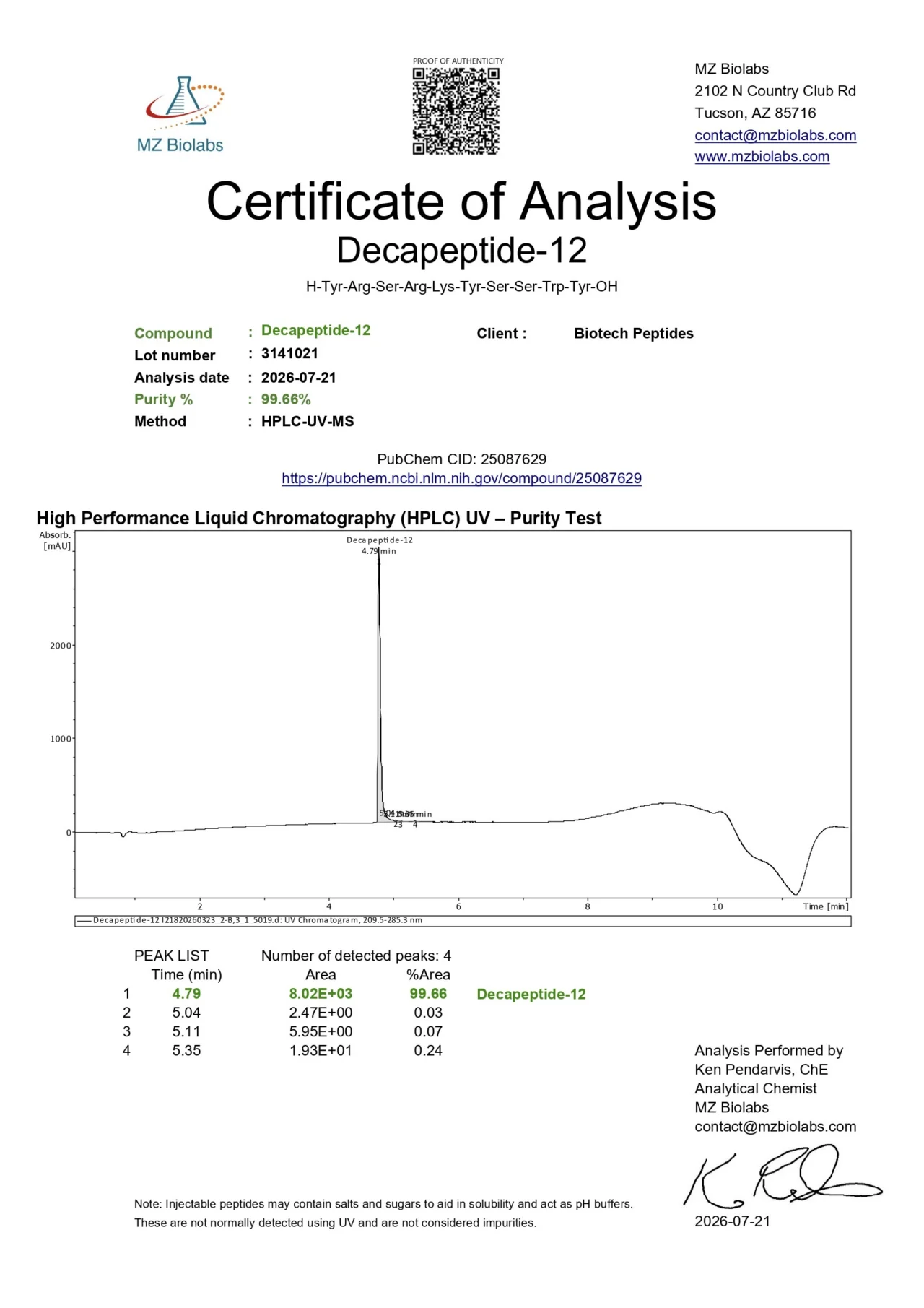
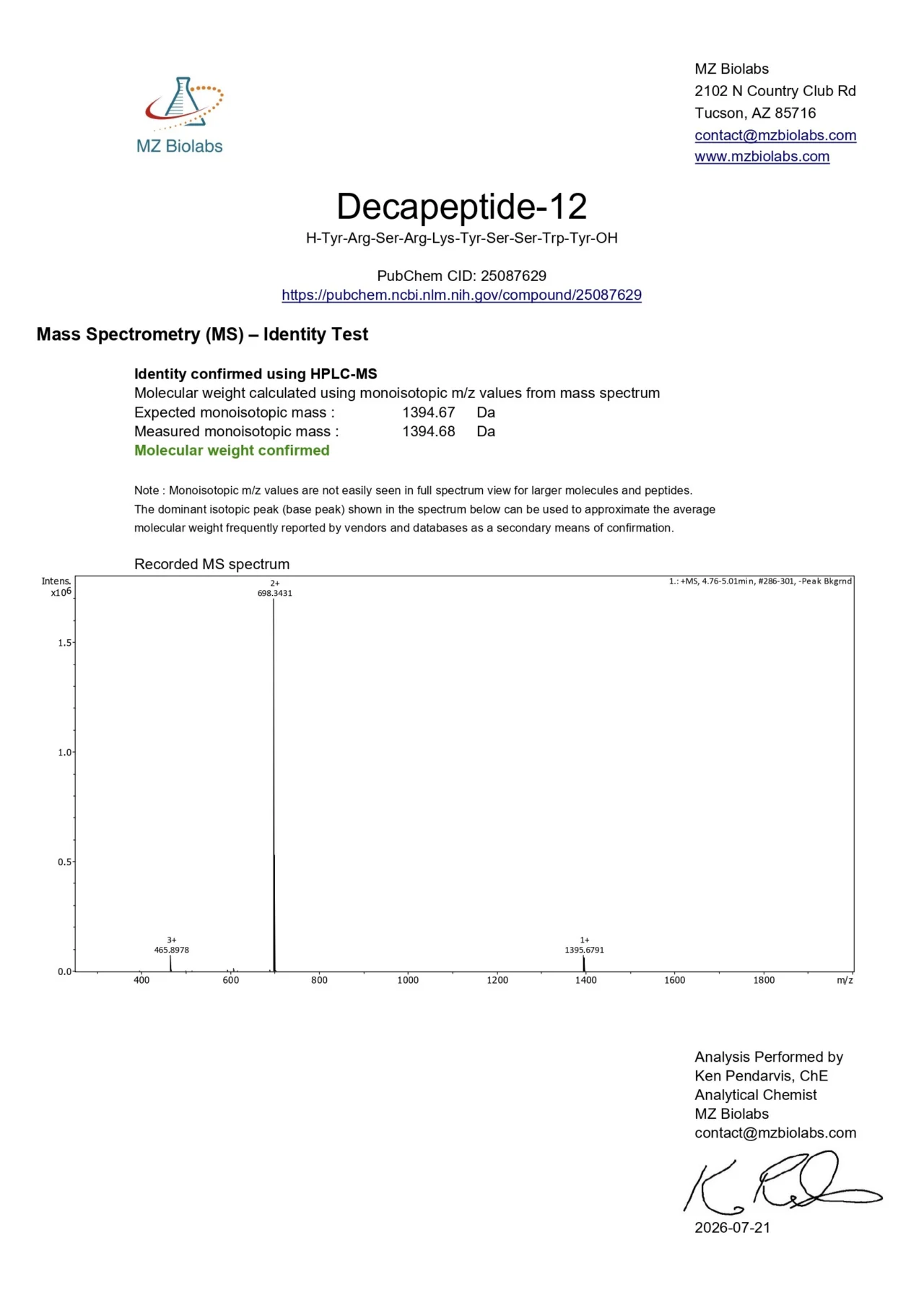
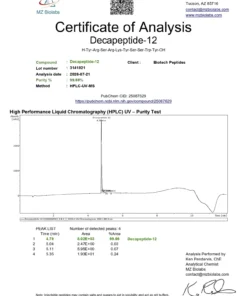
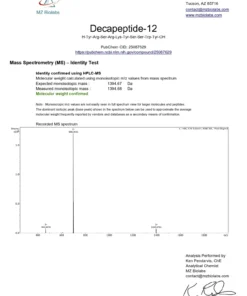
The supplied sequence contains the residues “Aar” and “Lysd” as provided in the source material. Researchers should verify the exact sequence notation, molecular identity, purity, molecular formula, and lot-specific analytical specifications against the applicable certificate of analysis (CoA) before experimental use.
Decapeptide-12 and Tyrosinase Research
One of the primary areas of Decapeptide-12 research involves tyrosinase, an enzyme containing copper at its catalytic center. Tyrosinase participates in the initial stages of melanin biosynthesis by catalyzing the hydroxylation of tyrosine to L-DOPA and the subsequent oxidation of L-DOPA to DOPAquinone.
These reactions provide an important experimental system for studying pigment biochemistry. Researchers investigating Decapeptide-12 have proposed that the peptide may interact with tyrosinase-associated molecular processes and influence enzymatic activity. However, the precise molecular mechanism remains an area of investigation.
Possible mechanisms explored in research include direct peptide-enzyme interactions or effects on pathways associated with tyrosinase expression. These hypotheses make Decapeptide-12 relevant to biochemical studies examining enzyme inhibition, melanocyte signaling, and pigment-production pathways.
Decapeptide-12 and Melanin Biosynthesis
Melanin production is a complex biochemical process involving melanocytes, melanosomes, tyrosinase, and multiple downstream enzymes and signaling pathways. Decapeptide-12 research provides a model for investigating how short peptide sequences may interact with this biological system.
Experimental studies have examined Decapeptide-12 in models involving changes in pigmentation and melanin-associated cellular activity. These investigations can help researchers characterize the relationship between peptide exposure, tyrosinase activity, melanocyte function, and pigment synthesis.
For laboratory researchers, this makes Decapeptide-12 particularly relevant to melanocyte biology, enzyme-inhibition research, pigment biochemistry, and peptide-cell interaction studies.
Decapeptide-12 and Epidermal Cell Research
Research involving Decapeptide-12 has also examined experimental epidermal models. Studies have investigated changes in pigmentation-associated characteristics following controlled exposure to the peptide.
These experiments provide a framework for investigating how tyrosinase-associated signaling can influence cellular pigment pathways. Researchers can use controlled epidermal and melanocyte models to examine changes in pigment production, cellular signaling, and molecular markers associated with melanin biosynthesis.
Reported findings have varied depending on the experimental model, study duration, peptide formulation, and research conditions. Consequently, individual experimental observations should be interpreted within the specific methodology used in each study.
Decapeptide-12 and Peptide Lipophilicity Research
Another area of research involves modifying Decapeptide-12 to investigate how physicochemical characteristics influence peptide interactions with biological models. Because peptide structure can affect membrane association and tissue-model permeability, researchers have examined modified forms incorporating lipid-associated components such as palmitate.
Palmitoylation can alter the lipophilicity of a peptide and may change its interaction with lipid membranes and experimental tissue models. Molecular-docking and structure-function studies have therefore been used to investigate whether modified Decapeptide-12 retains interactions with tyrosinase-associated targets.
These investigations are useful for researchers studying peptide engineering, molecular docking, structure-activity relationships, and the relationship between peptide chemistry and biological-model interactions.
Decapeptide-12 and Sirtuin Research
Decapeptide-12 has also been investigated in cellular models involving sirtuin gene expression. Sirtuins are a family of proteins involved in cellular processes including metabolic regulation, DNA repair, stress responses, and transcriptional regulation.
Experimental research has examined the expression of several sirtuin genes following controlled exposure to Decapeptide-12 in keratinocyte-related models. Reported changes have included SIRT1, SIRT3, SIRT6, and SIRT7 transcription.
SIRT1 is widely studied in relation to cellular stress and metabolic signaling, while SIRT3 is associated with mitochondrial processes. SIRT6 has been investigated in DNA-maintenance and chromatin-related pathways, and SIRT7 has been studied in relation to nucleolar activity and ribosome biogenesis.
These observations make Decapeptide-12 an interesting research subject for laboratories studying peptide-mediated transcriptional regulation, cellular stress responses, mitochondrial biology, and keratinocyte signaling.
Decapeptide-12 and Cellular Stress Research
Experimental investigations into Decapeptide-12 have included measurements of cellular viability, proliferation, and transcriptional responses. These parameters can provide useful information about how a peptide interacts with cultured cell systems under defined laboratory conditions.
Research into sirtuin-associated pathways also provides an opportunity to investigate relationships between peptide exposure and molecular mechanisms involved in oxidative-stress response, DNA maintenance, mitochondrial function, and cellular homeostasis.
Further work is required to establish the precise molecular mechanisms underlying the reported observations and to determine how reproducible these effects are across different experimental systems.
Why Researchers Study Decapeptide-12
- Investigate tyrosinase-associated enzymatic pathways.
- Study melanin biosynthesis and pigment biochemistry.
- Research melanocyte and epidermal-cell signaling.
- Examine peptide-enzyme interaction mechanisms.
- Study peptide structure-function relationships.
- Investigate modified peptide lipophilicity and membrane interactions.
- Research keratinocyte cellular models.
- Study SIRT1, SIRT3, SIRT6, and SIRT7 gene-expression pathways.
- Investigate cellular stress and metabolic signaling.
- Explore peptide effects on controlled in-vitro research systems.
Buy Decapeptide-12 Peptide 100mg & 200mg for Research
Ready to buy Decapeptide-12 Peptide 100mg or 200mg? Choose the research quantity that fits your laboratory workflow and investigate tyrosinase activity, melanin-associated pathways, melanocyte biology, keratinocyte signaling, peptide-enzyme interactions, and sirtuin gene-expression pathways.
Order Decapeptide-12 Peptide today for controlled laboratory, analytical, or in-vitro research. Available in 100mg and 200mg research quantities, Decapeptide-12 provides laboratories with material for studying peptide-mediated cellular and biochemical pathways.
Research Use Only (RUO) Disclaimer
FOR RESEARCH USE ONLY (RUO). Decapeptide-12 Peptide 100mg & 200mg is supplied exclusively for laboratory research, in-vitro testing, analytical research, and scientific investigation. It is not intended for human consumption, veterinary use, diagnosis, disease management, or use as a food, dietary supplement, cosmetic, or approved drug. This material is intended for qualified laboratory personnel using appropriate safety procedures and following applicable institutional requirements and laws. Findings from cellular or animal research models should not be interpreted as established outcomes in humans. The purchaser is responsible for determining appropriate laboratory use, handling, storage, and regulatory compliance.
Frequently Asked Questions About Decapeptide-12
What is Decapeptide-12?
Decapeptide-12 is a synthetic oligopeptide investigated in laboratory research involving tyrosinase, melanin biosynthesis, melanocyte biology, epidermal-cell signaling, and sirtuin-associated cellular pathways.
What is Decapeptide-12 used for in research?
Decapeptide-12 is studied experimentally in relation to tyrosinase activity, pigment-production pathways, melanocyte and keratinocyte models, peptide-enzyme interactions, and cellular gene-expression research.
What is the molecular weight of Decapeptide-12?
The supplied molecular weight is 1311.46 g/mol. Researchers should confirm molecular weight and other analytical specifications against the applicable lot-specific CoA.
What is the sequence of Decapeptide-12?
The sequence supplied for this product is Tyr-Arg-Ser-Aar-Lysd-Tyr-Ser-Ser-Trp-Tyr. Because the supplied notation contains the non-standard residue labels “Aar” and “Lysd,” researchers should verify the exact sequence against lot-specific analytical documentation.
What research pathways are associated with Decapeptide-12?
Research involving Decapeptide-12 includes tyrosinase and melanin biosynthesis, melanocyte signaling, keratinocyte biology, peptide-enzyme interactions, cellular stress, and sirtuin-associated gene-expression pathways.
Is Decapeptide-12 intended for human use?
No. Decapeptide-12 is supplied strictly as Research Use Only (RUO) material for qualified laboratory research, in-vitro testing, analytical research, and scientific investigation. It is not intended for human or veterinary use.
| Miligram | 100, 200 |
|---|
Be the first to review “Decapeptide-12 Peptide 100mg & 200mg”
Related products
Biotech Peptides
Biotech Peptides
Biotech Peptides
Biotech Peptides
Biotech Peptides
Biotech Peptides
Biotech Peptides
Biotech Peptides
Reviews
There are no reviews yet.