
Buy Acetyl Hexapeptide-3 (Argireline) Peptide 200mg for Laboratory Research
Acetyl Hexapeptide-3 (Argireline) Peptide 200mg is a synthetic peptide sequence investigated in laboratory research involving SNAP-25, SNARE-complex biology, neurotransmitter-release mechanisms, cellular signaling, and skin-cell research models. The supplied sequence is Ac-Glu-Glu-Met-Gln-Arg-Arg-NH2, a short acetylated peptide studied in connection with molecular events involved in vesicle fusion and cellular communication.
For researchers looking to buy Acetyl Hexapeptide-3 (Argireline) Peptide 200mg, this research material can support controlled investigations involving SNARE-associated protein interactions, neurotransmitter-release pathways, extracellular-matrix biology, skin-cell models, hydration-related cellular responses, and peptide structure-function relationships.
Acetyl Hexapeptide-3 (Argireline) Research Overview
Acetyl Hexapeptide-3 (Argireline) has been investigated as a peptide fragment associated with the SNAP-25 region of the SNARE protein machinery. SNAP-25 participates in the molecular machinery responsible for vesicle docking and fusion, making it an important subject for research into regulated neurotransmitter release.
The SNARE complex works together with proteins involved in vesicle fusion and calcium-dependent signaling. Research into short peptide fragments that interact with this molecular system provides an opportunity to investigate how peptide structure may influence protein-protein interactions and vesicular communication.
Research involving Acetyl Hexapeptide-3 has also extended into skin-cell and extracellular-matrix models, including investigations of collagen-associated pathways, tissue hydration, and structural properties of experimental skin models.
Acetyl Hexapeptide-3 (Argireline) Specifications
| Property | Specification |
|---|---|
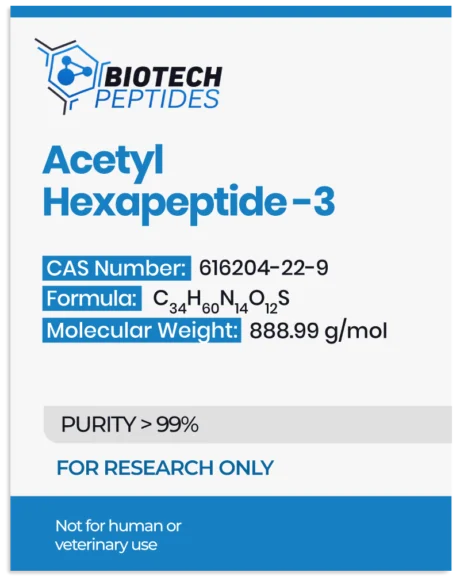
| Product Name | Acetyl Hexapeptide-3 (Argireline) Peptide 200mg |
| Sequence | Ac-Glu-Glu-Met-Gln-Arg-Arg-NH2 |
| Molecular Formula | C34H60N14O12S |
| Molecular Weight | 888.99 g/mol |
| Synonyms | Acetyl Hexapeptide, Argireline, Argireline Acetate |
| Research Classification | Research Use Only (RUO) |
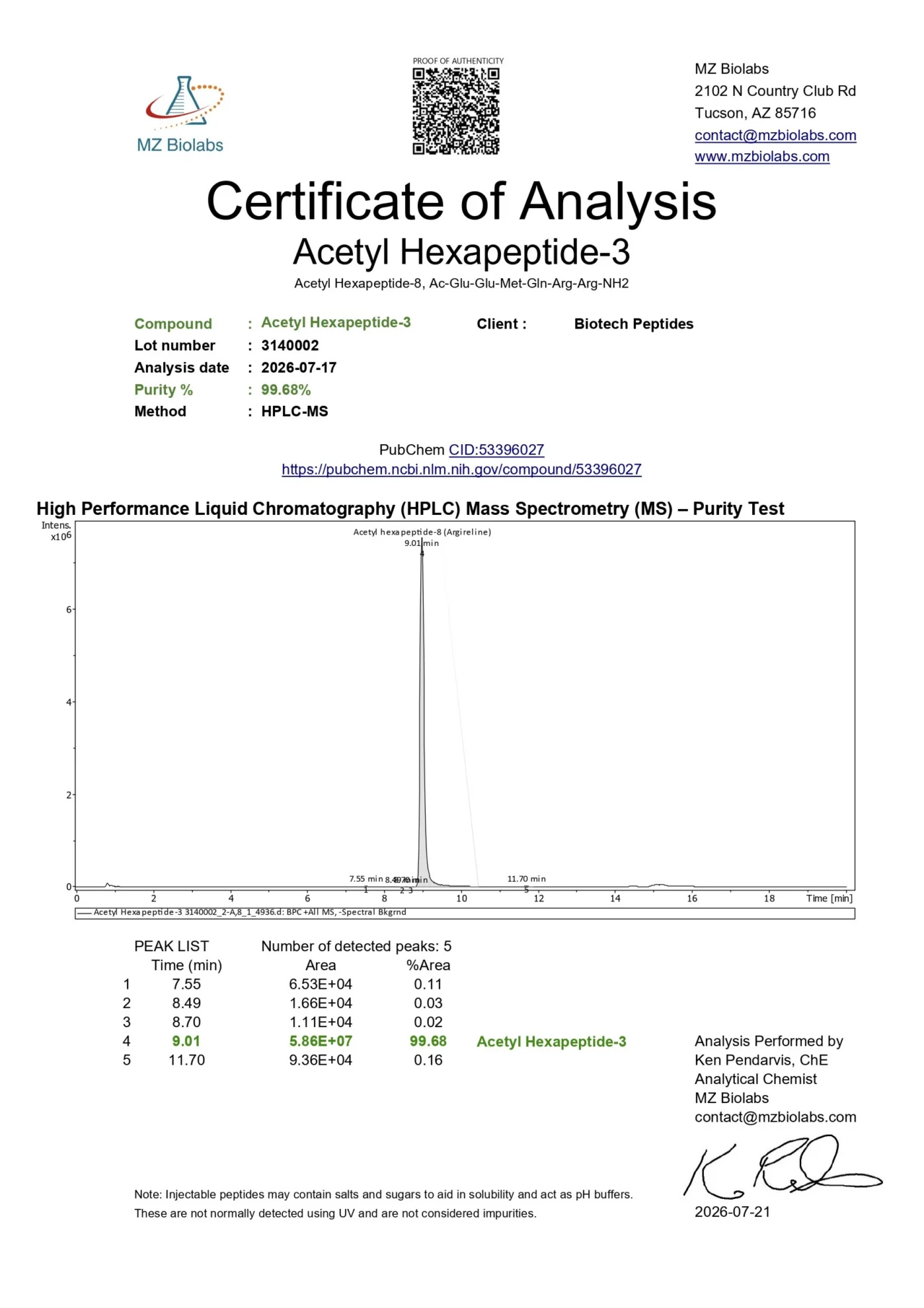
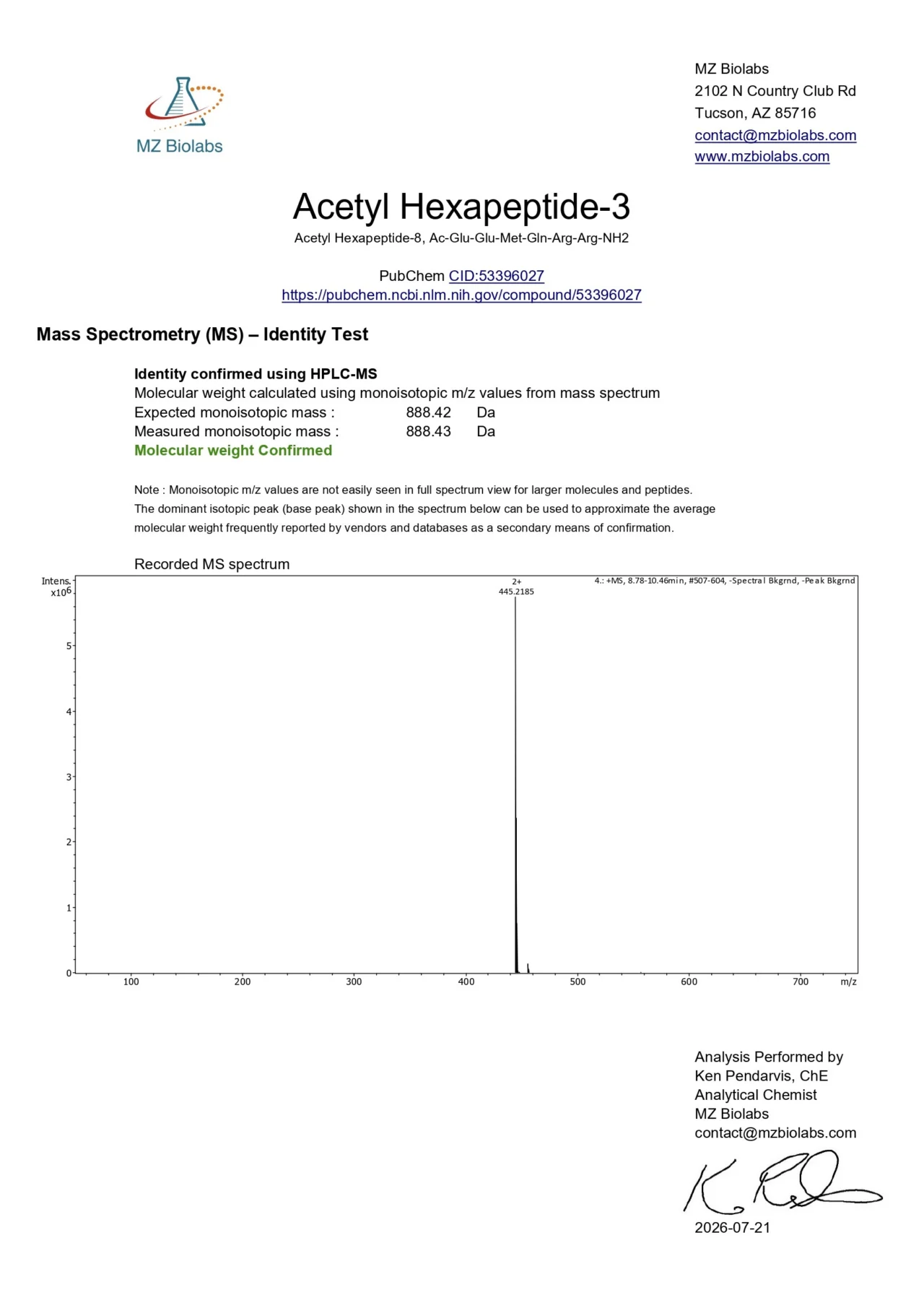
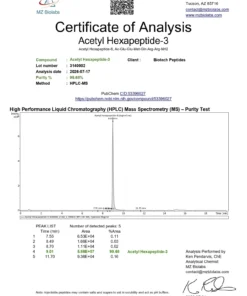
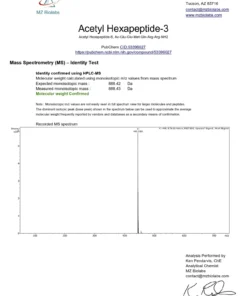
Researchers should verify peptide identity, molecular weight, purity, sequence, and other analytical characteristics against the applicable lot-specific certificate of analysis (CoA) and product documentation.
Acetyl Hexapeptide-3 and SNAP-25 Research
One of the principal areas of Acetyl Hexapeptide-3 research involves SNAP-25 and the SNARE complex. SNAP-25 is an important component of the molecular machinery involved in synaptic-vesicle fusion.
During vesicular signaling, SNARE proteins participate in bringing vesicle and plasma membranes into close proximity, allowing regulated exocytosis to occur. Because Acetyl Hexapeptide-3 resembles a portion of the SNAP-25 structure, researchers have investigated whether the peptide can interact with molecular events associated with SNARE-complex assembly.
This makes Acetyl Hexapeptide-3 useful as a research subject for studying peptide-protein interactions, vesicle fusion, exocytosis, neurotransmitter-release mechanisms, and cellular communication.
Acetyl Hexapeptide-3 and Neurotransmitter Research
Experimental research has examined the relationship between Acetyl Hexapeptide-3 and neurotransmitter-release pathways. The underlying research model focuses on molecular events associated with SNARE-complex formation and regulated exocytosis rather than direct effects on intact human tissues.
Investigating this pathway can help researchers better understand how short peptide sequences influence protein-complex formation and vesicle-release processes. These studies are particularly relevant to laboratories investigating neuronal signaling, synaptic biology, membrane trafficking, and protein-protein interactions.
Acetyl Hexapeptide-3 and Skin-Cell Research
Another important area of Argireline peptide research involves experimental skin models. Researchers have investigated Acetyl Hexapeptide-3 in connection with extracellular-matrix biology and cellular pathways associated with structural proteins such as collagen.
Laboratory research has explored whether the peptide can influence molecular pathways associated with repetitive cellular contraction, extracellular-matrix organization, and structural changes observed in experimental skin models. These investigations provide a framework for studying how short peptides may interact with cellular signaling pathways involved in tissue structure.
Research has also investigated Acetyl Hexapeptide-3 in combination with other compounds and peptide-associated ingredients to characterize changes in experimental models of skin structure. Results have varied between studies, highlighting the importance of controlled experimental conditions when evaluating peptide activity.
Acetyl Hexapeptide-3 and Skin Hydration Research
Acetyl Hexapeptide-3 has also been examined in laboratory models involving skin-barrier properties and water retention. Some experimental studies have investigated changes in transepidermal water loss (TEWL) following exposure to the peptide.
TEWL is commonly used as an experimental parameter when investigating skin-barrier function and hydration. Research involving Acetyl Hexapeptide-3 and TEWL can therefore provide useful information for laboratories studying peptide interactions with skin-cell models, barrier biology, and extracellular-matrix systems.
Acetyl Hexapeptide-3 and Muscle-Signaling Research
Because SNAP-25 and related SNARE proteins participate in regulated neurotransmitter release, Acetyl Hexapeptide-3 has also been examined in experimental models involving neuromuscular signaling.
Some research has investigated the peptide alongside neurotoxin-based experimental models to examine whether changes in neurotransmitter-release mechanisms influence the duration of experimentally observed muscle-activity responses. These studies provide a molecular framework for investigating synaptic communication and vesicular release rather than establishing any clinical or therapeutic application.
Results from these experiments should be interpreted within the specific conditions of each research model, particularly because observed effects can depend on peptide concentration, experimental system, associated compounds, and study design.
Acetyl Hexapeptide-3 and Palmitoyl Peptide Research
Researchers have also investigated structural modifications of Acetyl Hexapeptide-3, including the addition of palmitic acid to create Palmitoyl Hexapeptide-3. This modification changes the physicochemical characteristics of the peptide and has been studied separately in experimental models involving neuronal signaling and membrane-associated pathways.
Research into palmitoylated derivatives has included investigations of TRPV1-associated signaling and neuronal membrane processes. TRPV1 is a membrane-associated ion channel involved in sensory signaling and cellular responses to environmental stimuli.
These studies are useful for understanding how chemical modification of short peptide sequences can alter membrane interactions, peptide stability, cellular localization, and signaling behavior. Palmitoyl Hexapeptide-3 should be regarded as a distinct research molecule from the Acetyl Hexapeptide-3 material described on this page.
Why Researchers Study Acetyl Hexapeptide-3
- Study SNAP-25-associated molecular interactions.
- Investigate SNARE-complex assembly and vesicle fusion.
- Research neurotransmitter-release and exocytosis pathways.
- Examine peptide-protein interaction mechanisms.
- Study skin-cell and extracellular-matrix research models.
- Investigate collagen-associated cellular pathways.
- Study experimental skin-barrier and TEWL models.
- Explore neuromuscular signaling mechanisms in controlled laboratory systems.
- Compare structural modifications of short peptides and their molecular properties.
- Investigate TRPV1-associated pathways using related peptide derivatives.
Buy Acetyl Hexapeptide-3 (Argireline) Peptide 200mg for Research
Ready to buy Acetyl Hexapeptide-3 (Argireline) Peptide 200mg? Add this research peptide to your laboratory materials for controlled studies involving SNAP-25, SNARE-complex biology, neurotransmitter release, exocytosis, skin-cell signaling, extracellular-matrix pathways, and peptide structure-function relationships.
Order Acetyl Hexapeptide-3 (Argireline) Peptide 200mg today for your next laboratory, analytical, or in-vitro research project. The 200mg research quantity provides laboratory investigators with material for controlled scientific studies conducted according to appropriate research procedures.
Research Use Only (RUO) Disclaimer
FOR RESEARCH USE ONLY (RUO). Acetyl Hexapeptide-3 (Argireline) Peptide 200mg is supplied exclusively for laboratory research, in-vitro testing, analytical research, and scientific investigation. It is not intended for human consumption, veterinary use, diagnosis, disease management, or use as a food, dietary supplement, cosmetic, or approved drug. This material is intended for qualified laboratory personnel using appropriate safety procedures and following applicable institutional requirements and laws. Findings from cellular or animal research models should not be interpreted as established outcomes in humans. The purchaser is responsible for determining appropriate laboratory use, handling, storage, and regulatory compliance.
Frequently Asked Questions About Acetyl Hexapeptide-3 (Argireline)
What is Acetyl Hexapeptide-3?
Acetyl Hexapeptide-3 is a short synthetic peptide investigated in laboratory research involving SNAP-25, SNARE-complex biology, vesicle fusion, neurotransmitter-release pathways, and skin-cell research models.
What is Acetyl Hexapeptide-3 used for in research?
Acetyl Hexapeptide-3 is studied in experimental research involving peptide-protein interactions, SNARE-associated signaling, exocytosis, neurotransmitter release, skin-cell biology, extracellular-matrix pathways, and experimental skin-barrier models.
What is the sequence of Acetyl Hexapeptide-3?
The supplied sequence is Ac-Glu-Glu-Met-Gln-Arg-Arg-NH2.
What is the molecular weight of Acetyl Hexapeptide-3?
The supplied molecular weight is 888.99 g/mol. Researchers should confirm the molecular weight and other analytical specifications against the applicable lot-specific CoA.
Is Acetyl Hexapeptide-3 intended for human or cosmetic use?
No. This product is supplied strictly as Research Use Only (RUO) material for qualified laboratory research, in-vitro testing, analytical research, and scientific investigation. It is not intended for human, veterinary, or consumer cosmetic use.
Be the first to review “Acetyl Hexapeptide-3 Argireline Peptide 200mg | Research Peptide”
Related products
Biotech Peptides
Biotech Peptides
Biotech Peptides
Biotech Peptides
Biotech Peptides
Biotech Peptides
Biotech Peptides
Biotech Peptides
Reviews
There are no reviews yet.