
Buy MOTS-c Peptide 10mg for Laboratory Research
MOTS-c Peptide 10mg is a 16-amino-acid mitochondrial-derived peptide (MDP) investigated in laboratory research involving mitochondrial communication, cellular energy regulation, metabolic signaling, and stress-response pathways. Also known as mitochondrial open-reading-frame of the 12S rRNA-c, MOTS-c has attracted scientific interest because of its potential interactions with cellular pathways that connect mitochondrial activity with nuclear signaling.
For researchers looking to buy MOTS-c peptide 10mg, this research material is suitable for controlled laboratory investigations involving mitochondrial signaling, AMP-activated protein kinase (AMPK), metabolic flexibility, skeletal muscle cell biology, bone-cell signaling, endothelial research, and cellular stress responses. MOTS-c remains an active area of scientific investigation, and its molecular mechanisms continue to be characterized.
MOTS-c Peptide 10mg Research Overview
MOTS-c is classified as a mitochondrial-derived peptide and is associated with the MT-RNR1 region of mitochondrial DNA. Early research focused on its relationship with mitochondrial biology, while subsequent studies have investigated its ability to participate in signaling pathways beyond the mitochondria.
Research models have examined MOTS-c in connection with AMPK activation, the folate/methionine cycle, glucose and fatty-acid metabolism, skeletal muscle signaling, oxidative stress, cellular adaptation, and transcriptional regulation. These findings make MOTS-c a useful research subject for investigators studying communication between mitochondrial and nuclear pathways.
MOTS-c Peptide Specifications
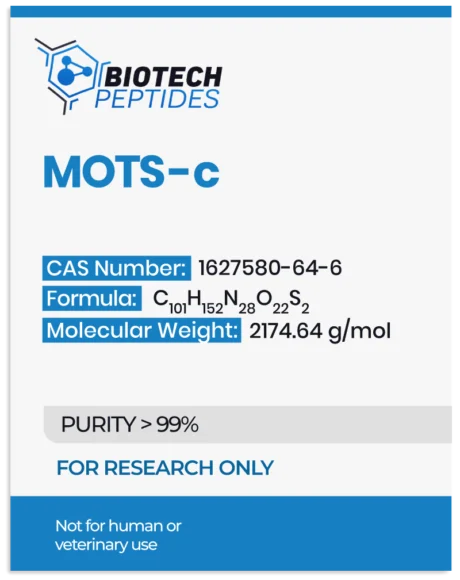
| Property | Specification |
|---|---|
| Product Name | MOTS-c Peptide 10mg |
| Peptide Classification | Mitochondrial-Derived Peptide (MDP) |
| Sequence | Met-Arg-Trp-Gln-Glu-Met-Gly-Tyr-Ile-Phe-Tyr-Pro-Arg-Lys-Leu-Arg |
| Molecular Formula | C101H152N28O22S2 |
| Molecular Weight | 2174.64 g/mol |
| Synonyms | 12S rRNA-c, MT-RNR1 |
| Research Classification | Research Use Only (RUO) |
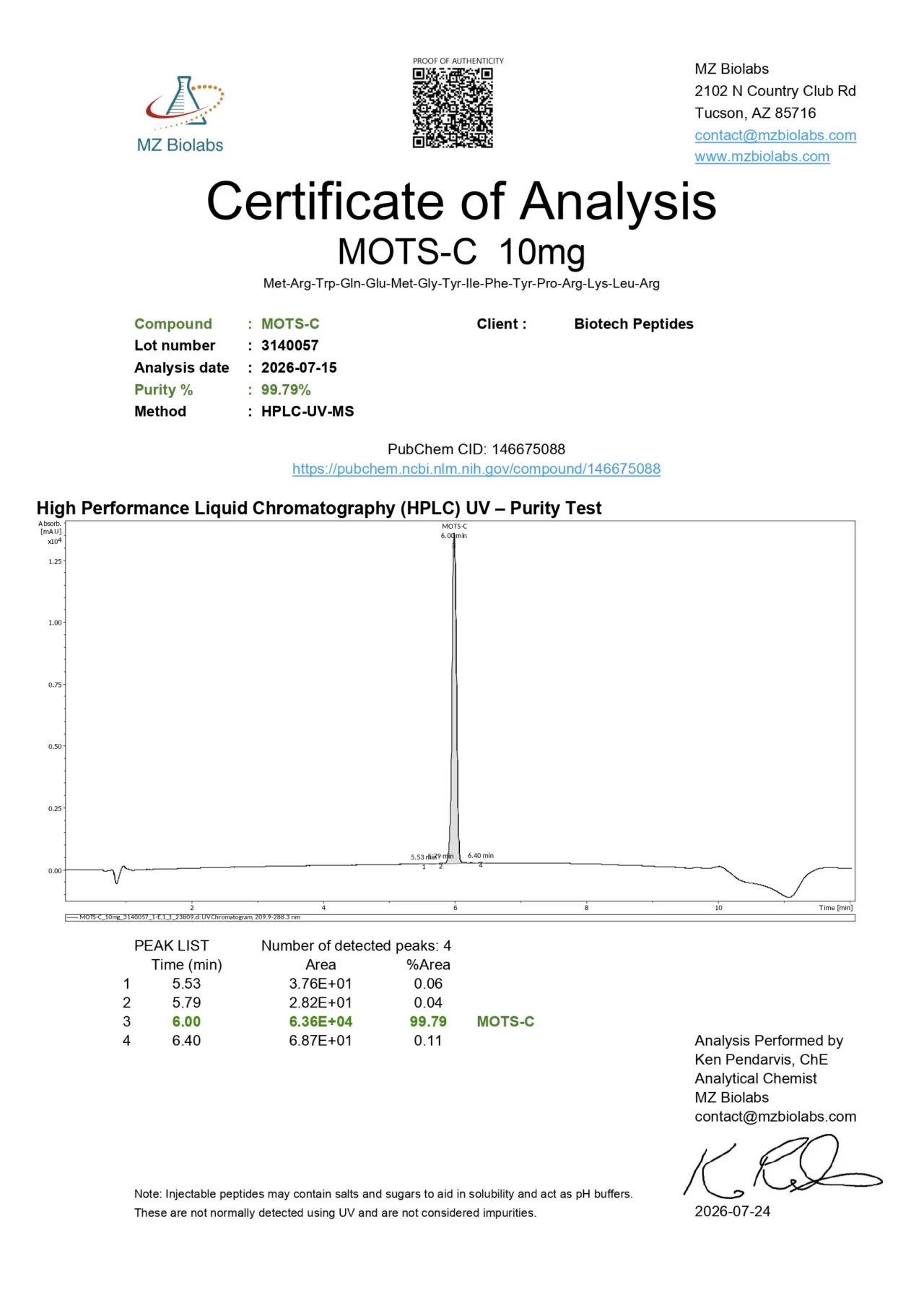
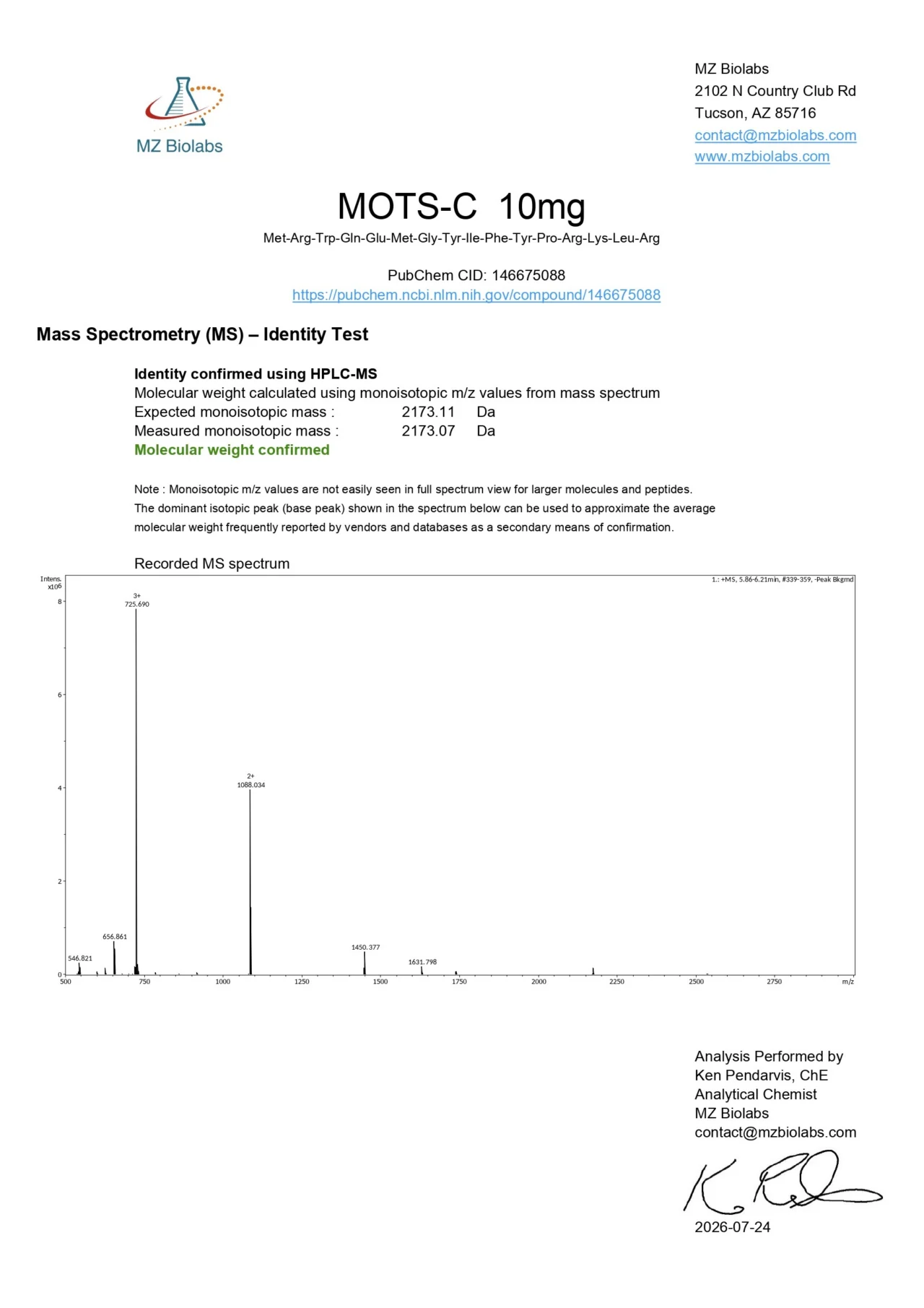
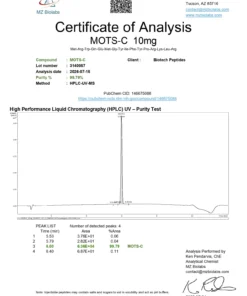
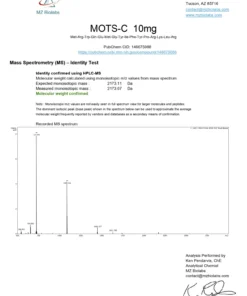
Researchers should verify product identity, purity, sequence, and lot-specific analytical information against the applicable certificate of analysis (CoA) and product documentation.
MOTS-c and AMPK Metabolic Signaling Research
One of the most studied areas of MOTS-c research involves AMP-activated protein kinase (AMPK), a major cellular energy-sensing pathway. Experimental studies have investigated whether MOTS-c can influence AMPK signaling through mechanisms associated with the folate/methionine cycle and de novo purine biosynthesis.
AMPK is involved in the regulation of cellular energy availability and coordinates processes related to glucose utilization, fatty-acid metabolism, and energy balance. Research involving MOTS-c therefore provides an opportunity to investigate how mitochondrial-derived signals may interact with established cellular energy-sensing mechanisms.
Laboratory models have also examined MOTS-c in relation to metabolic flexibility, mitochondrial communication, lipid metabolism, and cellular responses to altered nutrient availability. These investigations can help researchers characterize the molecular relationship between mitochondrial signaling and broader metabolic pathways.
MOTS-c and Skeletal Muscle Cell Research
MOTS-c peptide research has also focused on skeletal muscle because muscle tissue is highly dependent on coordinated mitochondrial and metabolic signaling. Experimental models have investigated the relationship between MOTS-c and AMPK-dependent pathways involved in glucose utilization and fatty-acid oxidation.
Research has explored whether MOTS-c-associated signaling can influence glucose transporter expression and cellular responses to metabolic stress. These investigations are relevant to laboratory studies of muscle-cell metabolism, mitochondrial communication, energy utilization, and cellular adaptation.
Additional research has examined MOTS-c in relation to transcriptional regulation, proteostasis, heat-shock responses, and HSF1-associated signaling. Together, these pathways provide a broader framework for investigating how mitochondrial-derived signals may influence cellular adaptation under controlled experimental conditions.
MOTS-c and Bone Cell Signaling Research
Another area of MOTS-c research involves osteoblast biology and extracellular-matrix signaling. Experimental studies have investigated MOTS-c in relation to type I collagen production and signaling pathways involved in osteoblast activity.
Particular attention has been given to the TGF-β/SMAD pathway, including signaling associated with TGF-β1, TGF-β2, and SMAD-related gene regulation. Research models have also examined markers such as COL1A1, COL1A2, ALP, Bglap, and Runx2 as part of investigations into osteogenic differentiation and bone-cell biology.
These findings make MOTS-c an interesting research material for laboratories studying osteoblast signaling, extracellular-matrix biology, stem-cell differentiation, and TGF-β/SMAD pathway regulation.
MOTS-c and Endothelial Cell Research
Experimental cardiovascular and endothelial research has investigated MOTS-c in connection with endothelial signaling, microvascular biology, cellular stress, and nitric-oxide-related pathways. Researchers have explored whether mitochondrial-derived peptides can influence how endothelial cells respond to external signaling molecules.
Potential relationships between MOTS-c, AMPK, endothelial nitric oxide synthase (eNOS), and inflammatory signaling provide several avenues for laboratory investigation. These pathways can be studied using controlled endothelial-cell and vascular research models without assuming a therapeutic outcome.
MOTS-c and Cellular Stress Research
MOTS-c has also been investigated as part of research into cellular adaptation and stress-response mechanisms. Studies have explored potential interactions between MOTS-c signaling, mitochondrial function, NAD+ metabolism, folate/methionine pathways, and transcriptional regulation.
The relationship between MOTS-c and cellular stress pathways may be particularly relevant to researchers studying mitochondrial biology, proteostasis, metabolic adaptation, and age-associated changes in cellular signaling. Research involving HSF1 and related stress-response mechanisms provides additional opportunities to investigate how cells respond to changes in metabolic conditions.
Why Researchers Study MOTS-c Peptide
- Study mitochondrial-derived peptide signaling and mitochondrial-to-nuclear communication.
- Investigate AMPK and cellular energy-sensing pathways.
- Research folate/methionine cycle and metabolic signaling.
- Examine skeletal muscle-cell metabolism and glucose-utilization pathways.
- Study TGF-β/SMAD signaling in osteoblast and bone-cell models.
- Investigate endothelial-cell and vascular signaling pathways.
- Explore HSF1, proteostasis, and cellular stress responses.
- Study mitochondrial signaling in controlled in-vitro research models.
Buy MOTS-c Peptide 10mg for Research
Ready to buy MOTS-c Peptide 10mg for your laboratory research? MOTS-c provides researchers with a defined mitochondrial-derived peptide for investigating AMPK signaling, mitochondrial communication, cellular metabolism, skeletal muscle biology, TGF-β/SMAD pathways, endothelial signaling, and cellular stress responses.
Order MOTS-c Peptide 10mg for your next laboratory, analytical, or in-vitro research project. Select the available 10mg research quantity and add MOTS-c to your laboratory research materials for controlled scientific investigation.
Research Use Only (RUO) Disclaimer
FOR RESEARCH USE ONLY (RUO). MOTS-c Peptide 10mg is supplied exclusively for laboratory research, in-vitro testing, analytical research, and scientific investigation. It is not intended for human consumption, veterinary use, diagnosis, disease management, or use as a food, dietary supplement, cosmetic, or approved drug. This material is intended for qualified laboratory personnel using appropriate safety procedures and following applicable institutional requirements and laws. Findings from cellular or animal research models should not be interpreted as established outcomes in humans. The purchaser is responsible for determining appropriate laboratory use, handling, storage, and regulatory compliance.
Frequently Asked Questions About MOTS-c Peptide 10mg
What is MOTS-c peptide?
MOTS-c is a 16-amino-acid mitochondrial-derived peptide associated with the MT-RNR1 region. It is studied for its potential role in mitochondrial communication, AMPK signaling, cellular metabolism, and stress-response pathways.
What is MOTS-c used for in research?
MOTS-c is investigated in laboratory research involving mitochondrial signaling, cellular energy regulation, AMPK pathways, skeletal muscle biology, metabolic signaling, endothelial-cell research, bone-cell signaling, and cellular stress responses.
What is the molecular weight of MOTS-c?
The supplied molecular weight for this MOTS-c research material is 2174.64 g/mol. Researchers should confirm lot-specific analytical information using the applicable product documentation and CoA.
What is the amino acid sequence of MOTS-c?
The supplied sequence is Met-Arg-Trp-Gln-Glu-Met-Gly-Tyr-Ile-Phe-Tyr-Pro-Arg-Lys-Leu-Arg.
Is MOTS-c intended for human use?
No. This product is supplied strictly as Research Use Only (RUO) material for qualified laboratory research, in-vitro testing, analytical work, and scientific investigation. It is not intended for human or veterinary use.
Be the first to review “MOTS-c Peptide 10mg for Laboratory Research”
Related products
Biotech Peptides
Biotech Peptides
Biotech Peptides
Biotech Peptides
Biotech Peptides
Biotech Peptides
Biotech Peptides
Biotech Peptides
Reviews
There are no reviews yet.