
Buy Triptorelin (GnRH) Peptide 2mg | Research Use Only
Triptorelin (GnRH) Peptide 2mg is a synthetic analog of gonadotropin-releasing hormone (GnRH) that has been extensively investigated in laboratory and animal-model research involving GnRH receptor signaling and the hypothalamic-pituitary-gonadal (HPG) axis. Also known as Decapeptyl, TRP(6)-LHRH, Trelstar, Triptoreline, and Gonapeptyl, Triptorelin has been studied for its effects on luteinizing hormone (LH), follicle-stimulating hormone (FSH), and downstream endocrine signaling.
Experimental research describes a biphasic response to GnRH analog exposure. Initial receptor stimulation may increase LH and FSH secretion, while sustained exposure may lead to GnRH receptor desensitization and subsequent suppression of LH and FSH signaling. This mechanism has been investigated extensively in experimental models involving hormone-dependent cellular systems.
The research information below is presented for scientific and laboratory purposes. Findings from animal models and experimental systems should not be interpreted as established human effects. Triptorelin Peptide 2mg is intended strictly for Research Use Only (RUO).
Triptorelin Peptide Specifications
| Specification | Details |
|---|---|
| Product Name | Triptorelin (GnRH) Peptide |
| Quantity | 2mg |
| Other Known Titles | Decapeptyl, TRP(6)-LHRH, Trelstar, Triptoreline, Gonapeptyl |
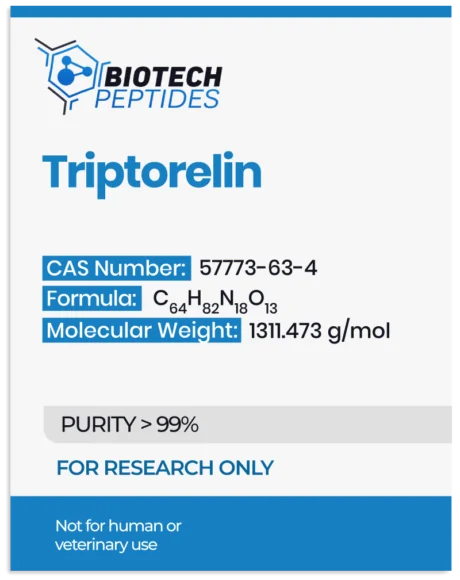
| Molecular Formula | C64H82N18O13 |
| Molecular Weight | 1311.473 g/mol |
| Sequence | Pyr-His-Trp-Ser-Tyr-D-Trp-Leu-Arg-Pro-Gly |
| Research Classification | Research Use Only (RUO) |
What Is Triptorelin Peptide?
Triptorelin is described as a synthetic analog of GnRH. GnRH is involved in signaling between the hypothalamus and anterior pituitary, where pulsatile signaling can influence the release of LH and FSH.
Experimental research has investigated how the pattern and duration of GnRH receptor stimulation influence downstream signaling. Under certain experimental conditions, initial exposure to Triptorelin may stimulate GnRH receptors and increase LH and FSH secretion. Sustained exposure, however, has been investigated for its ability to desensitize GnRH receptors and suppress subsequent LH and FSH signaling.
This distinctive response makes Triptorelin a research compound of interest for studying receptor activation, receptor desensitization, endocrine signaling, and HPG-axis regulation.
Triptorelin and GnRH Receptor Research
GnRH receptor signaling is strongly influenced by the timing and pattern of receptor stimulation. Research involving Triptorelin has examined how exposure conditions can affect the release of LH and FSH from the anterior pituitary.
Under pulsatile conditions, GnRH signaling can stimulate pituitary gonadotropin release. The supplied research describes Triptorelin as capable of producing an initial stimulatory response followed by suppression when exposure becomes sustained.
This experimental property has made Triptorelin useful for investigating the relationship between GnRH receptor activation, receptor desensitization, LH and FSH signaling, and downstream endocrine pathways.
Triptorelin and Testosterone Research
Testosterone-related research involving Triptorelin has examined both the initial stimulatory response and the subsequent suppressive response associated with prolonged GnRH receptor exposure.
Animal-model research described in the supplied material has reported that testosterone may increase during the early period following Triptorelin exposure. Researchers have therefore investigated the peptide in experimental models where the HPG axis has been disrupted.
One experimental model described in the source involved artificially induced hypogonadotropic hypogonadism. Following a single experimental exposure to Triptorelin, researchers measured testosterone, LH, and FSH over time. The supplied material reports increased testosterone within ten days and a return toward the model’s normal range within approximately one month.
These findings have been interpreted within the experimental model as evidence that GnRH signaling may influence recovery of HPG-axis activity under specific research conditions. The findings should remain limited to the experimental model in which they were observed.
Triptorelin and Hormonal Signaling Research
One of the central research characteristics of Triptorelin is the difference between short-term and sustained GnRH receptor exposure. Initial stimulation can produce increased LH and FSH secretion, while continuous receptor stimulation has been investigated for its ability to suppress gonadotropin signaling.
Because LH and FSH participate in downstream endocrine signaling, changes in their secretion can subsequently influence sex-hormone production in experimental systems. Researchers have therefore used Triptorelin to investigate mechanisms associated with hormone suppression and receptor desensitization.
The supplied research notes that some experimental suppressive effects have been reported to be reversible. The exact response depends on experimental exposure conditions, receptor dynamics, and the biological model being studied.
Triptorelin and Breast Cancer Research
Triptorelin has been investigated in research involving hormone-sensitive breast cancer models. One area of investigation concerns ovarian-function suppression and its relationship with estrogen-sensitive cellular systems.
The supplied material describes research comparing Triptorelin-associated ovarian suppression with selective estrogen receptor modulator (SERM) approaches in early breast cancer research. Experimental studies have examined whether combining GnRH-axis suppression with other hormone-related research strategies can influence disease-related outcomes.
These studies provide a research framework for examining interactions between GnRH signaling, ovarian hormone production, estrogen-sensitive cellular pathways, and cancer biology. The findings described in the source are research-model observations and should not be interpreted as a treatment recommendation.
Triptorelin and Prostate Cancer Research
Prostate cancer research is another major area in which Triptorelin has been investigated. Because prostate cancer cells can be influenced by androgen signaling, researchers have examined GnRH analogs as experimental tools for studying androgen-dependent pathways.
The supplied material describes studies investigating Triptorelin in hormone-sensitive prostate cancer models and research involving combinations of Triptorelin and radiation. These studies have examined the relationship between androgen suppression, tumor-associated signaling, and disease progression.
Research has also investigated urinary and lower-urinary-tract symptoms in experimental prostate cancer populations. These findings are part of the broader investigation into how GnRH receptor modulation can influence androgen-dependent biological systems.
Triptorelin and Endometriosis Research
Experimental research has also examined Triptorelin in models of endometriosis. These studies have investigated the relationship between GnRH signaling, reproductive hormone pathways, and endometrial tissue models.
The supplied material describes animal research examining changes in endometriosis-associated tissue and experimental outcomes following Triptorelin exposure. Additional research has investigated Triptorelin in the context of laparoscopic surgery models and reproductive outcomes.
These studies provide researchers with an experimental framework for examining how modulation of the HPG axis may affect endometrial tissue and reproductive biology.
Triptorelin and Immune Function Research
GnRH signaling has also been investigated in relation to the thymus and immune-system biology. Research described in the supplied material examined changes in GnRH-binding sites in the thymus during aging in murine models.
The study described a reduction in GnRH-binding sites together with changes in thymic weight and tissue architecture in older experimental animals. Researchers subsequently investigated whether chronic exposure to GnRH analogs such as Triptorelin could influence these age-associated changes.
The supplied material reports experimental observations involving thymic structure, cortical organization, lymphocyte density, and thymocyte responses to the mitogen Concanavalin-A. These findings have been used to investigate possible relationships between GnRH signaling, thymic biology, and age-associated changes in immune-system tissues.
Because these observations originate from animal research, additional studies are necessary to determine the relevance of these mechanisms across different biological systems.
Triptorelin Research Applications
- GnRH receptor signaling research
- HPG-axis regulation studies
- LH and FSH signaling research
- GnRH receptor desensitization studies
- Endocrine signaling research
- Androgen-related cellular research
- Estrogen-related cellular research
- Hormone-sensitive cancer research models
- Prostate cancer research models
- Breast cancer research models
- Endometriosis research
- Thymus and immune-system research
- Reproductive biology studies
Triptorelin Molecular Profile
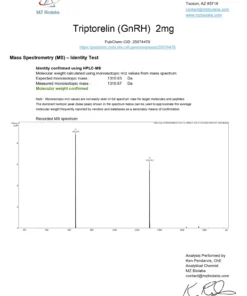
The supplied specification identifies Triptorelin as a synthetic peptide with the sequence Pyr-His-Trp-Ser-Tyr-D-Trp-Leu-Arg-Pro-Gly. Its reported molecular formula is C64H82N18O13, with a molecular weight of 1311.473 g/mol.
These characteristics can be used in analytical and biochemical research involving GnRH analogs, receptor-binding studies, endocrine signaling models, and comparative peptide research.
Why Use Triptorelin 2mg for Laboratory Research?
Triptorelin provides researchers with a defined GnRH analog for investigating receptor stimulation, receptor desensitization, gonadotropin signaling, and downstream endocrine pathways. Its distinctive response to different exposure patterns makes it particularly relevant to controlled studies examining sustained versus transient GnRH receptor activation.
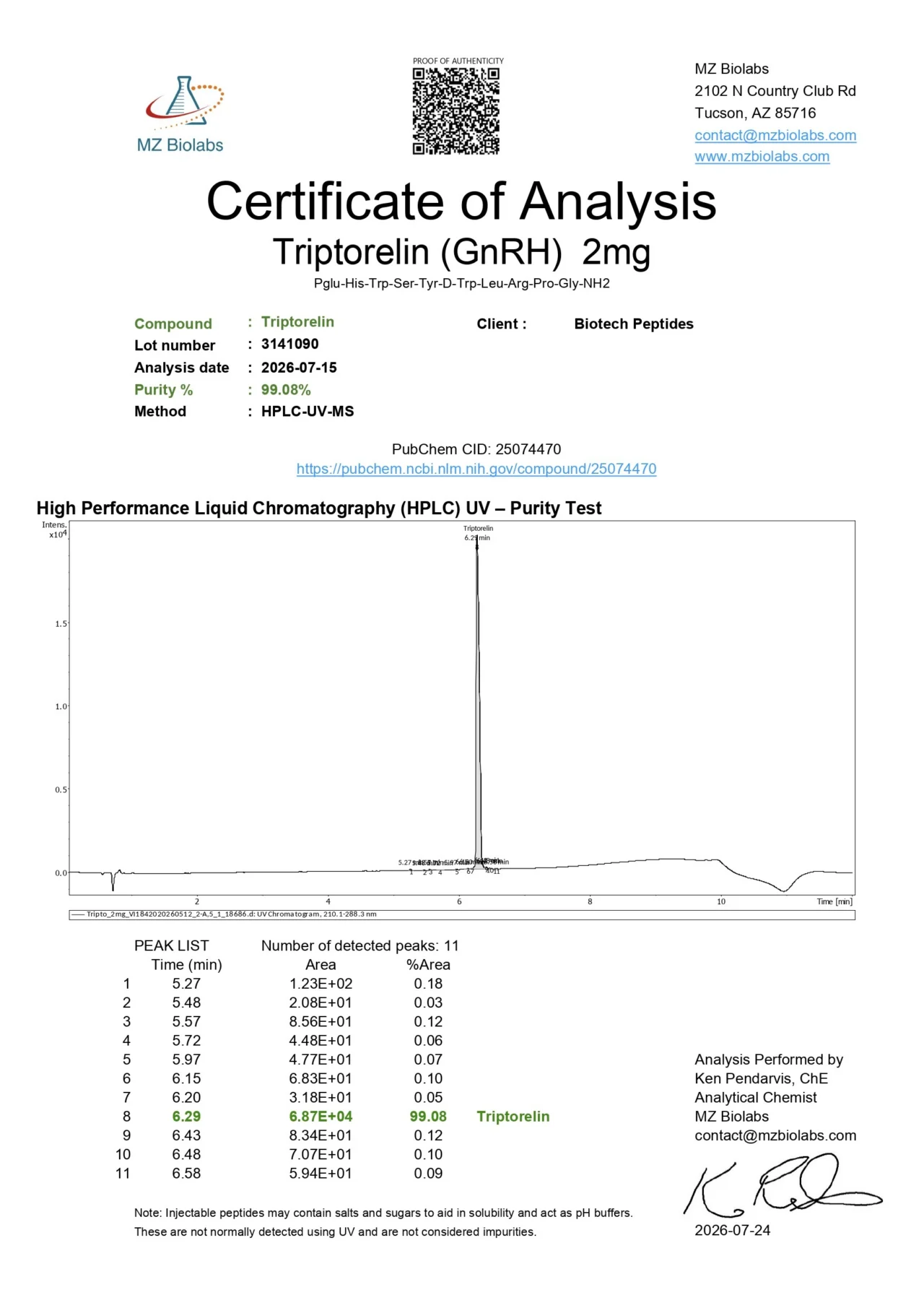
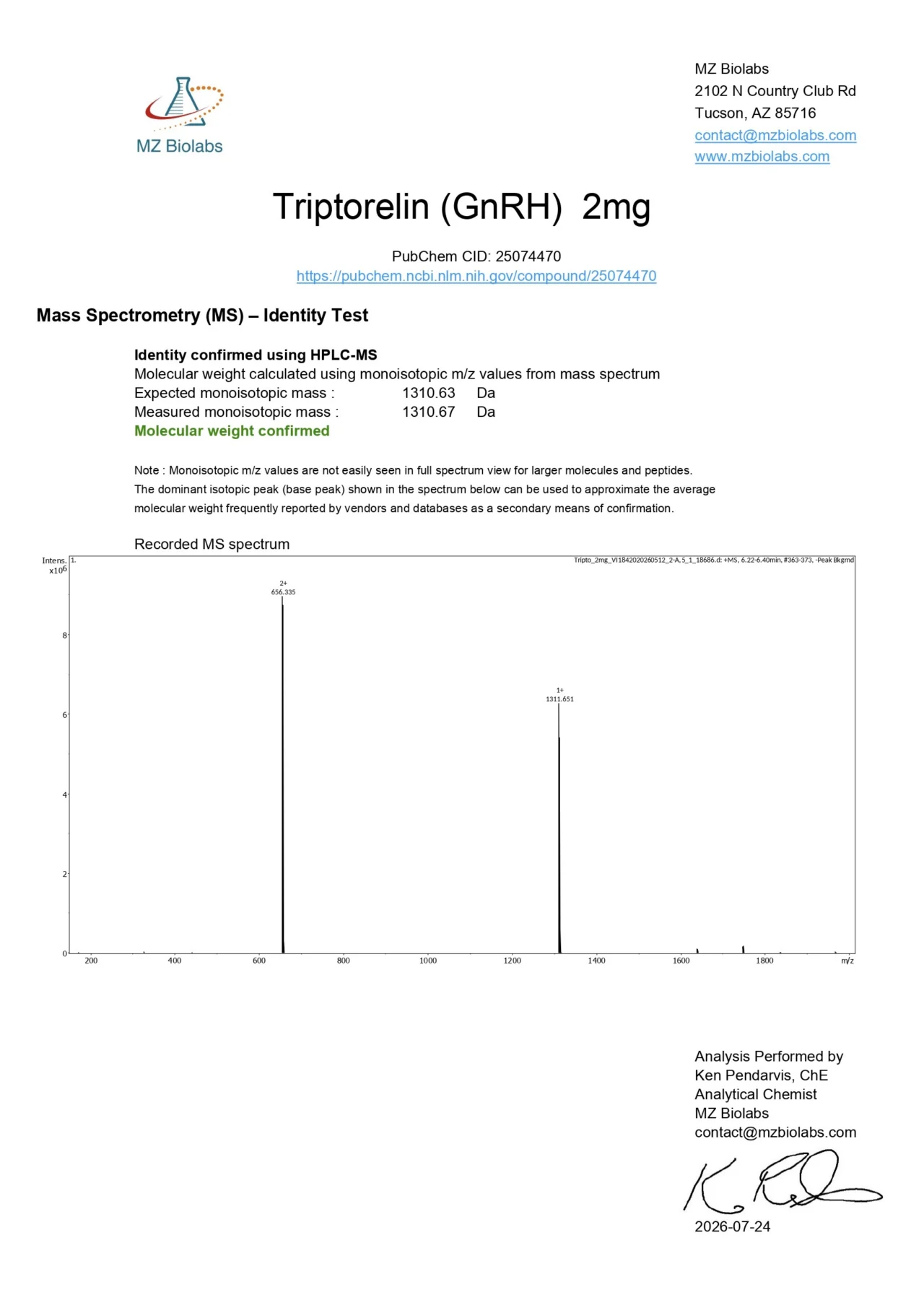
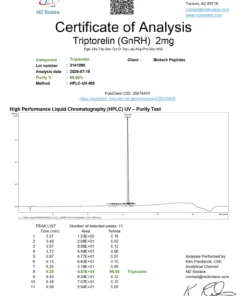
Researchers should rely on applicable batch-specific documentation and analytical records when characterizing the material. Where additional analytical information is required, consult the relevant product documentation or Certificate of Analysis.
Triptorelin Peptide FAQ
What is Triptorelin peptide?
Triptorelin is a synthetic analog of gonadotropin-releasing hormone (GnRH). It has been investigated extensively in experimental research involving GnRH receptors, LH and FSH signaling, HPG-axis regulation, and hormone-dependent cellular models.
What is the sequence of Triptorelin?
The supplied sequence is Pyr-His-Trp-Ser-Tyr-D-Trp-Leu-Arg-Pro-Gly.
What is the molecular weight of Triptorelin?
The supplied molecular weight is 1311.473 g/mol, with the molecular formula C64H82N18O13.
What is Triptorelin researched for?
Triptorelin has been investigated in research involving GnRH receptor signaling, LH and FSH regulation, HPG-axis activity, androgen and estrogen signaling, hormone-sensitive cancer models, endometriosis models, and thymic and immune-system research.
What are the other names for Triptorelin?
The supplied material lists Decapeptyl, TRP(6)-LHRH, Trelstar, Triptoreline, and Gonapeptyl as other known titles.
Is Triptorelin intended for human use?
No. Triptorelin (GnRH) Peptide 2mg is designated Research Use Only (RUO). It is not intended for human or veterinary use, consumption, diagnosis, treatment, prevention, or administration.
Research Use Only Disclaimer
Triptorelin (GnRH) Peptide 2mg is intended strictly for research and laboratory use only. This product is not intended for human or veterinary use, consumption, diagnosis, treatment, prevention, or mitigation of any disease or medical condition. It is not a dietary supplement, pharmaceutical product, or therapeutic product.
The information presented on this page is provided for scientific and educational purposes. Research findings described for Triptorelin are based on experimental and animal-model research and should not be interpreted as established clinical effects, safety, or efficacy. Researchers are responsible for the handling, testing, storage, and use of this material in accordance with applicable laboratory procedures, institutional requirements, and local regulations.
Be the first to review “Triptorelin (GnRH) Peptide 2mg | Research Use Only”
Related products
Biotech Peptides
Biotech Peptides
Biotech Peptides
Biotech Peptides
Biotech Peptides
Biotech Peptides
Biotech Peptides
Biotech Peptides
Reviews
There are no reviews yet.