
Buy TRH Thyrotropin (Protirelin) Peptide 25mg
TRH Thyrotropin (Protirelin) Peptide 25mg is a synthetic tripeptide used in laboratory research involving thyrotropin-releasing hormone (TRH) receptor signaling, neuroendocrine biology, pituitary-cell models, neurotransmitter regulation, and hypothalamic research. Also known as Protirelin and Thyroliberin, TRH is a small peptide consisting of three amino acids and is studied for its interactions with TRH receptor systems and downstream cellular signaling pathways.
Researchers investigating TRH Thyrotropin (Protirelin) peptide can use this material as a research tool for examining endocrine signaling, central nervous system pathways, cellular communication, and neuroendocrine regulation in appropriate laboratory models.
This 25mg research peptide is supplied for Research Use Only (RUO) and is intended for qualified laboratory research, in-vitro investigations, analytical studies, and scientific experimentation.
TRH Thyrotropin (Protirelin) Peptide Research
TRH is a hypothalamic tripeptide that has been extensively investigated as a signaling molecule connecting hypothalamic and pituitary systems. Laboratory research has examined TRH receptor activity in multiple cellular and neurological contexts, making TRH Thyrotropin (Protirelin) 25mg relevant to studies of receptor signaling, intracellular pathways, endocrine-cell communication, and neurobiology.
TRH-related research commonly examines two major receptor systems, generally described as TRH receptor 1 (TRH-R1) and TRH receptor 2 (TRH-R2). These receptors belong to the G-protein-coupled receptor family and can activate intracellular signaling pathways involving second messengers such as phospholipase C, inositol trisphosphate, and diacylglycerol.
TRH and Pituitary-Cell Signaling
One important area of laboratory research involving TRH is the interaction between hypothalamic signaling and anterior pituitary cells. Experimental models have investigated how TRH receptor activation influences pituitary-cell signaling associated with thyroid-stimulating hormone and prolactin secretion.
For researchers studying pituitary hormone signaling, TRH provides a useful molecular tool for examining communication between hypothalamic signals and endocrine-cell systems.
Research applications can include:
- TRH receptor activation studies
- Pituitary-cell signaling models
- Hypothalamic-pituitary communication
- Endocrine feedback research
- GPCR-mediated intracellular signaling
- Neuroendocrine pathway investigations
TRH and Neurobiology Research
TRH Thyrotropin (Protirelin) has also been studied extensively in neuroscience research. Experimental work has examined TRH signaling in the hippocampus, hypothalamus, cerebellum, and other regions of the central nervous system.
Studies involving hippocampal tissue models have investigated whether TRH can influence the release of excitatory neurotransmitters, including glutamate and aspartate, under experimentally induced depolarization conditions.
These findings make TRH relevant to research examining neurotransmitter regulation, calcium-dependent signaling, synaptic communication, and neuronal receptor activity.
TRH Receptor and GPCR Signaling
TRH receptors are members of the GPCR superfamily. Activation of these receptors can initiate intracellular signaling cascades that researchers can investigate using cellular and biochemical laboratory models.
TRH Thyrotropin (Protirelin) can therefore serve as a research tool for examining:
- GPCR activation
- Phospholipase C signaling
- Inositol trisphosphate pathways
- Diacylglycerol signaling
- Intracellular calcium dynamics
- Receptor-mediated cellular responses
- Neuroendocrine signal transduction
These pathways make TRH research peptide useful for studies focused on the relationship between extracellular peptide signaling and intracellular biochemical responses.
TRH Thyrotropin (Protirelin) and Neurotransmitter Research
Experimental studies using isolated hippocampal tissue have examined TRH-associated changes in potassium-induced neurotransmitter release. Research has investigated glutamate and aspartate release under controlled laboratory conditions, including experiments designed to distinguish basal neurotransmitter activity from stimulated release.
Such models provide opportunities to investigate the relationship between TRH receptor signaling, synaptic mechanisms, calcium-dependent processes, and excitatory neurotransmitter regulation.
The observed experimental effects should be interpreted within the specific conditions of the research model and should not be generalized to human physiological outcomes.
TRH and Motor-Learning Research
TRH signaling has also been investigated in animal models involving cerebellar and motor-learning pathways. Experimental research has examined TRH-related activity in models where researchers evaluate motor-task acquisition and cerebellar signaling.
These studies provide a basis for further investigation into the relationship between TRH signaling, neuronal circuits, synaptic plasticity, and motor-learning mechanisms.
For laboratory researchers, these models may be relevant when investigating:
- Cerebellar signaling
- Motor-learning pathways
- Neuronal plasticity
- TRH receptor distribution
- Neuroendocrine regulation
- Central nervous system peptide signaling
TRH and Cellular Stress Research
Additional experimental work has explored TRH signaling in models involving oxidative stress, cellular aging, and tissue-specific biochemical changes. These investigations remain areas of experimental research and may involve multiple pathways rather than a single established mechanism.
TRH can therefore be studied in controlled laboratory systems examining relationships between peptide signaling and:
- Oxidative-stress pathways
- Cellular signaling
- Protein accumulation
- Neuronal function
- Tissue-specific receptor activity
- Cellular response mechanisms
Researchers should evaluate individual findings according to the experimental model, concentration, tissue system, and study conditions used.
TRH and Cardiovascular Signaling Research
Preclinical research has also investigated TRH-related signaling within specific hypothalamic regions involved in autonomic regulation. Experimental studies have examined changes in cardiovascular parameters following localized exposure to TRH in animal models.
These investigations are useful for researchers studying the relationship between hypothalamic peptide signaling and autonomic neural pathways. Observed responses can vary substantially depending on the brain region and experimental conditions.
This makes TRH particularly relevant to laboratory studies involving:
- Hypothalamic signaling
- Autonomic nervous system research
- Cardiovascular neurobiology
- Neural control of physiological signaling
- Region-specific peptide activity
TRH Thyrotropin (Protirelin) Specifications
| Specification | Details |
|---|---|
| Product Name | TRH Thyrotropin (Protirelin) Peptide |
| Research Quantity | 25mg |
| Synonyms | Protirelin, Thyroliberin, Lopremone, Relefact |
| Peptide Type | Synthetic tripeptide |
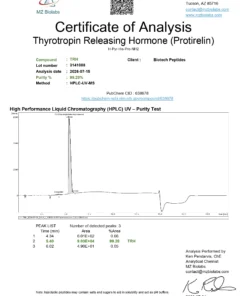
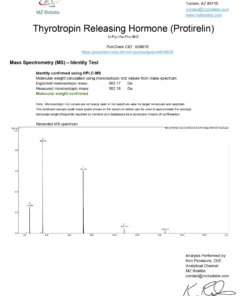
| Sequence | Pyr-His-Pro |
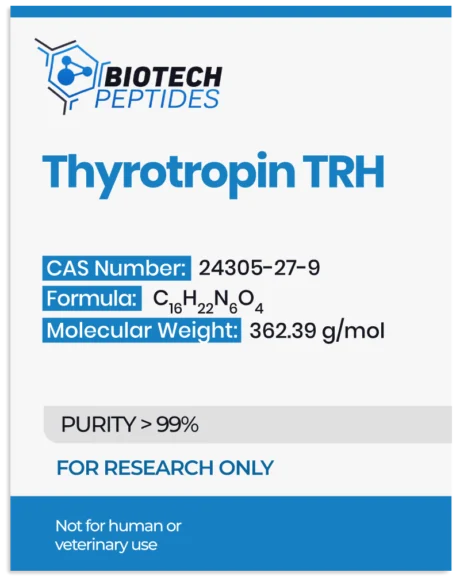
| Molecular Formula | C16H22N6O4 |
| Molecular Weight | 362.39 g/mol |
| Research Classification | Research Use Only (RUO) |
| Primary Research Areas | TRH receptor signaling, neuroendocrine biology, pituitary-cell research, neuroscience |
Why Buy TRH Thyrotropin (Protirelin) Peptide 25mg?
Researchers looking to buy TRH Thyrotropin (Protirelin) peptide 25mg can use this research material for controlled laboratory investigations involving TRH signaling and related biological pathways.
Potential research applications include:
- TRH receptor research
- Pituitary-cell signaling studies
- Neuroendocrine research
- GPCR signaling investigations
- Neurotransmitter-release studies
- Hypothalamic research
- Cerebellar and motor-learning models
- Cellular signaling and oxidative-stress research
- Autonomic neurobiology studies
- In-vitro peptide-receptor experiments
TRH research should always be performed under appropriate laboratory conditions using validated experimental protocols and suitable analytical controls.
Frequently Asked Questions
What is TRH Thyrotropin (Protirelin) Peptide?
TRH Thyrotropin (Protirelin) is a synthetic tripeptide with the sequence Pyr-His-Pro. It is studied in laboratory research involving TRH receptor signaling, neuroendocrine pathways, pituitary-cell models, and neuroscience.
What is the molecular weight of TRH Protirelin?
TRH Thyrotropin (Protirelin) has a reported molecular weight of 362.39 g/mol and the molecular formula C16H22N6O4.
What is the sequence of TRH Protirelin?
The supplied sequence is Pyr-His-Pro, representing the three-amino-acid structure of TRH.
What research is TRH Protirelin used for?
TRH Protirelin can be investigated in laboratory models involving TRH receptors, pituitary-cell signaling, neuroendocrine communication, neurotransmitter regulation, hypothalamic biology, GPCR signaling, and related cellular pathways.
Is TRH Thyrotropin (Protirelin) for human use?
No. This product is supplied strictly for Research Use Only (RUO). It is not intended for human consumption, self-administration, diagnosis, or treatment of any medical condition.
Research Use Only Disclaimer
Be the first to review “TRH Thyrotropin (Protirelin) Peptide 25mg”
Related products
Biotech Peptides
Biotech Peptides
Biotech Peptides
Biotech Peptides
Biotech Peptides
Biotech Peptides
Biotech Peptides
Biotech Peptides
Reviews
There are no reviews yet.