
Buy SNAP-8 Peptide 100mg & 200mg | Research Use Only
Buy SNAP-8 Peptide, also known as Acetyl Glutamyl Heptapeptide-3, is a synthetic octapeptide investigated in laboratory research involving cellular signaling, neurotransmitter release, muscle contraction pathways, skin-cell biology, wrinkle-related models, hydration, and oxidative stress. SNAP-8 contains eight amino acids and has structural similarities to peptide fragments associated with SNAP-25 research.
The supplied research material describes SNAP-8 as a modified peptide with an acetylated N-terminus and an amidated C-terminus. Its sequence is Ac-Glu-Glu-Met-Gln-Arg-Arg-Ala-Asp-NH2. Research has examined its potential interaction with proteins involved in vesicle fusion and neurotransmitter release, including Synaptotagmin 1 (Syt1) and components of the SNARE complex.
This product is available in 100mg and 200mg quantities and is supplied strictly for Research Use Only (RUO). It is intended for qualified laboratory researchers conducting controlled in-vitro, cellular, biochemical, and related scientific studies.
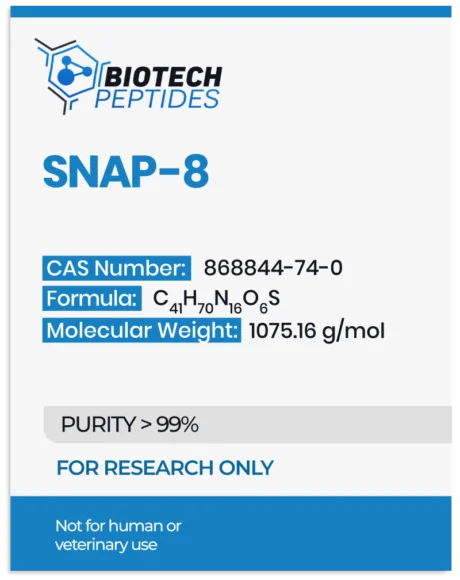
SNAP-8 Peptide Specifications
| Specification | Details |
|---|---|
| Product Name | SNAP-8 Peptide |
| Available Quantities | 100mg & 200mg |
| Other Known Title | Acetyl Glutamyl Heptapeptide-3 |
| Peptide Type | Synthetic octapeptide |
| Molecular Formula | C41H70N16O6S |
| Molecular Weight | 1075.16 g/mol |
| Sequence | Ac-Glu-Glu-Met-Gln-Arg-Arg-Ala-Asp-NH2 |
| Research Classification | Research Use Only (RUO) |
What Is SNAP-8 Peptide?
SNAP-8 is a synthetic eight-amino-acid peptide that has been investigated as a research compound structurally related to peptide fragments associated with SNAP-25. The supplied material describes SNAP-8 as being designed to mimic certain functionalities associated with the larger SNAP-25 protein.
The peptide contains an acetylated N-terminal group and an amidated C-terminal group. Researchers have investigated this structure in connection with molecular interactions involved in vesicle fusion, neurotransmitter release, and cellular signaling.
SNAP-8 is also structurally related to acetyl hexapeptide-3, with two additional amino acids incorporated into the peptide chain. This structural relationship has made SNAP-8 an area of interest in comparative peptide and cellular-aging research.
SNAP-8 and Cellular Signaling Research
One area of SNAP-8 research concerns its proposed interaction with proteins involved in neurotransmitter release. The supplied research material describes potential competitive binding between SNAP-8 and vesicle-associated proteins such as Synaptotagmin 1 (Syt1).
Syt1 is described in the research material as an important calcium-sensing protein involved in neurotransmission. Researchers have examined the possibility that SNAP-8 may interact with the C2A-C2B interface of Syt1, which is associated with calcium binding and membrane fusion.
The proposed interaction may influence the assembly or stability of the SNARE complex. SNARE proteins are involved in the fusion of intracellular vesicles with cell membranes and therefore have an important role in neurotransmitter release research.
The supplied theoretical models propose that interference with these interactions could influence neurotransmitter release, including acetylcholine-related signaling, and consequently alter experimental models involving muscle contraction.
SNAP-8 and Muscle Contraction Research
Research involving SNAP-8 has examined molecular mechanisms associated with muscle contraction and neurotransmitter release. The supplied material proposes that SNAP-8 may influence the formation or stability of the SNARE complex, potentially affecting neurotransmitter release at the cellular level.
Because neurotransmitter release is involved in signaling between neurons and muscle cells, researchers have investigated whether modulation of these pathways can produce measurable changes in experimental muscle-contraction models.
These studies provide a basis for investigating SNAP-8 as a molecular research tool for studying vesicle fusion, SNARE-complex interactions, neurotransmitter release, and associated cellular signaling.
SNAP-8 Research and Wrinkle Models
Experimental research described in the supplied material has examined SNAP-8 in relation to wrinkle depth and skin-surface topography. The proposed mechanism involves modulation of signaling pathways associated with muscle contraction.
The research material reports that SNAP-8 was associated with an apparent reduction in glutamate release of up to approximately 43% in the described experimental context. It also reports a maximum observed wrinkle-depth reduction of approximately 62%, with an average reduction of approximately 35% in the referenced research setting.
These values represent observations from the supplied research material and should be understood within the specific experimental conditions in which they were reported. They should not be interpreted as established clinical outcomes.
The source material also describes an experiment involving SNAP-8 and Leuphasyl. It reports independent inhibition values of approximately 38% and 7%, respectively, and a combined inhibition value of 47% when both were tested at equal concentrations in the described experimental model.
SNAP-8 and SNAP-25 Research
SNAP-8 research is closely associated with SNAP-25, a larger protein involved in neurotransmitter release. The supplied material describes SNAP-8 as a peptide designed to mimic certain functional characteristics of SNAP-25-related sequences.
Researchers have investigated whether SNAP-8 can interfere with molecular interactions required for efficient SNARE-complex formation. This provides an experimental framework for studying how short synthetic peptides can affect protein-protein interactions involved in vesicle fusion.
The distinction between SNAP-8 and SNAP-25 is important: SNAP-8 is a synthetic short peptide, whereas SNAP-25 is a larger cellular protein. SNAP-8 research therefore focuses on the peptide’s proposed molecular interactions rather than treating the two molecules as identical compounds.
SNAP-8 and Botulinum Toxin Research
The supplied research material discusses SNAP-8 alongside botulinum toxin because both have been investigated in connection with molecular pathways involved in muscle contraction. However, the described mechanisms are different.
According to the supplied material, botulinum toxin research involves cleavage of SNAP-25, while SNAP-8 has been investigated for its potential to interfere with molecular interactions associated with the SNARE complex.
This comparison is useful in laboratory research because it provides researchers with different molecular approaches for investigating neurotransmitter release and muscle-contraction signaling. The mechanisms should not be considered equivalent simply because they involve related molecular pathways.
SNAP-8 Hydration and Oxidative Stress Research
The supplied material also describes research interest in the water-binding characteristics of SNAP-8. Peptides investigated in extracellular and skin-cell models may be studied for their interaction with the surrounding extracellular environment and moisture-associated properties.
SNAP-8 has additionally been investigated in relation to reactive oxygen species (ROS). ROS and oxidative stress are important subjects in cellular research because excessive reactive species can influence cellular structures and signaling pathways.
Research involving SNAP-8 therefore includes experimental investigation of both hydration-associated properties and oxidative-stress-related cellular responses.
SNAP-8 Lyophilization and Storage Information
The supplied material states that SNAP-8 manufacturing includes a final lyophilization, or freeze-drying, step. The resulting crystalline material may exhibit polymorphic characteristics, aggregation, and variation in crystal size without necessarily indicating a difference in chemical composition.
The source material describes experimental observations supporting compound homogeneity. It also states that SNAP-8 may have a stated shelf life of at least 12 months when stored in a clean, cool, and dry environment, while longer storage may involve a temperature of approximately 4°C.
The supplied information further notes that refrigeration may potentially result in precipitation but indicates that this does not necessarily alter the integrity of the compound. Researchers should always follow the applicable product label, batch documentation, certificate of analysis, and storage instructions provided with the specific material.
SNAP-8 Peptide Research Areas
- SNARE-complex research: Investigation of protein interactions involved in vesicle fusion.
- SNAP-25 research: Study of peptide sequences associated with SNAP-25-related molecular pathways.
- Synaptotagmin 1 research: Investigation of potential interactions with the Syt1 C2A-C2B interface.
- Neurotransmitter-release research: Examination of molecular mechanisms involved in vesicle-mediated signaling.
- Muscle-contraction research: Investigation of signaling pathways associated with contraction models.
- Skin-cell research: Laboratory investigation of peptide interactions in dermal and cellular models.
- Skin-topography research: Examination of experimental wrinkle-depth and surface-structure measurements.
- Oxidative-stress research: Investigation of cellular responses associated with reactive oxygen species.
- Peptide stability research: Study of lyophilized peptide structure, aggregation, and storage characteristics.
Why Choose SNAP-8 Peptide 100mg & 200mg for Research?
SNAP-8 provides researchers with a defined synthetic octapeptide system for investigating protein-protein interactions, vesicle fusion, neurotransmitter-release pathways, and related cellular mechanisms.
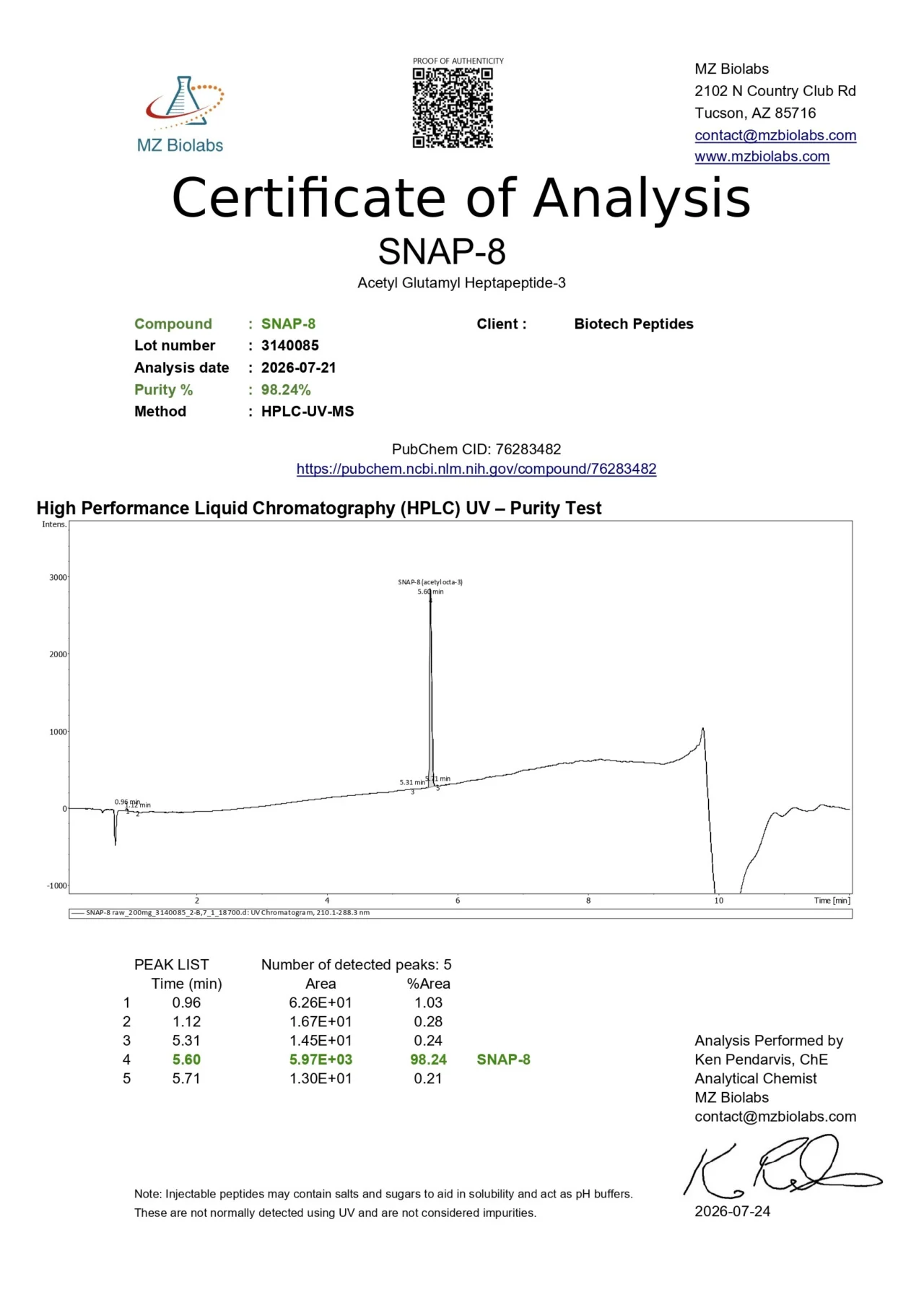
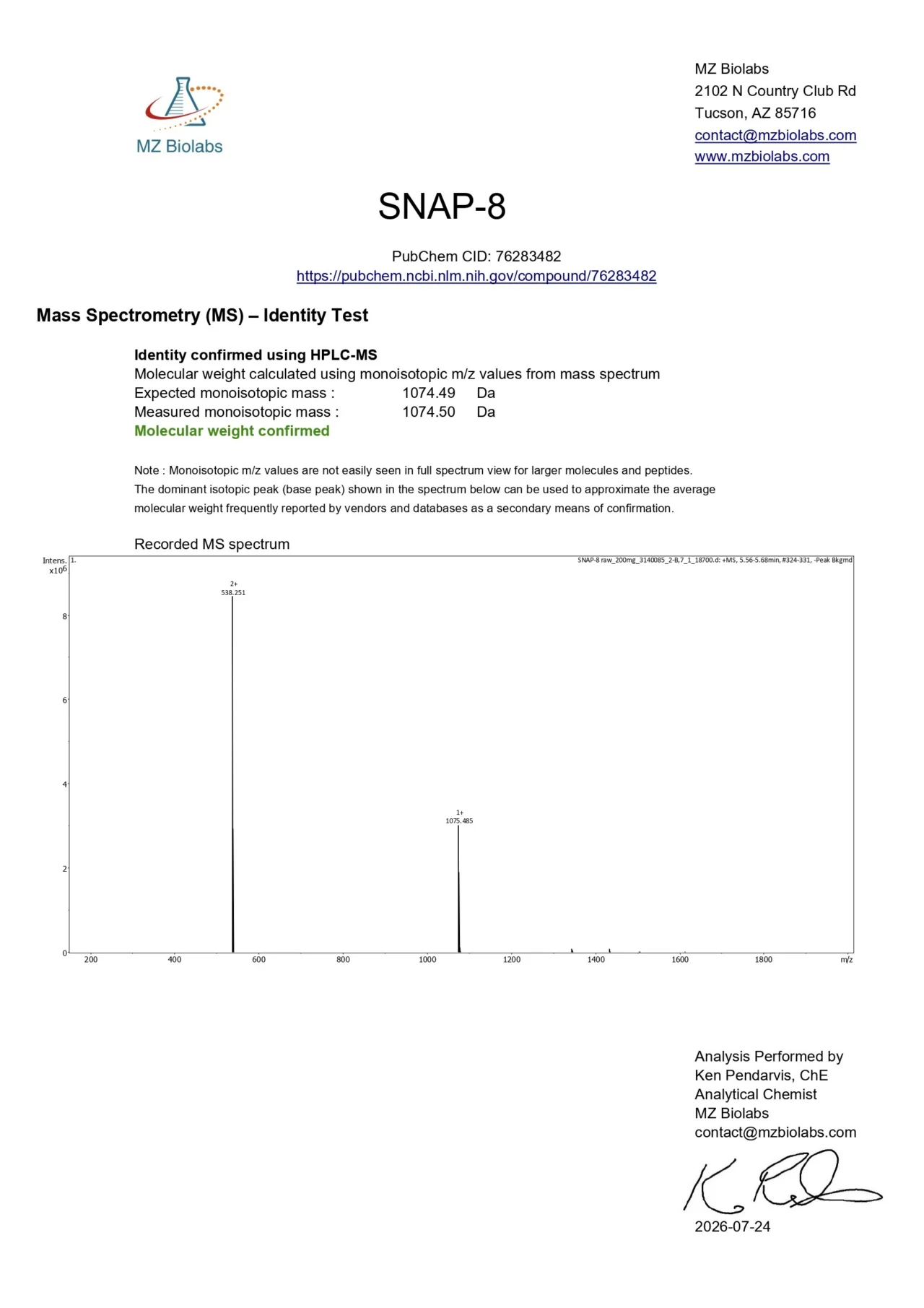
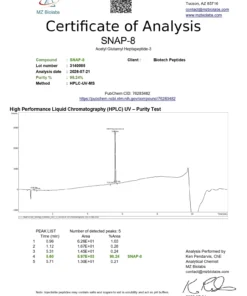
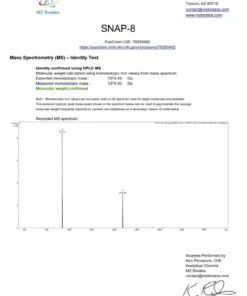
The 100mg and 200mg SNAP-8 peptide options provide researchers with different quantities for laboratory workflows. Product-specific analytical information should be confirmed using the applicable batch documentation and certificate of analysis where available.
SNAP-8 Peptide FAQ
What is SNAP-8 peptide?
SNAP-8 is a synthetic octapeptide investigated in laboratory research involving SNAP-25-related molecular pathways, SNARE-complex interactions, neurotransmitter release, muscle-contraction signaling, skin-cell models, and oxidative stress.
What is the molecular weight of SNAP-8?
The molecular weight provided in the supplied specifications is 1075.16 g/mol.
What is the SNAP-8 peptide sequence?
The supplied sequence is Ac-Glu-Glu-Met-Gln-Arg-Arg-Ala-Asp-NH2.
What is another name for SNAP-8?
The supplied material identifies Acetyl Glutamyl Heptapeptide-3 as another known title.
What quantities of SNAP-8 are available?
This product is available in 100mg and 200mg quantities.
What is SNAP-8 studied for?
SNAP-8 has been investigated in laboratory research involving SNARE-complex signaling, Synaptotagmin 1, SNAP-25-related mechanisms, neurotransmitter release, muscle-contraction models, skin-cell research, wrinkle-related experimental measurements, hydration-associated properties, and oxidative stress.
Is SNAP-8 intended for human use?
No. This product is supplied strictly for Research Use Only (RUO). It is intended for qualified laboratory research and is not intended for human or veterinary use, consumption, diagnosis, treatment, or prevention of any disease or medical condition.
Research Use Only Disclaimer
IMPORTANT — RESEARCH USE ONLY: SNAP-8 Peptide 100mg & 200mg is supplied strictly as a laboratory research material. This product is not intended for human consumption, human administration, veterinary use, diagnosis, treatment, cure, mitigation, or prevention of any disease or medical condition.
This material is intended only for qualified researchers conducting appropriate in-vitro, cellular, biochemical, or other controlled scientific research. Researchers are responsible for determining appropriate handling, storage, experimental procedures, safety measures, and regulatory requirements applicable to their work.
Research observations described on this page are based on specific experimental models and conditions. Reported laboratory findings should not be interpreted as established clinical effects or evidence of safety or efficacy in humans.
| Miligram | 100, 200 |
|---|
Be the first to review “SNAP-8 Peptide 100mg & 200mg | Research Use Only”
Related products
Biotech Peptides
Biotech Peptides
Biotech Peptides
Biotech Peptides
Biotech Peptides
Biotech Peptides
Biotech Peptides
Biotech Peptides
Reviews
There are no reviews yet.