Description
Humanin Peptide 5mg & 10mg
Buy Humanin Peptide 5mg & 10mg for laboratory research involving mitochondrial signaling, programmed cell death, oxidative stress, neuronal cell models, and cellular stress-response pathways. Humanin is an endogenous mitochondrial-derived peptide that has become a subject of research because of its interactions with proteins and signaling pathways associated with cellular survival and apoptosis.
Humanin research has examined interactions involving Bax, Bid, tBid, Akt, GSK-3β, AMPK, STAT3, and other intracellular signaling components. Laboratory investigations have also explored Humanin in neuronal, cardiac, retinal, bone, and metabolic cellular models.
Our Humanin Peptide 5mg & 10mg is supplied for research use only, including in-vitro experimentation, biochemical assays, analytical studies, and scientific investigation.
Humanin Peptide Research Overview
Humanin is a mitochondrial-derived peptide associated with the mitochondrial genome. Research literature describes Humanin in different cellular contexts, with investigations focusing on its potential interactions with apoptosis-related proteins and intracellular signaling pathways.
One major area of Humanin research involves the Bcl-2-associated X protein (Bax). Bax is a pro-apoptotic protein involved in mitochondrial membrane signaling and the regulation of programmed cell death. Experimental studies have investigated whether Humanin can interact with Bax-associated pathways and influence Bax localization within cellular models.
Researchers have also examined Humanin interactions with proteins including actinin-4 and phosphoprotein 8, providing additional avenues for studying intracellular protein-protein interactions and cellular stress responses.
These characteristics make Humanin useful as a research material for investigating mitochondrial biology, apoptosis signaling, oxidative stress, and cellular protection mechanisms in controlled laboratory systems.
Humanin Peptide Specifications
| Property | Specification |
|---|---|
| Product Name | Humanin Peptide |
| Available Sizes | 5mg & 10mg |
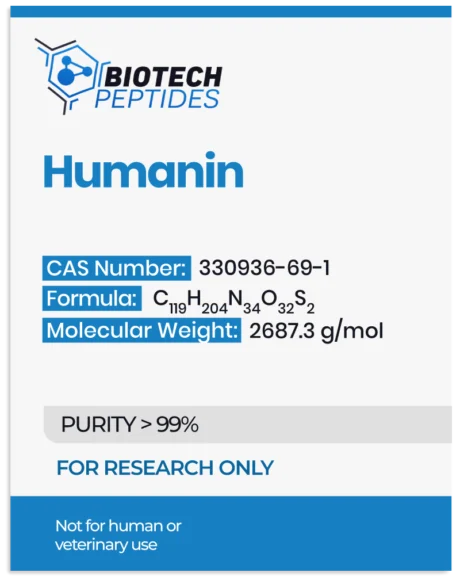
| Molecular Weight | 2687.3 g/mol |
| Molecular Formula | C119H204N34O32S2 |
| Sequence | Met-Ala-Pro-Arg-Gly-Phe-Ser-Cys-Leu-Leu-Leu-Leu-Thr-Ser-Glu-Ile-Asp-Leu-Pro-Val-Lys-Arg-Arg-Ala |
| Other Known Titles | Formyl Humanin, HNGF6A protein |
| Research Classification | Research Use Only (RUO) |
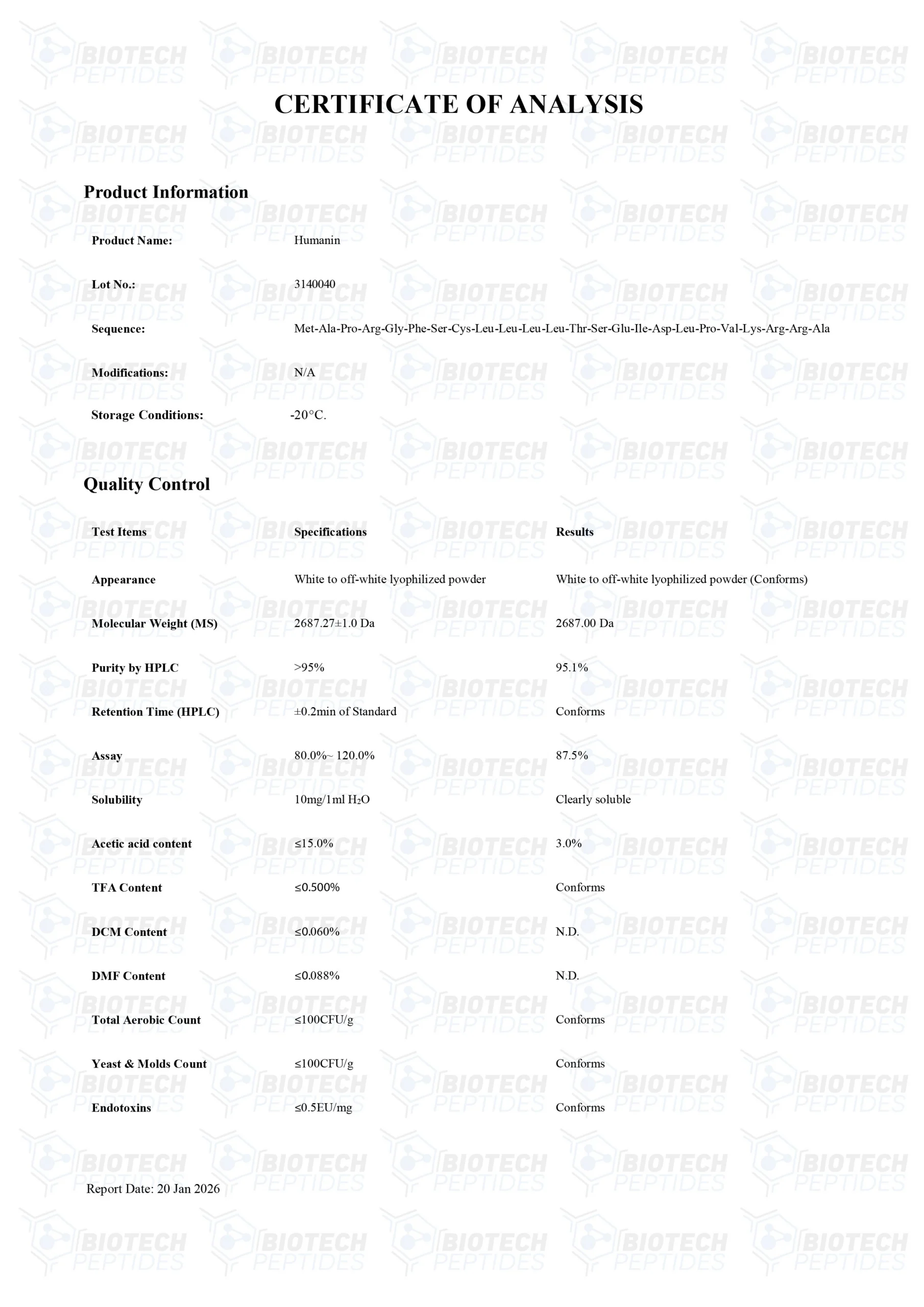
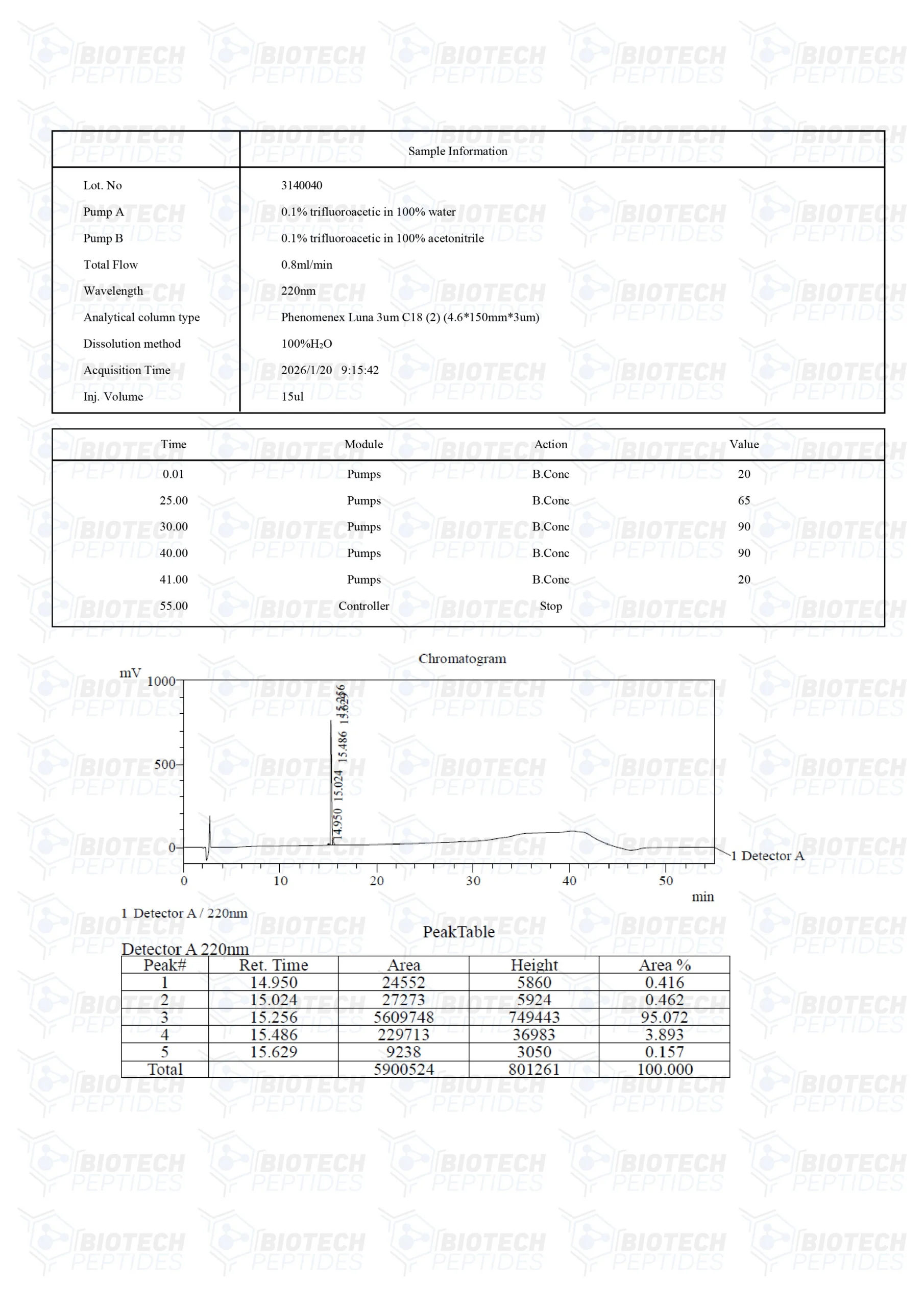
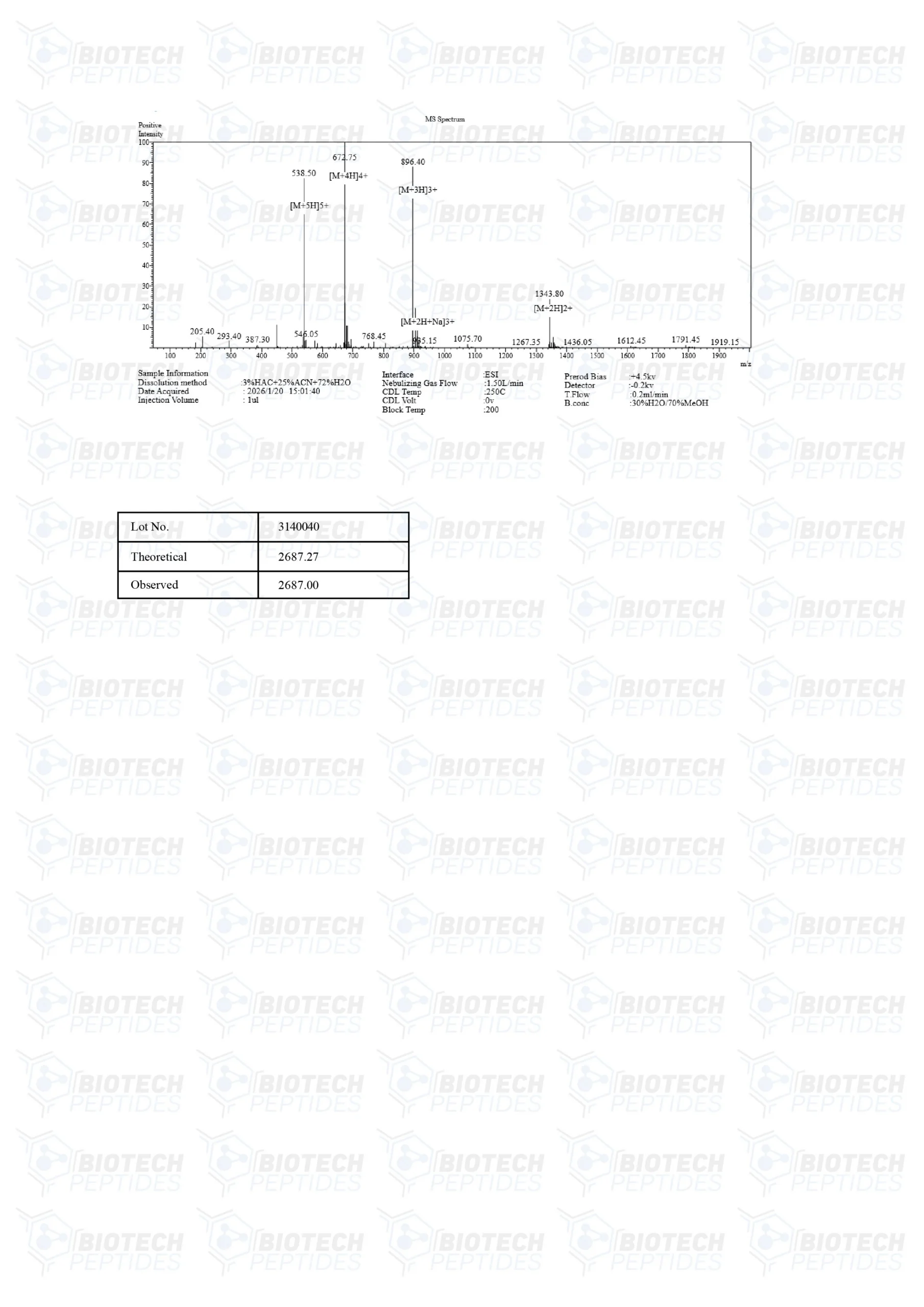
For analytical identity, purity, and lot-specific information, researchers should consult the applicable product documentation and Certificate of Analysis (CoA).
Humanin and Mitochondrial Apoptosis Research
A central application of Humanin research involves mitochondrial apoptosis pathways. Bax is an important protein in mitochondrial outer-membrane signaling, where its activity can contribute to downstream apoptotic events.
Laboratory studies have investigated whether Humanin interacts with Bax and related proteins involved in mitochondrial signaling. Research has also examined Humanin in relation to Bid and tBid, proteins associated with apoptotic signaling.
This makes Humanin particularly relevant for experiments examining:
- Mitochondrial membrane signaling
- Bax translocation
- Bcl-2 family proteins
- Apoptotic signaling cascades
- Cytochrome-c-associated pathways
- Cellular stress responses
- Protein-protein interactions
These experimental systems can help researchers characterize how mitochondrial-derived peptides participate in cellular signaling under controlled conditions.
Humanin Peptide in Neuronal Research
Another significant area of Humanin peptide research involves neuronal and neurobiology models. Experimental studies have examined Humanin in cellular systems associated with oxidative stress, protein phosphorylation, mitochondrial signaling, and neuronal viability.
Researchers have investigated pathways involving amyloid-beta-related signaling, formyl peptide receptors, tau phosphorylation, PP1, and PP2A. These studies provide experimental models for examining how mitochondrial-derived peptides interact with neuronal stress pathways.
Humanin has also been studied in cultured cortical neuron models exposed to experimental stressors such as Calyculin A, a compound that inhibits protein phosphatases including PP1 and PP2A.
These experiments provide opportunities to investigate:
- Neuronal oxidative stress
- Tau phosphorylation
- Protein phosphatase activity
- Mitochondrial signaling
- Cellular stress responses
- Neuronal cell-culture models
Humanin therefore represents a useful research material for laboratories studying interactions between mitochondrial peptides and neuronal signaling pathways.
Humanin and Oxidative Stress Research
Oxidative stress is another important research area associated with Humanin. Experimental studies have examined markers such as malondialdehyde (MDA) and antioxidant enzymes including superoxide dismutase (SOD).
MDA is commonly evaluated as an indicator of lipid peroxidation, while SOD participates in cellular antioxidant defense systems. Examining these markers can provide researchers with information about oxidative-stress responses in cultured cells and other experimental systems.
Humanin research may therefore be incorporated into laboratory investigations involving:
- Reactive oxygen species
- Lipid peroxidation
- Antioxidant enzyme activity
- Cellular membrane stress
- Mitochondrial dysfunction
- Oxidative signaling
Humanin Research in Cardiac and Vascular Cell Models
Humanin has also been investigated in experimental cardiac and vascular systems. Research has examined relationships between Humanin and pathways including Akt and glycogen synthase kinase-3 beta (GSK-3β).
These signaling proteins are involved in numerous cellular processes, making them relevant to studies of intracellular survival signaling, phosphorylation, and stress responses.
Laboratory investigations can examine Humanin in cardiac-cell models alongside measurements of:
- Akt phosphorylation
- GSK-3β signaling
- Reactive oxygen species
- Cellular stress
- Fibroblast-associated signaling
- Extracellular-matrix remodeling
This research provides an experimental framework for studying how mitochondrial-derived peptides interact with signaling networks in cardiac and vascular cell systems.
Humanin Peptide and Retinal Cell Research
Humanin has also attracted scientific interest in retinal pigment epithelium (RPE) research. RPE cells are specialized cells involved in maintaining the retinal environment and supporting photoreceptor biology.
Laboratory studies have examined Humanin in cultured RPE systems, particularly in relation to oxidative stress and cellular responses to experimental stress conditions.
Researchers studying Humanin may therefore investigate:
- RPE cell signaling
- Oxidative stress
- Mitochondrial function
- Cellular apoptosis pathways
- Retinal cell biology
- Stress-induced cellular responses
These applications make Humanin relevant to in-vitro research involving retinal and mitochondrial biology.
Humanin and Bone-Cell Signaling Research
Humanin has also been investigated in bone and cartilage cellular models. Research has explored potential relationships between Humanin and AMP-activated protein kinase (AMPK) signaling.
AMPK is an important cellular energy-sensing pathway. Humanin-related experiments have examined AMPK phosphorylation and downstream signaling involving RANKL, a regulator of osteoclast differentiation.
Additional research markers include:
- NFATc1
- OSCAR
- Cathepsin K (CTSK)
- Tartrate-resistant acid phosphatase (TRAP)
- AMPK signaling
- Osteoclast differentiation
- Chondrocyte cellular models
These pathways provide researchers with experimental tools for investigating cellular energy signaling and bone-cell differentiation in controlled laboratory environments.
Humanin and Metabolic Signaling Research
Humanin has also been examined in experimental models involving insulin signaling and cellular metabolism. Research has explored relationships between Humanin and signaling pathways involving STAT3, particularly within experimental hypothalamic models.
STAT3 is a transcriptional signaling component involved in numerous cellular processes. Investigating Humanin alongside STAT3-related pathways may help researchers characterize interactions between mitochondrial-derived peptides and metabolic signaling networks.
Potential laboratory research areas include:
- STAT3 signaling
- Cellular energy regulation
- Metabolic signaling
- Hypothalamic cell models
- Mitochondrial-derived peptide biology
- Glucose-related cellular pathways
These studies remain experimental and should be interpreted within the specific laboratory model and conditions under investigation.
Why Choose Humanin Peptide 5mg & 10mg?
Humanin Peptide 5mg & 10mg provides researchers with a defined peptide material for laboratory and in-vitro investigations involving mitochondrial-derived signaling.
Key research applications include:
- Mitochondrial peptide research
- Bax and apoptosis pathway studies
- Oxidative stress research
- Neuronal cell-culture studies
- Cardiac and vascular cell research
- Retinal pigment epithelium research
- Bone-cell and AMPK signaling studies
- STAT3 and metabolic signaling research
- Protein-protein interaction studies
- Cellular stress-response experiments
Humanin can therefore serve as a research material across multiple areas of molecular and cellular biology where mitochondrial signaling and cellular stress pathways are being investigated.
Humanin Peptide 5mg & 10mg — Research Use Only
Humanin Peptide is supplied in 5mg and 10mg research quantities for qualified laboratory applications. Researchers should use appropriate laboratory procedures and consult product-specific documentation for storage, handling, analytical characterization, and lot-specific specifications.
Frequently Asked Questions
What is Humanin Peptide?
Humanin is a mitochondrial-derived peptide studied in molecular and cellular biology research. Research has focused on its interactions with apoptosis-related proteins, mitochondrial signaling, oxidative stress pathways, and cellular stress responses.
What is Humanin Peptide used for in research?
Humanin is investigated in laboratory models involving mitochondrial signaling, Bax-associated apoptosis, oxidative stress, neuronal biology, cardiac-cell signaling, retinal cell biology, bone-cell pathways, and metabolic signaling.
What sizes of Humanin Peptide are available?
This product is available in 5mg and 10mg research quantities.
What is the molecular weight of Humanin?
The supplied specification lists a molecular weight of 2687.3 g/mol and a molecular formula of C119H204N34O32S2.
Is Humanin Peptide for human use?
No. Humanin Peptide is supplied strictly for research use only (RUO). It is not intended for human consumption, administration, diagnosis, treatment, or other clinical applications.
What should researchers verify before using Humanin?
Researchers should review the applicable Certificate of Analysis (CoA), lot-specific documentation, purity information, storage requirements, and institutional laboratory procedures before beginning an experiment.

Reviews
There are no reviews yet.