
BPC-157 & TB-500 Peptide Blend 10mg & 20mg | Research Use Only
$60.00 – $110.00Price range: $60.00 through $110.00
| Quantity | Discount | Discounted price |
| 5 - 9 | 10% | - |
| 10 + | 15% | - |
Buy BPC-157 & TB-500 Peptide Blend 10mg & 20mg | Research Use Only
BPC-157 & TB-500 Peptide Blend 10mg & 20mg combines two synthetic peptide research materials that have been investigated in laboratory studies involving tissue repair, cellular migration, wound models, angiogenic signaling, and tissue remodeling. Research on BPC-157 and TB-500 suggests that the two compounds may interact with different biochemical pathways, while researchers have also investigated whether their combined presence may produce complementary or synergistic effects in experimental models.
This peptide blend is intended for researchers studying the molecular mechanisms associated with tissue remodeling and cellular repair. Research areas described in the supplied literature include fibroblast migration, actin-related cellular movement, growth-factor signaling, angiogenesis, inflammatory pathways, extracellular-matrix formation, and experimental wound models.
BPC-157 & TB-500 Peptide Blend 10mg & 20mg is supplied strictly for Research Use Only (RUO). It is not intended for human consumption, administration, diagnosis, treatment, or prevention of disease.
BPC-157 & TB-500 Blend Specifications
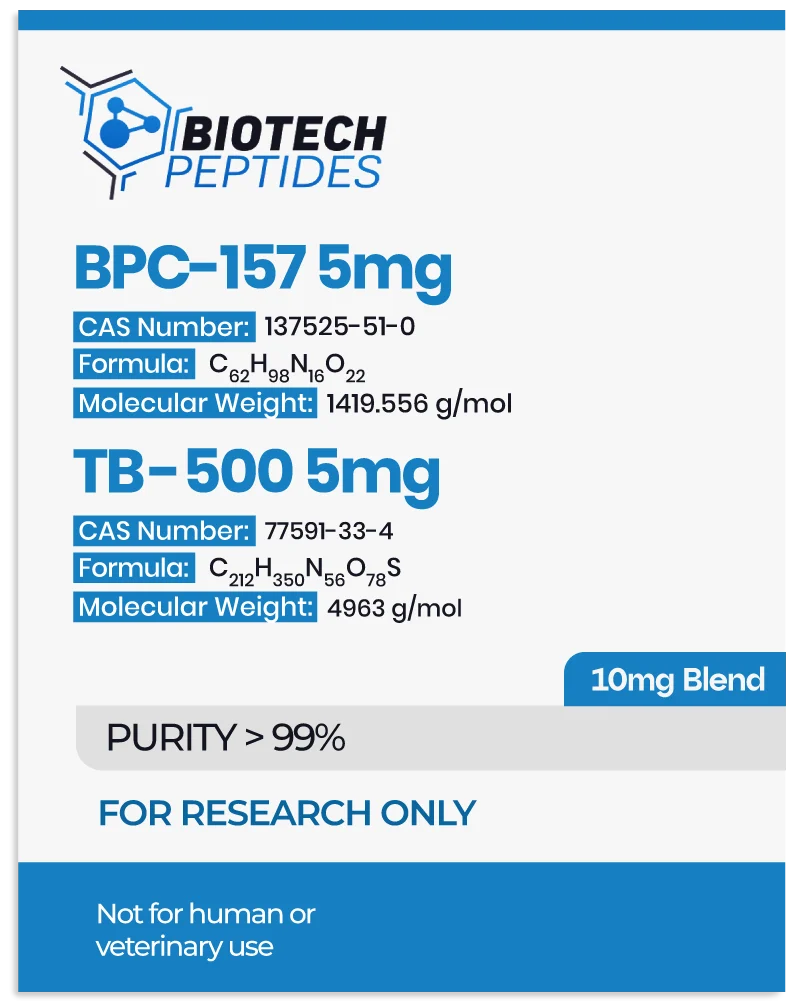
| Specification | BPC-157 | TB-500 |
|---|---|---|
| Product | BPC-157 | TB-500 |
| Other Known Titles | BPC-157 | Thymosin Beta 4 |
| Molecular Formula | C62H98N16O22 | C212H350N56O78S |
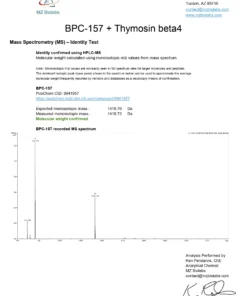
| Molecular Weight | 1419.55 g/mol | 4963 g/mol |
| Sequence | L-Valine,glycyl-L-alpha-glutamyl-L-prolyl-L-prolyl-Lprolylglycyl-L-lysyl-L-prolyl-L-alanyl-L-alpha-aspartyl-L-alpha-aspartyl-L-alanylglycyl-L-leucyl-;glycyl-L-alpha-glutamyl-L-prolyl-L-prolyl-L-prolylglycyllysyl-L-prolyl-L-alanyl-L-alpha-aspartylL-alpha-aspartyl-L-alanylglycyl-L-leucyl-L-valine | Ac-Ser-Asp-Lys-Pro-Asp-Met-Ala-Glu-lle-GluLys-Phe-Asp-Lys-Ser-Lys-Leu-Lys-LysThr-Glu-Thr-Gin-Glu-Lys-Asn-Pro-Leu-Pro-Ser-Lys-GluThy-lleGlu-Gin-Glu-Lys-Gin-Ala-Gly-Glu-Ser |
| Available Quantities | 10mg & 20mg Blend | |
| Research Classification | Research Use Only (RUO) | |
What Is the BPC-157 & TB-500 Peptide Blend?
The BPC-157 & TB-500 peptide blend brings together two peptide research materials that have independently been investigated in experimental tissue-repair models.
BPC-157 is described in the supplied research material as a pentadecapeptide consisting of 15 amino acids. Research has investigated BPC-157 in models involving cellular migration, extracellular-matrix organization, vascular signaling, and tissue-repair processes.
TB-500 is identified in the supplied material as Thymosin Beta 4. Research involving TB-500 has focused on actin-related cellular processes, cell migration, angiogenesis, inflammatory signaling, and experimental tissue models.
Because the two peptides have been investigated through different molecular pathways, researchers have proposed that studying them together may provide useful insight into potential interactions between these pathways. The proposed synergistic effects remain an area of experimental investigation.
BPC-157 & TB-500 Blend Research on Cellular Migration
Cellular migration is an important research area when examining tissue-repair mechanisms. Fibroblasts and immune cells can migrate toward areas of tissue damage, where fibroblasts participate in extracellular-matrix formation and remodeling.
The supplied research describes actin as an important component of this cellular movement. BPC-157 has been investigated for its potential influence on the transcription and expression of actin-related proteins, while TB-500 has been studied in connection with actin binding and localization.
Based on these proposed mechanisms, researchers have hypothesized that combining BPC-157 and TB-500 could provide complementary effects on cellular migration. In this experimental framework, BPC-157 may influence actin-related expression while TB-500 may affect the availability and localization of actin within cells.
This makes the blend relevant to laboratory studies examining fibroblast migration, immune-cell movement, cytoskeletal organization, and extracellular-matrix remodeling.
BPC-157 & TB-500 and Experimental Wound Research
Both peptides have been examined separately in experimental wound and tissue-repair models. BPC-157 research described in the supplied material includes murine models involving tendon injury, gastrointestinal injury, and wound repair.
Research has also investigated BPC-157 in connection with early growth response gene-1 (EGR-1). EGR-1 is discussed in the supplied literature as a gene involved in early cellular responses and processes associated with cytokines, growth factors, and extracellular-matrix components such as collagen.
One comparative study examined BPC-157 and PDGF-BB in experimental models involving granulation tissue formation and full-thickness excisional wounds. The supplied research reported similar selectivity for stimulating granulation tissue while suggesting that BPC-157 may have influenced early collagen organization under the investigated conditions.
TB-500 has also been studied in experimental wound models, including corneal injury research. The supplied material describes investigations into cytokine signaling, inflammatory pathways, cellular survival, and epithelial wound responses.
Researchers have examined pathways involving IL-1β, IL-6, MIP-2, KC, NF-κB, caspases, Akt, PINCH, and integrin-linked kinase. These findings provide potential molecular mechanisms for further laboratory investigation, although the supplied source emphasizes that several of these proposed mechanisms remain speculative and require additional research.
BPC-157 & TB-500 Blend and Angiogenesis Research
Angiogenesis is another major area of research involving both peptides. BPC-157 has been investigated using experimental systems such as chick chorioallantoic membrane assays, endothelial tube-formation models, and ischemic limb models.
The supplied research describes potential interactions between BPC-157 and vascular endothelial growth factor receptor 2 (VEGFR2). Experimental observations included potential changes in VEGFR2 expression and internalization, together with activation of the VEGFR2-Akt-eNOS signaling pathway.
These findings have led researchers to investigate whether BPC-157 may influence vascular signaling and vessel formation through VEGFR2-associated pathways.
TB-500 has also been studied in angiogenesis models, including critical limb ischemia research. Experimental work described in the supplied material examined endothelial-cell viability, migration, and tube formation, alongside molecular markers associated with angiogenesis.
Reported experimental markers included Ang2, Tie2, VEGFA, N1ICD, Notch3, NF-κB, and phosphorylated p65. The supplied research proposed that Notch and NF-κB signaling may contribute to the observed angiogenic effects associated with TB-500 in these models.
Studying BPC-157 and TB-500 together therefore provides a research framework for examining potentially complementary mechanisms involving vascular signaling, endothelial migration, and angiogenic pathways.
BPC-157 & TB-500 and Growth-Factor Research
Growth-factor signaling is another proposed area of interaction between BPC-157 and TB-500. The supplied material describes research suggesting that BPC-157 may influence the expression of growth hormone receptors on fibroblasts, potentially affecting fibroblast activity and longevity within experimental models.
TB-500, meanwhile, has been studied in relation to actin localization and filament formation. Researchers have proposed that these mechanisms could complement cellular processes associated with fibroblast activity and tissue remodeling.
The proposed combination of BPC-157 and TB-500 has therefore attracted research interest as a model for examining how different molecular pathways may converge during cellular repair and extracellular-matrix remodeling.
However, the proposed synergistic mechanisms should be considered experimental hypotheses rather than established biological outcomes.
Key Research Areas
- BPC-157 and TB-500 peptide interaction research
- Fibroblast migration studies
- Immune-cell migration research
- Actin and cytoskeletal signaling
- Extracellular-matrix research
- Experimental wound models
- Collagen organization studies
- Growth-factor signaling
- VEGFR2-Akt-eNOS pathway research
- Angiogenesis and endothelial-cell models
- Notch and NF-κB pathway research
- Cellular survival and apoptosis studies
- Inflammatory signaling research
- Tissue remodeling studies
Why Use BPC-157 & TB-500 Peptide Blend for Research?
BPC-157 & TB-500 Peptide Blend 10mg & 20mg offers researchers a combined research material for investigating interactions between two peptide systems that have independently been studied across tissue-repair and cellular-signaling models.
The blend is particularly relevant for research programs examining cellular migration, actin organization, fibroblast activity, angiogenesis, inflammatory signaling, extracellular-matrix processes, and experimental wound models.
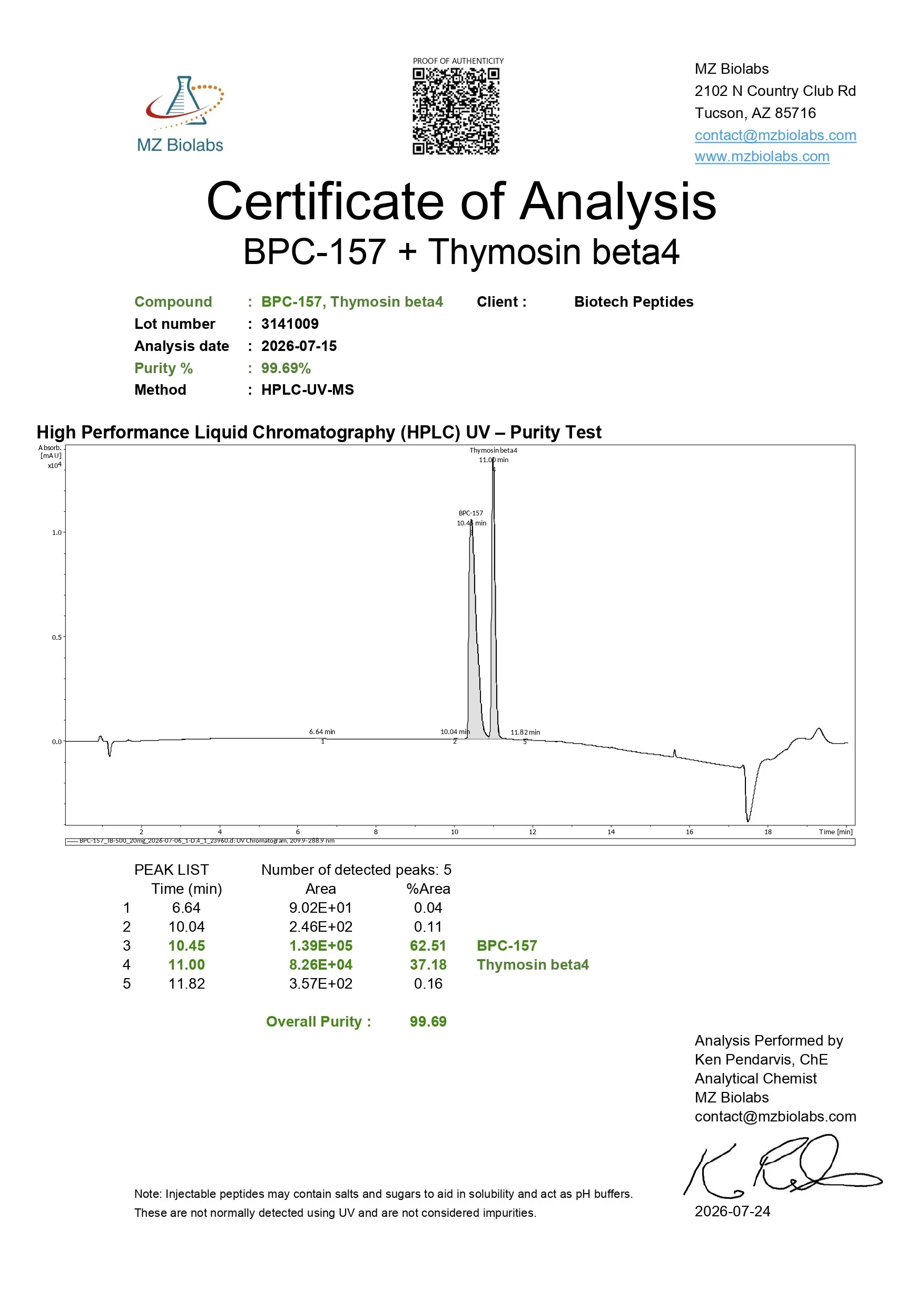
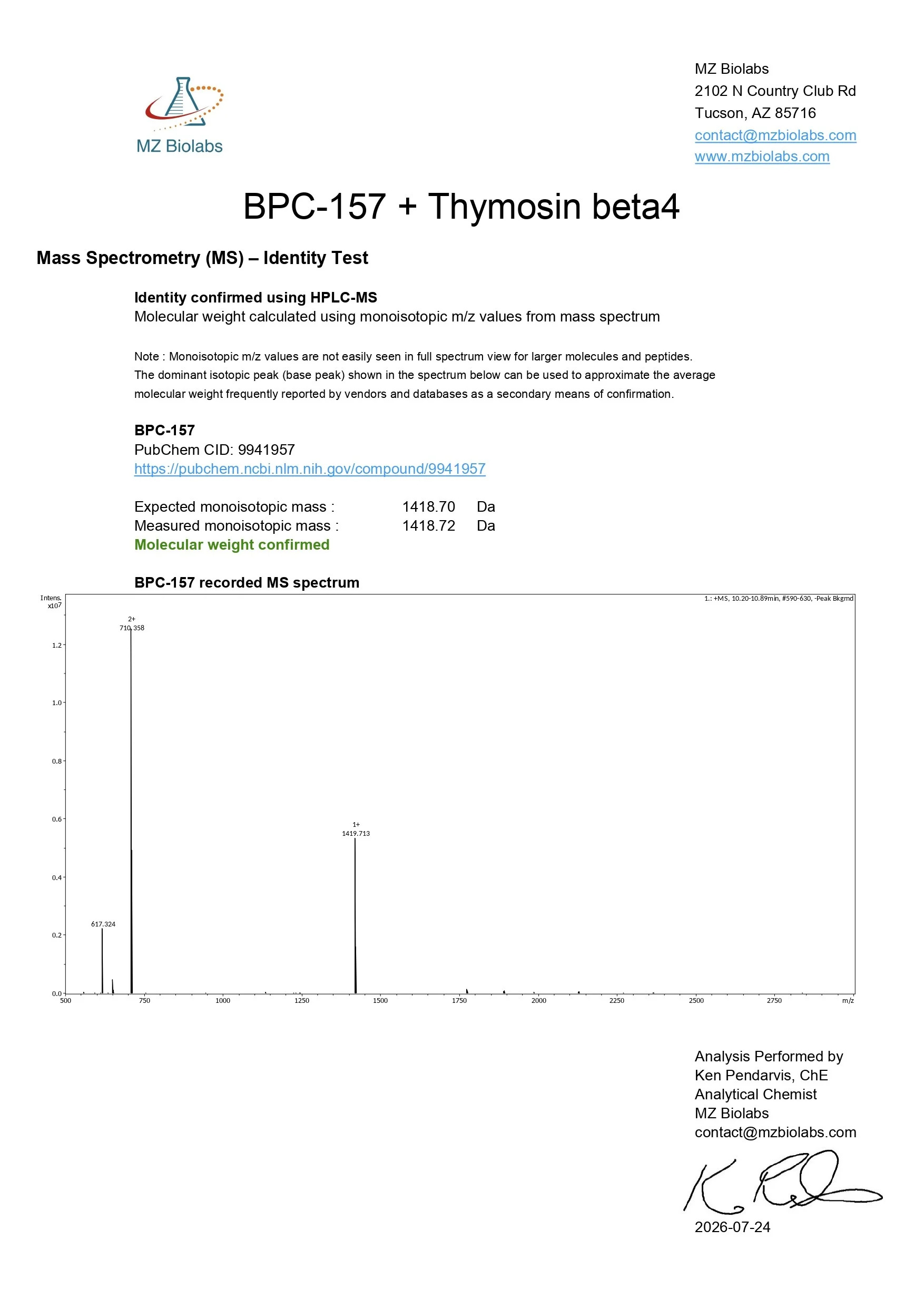
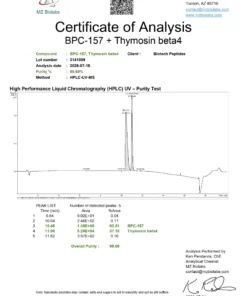
Researchers can evaluate the blend using their own validated laboratory protocols and analytical methods while referring to applicable batch-specific documentation for product information.
BPC-157 & TB-500 Blend FAQ
What is the BPC-157 & TB-500 peptide blend?
It is a research peptide blend combining BPC-157 and TB-500, two peptide materials that have been investigated independently in experimental studies involving cellular migration, tissue remodeling, wound models, angiogenesis, and related molecular pathways.
What are the available quantities?
The supplied product is available in 10mg and 20mg blend options.
What is the molecular weight of BPC-157?
The supplied specification lists the molecular weight of BPC-157 as 1419.55 g/mol.
What is the molecular weight of TB-500?
The supplied specification lists the molecular weight of TB-500 as 4963 g/mol.
What research areas are associated with this blend?
Research areas include fibroblast and immune-cell migration, actin-related cellular processes, wound models, angiogenesis, VEGFR2 signaling, Notch/NF-κB pathways, extracellular-matrix research, growth-factor signaling, and tissue remodeling.
Is the BPC-157 & TB-500 blend intended for human use?
No. This product is supplied strictly for Research Use Only (RUO). It is not intended for human consumption, administration, diagnosis, treatment, or prevention of disease.
Research Use Only Disclaimer
IMPORTANT: RESEARCH USE ONLY
BPC-157 & TB-500 Peptide Blend 10mg & 20mg is supplied strictly as a research material for laboratory and scientific investigation. It is not a food, dietary supplement, pharmaceutical product, medical product, or therapeutic preparation.
This material is not intended for human or veterinary consumption, administration, diagnosis, treatment, cure, or prevention of any disease or medical condition. All research involving this material should be conducted by appropriately qualified personnel using suitable laboratory procedures and applicable institutional, legal, and regulatory requirements.
The research mechanisms and experimental findings described on this page are provided for scientific and educational context. Proposed synergistic, tissue-repair, angiogenic, anti-inflammatory, or cellular effects should not be interpreted as established clinical outcomes.
Researchers should refer to applicable batch-specific documentation and analytical records for product-specific quality information and specifications.
| Miligram | 10, 5 |
|---|
Reviews
There are no reviews yet.